
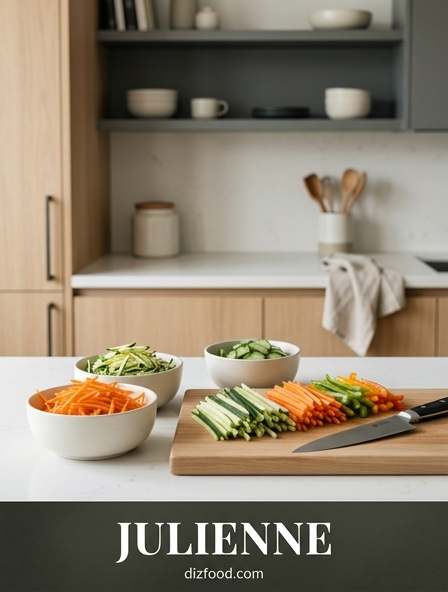
Understanding the Classic Julienne Technique
The julienne cut is one of the most fundamental knife skills in the culinary world, serving as a cornerstone for both professional chefs and dedicated home cooks. Originating from French cuisine, this technique involves cutting vegetables into long, thin, uniform strips that resemble matchsticks. The standard dimensions for a classic julienne are typically 1/8 inch by 1/8 inch by 2 inches. Mastering this skill is not merely about aesthetic appeal; it is a critical component of culinary science. By ensuring every piece of food is of equal size, the cook guarantees that the ingredients will cook at an identical rate, preventing the textural inconsistency of having some pieces mushy while others remain raw.
Historically, the term "julienne" first appeared in French culinary literature in the 18th century, though the method of fine slicing has existed for much longer. While often associated with carrots and celery, the technique applies to a wide variety of firm produce. Achieving the perfect julienne requires patience and a deep understanding of the vegetable's anatomy. It transforms humble ingredients into elegant, refined components that elevate the visual presentation of any plate, bridging the gap between simple preparation and professional artistry.
Essential Tools for Precision Cutting
To achieve the precision required for a perfect julienne, the quality and condition of your tools are paramount. A dull blade is the enemy of consistency and safety. The primary tool for this task is a high-quality chef's knife, typically 8 to 10 inches in length, which provides the necessary leverage and surface area for clean cuts. A Nakiri or a Santoku knife can also be used effectively due to their flatter edges, which facilitate straight, downward motions rather than the rocking motion common with curved blades.
- Chef's Knife: A sharp, well-balanced blade is essential for controlling the thickness of each slice.
- Cutting Board: A large, stable wooden or composite board prevents the knife from slipping and protects the blade edge.
- Honing Rod and Whetsone: Regular maintenance ensures the knife remains razor-sharp for delicate work.
- Mandoline Slicer: For high-volume preparation, a mandoline can produce uniform planks that are then finished by hand.
- Ruler: Beginners often use a small culinary ruler to calibrate their eyes to the 1/8-inch standard.
Investing in these tools and maintaining them properly allows for the fluid, rhythmic motion necessary to produce hundreds of identical matchsticks in a short period, which is the hallmark of a skilled kitchen professional.
Selecting the Best Vegetables for Prepping
Not all vegetables are suitable for the julienne technique. The ideal candidates are those with a firm, dense structure that can hold their shape during the slicing process and after cooking. Soft or overly fibrous vegetables often collapse or shred, leading to uneven results. Understanding the moisture content and structural integrity of your produce is essential for choosing the right subjects for your knife work. Root vegetables are the most common choices, but certain fruits and firm stalks also perform well under the blade.
| Vegetable Type | Suitability | Common Examples |
|---|---|---|
| Root Vegetables | Excellent | Carrots, Parsnips, Daikon Radish |
| Firm Tubers | Very High | Potatoes, Sweet Potatoes, Jicama |
| Pithy Stalks | High | Celery, Broccoli Stems |
| Dense Fruits | Moderate | Green Apples, Firm Pears |
When selecting these items, look for specimens that are straight and lack deep grooves or irregular knots. A straight carrot, for instance, yields much more usable product and results in less waste during the "squaring off" phase. Freshness is equally important; older, dehydrated vegetables become rubbery, making it difficult for the knife to pass through cleanly and accurately.
Step by Step Guide to Perfect Matchsticks
Creating the perfect julienne is a methodical process that requires breaking down a three-dimensional object into two-dimensional planes. By following a structured approach, you ensure that every strip is identical in thickness and length. This systematic breakdown is the secret to professional-grade consistency and speed in the kitchen.
- Wash and Peel: Clean the vegetable thoroughly and remove the skin to ensure a smooth, clean surface for cutting.
- Trim the Ends: Cut off the top and bottom of the vegetable to create two flat ends, then cut the vegetable into 2-inch segments.
- Square Off: Slice a thin strip off one side to create a flat base. Rotate the vegetable onto this base and repeat on all sides until you have a rectangular block.
- Create Planks: Slice the block lengthwise into uniform sheets that are 1/8-inch thick.
- Stack and Slice: Stack two or three planks on top of each other and cut lengthwise again at 1/8-inch intervals to create the final matchsticks.
This "planking and stacking" method is far more efficient and accurate than trying to cut individual strips directly from a round vegetable. It minimizes the risk of the produce rolling under the knife, which is a primary cause of uneven cuts and kitchen accidents.
Safety First with Proper Hand Placement
Precision cutting techniques like the julienne require the blade to move very close to the fingers, making safety the highest priority. The most critical skill to master for safety is the "claw grip." This involves tucking the fingertips inward toward the palm and resting the knuckles against the side of the knife blade. By using the knuckles as a guide, you keep the sharp edge of the blade away from your sensitive fingertips while maintaining total control over the thickness of the cut.
Furthermore, the thumb and pinky finger should act as anchors, gripping the vegetable from the sides to keep it stable on the cutting board. Never lift the edge of the knife higher than your knuckles, as this exposes the fingers to the blade. Stability of the work surface is also vital; if your cutting board slides, place a damp paper towel or a non-slip silicone mat underneath it. Maintaining a relaxed but firm grip on the knife handle-often using a "pinch grip" where the thumb and index finger choke up on the bolster-provides the stability needed to execute fine cuts without the knife wobbling or slipping during the downward stroke.
Achieving Uniform Dimensions and Consistency
Consistency is the hallmark of a professional chef. In the context of a julienne, uniformity is measured by the mathematical precision of each matchstick. When pieces are disparate in size, they will not finish cooking at the same time, leading to a dish with varying textures. For example, in a quick stir-fry, a thick strip of carrot may remain crunchy and raw while a thinner strip becomes limp and overcooked. This inconsistency negatively impacts the "mouthfeel" and the overall quality of the culinary experience.
To achieve this level of uniformity, it is helpful to visualize the desired end product before the first cut is made. Many culinary students practice by keeping a "model" matchstick at the top of their board to compare against their progress. It is also important to maintain consistent downward pressure and a rhythmic tempo. Rushing the process often leads to "tapering," where the strips are thicker at one end than the other. Slow, deliberate movements initially will eventually build the muscle memory required for high-speed precision. Remember that the goal is not just to produce thin strips, but to produce identical strips that look as though they were manufactured by a machine.
Culinary Applications for Julienne Vegetables
The versatility of the julienne cut makes it a staple in various cuisines across the globe. Because of their thin profile, julienned vegetables offer a delicate crunch and a high surface-area-to-volume ratio, which allows them to absorb flavors quickly and cook in seconds. This makes them ideal for high-heat cooking methods and raw applications where texture is the primary focus. The elegance of the cut also makes it a favorite for garnishing sophisticated dishes.
- Stir-Fries: The thin strips cook almost instantly in a hot wok, retaining their vibrant color and nutrients.
- Salads and Slaws: Julienned carrots, radishes, or apples provide a refined texture compared to grating, which can release too much moisture.
- Spring Rolls: The uniform shape allows for tight, even rolling and a consistent bite in every mouthful.
- Soups and Consommés: Fine strips of leeks or carrots add visual beauty and a light texture to clear broths.
- Garnishes: A small nest of julienned scallions or ginger can elevate the presentation of seafood or poultry.
Beyond aesthetics, the julienne cut changes how we experience flavor. A julienned pepper releases its sweetness differently than a diced one, providing a subtle, elongated flavor profile that complements complex sauces and delicate proteins.
Advanced Tips for Professional Results
Moving from a proficient home cook to a professional-level speed and accuracy requires fine-tuning your ergonomics and workflow. One advanced tip is to focus on your stance; standing with your feet shoulder-width apart and your body slightly angled toward the board provides better balance and reduces fatigue during long prep sessions. Additionally, professional chefs focus on "waste management." When squaring off vegetables to create the initial block, the trimmings should not be discarded. These scraps are perfect for stocks, purees, or mirepoix, ensuring that the precision of the julienne does not come at the cost of food waste.
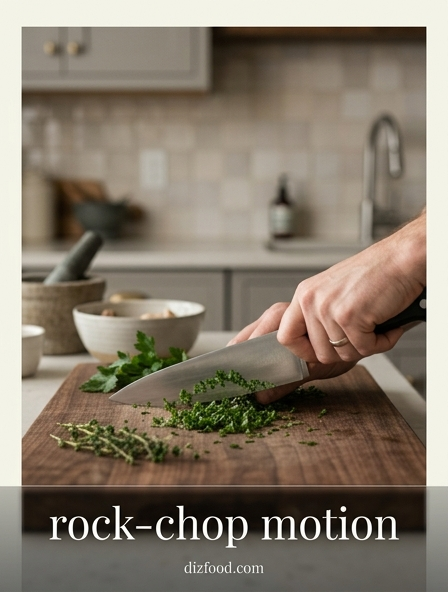
Another professional secret is the "pull-cut" or "glide-cut." Instead of simply pressing the knife down, draw the blade toward you or push it away in a slight sliding motion. This utilizes the entire length of the blade and ensures the vegetable fibers are sliced rather than crushed. Finally, always keep your station clean. A cluttered cutting board leads to mistakes. Frequently clear your finished julienne strips into a separate container using the back of your knife-never the sharp edge-to maintain the integrity of both the produce and your blade's sharpness.
Common Pitfalls in the Cutting Process
Even experienced cooks can fall into habits that compromise the quality of their julienne. One of the most common pitfalls is neglecting to square off the vegetable properly. Attempting to cut matchsticks from a rounded surface is not only dangerous but results in irregular, wedge-shaped pieces that lack the professional finish of a true julienne. Another frequent error is "stacking too high." While stacking planks saves time, stacking more than three or four layers can cause the pile to shift, leading to slanted cuts and uneven widths.
Inconsistent pressure is another issue; if the knife isn't kept perfectly vertical, the strips will have a trapezoidal cross-section rather than a square one. This usually happens when the cook's elbow is tucked too tightly to the body or flared too far out. Finally, many beginners struggle with the "end of the block." As the vegetable block gets smaller, it becomes harder to hold securely with the claw grip. Instead of risking a finger to finish the last few cuts, it is better to rotate the remaining piece onto its widest side or set it aside for another use. Recognizing when to stop is a sign of a mature and safe cook.
Mastering the Fine Julienne Variation
Once the standard julienne is mastered, the next level of expertise is the "fine julienne," also known as *julienne allumette* in certain contexts, though *allumette* is often slightly larger. The fine julienne is an exercise in extreme precision, resulting in delicate threads that are 1/16 inch by 1/16 inch by 2 inches. This cut is frequently used for high-end garnishes, particularly with aromatics like ginger, citrus zest, or leeks. Because the strips are so thin, they offer a very subtle texture and a rapid release of essential oils and flavors.
Achieving a fine julienne requires an exceptionally sharp knife and a very steady hand. The slightest deviation in the angle of the blade will be highly visible in the final product. It is often used in cold preparations, such as a garnish for steak tartare or as a base for a refined remoulade. Mastering this variation demonstrates a superior level of knife control and an eye for detail. It is the ultimate expression of the julienne technique, transforming simple vegetables into intricate, lace-like decorations that signify a high level of culinary craftsmanship and attention to the finer points of food preparation.

Comments