
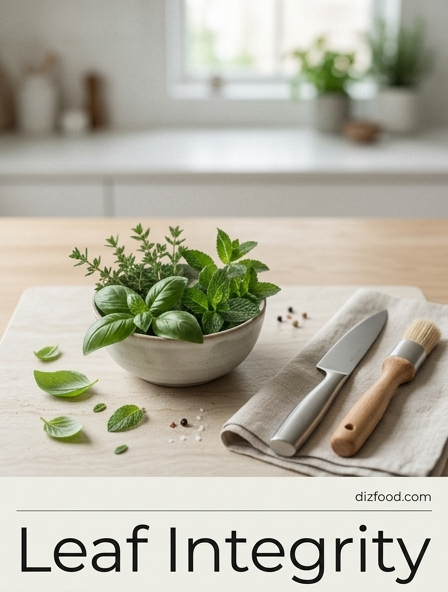
Selecting the Freshest Greens for Structural Resilience
The foundation of leaf integrity begins at the point of purchase or harvest. Selecting greens with high structural resilience requires an eye for turgor pressure-the internal water pressure that keeps plant cells rigid. When inspecting leaves, look for vibrant, uniform colors and a crisp snap when a stem is gently bent. Avoid any specimens exhibiting "clear" or translucent patches, as this indicates cellular breakdown and the onset of decay.
- Visual Turgidity: Leaves should stand upright or hold their shape without drooping.
- Edge Consistency: Check for "tip burn" or yellowing at the margins, which suggests nutrient deficiencies or age.
- Stem Health: The base of the bunch should be moist and light-colored, not brown or slimy.
Thicker-leaved varieties, such as kale or romaine, inherently possess more cellulose and lignin, making them naturally more resilient to handling. Conversely, delicate greens like mâche or baby spinach require even stricter scrutiny during selection, as their thin cell walls offer little protection against mechanical damage or temperature fluctuations during transport from the market to the kitchen.
The Science of Washing Without Bruising
Washing greens is a critical step for hygiene, yet improper technique can lead to micro-bruising that accelerates wilting. The goal is to remove debris while maintaining the delicate lipid layer of the leaf surface. High-pressure streams from a faucet should be avoided, as the kinetic energy can rupture cell walls, leading to localized "water-logging" and limpness. Instead, the immersion method is the gold standard for preserving leaf integrity.
- Fill a large basin with cool, filtered water to allow leaves to float freely.
- Gently submerge the greens, using a slow swirling motion to dislodge silt.
- Allow the greens to rest for sixty seconds so heavier particulates sink to the bottom.
- Lift the leaves upward out of the water rather than pouring the water over them.
Temperature control is equally important; water that is too warm can soften the cellular structure, while ice-cold water helps maintain the "crispness" by tightening the plant's vascular network. Always handle the greens with a light touch, treating them as fragile biological tissues rather than durable commodities.
Mastering the Salad Spinner for Optimal Dryness
Excessive moisture is the primary enemy of leaf longevity after washing. Residual water serves as a solvent for the leaf's natural protective waxes and provides a breeding ground for bacteria. The salad spinner utilizes centrifugal force to strip water away from the leaf surface without the crushing pressure of hand-drying. However, overfilling the spinner basket can be counterproductive, as leaves pinned against the outer wall can become crushed under the weight of other leaves.
- Load Density: Fill the basket no more than two-thirds full to allow air and water movement.
- Acceleration: Start the rotation slowly to align the leaves before reaching maximum velocity.
- Duration: Two short bursts of high-speed spinning are more effective than one long, slow cycle.
Proper drying ensures that dressings will adhere to the leaf surface rather than sliding off or diluting. This adherence creates a protective barrier that helps maintain the internal moisture of the leaf, effectively preserving its crunch. Once spun, the leaves should feel dry to the touch but remain cool, indicating that the protective cellular structure remains intact and ready for service or storage.
Tearing Versus Cutting for Maximum Cellular Integrity
The debate between tearing and cutting greens involves the preservation of cellular boundaries. When a leaf is cut with a knife, the blade passes through every cell in its path, releasing enzymes like polyphenol oxidase. These enzymes react with oxygen to cause rapid browning. Tearing, by contrast, often follows the natural lines of the plant's cell walls, theoretically rupturing fewer individual cells. This can lead to a more rustic aesthetic and potentially slower oxidation in some varieties.
| Method | Cellular Impact | Best For |
|---|---|---|
| Tearing | Follows natural cell boundaries; reduces enzymatic release. | Delicate head lettuces (Bibb, Boston). |
| Cutting | Clean, uniform slices; creates more exposed surface area. | Hearty greens (Kale, Cabbage) and Chiffonade. |
While the difference in oxidation rates is minimal if the salad is consumed immediately, the structural impact is notable. Tearing creates irregular edges that catch dressing more effectively, whereas a sharp knife provides clean lines that look professional. Regardless of the chosen method, the objective remains the same: minimizing the duration between the breach of the leaf's surface and the moment of consumption.
Thermal Shock Techniques to Restore Wilted Leaves
Wilting is the visible result of moisture loss within the vacuoles of plant cells, leading to a loss of turgor pressure. If the cellular structure is not fundamentally damaged by rot, many greens can be revitalized through thermal shock. This process involves submerging the leaves in an ice-water bath, which triggers a rapid rehydration through osmosis. The cold temperature also helps to solidify the cell walls, "locking" the moisture back into the plant's internal structure.
- Prepare a bowl with 50% ice and 50% cold water.
- Submerge wilted greens entirely for 15 to 30 minutes.
- Remove the greens and dry them thoroughly using a salad spinner.
- Refrigerate the dried greens for 10 minutes to allow the structure to set.
This technique is particularly effective for heartier greens like romaine or endive, which can regain nearly all of their original crunch. It is less effective for greens that have already begun the chemical process of decomposition. For the best results, use filtered water to avoid introducing any chlorine flavors into the rehydrated plant tissue.
The Impact of Blade Sharpness on Leaf Oxidation
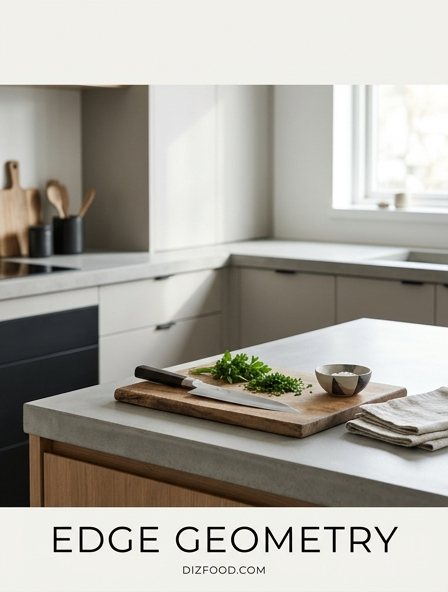
If you choose to cut your greens, the sharpness of your knife is the most critical factor in maintaining leaf integrity. A dull blade does not slice; it crushes. This crushing action mashes the delicate cells on either side of the cut, forcing out chlorophyll and enzymes. This results in a "bruised" edge that turns brown or black within minutes. A razor-sharp edge, however, minimizes the number of ruptured cells, leaving a clean margin that stays green significantly longer.
- Carbon Steel: Offers the sharpest edge but can react with acidic greens.
- Stainless Steel: Highly resistant to oxidation and ideal for general prep.
- Ceramic: Chemically inert and excellent for preventing browning in lettuce.
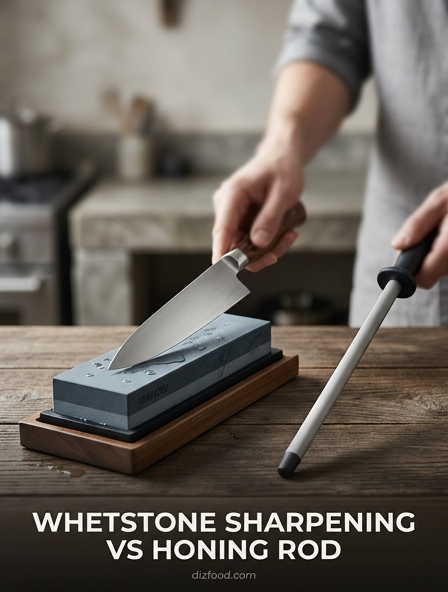
Microscopic examinations of cut leaves show that dull blades create jagged, "torn" cellular structures that increase the surface area exposed to air. By maintaining a polished, keen edge, you reduce the mechanical stress placed on the leaf during preparation. Professionals often hone their blades before every shift specifically to handle delicate herbs and greens, ensuring the structural and visual integrity of the final dish is preserved.
Strategic Storage Methods to Maintain Crispness
Proper storage is a balancing act between maintaining humidity and preventing saturation. Greens need to "breathe" to avoid the buildup of ethylene gas, which accelerates aging, but they also require a high-humidity environment to prevent the air from wicking away their internal moisture. The most effective method involves creating a micro-environment that mimics a humid vegetable crisper drawer while providing an absorbent buffer to manage condensation.
| Component | Purpose | Technique |
|---|---|---|
| Absorbent Layer | Moisture Control | Wrap greens in dry paper towels. |
| Barrier | Airflow Regulation | Place in a perforated plastic bag. |
| Temperature | Metabolic Slowdown | Store between 34°F and 38°F. |
Hardier greens can be stored in airtight containers, but delicate leaves benefit from the slight gas exchange provided by loose bagging. Additionally, storing greens away from ethylene-producing fruits, such as apples or bananas, is vital. Ethylene is a natural ripening hormone that will cause leafy greens to yellow and lose their structural rigidity prematurely, turning a fresh batch of spinach into a wilted mess in a matter of hours.
Timing Your Dressing to Prevent Premature Wilting
The moment dressing touches a leaf, a countdown to wilting begins. This is primarily due to osmosis. Most dressings contain salts and acids (like vinegar or lemon juice) which have a higher solute concentration than the fluid inside the plant cells. This imbalance draws water out of the leaf to equalize the concentration, causing the cells to collapse. Furthermore, oil-based dressings can penetrate the waxy cuticle of the leaf, weighing it down and making it appear translucent.
- Acidic Impact: Vinegar breaks down the pectin that holds cell walls together.
- Salt Osmosis: Salt rapidly extracts moisture, leading to immediate limpness.
- Oil Saturation: Heavy oils coat the leaf, preventing it from "breathing."
To maximize integrity, greens should be dressed as close to the point of consumption as possible. If a salad must be prepared in advance, consider "layering" the ingredients, keeping the dressing at the bottom of the bowl and the greens at the top. Alternatively, using a fat-rich dressing (like a creamy vinaigrette) can sometimes provide a temporary protective coating that slows the penetration of salts, but even then, timing remains the most crucial variable for crispness.
Reducing Mechanical Stress During Salad Assembly
The assembly of a salad is often where the most physical damage occurs. Forceful tossing with heavy metal tongs can bruise tender leaves and break the delicate stems of microgreens. To maintain structural integrity, the goal is to coat each leaf with dressing using the least amount of friction possible. Using your hands is often the most effective method, as it allows for a tactile sensitivity that prevents over-handling or crushing.
- Use a wide, oversized bowl to allow for ample movement without crowding.
- Drizzle dressing around the sides of the bowl rather than directly onto the leaves.
- Reach to the bottom and lift the greens upward, gently folding them over.
- Stop the moment a thin, even sheen is visible on the leaf surfaces.
If using utensils, choose light, broad-surfaced salad hands or wooden spoons rather than thin-pronged forks. The distribution of pressure across a wider surface area reduces the likelihood of piercing the leaf tissue. Remember that every movement contributes to the breakdown of the leaf's internal lattice; therefore, a "minimalist" approach to mixing will always yield a crisper, more resilient salad.
Essential Tools for Preserving Delicate Leaf Textures
Maintaining leaf integrity in a high-performance kitchen requires specific tools designed to mitigate damage. While basic equipment can suffice, specialized items are engineered to respect the biological limits of leafy greens. From the precision of the cut to the efficiency of the dry, the right tool reduces the human error that leads to wilting and oxidation. Investing in high-quality implements ensures that the effort put into selection and washing is not wasted during the final stages of preparation.
- Ceramic Knives: Naturally non-reactive, these blades prevent the catalytic browning that occurs with some metal alloys.
- High-Capacity Salad Spinners: Features like brake systems and balanced baskets prevent "leaf burn" during high-speed drying.
- Produce Savers: Containers with elevated racks and adjustable vents regulate humidity and prevent the greens from sitting in stagnant water.
Additionally, mesh bags for washing and microfiber cloths for delicate blotting are invaluable for handling fragile herbs like cilantro or parsley. By utilizing tools that prioritize gentle mechanical action and chemical neutrality, you can extend the shelf life and sensory quality of your greens, ensuring that they remain structurally sound from the cutting board to the plate.

Comments