
Finding the perfect balance between accessibility and protection is essential when deciding how to house your collection. Wine glass racks offer a stylish, space-saving solution that keeps your favorite stems within arm's reach for nightly pours, while stemware storage cases provide the ultimate sanctuary for delicate crystal against dust and breakage during long-term storage. Whether you are a frequent entertainer looking to showcase your glassware or a collector preserving vintage flutes for special occasions, understanding the functional differences between these two organization methods will ensure your stemware remains sparkling, secure, and ready for the next toast.
| Feature | Wine Glass Racks | Stemware Storage Cases |
|---|---|---|
| Primary Use | Daily access and aesthetic display | Long-term storage and safe transport |
| Protection Level | Open to dust, grease, and vibrations | Dust-proof, padded, and impact-resistant |
| Space Efficiency | Utilizes vertical wall or under-cabinet space | Stackable; requires shelf or closet floor space |
| Accessibility | Instant; one-handed retrieval | Low; requires unzipping and unpacking |
| Capacity | Small to medium (usually 4-12 glasses) | High density (often 12-24 glasses per unit) |
| Best For | Everyday sets and active home bars | Fine crystal and seasonal holiday glassware |
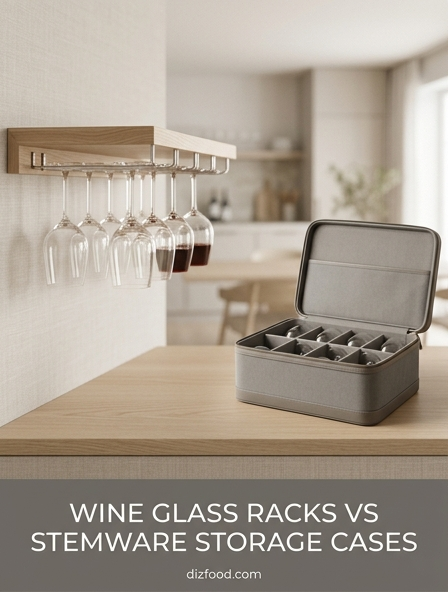
Wine Glass Racks vs Stemware Storage Cases Comparison
Deciding between wine glass racks and stemware storage cases depends primarily on your lifestyle, the value of your glassware, and your kitchen's layout. Wine glass racks are designed for immediate accessibility and visual appeal. They typically mount under cabinets or on walls, allowing glasses to hang by their base. This setup is ideal for those who enjoy a glass of wine frequently and want their stemware within arm's reach. However, because the glasses are exposed to the open air, they are prone to collecting dust and kitchen grease over time.
In contrast, stemware storage cases are engineered for maximum protection and long-term preservation. These are usually reinforced boxes with padded dividers that house each glass individually. While they lack the display factor of a rack, they excel in environments where space is limited or where glasses are only used for special occasions. The comparison below highlights the primary functional differences between these two storage methods:
| Feature | Wine Glass Racks | Stemware Storage Cases |
|---|---|---|
| Primary Use | Daily accessibility and display | Protection and long-term storage |
| Protection Level | Moderate (exposed to air) | High (padded and enclosed) |
| Space Utilization | Uses vertical or under-cabinet space | Stackable in closets or pantries |
| Dust Prevention | Low (requires frequent rinsing) | High (completely sealed) |
Ultimately, a well-organized kitchen often utilizes both. Racks serve the everyday water and wine glasses, while storage cases keep high-end crystal safe from accidental breakage and environmental contaminants during the months between holiday celebrations.
Pros and Cons of Hanging Wine Glass Racks
Hanging wine glass racks are a staple in modern kitchen design, offering a blend of professional aesthetics and practical utility. By utilizing the underside of upper cabinetry or wall space, these racks free up valuable shelf real estate for other kitchen essentials. One of the most significant advantages is the "gravity-dry" feature; when glasses are washed and hung upside down, water droplets fall away from the bowl, preventing unsightly water spots and ensuring the rim stays clean.
However, the open-air nature of hanging racks presents several drawbacks. In a busy kitchen, airborne particles from cooking oils and steam can settle on the glass, creating a sticky film that requires frequent cleaning even if the glass hasn't been used. Furthermore, while the glasses are securely held by the base, the bowls remain exposed. In high-traffic areas, there is a marginal risk of knocking into the glasses, leading to potential chips or cracks.
- Pros: Immediate access, saves cabinet shelf space, decorative "bar" atmosphere, prevents water spots.
- Cons: Exposure to dust and grease, potential for rim chipping if not spaced properly, not suitable for very heavy glassware.
When choosing a hanging rack, it is crucial to measure the thickness of your cabinet base and the diameter of your widest glass bases. Wooden racks offer a classic look but may be bulkier, whereas stainless steel or chrome racks provide a sleek, minimalist profile that fits into contemporary decor seamlessly. Proper installation is key to ensuring the rack can handle the weight of multiple full-sized wine glasses without sagging.
Benefits of Using Padded Stemware Storage Cases
For the serious wine enthusiast or the homeowner with a collection of fine lead crystal, padded stemware storage cases are an essential investment. These cases are designed with a focus on structural integrity and internal cushioning. Most high-quality models feature a hard-shell exterior or reinforced cardboard walls covered in durable fabric, such as polyester or linen. This construction allows the cases to be stacked on top of one another, making them perfect for vertical storage in a pantry or attic.
The internal architecture of a storage case usually consists of adjustable or fixed dividers. These dividers prevent the glasses from touching, which is the most common cause of breakage during movement or storage. Many cases also include a clear window on the front or a label holder, allowing you to identify the contents without having to unzip the lid. This is particularly helpful if you have different sets for Bordeaux, Burgundy, and Champagne.
Beyond physical protection, storage cases provide a controlled environment. By sealing out dust, pests, and moisture, they ensure that your glasses remain in pristine condition. When you pull a glass out for a dinner party, it will be as clear and polished as the day you put it away. This eliminates the need for emergency polishing or pre-event washing, saving you time when hosting. The portability of these cases also makes them ideal for those who frequently move or those who enjoy bringing their own specific stemware to tasting events or vacation rentals.
Choosing the Best Glassware Storage for Your Home
Selecting the right storage solution requires an honest assessment of your habits and the physical constraints of your kitchen. If you find yourself reaching for a glass of Cabernet every evening while cooking, a case stored in the back of a closet will quickly become a nuisance. Conversely, if you only use your hand-blown crystal twice a year, leaving it on a hanging rack is an invitation for dust and potential accidents. To make the best choice, consider the following factors:
- Frequency of Use: Everyday items belong in racks or on open shelves; heirloom pieces belong in cases.
- Kitchen Environment: If your kitchen has high ceilings and great ventilation, racks stay cleaner longer. In smaller, steamier kitchens, cases protect against grease.
- Glass Material: Durable, dishwasher-safe glass handles racks well. Thin, delicate crystal benefits from the support of padded dividers.
- Available Real Estate: Measure your under-cabinet clearance and your closet depth before purchasing any storage product.
It is also worth considering the "hybrid" approach. Many homeowners install a small, stylish rack for their four most-used glasses and keep the rest of the set in a storage case tucked away. This keeps the kitchen looking uncluttered while ensuring you are prepared for larger gatherings. Always prioritize quality over quantity; a cheap rack may have rough edges that scratch glass bases, and a flimsy storage case might collapse under the weight of a second box. Investing in sturdy materials ensures your glassware remains an asset to your home for years to come.
Wine Glass Racks for Daily Accessibility and Display
The psychological impact of a well-displayed wine glass collection cannot be understated. It signals a home that values hospitality and relaxation. Wine glass racks turn functional objects into a design feature, creating a focal point in a dining room or kitchen island area. For those who enjoy entertaining, having glasses visible and accessible makes it easier for guests to serve themselves, fostering a casual and welcoming environment. The visual rhythm of repeating stems can complement other architectural lines in the kitchen, such as cabinetry or tiling.
Functionally, daily accessibility is the greatest strength of the rack system. There is no unzipping, no moving of boxes, and no reaching into the dark depths of a cabinet. Most modern racks are designed with a slight upward tilt at the end of the rails to prevent glasses from sliding off due to vibration. Some even feature adjustable widths to accommodate different styles, from thick-stemmed water goblets to ultra-thin dessert wine glasses.
To maximize the benefits of a display rack, location is everything. Placing a rack above a wet bar or adjacent to a wine cooler creates a dedicated "beverage station" that streamlines the workflow of serving drinks. This keeps the main food preparation areas clear of foot traffic. However, avoid placing racks directly above a stove or dishwasher. The heat and steam from these appliances can cause rapid temperature fluctuations, which may stress the glass and lead to micro-fractures, not to mention the accelerated buildup of residue that will dull the shine of your collection.
Protecting Fine Crystal with Stemware Storage Cases
Fine crystal is more than just glassware; it is often a delicate work of art that requires specialized care. Unlike standard soda-lime glass, crystal is softer and more porous, making it highly susceptible to scratches and "clouding" if not stored correctly. Stemware storage cases provide the cushioned, dark, and dry environment that crystal requires to maintain its brilliance. The soft interior lining, often made of microfiber or felt, gently grips the glass without abrading the surface, which is a significant risk with wire racks or hard plastic bins.
One of the hidden dangers to fine crystal is "mechanical shock." This occurs when glasses clink together, even lightly. Over time, these tiny impacts create stress points that can eventually lead to a full crack. Storage cases eliminate this risk by ensuring each piece of stemware is isolated in its own compartment. Furthermore, the lids of these cases protect the thin rims-the most fragile part of the glass-from any downward pressure or falling objects within a cupboard.
When storing crystal long-term, it is also important to consider chemical stability. Many storage cases are made from acid-free materials that prevent the yellowing of the fabric or the leaching of chemicals into the glass. This is especially important for antique or leaded crystal. By using a dedicated case, you are not just organizing your home; you are acting as a curator for your collection, ensuring that when the time comes for a celebratory toast, your finest vessels are ready to perform their best without the need for intensive restoration or cleaning.
Space Saving Wine Glass Rack Design Ideas
For those living in apartments or homes with compact kitchens, space-saving wine glass racks are a game changer. The most popular design is the under-cabinet rack, which utilizes the "dead space" beneath upper units. This keeps the countertops clear for food prep while keeping glasses within reach. These racks come in various lengths, ranging from single-track models that hold two or three glasses to multi-track systems that can hold a dozen or more. If you have deep cabinets, you can even find pull-out racks that slide forward on a track, allowing you to view and select your glass with ease.
Wall-mounted racks offer another creative solution, particularly those that integrate a small shelf for wine bottles or accessories. These can be installed in a dining area or a hallway nook to create a mini-bar where none existed before. For those who want an industrial look, ceiling-mounted racks (often seen in commercial bars) can be hung over a kitchen island. This not only saves cabinet space but also adds a professional, architectural element to the room.
- Corner Racks: Designed to fit into the L-shaped corners under cabinets, utilizing the hardest-to-reach areas.
- Integrated Shelving: Some modern kitchen cabinets now come with built-in grooves on the bottom of the shelves specifically for stemware.
- Magnetic or Adhesive Racks: For renters who cannot drill into cabinetry, high-strength adhesive racks provide a temporary but sturdy solution.
Regardless of the design, the key to space-saving is measuring the "drop height." Ensure that the bottom of the hanging glasses won't interfere with your use of the countertop below. By carefully selecting the right rack for your specific layout, you can maximize every square inch of your kitchen while maintaining an organized and stylish environment.
Why Long Term Storage Requires Stemware Cases
Long-term storage of glassware presents challenges that daily-use solutions simply cannot handle. The primary enemy of stored glass is the environment. Over months of inactivity, humidity can lead to "glass illness," a condition where moisture reacts with the glass surface, leading to permanent haziness or a white film that cannot be washed away. Stemware cases provide a buffered environment that minimizes air exchange, significantly reducing the impact of humidity fluctuations. This is particularly important for glasses stored in basements or garages where climate control may be less consistent.
Another factor is structural safety. In a typical kitchen cabinet, glasses are often pushed to the back to make room for newer items. This leads to "crowding," where stems are stressed and rims are likely to be chipped when reaching for other items. A storage case removes the glasses from the "active" zone of the kitchen. Once packed, the case can be placed on a high shelf or in a storage unit, completely safe from the daily hustle and bustle of the household. This "set it and forget it" mentality is the safest way to handle high-value inventory.
Finally, stemware cases simplify the logistics of hosting. If you own sets of glasses for different seasons-such as heavy goblets for winter reds and delicate flutes for summer sparklers-cases allow you to rotate your inventory seamlessly. When the seasons change, you simply swap the cases. This prevents your kitchen from becoming cluttered with items you aren't currently using, keeping your workspace streamlined and your mind focused on the culinary tasks at hand.
How to Prevent Glassware Breakage and Dust
Preventing damage to your glassware involves a combination of the right equipment and proper handling techniques. Breakage most commonly occurs during two phases: cleaning and retrieval. When using a wine glass rack, the most effective way to prevent breakage is to ensure adequate spacing. If the tracks are too close together, the bowls of the glasses will knock into each other every time the cabinet is opened or closed. Aim for at least half an inch of clearance between the widest parts of the glasses. Additionally, always slide glasses onto the rack gently, ensuring the base is fully supported by both rails.
Dust management is the second major challenge. For glasses on a rack, the best defense is frequent use. However, for those that sit longer, hanging them upside down is essential. This prevents dust from settling inside the bowl, though it will still collect on the base and stem. For those who demand a perfectly clean glass every time, a stemware storage case is the only true solution. The zipper seals found on most modern cases act as a barrier against dust and even small insects that might find their way into dark pantries.
Maintenance tips for preventing damage include:
- Hand Washing: Even if marked dishwasher safe, hand washing reduces the risk of thermal shock and mechanical chipping.
- Microfiber Buffing: Use a dedicated microfiber cloth to dry glasses before storing them to prevent water spots and lint.
- Liner Replacement: If using storage cases, ensure the padding remains firm. Replace any worn-out dividers that no longer hold the glass upright.
By implementing these small habits, you can extend the life of your glassware significantly, ensuring that every bottle of wine is enjoyed in a crystal-clear, chip-free vessel.
The Ultimate Guide to Organizing Wine Glass Collections
A well-organized wine glass collection reflects a sophisticated approach to home management. The first step in organizing is categorization. Sort your glassware by its intended varietal: red wine, white wine, sparkling, and dessert. Within those categories, separate your "daily drivers" from your "special occasion" pieces. This initial sort determines which items go onto your hanging racks for easy access and which ones are packed into protective cases. Using a logical flow in your kitchen-placing the most-used glasses closest to the wine fridge or dishwasher-will save hundreds of steps over the course of a year.
For the items in storage cases, labeling is paramount. Use a consistent labeling system that identifies not just the type of glass, but the quantity. For example, a label might read "12x Riedel Pinot Noir - Crystal." This makes it easy to grab exactly what you need for a specific dinner party without opening multiple boxes. If you have a large collection, consider an inventory list taped to the inside of your pantry door. This prevents you from buying duplicates and helps you keep track of any pieces that may have been broken and need replacement.
Finally, consider the aesthetics of your organization. On your visible racks, arrange glasses by height or by color if you have tinted stemware. This creates a visually pleasing gradient that enhances the room's decor. Organization is not just about finding things; it's about creating a system that protects your investment and makes the act of sharing a bottle of wine more seamless and enjoyable. Whether you prefer the accessibility of a rack or the security of a case, a thoughtful arrangement ensures that your kitchen remains both beautiful and functional.

Comments