
Deciding between vacuum sealer bags and reusable silicone pouches is more than just a storage choice; it's about finding the perfect balance between long-term freshness and eco-conscious living. While vacuum sealer bags are the undisputed champions of preventing freezer burn by creating an oxygen-free, hermetic seal that extends food life by up to five times, reusable silicone pouches offer a durable, BPA-free alternative that shines in daily meal prep and high-heat sous vide cooking. Whether you are a bulk-buyer looking to maximize your grocery budget or a sustainable chef aiming to reduce single-use plastics, understanding the nuances of suction power versus structural durability will help you choose the tool that truly delivers the ultimate food preservation for your kitchen.
| Feature | Vacuum Sealer Bags (PE/PA) | Reusable Silicone Pouches |
|---|---|---|
| Seal Integrity | 100% Airtight; commercial-grade vacuum suction. | Pinch-press or slider seal; contains some residual air. |
| Preservation Time | Up to 2-3 years in freezer (zero freezer burn). | Best for short-term (weeks) or daily fridge storage. |
| Sustainability | Primarily single-use; generates plastic waste. | Infinite reuse; eco-friendly and dishwasher safe. |
| Heat Resistance | Safe for simmering/sous vide (up to 195°F). | Extreme durability; oven/microwave safe (up to 425°F). |
| Space Efficiency | Ultra-compact; compresses food to minimal size. | Bulky; thicker material takes up more shelf space. |
| Best Use Case | Bulk meat storage and long-term deep freezing. | Daily leftovers, snacks, and eco-friendly meal prep. |
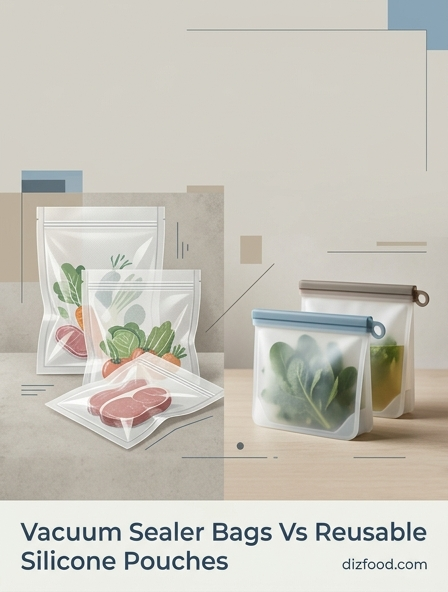
Vacuum Sealer Bags vs Reusable Silicone Pouches Comparison
The choice between vacuum sealer bags and reusable silicone pouches often comes down to a balance between immediate convenience and long-term sustainability. Vacuum sealer bags are typically made from multi-layered polyethylene and nylon, designed for single-use applications where a total vacuum is required. They are thin, flexible, and extremely effective at contouring to the shape of the food. In contrast, reusable silicone pouches are constructed from food-grade, high-durability silicone. They are much thicker and designed to be washed and reused hundreds of times, making them a cornerstone of the "zero-waste" kitchen movement.
While both tools serve the primary purpose of food containment, their operational mechanics differ significantly. Vacuum bags require a specialized machine to extract air and heat-seal the plastic shut, creating a permanent bond that must be cut open. Silicone pouches usually utilize a pinch-press seal or a sliding plastic bar to create a closure, which allows for manual air displacement but rarely achieves the same level of absolute vacuum as a mechanical sealer. The following table highlights the core differences:
| Feature | Vacuum Sealer Bags | Reusable Silicone Pouches |
|---|---|---|
| Material | PE/Nylon Plastic | Food-grade Silicone |
| Reusability | Limited/None | High (Years) |
| Closure Type | Heat Seal | Pinch/Zip/Slide |
| Best Use | Long-term freezing | Daily prep/Short-term |
Food Preservation and Shelf Life Extension Efficiency
The primary goal of food preservation is to halt the process of oxidation and prevent the growth of aerobic bacteria. Vacuum sealer bags excel in this category because the mechanical suction removes nearly 99% of the air surrounding the food. By eliminating oxygen, these bags can extend the shelf life of proteins, vegetables, and dry goods by up to five times compared to traditional storage methods. For instance, a steak that might last six months in a standard freezer bag can remain high-quality for two to three years when vacuum-sealed.
Reusable silicone pouches, while excellent for organization, face challenges in achieving a true vacuum. Most users employ the "water displacement method" to push air out of a silicone bag, but small pockets of oxygen inevitably remain. This makes silicone pouches better suited for short-to-medium-term storage rather than multi-year preservation. However, silicone is non-porous and does not leach chemicals into food, which maintains the "purity" of the flavor over time. To maximize efficiency when using silicone, one should consider the following:
- Use the smallest pouch possible to minimize internal headspace.
- Ensure the sealing track is completely free of moisture or debris.
- Expel air manually by rolling the bag from the bottom up before sealing.
- Prioritize silicone for high-turnover items like snacks, sliced fruit, or leftovers.
Ultimately, if the objective is maximum shelf-life extension for bulk-purchased meats or seasonal harvests, the vacuum sealer bag remains the superior technological choice.
Environmental Impact of Plastic vs Reusable Silicone
The environmental debate between these two storage options is a classic conflict between manufacturing footprint and waste stream volume. Vacuum sealer bags are fundamentally a single-use plastic product. While some brands claim their bags are recyclable, most municipal recycling programs do not accept soft, multi-layer plastics because they clog sorting machinery. This results in billions of plastic shards entering landfills or oceans, where they take hundreds of years to decompose into microplastics. For a high-volume kitchen, the sheer volume of plastic waste generated by vacuum sealing can be substantial.
On the other hand, silicone is derived from silica (sand), a more abundant resource than the petroleum used for plastic. While the energy required to manufacture a thick silicone pouch is significantly higher than that of a thin plastic bag, the environmental "break-even" point is reached after approximately 50 to 100 uses. Since a high-quality silicone pouch can last for thousands of uses, its lifetime carbon footprint is significantly lower. Consider these environmental factors:
- Waste Generation: Plastic bags create immediate post-consumer waste; silicone creates almost none during its useful life.
- Biodegradability: Neither material is biodegradable, but silicone is more inert and does not shed toxic chemicals as it slowly breaks down.
- End-of-Life: Specialized recycling programs (like TerraCycle) can process silicone, whereas multi-layer vacuum films are rarely recovered.
Choosing silicone is an investment in a circular kitchen economy, reducing the daily demand for fossil-fuel-based disposables.
Cost Analysis of Disposable Bags vs Long Term Pouches
When evaluating cost, one must look at the "price per use" rather than the initial sticker price. Vacuum sealer bags are relatively inexpensive upfront, often costing between $0.20 and $0.50 per bag depending on whether you buy pre-cut sizes or rolls. However, because they are discarded after one use (or at most two if washed carefully), this cost is recurring. A household that seals four items per week could easily spend $100 annually just on the plastic consumables, not including the initial $60 to $200 for the vacuum sealing machine itself.
Reusable silicone pouches have a much higher barrier to entry. A single high-quality pouch can cost between $12 and $20. For a set of ten pouches, a cook might spend $150 upfront. While this seems expensive, these pouches do not require a machine to operate and can last for five years or more with proper care. If used weekly, the cost per use drops to fractions of a penny over time. The following list breaks down the financial considerations:
- Vacuum Bags: Low initial cost, high recurring expense, requires machine maintenance.
- Silicone Pouches: High initial cost, zero recurring expense, no machine required.
- Bulk Savings: Vacuum bags allow for larger bulk meat purchases, which can offset their own cost through grocery savings.
- Durability: Silicone bags do not need to be replaced if they are not punctured, whereas plastic bags are a "sunk cost" every time they are cut open.
For the budget-conscious cook looking at a five-year horizon, silicone pouches are the clear financial winner.
Best Storage Options for Sous Vide Cooking
Sous vide cooking requires a container that can withstand prolonged immersion in hot water without leaking or transferring off-flavors to the food. Vacuum sealer bags have long been the industry standard for sous vide. Their ability to form a tight, airless skin around the food ensures maximum heat transfer from the water to the ingredient. Furthermore, the heat-sealed edge is extremely reliable; it rarely fails even during 24-hour cooks at high temperatures. Because the air is completely removed, the bag stays submerged without the need for weights.
Silicone pouches are a popular alternative for sous vide enthusiasts who want to reduce plastic waste. They are naturally heat-stable and BPA-free, which provides peace of mind when cooking at temperatures above 150°F (65°C). However, silicone is a thicker material and acts as a slight insulator, which may marginally increase cooking times. The biggest challenge with silicone in a water bath is buoyancy. Since it is difficult to remove every bubble of air, silicone bags tend to float, requiring the use of weights or clips to keep the food submerged.
For delicate items like fish or eggs, silicone is excellent. For heavy-duty, long-duration cooks like brisket or short ribs, the security of a heat-sealed vacuum bag is often preferred to prevent the seal from popping under the pressure of expanding gases. Many professionals keep both on hand: silicone for quick vegetables and vacuum bags for long-term protein immersion.
Durability and Heat Resistance for Kitchen Use
Durability is the category where silicone pouches truly outshine plastic vacuum bags. Vacuum bags are thin and prone to punctures, especially when storing "bone-in" meats like ribeye steaks or pork chops. A single tiny hole ruins the vacuum seal, leading to spoilage or freezer burn. While "heavy-duty" vacuum rolls exist, they are still fundamentally fragile plastic films. Their heat resistance is also limited; while they can handle simmering water for sous vide, they cannot be used in a microwave without venting, and they certainly cannot go into a conventional oven.
Silicone is a robust polymer known for its incredible thermal stability. Most food-grade silicone pouches can withstand temperatures ranging from -40°F to 450°F. This versatility allows them to move seamlessly from the freezer to the microwave, and in some cases, even into the oven for reheating. They are virtually impossible to puncture with standard kitchen handling and do not become brittle when frozen. Key durability features include:
- Puncture Resistance: Thick walls prevent bones or sharp frozen edges from breaking the seal.
- Thermal Shock: Silicone can handle rapid temperature changes without cracking or melting.
- Chemical Stability: Unlike some plastics, silicone does not degrade or leach phthalates when exposed to high heat or acidic foods like tomato sauce.
For a kitchen tool that needs to survive accidental drops, sharp edges, and extreme temperature swings, silicone is the far more durable investment.
Airtight Seal Strength and Freezer Burn Protection
Freezer burn occurs when air reaches the surface of food, causing dehydration and oxidation. The "strength" of a seal is therefore the most critical factor in long-term cold storage. Vacuum sealer bags utilize a thermal weld-essentially melting two layers of plastic together. This creates a 100% airtight and watertight barrier that is impossible to open without scissors. Because the plastic is sucked tight against the food, there is no room for ice crystals to form on the surface, which is the primary cause of freezer burn.
Silicone pouches rely on mechanical seals, such as a "zip-top" track or a sliding bar. While these are effective for keeping liquids in, they are not always 100% gas-permeable over long periods. Over months in a freezer, microscopic amounts of air can migrate through the seal or even through the silicone material itself. Furthermore, if the sealing track has a single drop of water in it when closed, it can freeze and expand, potentially creating a small gap in the seal.
To protect against freezer burn, users should follow these guidelines:
- For vacuum bags, always double-seal the ends for added security.
- For silicone, ensure the seal is "clicked" or slid into place across the entire width.
- Label all bags with the date; even the best seal cannot prevent quality loss after several years.
In a direct competition for "seal strength," the heat-welded vacuum bag remains the gold standard for protecting expensive cuts of meat from the harsh environment of a deep freezer.
Ease of Cleaning and Maintenance Requirements
The "ease of cleaning" is perhaps the most divisive topic when comparing these two products. Vacuum sealer bags represent the pinnacle of maintenance ease: they require none. Once the food is consumed, the bag is thrown away. While it is technically possible to wash and reuse a vacuum bag by cutting it slightly larger than needed, the thin plastic is difficult to dry, and the crinkled surface can trap bacteria, making it a tedious and potentially unhygienic process.
Silicone pouches are designed to be cleaned, but they bring their own set of challenges. Most are dishwasher safe, but their floppy nature means they often collapse on the dishwasher rack, preventing the water from reaching the inside corners. Manual hand-washing is often required to ensure grease is removed from the sealing track. Drying is the most significant hurdle; silicone bags stay wet inside for a long time unless propped open with a specialized drying rack. Maintenance tips for silicone include:
- Turn the bag inside out (if the brand allows) for a more thorough cleaning.
- Use a bottle brush to scrub the bottom corners where food particles settle.
- To remove odors (like onion or garlic), bake the empty silicone bag in the oven at 350°F for 20 minutes.
- Ensure the slide-bar (if applicable) is hand-washed separately to avoid warping.
If you value a "one-and-done" workflow, vacuum bags win. If you don't mind an extra chore in exchange for sustainability, silicone is the way to go.
Space Saving Benefits for Organized Food Storage
Space optimization in the refrigerator and freezer is essential for efficient kitchen management. Vacuum sealer bags are the ultimate space-savers. By removing the air, the volume of the package is reduced to the absolute minimum size of the food itself. This allows for "file-style" storage, where bags are stacked vertically like folders in a cabinet. This visibility prevents food from being "lost" at the bottom of the freezer and allows for a significantly higher density of storage in small apartments or compact freezers.
Silicone pouches, while helpful for organization, are much bulkier. The thick silicone walls and the heavy-duty sealing mechanisms (like sliding bars) take up physical space even when the bag is empty. When filled, they do not compress as much as vacuum bags, meaning you are often storing a "brick" of silicone and air alongside your food. However, silicone bags have one organizational advantage: many are designed with a flat bottom that allows them to stand upright on a fridge shelf. This makes them excellent for storing soups, stews, or pre-cut snacks that you want to access easily.
Comparison of space features:
- Vacuum Bags: Can be flattened or rolled; allows for 30-50% more food storage in the same volume.
- Silicone Pouches: Stand upright for easy access; best for "active" ingredients in the fridge.
- Empty Storage: Vacuum rolls take up almost no drawer space; a set of silicone pouches requires a dedicated bin or peg.
Final Verdict on the Best Food Preservation Method
The "best" method depends entirely on your specific kitchen habits and values. There is no one-size-fits-all answer, as both vacuum sealer bags and reusable silicone pouches serve distinct roles in a modern home. For the person who buys meat in bulk from a wholesaler, hunts or fishes, or preserves a summer garden for the winter, the vacuum sealer is an indispensable tool. Its ability to prevent freezer burn and extend shelf life for years is unmatched by any reusable alternative. The cost of the bags is a justified insurance policy against the much higher cost of spoiled food.
Conversely, for the daily meal-prepper, the environmentally conscious cook, or the "sous vide hobbyist" who cooks for immediate consumption, reusable silicone pouches are the superior choice. They eliminate the ongoing cost and waste of plastic, offer better heat versatility for microwave reheating, and are durable enough to last a lifetime. They are perfect for the "active" part of the kitchen-storing half an onion, keeping snacks fresh, or marinating tonight's dinner.
The hybrid approach is often the most effective: Use vacuum sealer bags for the deep freezer and long-term preservation, and invest in a quality set of 5-10 silicone pouches for daily refrigerator storage and short-term prep. By utilizing both, you can maximize the shelf life of your food while minimizing your environmental footprint, achieving a balanced and efficient kitchen ecosystem.


Comments