
Maximizing Vertical Kitchen Storage
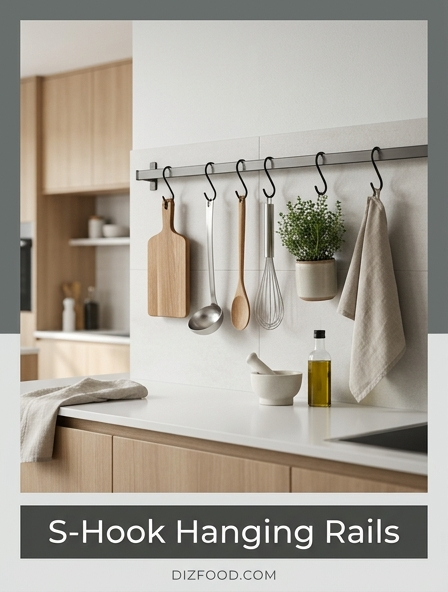
In many modern kitchens, square footage is a premium resource that must be managed with strategic precision. Maximizing vertical kitchen storage through the use of S-hook hanging rails allows homeowners to reclaim the often-neglected wall space located between the countertop and upper cabinetry. By moving essential tools out of crowded drawers and onto the wall, you create a layered organizational system that utilizes the full height of the room.
Implementing a rail system transforms a flat wall into a dynamic storage hub. This method is particularly effective for items that are awkward to store in standard dimensions, such as rolling pins, large colanders, or long-handled whisks. Consider the following advantages of vertical hanging:
- Immediate visual inventory of all available cooking implements.
- Reduction of clutter on flat surfaces and workspaces.
- Improved air circulation around drying or damp kitchen towels.
- Utilization of narrow wall segments that cannot accommodate shelving.
By shifting the focus from horizontal stacking to vertical suspension, the kitchen feels more expansive and organized. This approach not only solves storage dilemmas but also ensures that every inch of the kitchen serves a functional purpose.
Heavy Duty Rail Weight Capacity
When selecting an S-hook rail system, understanding the weight capacity is critical for maintaining a safe and durable kitchen environment. Heavy-duty rails are typically constructed from thick-gauge stainless steel or wrought iron, designed to withstand the significant downward force exerted by multiple pieces of cookware. A high-quality rail should support not only the weight of the hooks but also the heavy pots, pans, and Dutch ovens frequently used in gourmet cooking.
The total load capacity is determined by both the material of the rail and the method of installation. It is essential to match the intended use with the appropriate hardware specifications. The following table provides a general guideline for common rail materials and their typical weight tolerances when properly mounted:
| Material Type | Avg. Weight Capacity | Best Use Case |
|---|---|---|
| Aluminum | 15 - 25 lbs | Light utensils and herbs |
| Stainless Steel | 40 - 60 lbs | Standard pots and pans |
| Wrought Iron | 70 - 100+ lbs | Heavy cast iron collections |
Always ensure that the weight is distributed evenly across the length of the rail to prevent bowing or tension on the mounting brackets. Regular inspection of the anchors is recommended to ensure long-term stability.
Streamlined Accessibility for Everyday Use
The primary benefit of an S-hook hanging rail is the drastic improvement in kitchen workflow. In a fast-paced cooking environment, the seconds spent rummaging through a cluttered drawer for a spatula or searching the back of a deep cabinet for a lid can disrupt the timing of a recipe. By suspending everyday tools on a rail, you create a streamlined environment where everything is within arm's reach.
To optimize your kitchen for maximum efficiency, consider a logical arrangement based on frequency of use and the specific tasks performed in different zones. Following a simple organization sequence can enhance the accessibility of your workspace:
- Identify the tools used daily, such as tongs, spatulas, and measuring cups.
- Install the rail near the primary heat source or prep station.
- Arrange items from left to right based on the cooking process.
- Use different hook lengths to vary the hanging height for easier grasping.
This "open-access" philosophy reduces cognitive load during meal preparation. When tools are visible and accessible, the chef can maintain focus on the food rather than the logistics of finding equipment, leading to a more enjoyable and efficient culinary experience.
Minimalist Aesthetics for Open Spaces
Beyond functional utility, S-hook hanging rails contribute significantly to the visual character of a kitchen. For those embracing minimalist or industrial design, these rails offer a clean, linear aesthetic that replaces the bulky appearance of traditional upper cabinets. By stripping away heavy furniture and exposing the wall, the kitchen feels lighter, more airy, and visually spacious. This is especially beneficial in smaller apartments or galley kitchens where traditional storage can feel claustrophobic.
The beauty of a rail system lies in its simplicity. A single, well-placed bar with a few carefully chosen copper pots or wooden spoons creates a curated, professional look reminiscent of a high-end restaurant. It allows the architecture of the home to shine, highlighting backsplash tiles or exposed brickwork that would otherwise be hidden behind cabinetry. Choosing finishes that complement your faucet or cabinet hardware-such as matte black, brushed nickel, or polished brass-ensures the rail acts as a cohesive design element rather than a mere utility. This minimalist approach proves that the most effective storage solutions can also be the most visually striking.
Protecting Cast Iron and Copper
Proper storage is vital for maintaining the longevity and performance of high-end cookware, particularly cast iron and copper. Stacking these materials in drawers or cabinets often leads to physical damage. Cast iron is prone to chipping its seasoned surface, while copper is highly susceptible to scratches and dents from contact with other metal items. Hanging these pieces on an S-hook rail provides a protective environment that preserves their integrity.
Suspension storage offers specific advantages for delicate or reactive metals that traditional shelving cannot match. By keeping these items separated, you eliminate the friction that ruins polished finishes. Consider the following benefits for specialty cookware:
- Prevents moisture buildup between stacked pans, reducing the risk of rust on cast iron.
- Ensures constant air circulation, which helps maintain the patina of copper.
- Avoids the "clanging" and impact damage associated with digging through cupboards.
- Showcases the natural beauty of the cookware as a decorative kitchen feature.
By hanging these heavy investments, you not only extend their lifespan but also ensure they remain in peak condition for every cooking session, ready to perform without the need for intensive polishing or re-seasoning.
Freeing Up Cabinet Shelf Space
Cabinet real estate is some of the most valuable territory in a home. When bulky pots, pans, and colanders occupy shelf space, it often forces other items, like small appliances or dry goods, into awkward corners or onto the countertops. Transitioning to a hanging rail system effectively "outsources" the storage of large-volume items to the walls, freeing up the interior of your cabinets for more appropriate uses.
Once the heavy cookware is moved to a rail, cabinets can be reorganized to house items that are better suited for enclosed environments, such as stackable plates, glassware, or pantry staples. This shift eliminates the "avalanche" effect common in deep cupboards where one must move five pans just to reach one pot. The result is a more organized kitchen where every item has a dedicated home. Furthermore, removing pots from cabinets improves hygiene, as it is much easier to wipe down an empty shelf than one packed with heavy metalware. The increased cabinet capacity often negates the need for additional furniture, making the kitchen more efficient without increasing its footprint.
Customizable S Hook Configuration Tips
One of the most versatile aspects of a rail system is the ability to customize the hook configuration to suit your specific collection of tools. Unlike fixed hooks or pegged boards, S-hooks can be slid along the rail, added, or removed as your kitchen inventory evolves. This flexibility allows you to accommodate everything from a tiny measuring spoon to a wide-diameter frying pan without wasting space.
To achieve the most efficient and aesthetically pleasing configuration, it is helpful to follow a strategic setup process. Customization allows you to adapt the system to your unique cooking style. Follow these tips for a better setup:
- Use "Flat" S-hooks for items that need to hang flush against the wall.
- Opt for "Twisted" S-hooks to turn utensils 90 degrees, allowing more items to fit on a single rail.
- Group items by height to create a clean visual "skyline" along the bottom of the tools.
- Keep a few spare hooks at the end of the rail for temporary items like drying herbs or wet dishcloths.
By frequently reassessing and sliding your hooks, you can ensure that the rail always provides the perfect balance between density and accessibility, adapting perfectly to your current culinary needs.
Improving Ergonomic Kitchen Organization
Ergonomics in the kitchen is often overlooked, yet it plays a significant role in physical comfort and long-term health. Constant bending down to reach heavy pots in low cabinets or stretching to grab items from high shelves can lead to back and shoulder strain. S-hook hanging rails improve the ergonomics of the space by placing frequently used items at "neutral" heights-usually between the waist and eye level.
This positioning allows the cook to maintain a natural posture while retrieving tools. Instead of lifting a heavy cast iron skillet from a squatting position, you simply unhook it using a natural arm motion. This is particularly beneficial for individuals with limited mobility or chronic joint pain. Furthermore, the rail system reduces the repetitive motion of "digging" and "shuffling" through drawers, which can be taxing on the wrists. By aligning the height of the rail with the primary user's reach, the kitchen becomes a more accessible and inclusive environment. An ergonomic layout ensures that the physical act of cooking remains a pleasure rather than a chore, supporting efficiency through better body mechanics.
Durable Mounting for Large Cookware
The utility of a hanging rail is only as good as its mounting. For those intending to hang heavy items like Le Creuset pots or professional-grade sauté pans, the installation must be rock-solid. A durable mount ensures that the rail does not pull away from the wall over time, which could lead to damaged surfaces or injury. Ideally, mounting brackets should be fastened directly into wall studs using long wood screws.
In cases where stud alignment does not match the desired rail location, high-performance anchors are a necessity. Understanding the hardware requirements for different wall types is the first step in a successful installation. Refer to the following table for appropriate mounting hardware based on wall construction:
| Wall Material | Recommended Hardware | Security Level |
|---|---|---|
| Drywall | Toggle Bolts or Snaptoggles | Medium |
| Wood Studs | 3-inch Stainless Steel Screws | High |
| Brick/Masonry | Expansion Anchors or Tapcons | Maximum |
Always use a level during installation to ensure the rail is perfectly horizontal, as even a slight tilt can cause S-hooks to slide toward one end, concentrating the weight and potentially compromising the mounting points.
The Functional Beauty of Steel Rails
Stainless steel rails represent the perfect marriage of form and function in kitchen design. Steel is the preferred material for professional environments because it is non-porous, corrosion-resistant, and incredibly easy to sanitize. In a humid kitchen environment where steam and grease are prevalent, a steel rail will not warp, rust, or harbor bacteria, unlike wooden or plastic alternatives. This durability ensures that the storage system remains a permanent fixture of the home for decades.
Beyond its physical resilience, the reflective quality of steel adds a sense of brightness and professional polish to the room. It complements the standard finishes of ovens, refrigerators, and sinks, creating a cohesive "chef's kitchen" look. The functional beauty of steel is highlighted by several key characteristics:
- Resilience to high temperatures near stovetops.
- High tensile strength that prevents sagging under heavy loads.
- Compatibility with magnetic accessories for additional tool storage.
- A timeless finish that survives changing interior design trends.
Investing in a high-quality steel rail system is a commitment to both the aesthetic elegance and the operational efficiency of your culinary space, proving that industrial materials can be both practical and sophisticated.


Comments