
Deciding between bamboo drawer dividers and acrylic cutlery trays is the first step toward a functional, Pinterest-worthy kitchen. If you love a warm, organic look, bamboo dividers are a game-changer; they are often spring-loaded and expandable, making them ideal for separating large utensils or deep drawers with a high-end, built-in feel. On the other hand, acrylic cutlery trays offer a minimalist, "invisible" look that makes finding small items a breeze, while also being incredibly easy to sanitize after a spill. While bamboo wins on sustainability and custom-fit versatility, acrylic excels in moisture-heavy environments and provides a crisp, modern clarity that suits contemporary cabinetry perfectly.
| Feature | Bamboo Drawer Dividers | Acrylic Cutlery Trays |
|---|---|---|
| Sustainable Moso Bamboo | BPA-Free Clear Plastic | |
| Warm, natural, premium wood grain | Sleek, transparent, minimalist | |
| Wipe with damp cloth; occasional oiling | Dishwasher safe; easy soap & water wash | |
| High (Expandable/Tension-fit) | Fixed sizes or modular stacking | |
| High; resists scratches & odors | Moderate; prone to visible scratches | |
| Biodegradable and highly renewable | Recyclable but non-biodegradable |
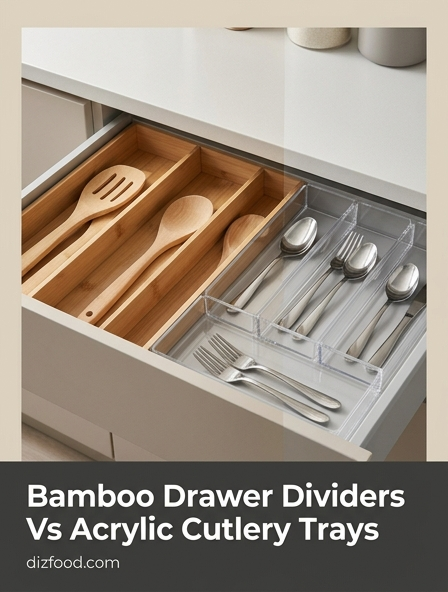
Bamboo Versus Acrylic Drawer Organization Comparison
Choosing between bamboo drawer dividers and acrylic cutlery trays involves a detailed look at how these materials function within the high-traffic environment of a modern kitchen. Bamboo, a fast-growing grass, offers a natural, warm aesthetic that mimics traditional cabinetry, while acrylic provides a sleek, transparent, and clinical look that favors visibility and modern design principles. Both materials serve the primary purpose of categorizing utensils, gadgets, and cutlery, but they differ significantly in their physical footprint and installation styles.
Bamboo dividers often come as individual spring-loaded slats that compress to fit the length or depth of a drawer, allowing for a semi-custom layout. In contrast, acrylic options are typically molded into fixed trays or modular interlocking bins. When comparing the two, one must consider the specific dimensions of their drawers and the types of items being stored. The following table highlights the core differences between these two popular organization solutions:
| Feature | Bamboo Dividers | Acrylic Trays |
|---|---|---|
| Material Type | Organic Fiber | Synthetic Plastic |
| Visual Style | Traditional/Warm | Modern/Invisible |
| Flexibility | Highly Adjustable | Fixed or Modular |
| Water Resistance | Moderate | High |
The choice ultimately hinges on whether the user prioritizes the tactile, premium feel of wood-like materials or the utilitarian, easy-to-clean nature of high-grade plastics. While bamboo feels like an extension of the furniture, acrylic acts as a transparent insert that puts the focus entirely on the contents of the drawer.
Aesthetics of Natural Wood vs Transparent Plastic
The visual impact of a kitchen drawer organizer is often underestimated until the drawer is opened. Bamboo brings an organic, high-end feel to the kitchen, often blending seamlessly with oak, maple, or cherry cabinetry. The natural grain patterns and soft honey hues of bamboo provide a sense of warmth and craftsmanship. For those who enjoy a "built-in" look, bamboo dividers can make a standard drawer feel like a custom-designed piece of furniture. This aesthetic appeal is particularly favored in farmhouse, traditional, or transitional kitchen designs where natural materials are a focal point.
Acrylic, on the other hand, offers a completely different visual experience. Because it is crystal clear, acrylic "disappears" within the drawer, making the space feel larger and less cluttered. This transparency allows the color and texture of the drawer lining or the cutlery itself to stand out. Acrylic is the preferred choice for minimalist and modern kitchens, where "clean" lines and a lack of visual weight are desired. It provides a laboratory-grade precision that looks professional and organized. To summarize the aesthetic benefits:
- Bamboo: Creates a cozy, luxurious, and cohesive look with wooden cabinets.
- Bamboo: Masks dust and small crumbs better due to its natural grain and color.
- Acrylic: Offers a high-gloss, sophisticated finish that complements stainless steel.
- Acrylic: Enhances visibility, allowing users to see the very bottom of the tray easily.
Deciding between the two requires assessing the existing kitchen decor. If the goal is to add texture and earthiness, bamboo is the clear winner. If the goal is a sharp, crisp, and unobtrusive storage solution, acrylic is the superior choice.
Durability and Longevity of Kitchen Dividers
Durability in the kitchen means resisting the daily impact of heavy stainless steel knives, metal whisks, and the occasional moisture from not-quite-dry silverware. Bamboo is exceptionally sturdy and has a high tensile strength, making it resistant to snapping or breaking under pressure. However, because it is a natural material, it is susceptible to environmental changes. Over several years, extreme fluctuations in humidity can cause bamboo to expand, contract, or even hairline crack if not properly treated with mineral oil. It is a resilient material, but it requires a stable environment to maintain its structural integrity over a decade.
Acrylic is a hard, rigid plastic that maintains its shape regardless of humidity levels. It will never warp or rot. However, its primary weakness is brittleness. If an acrylic tray is dropped on a hard tile floor, it is prone to cracking or shattering. Furthermore, acrylic is susceptible to surface scratches from sharp knives or abrasive cleaning pads, which can cloud the material over time. To ensure longevity, users should follow specific care patterns:
- Avoid dropping heavy metal objects into acrylic bins to prevent impact cracks.
- Periodically check the tension on spring-loaded bamboo dividers to ensure they aren't bowing the drawer walls.
- Apply a food-safe mineral oil to bamboo once a year to prevent the fibers from drying out.
- Use silicone bumpers on the bottom of organizers to prevent sliding, which reduces friction wear.
In terms of pure "strength," bamboo is less likely to break during an accident, but acrylic is more "stable" in the face of moisture and air quality. Both can last many years if handled with basic care and consideration for their specific material limits.
Eco Friendly Sustainability of Bamboo Organizers
In an era of increasing environmental consciousness, the source of kitchen products matters. Bamboo is widely regarded as one of the most sustainable materials on the planet. Technically a grass rather than a hardwood, some species of bamboo can grow up to three feet in a single day. This rapid growth rate allows for frequent harvesting without damaging the surrounding ecosystem or requiring replanting. Furthermore, bamboo absorbs more carbon dioxide and produces more oxygen than an equivalent stand of trees, making its cultivation beneficial for the atmosphere.
Acrylic, conversely, is a petroleum-based plastic. The production of acrylic involves chemical processes that are more energy-intensive and rely on non-renewable resources. While high-quality acrylic is durable and can be recycled in some municipal programs, it is not biodegradable. Once an acrylic tray reaches the end of its life, it may persist in a landfill for centuries. Bamboo is biodegradable, meaning that once it is discarded, it will eventually break down and return to the earth without leaving behind microplastics. Consider these ecological factors:
- Renewability: Bamboo matures in 3-5 years; petroleum for plastic takes millions of years to form.
- Chemical Use: Most bamboo organizers use formaldehyde-free glues, whereas plastic production involves various polymers.
- Carbon Footprint: Bamboo acts as a carbon sink during its growth phase.
- End-of-Life: Bamboo is compostable in industrial settings; acrylic requires specialized plastic recycling.
For the eco-conscious consumer, bamboo is the undisputed champion. It offers a way to organize the home using materials that align with a low-impact lifestyle. Choosing bamboo reduces the demand for new plastic production and supports industries that utilize regenerative agricultural practices.
Customization Potential of Adjustable Bamboo Slats
One of the most significant advantages of bamboo organizers is the prevalence of the "adjustable divider" design. Unlike fixed trays, these are individual slats equipped with internal springs and rubberized ends. This design allows the user to customize the width of each compartment to fit specific items, such as extra-long rolling pins or awkwardly shaped potato mashers. This modularity is essential for kitchens with non-standard drawer sizes where a pre-molded tray might leave wasted gaps at the edges. With bamboo slats, you can create a grid that utilizes every square inch of the drawer's interior.
Acrylic trays are generally sold as fixed-dimension inserts. While some manufacturers offer "modular" acrylic bins that can be mixed and matched, they still lack the fluid adjustability of a spring-loaded bamboo slat. If your utensil collection changes-for instance, if you trade your small tea spoons for larger soup spoons-you can simply move the bamboo divider an inch to the left. With an acrylic tray, you are stuck with the molded dimensions provided by the manufacturer. Key customization features of bamboo include:
- Tension Fitting: Fits snugly in drawers without the need for screws or adhesives.
- Vertical or Horizontal Orientation: Slats can be placed in either direction to suit the user's reach.
- Stackability: Some bamboo systems allow for double-layering to use the full depth of deep drawers.
- Insert Compatibility: Small bamboo boxes can often be nested between larger slats for tiny items like corn holders.
This level of adaptability makes bamboo the superior choice for "problem drawers" that contain a hodgepodge of different sizes. It transforms a chaotic space into a tailored storage system that can evolve alongside the cook's tool collection.
Maintenance and Cleaning for Acrylic Trays
Acrylic trays excel in the category of low-maintenance care. Because acrylic is a non-porous synthetic material, it does not absorb oils, spices, or liquids that might accidentally spill in a kitchen drawer. If a bottle of honey leaks or a spice jar breaks, the acrylic tray can be removed and washed easily. Cleaning usually requires nothing more than warm, soapy water and a soft microfiber cloth. This ease of maintenance is a major selling point for busy households where deep cleaning needs to be quick and effective.
However, maintaining the "crystal clear" look of acrylic requires some specific "don'ts." It is important to avoid using harsh chemical cleaners or ammonia-based sprays (like some glass cleaners), as these can cause the plastic to "craze" or develop tiny internal cracks that make it look cloudy. Furthermore, acrylic is generally not dishwasher safe; the high heat of a drying cycle can warp the plastic or cause it to lose its luster. To keep acrylic looking new, follow these steps:
- Empty the tray and shake out any loose crumbs or debris.
- Hand wash in lukewarm water using a mild dish detergent.
- Use a soft sponge to avoid creating surface scratches.
- Dry immediately with a lint-free cloth to prevent water spots from forming.
- Apply a plastic polisher occasionally if the surface becomes dull or lightly scratched.
While bamboo requires periodic oiling and careful moisture management, acrylic maintenance is strictly about preventing scratches and avoiding high heat. It is the more "sanitary" feeling option for those who want to be able to scrub their organizers without fear of damaging the finish or causing the material to rot.
Moisture Resistance and Kitchen Hygiene Factors
Kitchens are inherently moist environments, and organizers are often subjected to damp cutlery straight from the dishwasher. Acrylic is entirely waterproof. It will not swell, mold, or harbor bacteria within its structure because it lacks the pores found in organic materials. For those who prioritize a sterile environment, acrylic provides peace of mind. It is an inert material that does not react with food particles or moisture, making it exceptionally hygienic for storing items that come into direct contact with the mouth.
Bamboo is naturally antimicrobial, containing a substance called "bamboo kun" that resists the growth of bacteria. However, because it is a porous wood-like material, it can absorb moisture if it sits in standing water. If bamboo dividers are placed in a drawer with wet silverwear and no airflow, there is a risk of mildew forming in the corners. Therefore, hygiene with bamboo requires a bit more diligence. The following table compares the hygiene profiles of both materials:
| Hygiene Factor | Bamboo Organizers | Acrylic Organizers |
|---|---|---|
| Porousness | Porous (Can absorb moisture) | Non-Porous (Waterproof) |
| Bacterial Resistance | Natural antimicrobial properties | Inert, does not support growth |
| Mold Risk | Low to Moderate (if kept damp) | Zero |
| Ease of Sanitizing | Surface wipe only | Deep wash/Soakable |
To maximize hygiene with bamboo, always ensure cutlery is bone-dry before putting it away. For acrylic, the main hygiene task is simply removing the tray occasionally to wipe away the dust that accumulates at the bottom. If you live in a very humid climate or have a tendency to put dishes away damp, acrylic offers a safer, more moisture-resistant profile.
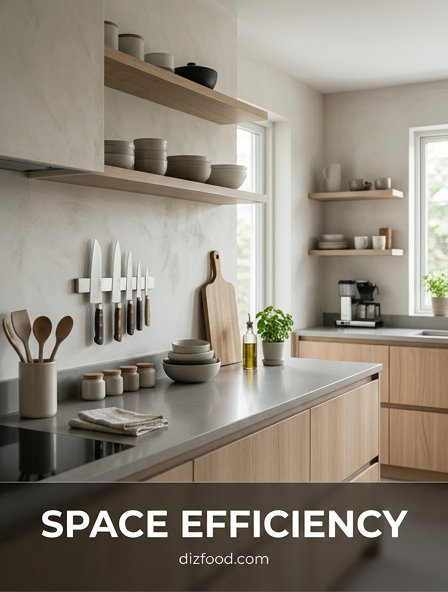
Maximizing Vertical and Horizontal Drawer Space
Space efficiency is the ultimate goal of any organization project. Acrylic trays often have thinner walls than bamboo dividers. Because the plastic is strong even when molded into thin sheets, it takes up less of the "usable" space within the drawer. In a very narrow drawer, a bamboo divider with 1/2-inch thick walls might sacrifice too much horizontal space, whereas a 1/8-inch thick acrylic wall allows for more cutlery to be packed into the same area. This makes acrylic a favorite for small apartment kitchens where every millimeter counts.
However, bamboo excels at maximizing vertical space and accommodating deep drawers. Many bamboo systems are taller than standard acrylic trays, preventing items from sliding over the tops of the dividers. Furthermore, the adjustable nature of bamboo slats allows you to create long, unobstructed channels for items that wouldn't fit in a standard molded tray. To maximize your specific space, consider these strategies:
- For Narrow Drawers: Use acrylic to minimize the "wall-to-storage" ratio.
- For Deep Drawers: Use tall bamboo slats to prevent stacking chaos and keep items vertical.
- For Odd Shapes: Use bamboo to create custom-sized zones for whisks, graters, and tongs.
- For Visual Clarity: Use acrylic modular bins to see exactly where small items like corn holders are located.
If your drawers are standard sizes and your priority is fitting as much as possible, acrylic's thin profile is advantageous. If you have non-standard drawers or a variety of oversized tools, the customizable "grid" you can build with bamboo slats will ultimately prove more space-efficient by eliminating "dead zones" that fixed trays can't reach.
Cost Analysis and Value for Money
When evaluating cost, there is a distinction between the initial purchase price and the long-term value. Generally, acrylic trays are more affordable at the entry-level. Mass-produced plastic bins can be found at very low price points, making them accessible for those on a tight budget. However, high-end "shatterproof" or "heavy-duty" acrylic can approach the price of bamboo. Acrylic is an economical way to organize an entire kitchen quickly, especially if using standardized sizes that are produced in high volumes.
Bamboo typically carries a higher price tag due to the material costs and the construction involved (especially for spring-loaded mechanisms). However, many users find that bamboo offers better "value for money" because it feels like a permanent upgrade to the home's cabinetry. It adds a level of perceived value to the kitchen that plastic rarely achieves. From an investment perspective, bamboo is often seen as a "buy it once" item, whereas cheap plastic may need replacing if it cracks or yellows. Consider these cost factors:
- Initial Investment: Acrylic is usually 20-40% cheaper for basic sets.
- Replacement Frequency: Bamboo is less likely to break; acrylic may crack if mishandled.
- Home Value: Bamboo organizers are often viewed as a premium feature in real estate staging.
- Versatility: Adjustable bamboo can be moved to different drawers or even different houses more easily than fixed trays.
In summary, if you are looking for the cheapest functional solution, acrylic wins. If you are looking for a durable, aesthetically pleasing investment that enhances the "feel" of your kitchen for years to come, the extra cost of bamboo is usually justified.
Final Verdict for Your Kitchen Storage Needs
The decision between bamboo and acrylic ultimately depends on your personal priorities regarding style, sustainability, and maintenance. There is no "wrong" choice, as both materials effectively solve the problem of drawer clutter. However, the best fit for your kitchen can be determined by matching your lifestyle to the strengths of each material. If you value a warm, high-end look and prefer natural, eco-friendly products, bamboo is the superior choice. Its ability to be customized to any drawer size makes it a versatile tool for the serious home cook who has a diverse array of kitchen gadgets.
Conversely, if you prefer a modern, minimalist aesthetic and want a storage solution that is "set it and forget it," acrylic is the way to go. Its waterproof nature and easy-to-clean surface make it ideal for busy families or those who want a laboratory-clean environment. When making your final decision, consider the following summary points:
- Choose Bamboo if: You want a custom, "built-in" look, you prioritize eco-friendly materials, or you have non-standard drawer dimensions.
- Choose Acrylic if: You have a modern kitchen with a clean aesthetic, you want maximum visibility of your items, or you need a budget-friendly and waterproof solution.
- The Hybrid Approach: Many organizers use bamboo slats for large tools and acrylic bins for small, messy items like tea bags or clips.
By assessing the moisture levels in your kitchen, your budget, and how much you value the "natural" feel of your home, you can select the organizer that will bring order to your kitchen for years to come. Whether it is the sustainable elegance of bamboo or the crisp clarity of acrylic, your drawers will thank you for the upgrade.

Comments