
Rolling Utility Carts vs. Stationary Kitchen Islands: Maximizing Your Kitchen's Potential
Deciding between a rolling utility cart and a stationary kitchen island often comes down to your unique culinary rhythm and the square footage of your home. If you're navigating a compact apartment where every inch counts, a rolling cart offers the nimble flexibility to act as a prep station one minute and a mobile serving bar the next, tucking away neatly when the work is done. Conversely, a stationary island serves as a robust anchor, providing expansive countertop real estate and deep integrated storage that transforms a busy kitchen into a high-efficiency command center. By choosing the option that aligns with your spatial constraints and workflow needs, you can effectively eliminate clutter and create a more intuitive, enjoyable cooking environment that scales with your lifestyle.
| Feature | Rolling Utility Carts | Stationary Kitchen Islands |
|---|---|---|
| Mobility | High; features locking casters for 360° movement. | None; fixed or heavy semi-permanent placement. |
| Storage Density | Light; open shelving, wire baskets, and side hooks. | Heavy; deep cabinets, drawers, and integrated racks. |
| Surface Area | Compact (approx. 18"-30" W); wood or stainless steel. | Large (48"+ W); granite, quartz, or butcher block. |
| Weight Capacity | Moderate (approx. 50-150 lbs total limit). | Industrial; supports heavy appliances and stone tops. |
| Seating Capability | None; designed strictly for prep and transport. | High; often features overhangs for barstool seating. |
| Best For | Renters, small kitchens, and flexible hosting. | Homeowners, meal prepping, and permanent storage. |
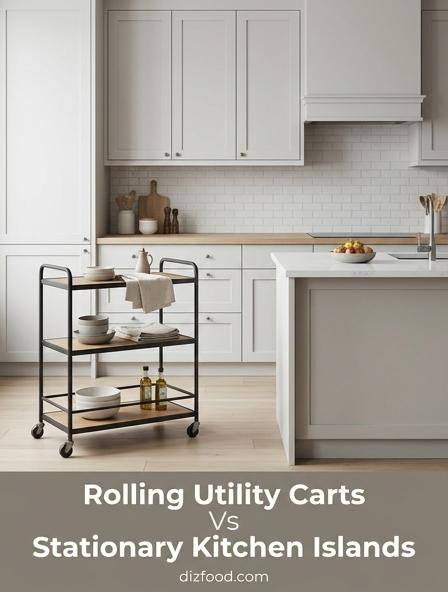
Choosing Between Rolling Carts and Stationary Islands
Deciding between a rolling utility cart and a stationary kitchen island often comes down to the specific needs of your culinary space and your long-term lifestyle goals. A rolling cart offers unparalleled flexibility, acting as a dynamic tool that can be moved from the stove to the dining area or tucked away in a pantry when not in use. This mobility makes it an ideal choice for renters or those who frequently host social gatherings and need to clear floor space for guests. Conversely, a stationary island serves as a permanent architectural feature that anchors the kitchen, providing a sense of solidity and a dedicated zone for meal preparation and social interaction.
When making your choice, consider the primary function the unit will serve. If you require a surface that can double as a bar cart or a mobile coffee station, the utility cart is the clear winner. However, if your kitchen lacks sufficient counter space and you have the square footage to accommodate a fixed structure, a stationary island is often the more robust investment. You should evaluate the following criteria before making a final purchase:
- Frequency of kitchen reconfiguration and entertaining needs.
- Total available floor area and clearance for cabinet doors.
- Need for integrated utilities like electrical outlets or sinks.
- Budgetary constraints and long-term home value goals.
- The specific height requirements for ergonomic food preparation.
Ultimately, the decision rests on the balance between "permanent utility" and "flexible convenience." While a fixed island adds significant value and storage, a rolling cart provides a low-commitment way to enhance functionality without a major renovation.
Space Saving Benefits of Mobile Utility Carts
In compact urban kitchens or older homes with narrow layouts, space is a premium commodity. Mobile utility carts are specifically engineered to address these spatial challenges by providing extra surface area without permanently obstructing the flow of traffic. The primary benefit of a mobile unit is its ability to "disappear." When the cooking process is finished, a rolling cart can be glided into a corner, positioned against a wall, or even stored inside a large closet, effectively reclaiming the floor space that a stationary island would occupy 24/7. This makes them indispensable for studio apartments and galley-style kitchens where every square inch counts.
Furthermore, mobile carts often feature tiered shelving and vertical storage solutions that maximize their footprint. By utilizing the vertical space above the wheels, these carts can hold heavy mixers, sets of pots and pans, or bins of produce that would otherwise clutter the main countertops. Because many models are designed with a slim profile, they can also fit into "dead spaces," such as the gap between a refrigerator and a wall. This adaptability ensures that the kitchen remains organized and functional, even when the layout is less than ideal. For those who value a clean, minimalist aesthetic, the ability to remove the workspace from the center of the room is a significant advantage that permanent fixtures simply cannot offer.
The Stability and Durability of Fixed Kitchen Islands
For homeowners who prioritize a heavy-duty workspace, the stability and durability of a fixed kitchen island are unmatched. Unlike rolling carts, which may experience slight wobbling or shifting during intense tasks like kneading dough or using a meat tenderizer, a stationary island is bolted to the floor or weighted by high-density cabinetry. This solid foundation allows for the installation of premium, heavy materials such as granite, marble, or thick quartz countertops that would be too heavy for the casters of a mobile cart. The sheer mass of a fixed island ensures it can withstand decades of daily use without showing signs of structural fatigue.
In addition to physical stability, fixed islands offer a level of permanence that allows for the integration of complex infrastructure. This includes built-in appliances and plumbing features that enhance the kitchen's overall capability. Consider the following structural benefits of a stationary unit:
- Ability to house integrated dishwashers or wine coolers.
- Permanent electrical wiring for heavy-duty appliances and charging stations.
- Installation of a "prep sink" to separate cleaning from food preparation.
- Heavier drawer glides and hardware that support professional-grade cookware.
- Integration with the home's flooring for a seamless, high-end look.
While the initial cost and labor are higher, the durability of a fixed island makes it a "once-in-a-lifetime" addition to the kitchen. It becomes a reliable centerpiece that does not rattle, roll, or require the maintenance of moving parts, providing a professional-grade environment for serious home chefs.
Maximizing Storage in Small Kitchen Layouts
Storage efficiency is the cornerstone of a functional kitchen, and both rolling carts and stationary islands offer unique ways to house culinary tools. In a small layout, the goal is to reduce clutter while keeping essential items within arm's reach. Rolling carts often utilize open shelving, which allows for quick visual identification of ingredients or tools. Stationary islands, on the other hand, typically feature deep drawers and enclosed cabinets, which are better for hiding unsightly appliances or bulky items. Choosing between them depends on whether you prefer "displayed accessibility" or "concealed organization."
The following table compares the storage capacities and features typically found in both mobile and stationary units to help determine which fits your organizational style:
| Feature | Rolling Utility Cart | Stationary Kitchen Island |
|---|---|---|
| Standard Shelving | Open-wire or wood slats | Adjustable enclosed shelving |
| Drawer Depth | Shallow (utensils/towels) | Deep (pots/pans/small appliances) |
| Side Attachments | Towel bars and spice racks | Decorative end panels or hooks |
| Weight Capacity | 50-150 lbs on average | 300+ lbs (structural) |
To truly maximize storage in a small kitchen, look for islands or carts that feature "overhangs" for seating or built-in knife blocks and garbage pull-outs. By consolidating these features into a single central unit, you free up the perimeter cabinets for less frequently used items, creating a more streamlined and efficient cooking environment regardless of the total square footage.
Comparing Costs for Kitchen Workspace Upgrades
The financial investment required for a kitchen upgrade is a significant factor for most homeowners. Rolling utility carts are generally the more budget-friendly option, with prices ranging from as low as $50 for basic metal tiers to $500 for high-end wood models with butcher block tops. These units are mass-produced and sold as "ready-to-assemble" furniture, meaning there are no hidden costs for professional labor or installation. For a relatively small amount of money, a cook can immediately gain additional prep space and storage without touching their savings or taking out a home improvement loan.
Stationary islands represent a much higher price tier, often starting at $1,000 and reaching upwards of $5,000 or more for custom-built units. This cost includes the cabinetry, the countertop material (which is often priced per square foot), and the labor for installation. If the island includes a sink or electrical outlets, the price increases further to account for plumbing and electrical contractors. However, it is important to view a stationary island as a value-add for the property. Real estate experts often note that a well-designed, permanent island can provide a high return on investment (ROI) by increasing the home's resale value and appeal. While the cart is a temporary convenience, the island is a long-term capital improvement that changes the home's marketability.
Design Versatility and Aesthetic Impact
Visual appeal plays a major role in how a kitchen feels, and both carts and islands can serve as significant design statements. A rolling utility cart often introduces a "bistro" or industrial feel, especially models featuring stainless steel tops and locking casters. These are excellent for adding a pop of color or a different texture to a monochromatic kitchen. Because they are smaller, they can be used as an accent piece, allowing homeowners to experiment with bolder styles-such as a vintage-inspired metal cart or a rustic wooden trolley-without committing to a full kitchen remodel.
A stationary island, conversely, is designed to integrate seamlessly with the existing cabinetry or to serve as a contrasting focal point. It dictates the room's flow and sets a tone of luxury and permanence. Many designers use stationary islands to anchor a large open-concept room, choosing a different color for the island base than the perimeter cabinets to create visual interest. Consider these aesthetic advantages of a fixed island:
- Consistent countertop materials that match or complement the rest of the kitchen.
- Custom molding and decorative legs that add architectural character.
- A platform for statement lighting, such as large pendant lamps hung overhead.
- The ability to hide cords and plumbing for a cleaner, more streamlined appearance.
- A natural gathering spot that feels like an intentional "room within a room."
Portable Prep Stations Versus Permanent Countertops
The functionality of a kitchen often hinges on the quality and location of its prep surfaces. Portable prep stations, usually in the form of heavy-duty rolling carts, are designed specifically for the "action" of cooking. Many come equipped with specialized tops, such as thick end-grain butcher blocks, which are ideal for chopping vegetables and preparing meats. The advantage of the portable version is the ability to move the prep station directly next to the sink for cleaning or right beside the range for sautéing, minimizing the distance ingredients must travel across the kitchen floor.
Permanent countertops on a stationary island offer a different set of advantages, primarily related to scale and heat resistance. A large island provides a vast, uninterrupted surface that is perfect for multi-step tasks like rolling out pastry dough, cooling large batches of cookies, or laying out a buffet-style meal. To maximize the utility of your prep area, consider these workflow steps:
- Assess the distance between your refrigerator, sink, and primary prep surface (the "work triangle").
- Determine if you need a surface that can handle hot pans (quartz or granite) or a surface for cutting (wood).
- Evaluate the height of the surface; standard islands are 36 inches, but custom carts can be higher or lower for ergonomics.
- Decide if you require "wing" extensions or drop-leaf surfaces to expand your prep area on demand.
While the portable station excels in task-specific proximity, the permanent island excels in providing a spacious, multi-functional zone that can accommodate multiple cooks working simultaneously.
Functionality and Workflow Optimization Tips
Optimizing the kitchen workflow-often referred to as the "Kitchen Work Triangle"-is essential for efficient meal preparation. The introduction of a rolling cart or a stationary island can either enhance or disrupt this flow. A mobile cart allows you to temporarily adjust the triangle based on the task at hand. For example, if you are baking, you can move the cart closer to the oven; if you are prepping a salad, you can move it closer to the sink. This "fluid workflow" is highly effective for solo cooks who like to customize their environment based on the menu.
Stationary islands optimize workflow by providing a permanent "landing zone" for groceries and cooked dishes. They often serve as the central hub of the kitchen, shortening the distance between distant appliances in larger rooms. To ensure your island or cart truly improves functionality, avoid placing a stationary unit in a way that blocks the path between the sink and the stove. For mobile carts, ensure the wheels are of high quality and have locking mechanisms to prevent unwanted movement during use. A well-placed island should leave at least 36 to 42 inches of clearance on all sides to allow for comfortable movement and the opening of appliance doors like the dishwasher or oven. By prioritizing these spatial measurements, you ensure that your new workspace upgrade reduces stress rather than creating a bottleneck.
Easy Installation Versus Built In Construction
The process of adding a new workspace to your kitchen varies wildly depending on the type of unit you choose. Rolling utility carts represent the pinnacle of "easy installation." Most arrive in a single box and require only basic hand tools for assembly. In many cases, the most difficult part of the process is simply attaching the casters and handles. This makes them an excellent project for DIY enthusiasts or individuals who want an immediate solution to their storage and counter space problems. There is no need for permits, contractors, or modifications to the home's flooring or walls.
Stationary islands, particularly those with built-in features, involve a more complex construction process. This often includes:
- Securing the base cabinets to the subfloor to prevent tipping.
- Professional template and installation for heavy stone countertops.
- Electrical rough-ins for power outlets, which must meet local building codes.
- Plumbing connections if a sink or dishwasher is included.
- Potential floor repairs if the island is replacing a different structure or sits on unfinished flooring.
While the built-in route requires more time-sometimes weeks for custom fabrication-it results in a fixture that is perfectly tailored to the dimensions of the room. The choice here is between the "instant gratification" of a cart and the "customized precision" of a built-in island.
Finding the Best Kitchen Organization Solution
The ultimate goal of adding a rolling cart or a stationary island is to create a more organized and enjoyable cooking environment. To find the best solution, perform a "kitchen audit" for one week. Pay attention to where you experience frustration: Are you running out of counter space? Is the walk from the fridge to the stove too long? Do you have nowhere to put your heavy stand mixer? If your frustrations change day to day, a rolling cart provides the versatility to solve different problems at different times. If your kitchen consistently feels "unfinished" or lacks a central gathering point, a stationary island is likely the missing piece of the puzzle.
Regardless of which you choose, focus on quality materials that can withstand the moisture and heat typical of a kitchen environment. Look for features that solve your specific organizational needs, whether that is a dedicated spice rack, a hidden trash bin, or a place to tuck away stools. By carefully weighing the mobility of a cart against the permanence of an island, you can select a tool that not only fits your current lifestyle but also enhances the long-term functionality and beauty of your home. A well-chosen kitchen addition transforms the room from a simple utility space into a highly efficient culinary workshop.


Comments