
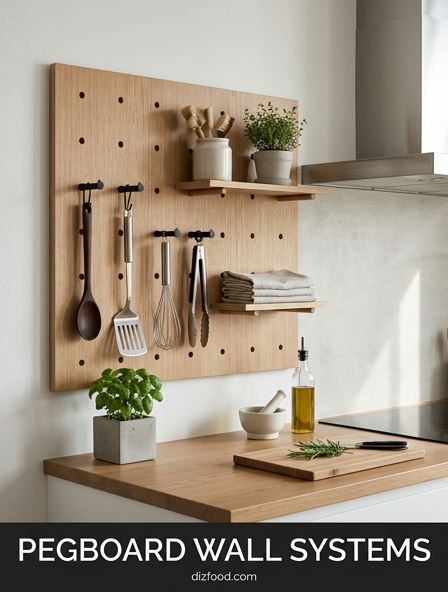
Maximizing Vertical Kitchen Storage Space
In many modern kitchens, square footage is a premium commodity, often leading to cluttered countertops and overflowing drawers. Maximizing vertical storage through a pegboard wall system is a transformative strategy that shifts the storage burden from limited horizontal surfaces to underutilized wall real estate. By installing a comprehensive grid, you create a customizable landscape where every square inch is functional. This approach not only clears the workspace for actual food preparation but also brings tools into the line of sight, reducing the time spent rummaging through deep cabinets.
- Utilizes high walls and narrow strips of space between appliances.
- Keeps heavy cast iron pans and bulky colanders within arm's reach.
- Creates a visual inventory of all available culinary tools.
- Reduces the need for additional bulky furniture or cabinetry.
- Provides air circulation around damp items like freshly washed whisks.
By treating the kitchen wall as a three-dimensional storage zone, homeowners can effectively double their usable area. This is particularly beneficial in open-concept homes where maintaining a clean, streamlined look is essential. The vertical orientation ensures that even in the smallest galley kitchens, professional-grade organization is achievable without major structural renovations.
Advantages of Modular Pegboard Systems
Modular pegboard systems offer a level of adaptability that traditional built-in shelving simply cannot match. Unlike fixed cabinets, these systems allow the user to reposition hooks, shelves, and bins as their cooking habits evolve. Whether you are transitioning from a baking enthusiast to a sous-vide specialist, the wall adjusts to your current inventory. The material choice also plays a significant role in the system's longevity and performance within a high-moisture environment.
| Material Type | Primary Benefit | Durability Level |
|---|---|---|
| Stainless Steel | Heat resistant and easy to sanitize. | Highest |
| Powder-Coated Metal | Resists rust and offers color variety. | High |
| Hardboard/Wood | Cost-effective and traditional aesthetic. | Moderate |
| Acrylic/Plastic | Lightweight and moisture-proof. | Low to Moderate |
Beyond physical durability, the modular nature fosters a "living" kitchen. You can expand the system incrementally, adding new panels as your collection grows. This scalability makes it a cost-effective long-term investment for both renters and homeowners who desire a professional-grade culinary workspace.
Essential Pegboard Accessories for Chefs
A pegboard is only as effective as the accessories attached to it. For a serious chef, the goal is to create a station that mirrors the efficiency of a commercial kitchen. High-quality accessories transform a simple perforated board into a specialized tool kit. Selecting the right hooks and attachments ensures that delicate items like microplanes are protected while heavy items like Dutch oven lids remain secure. It is advisable to mix and match different attachment types to cater to the diverse shapes of kitchen gear.
- J-Hooks: Ideal for handled items like measuring cups and spatulas.
- Magnetic Strips: Perfect for securing chef knives and metal spice tins.
- Deep Wire Baskets: Best for holding onions, garlic, or irregularly shaped gadgets.
- Slotted Shelves: Designed specifically to hold pot lids or thin cutting boards.
- Multi-Prong Hooks: Useful for hanging sets of tongs or multiple whisks.
Integrating these specific components allows for a highly granular level of organization. For example, using a combination of magnetic strips and specialized loops can keep your most-used knives and sharpening steels in one dedicated zone. This tactical selection of hardware ensures that every tool has a "home," making cleanup faster and maintaining the integrity of expensive culinary equipment over years of heavy use.
Strategic Layouts for Optimal Workflow
The efficiency of a kitchen pegboard depends heavily on its placement relative to the "kitchen triangle"-the path between the stove, sink, and refrigerator. A strategic layout ensures that the tools you need are exactly where you stand when you need them. By mapping out zones on your pegboard, you can minimize unnecessary movement across the kitchen floor, which is crucial during complex meal preparation or high-heat cooking. Organizing by frequency of use and functional categories creates a seamless transition between prep and plating.
- The Prep Zone: Located near the main counter, featuring peelers, graters, and cutting boards.
- The Heat Zone: Positioned near the range, holding ladles, turners, and heat-resistant silicone mats.
- The Cleaning Zone: Situated by the sink, equipped with bottle brushes and drying racks.
- The Baking Station: A dedicated area for rolling pins, sifts, and measuring spoons.
- The Beverage Corner: Organizing mugs, frothers, and coffee scoops near the espresso machine.
When planning the layout, consider the "reach factor." Place your most frequently used items at eye level or within a natural arm's swing. Heavier items should be kept lower to prevent strain, while rarely used specialty items can occupy the highest rungs of the board. This ergonomic approach reduces physical fatigue and enhances the overall cooking experience.
Customizing Your Kitchen Wall Design
A kitchen pegboard does not have to look like a hardware store display; it can be a significant design element that reflects your personal style. Customization starts with the color and finish of the board itself. Many homeowners choose to paint wooden pegboards to match their cabinetry or use bold, contrasting colors to create a focal point. Additionally, the framing of the pegboard can elevate the look from utilitarian to high-end. A simple mitered wood frame or a sleek metal border can tie the system into the existing architectural details of the room.
Beyond color, the arrangement of items can be artistic. Some designers suggest "shadowing" the tools-painting silhouettes of the items behind them-to ensure everything returns to its specific spot while adding a graphic, vintage charm. You can also integrate non-culinary items such as small potted herbs, decorative clocks, or framed recipes to soften the industrial look of the metal hooks. The result is a balance between a high-functioning tool shed and a curated gallery. By selecting hardware in finishes like brushed gold, matte black, or polished chrome, you can align the storage system with your faucet and cabinet hardware for a cohesive, professional aesthetic throughout the entire space.
Heavy Duty Mounting and Installation Basics
Safety is the primary concern when installing a kitchen pegboard, especially when it will support heavy cast iron or professional mixers. A poorly mounted board can lead to wall damage or injury. The foundation of a heavy-duty installation is locating the wall studs. While drywall anchors have their place for lightweight decor, a kitchen system requires the mechanical strength of wood or metal studs to handle the dynamic weight of shifting pans and tools. Proper spacing behind the board is also required to allow hooks to be inserted easily.
- Clear the area and use a stud finder to mark the vertical supports.
- Install furring strips or a mounting frame if the pegboard does not have built-in standoffs.
- Level the board carefully before pre-drilling holes into the studs.
- Use heavy-duty wood screws with washers to distribute the load across the board surface.
- Test the stability by applying downward pressure before hanging expensive cookware.
If you are working with a brick or masonry backsplash, specialized masonry anchors and a hammer drill are required. For renters who cannot drill into studs, smaller modular panels using high-strength adhesive systems may work for light utensils, but for a full-scale wall system, a freestanding frame or a tension-based mounting system is a safer alternative that provides the necessary structural integrity without permanent wall alteration.
Organizing Utensils with Adaptable Hooks
The humble hook is the backbone of the pegboard system, and its adaptability is what makes the kitchen highly functional. Not all hooks are created equal; choosing the wrong type can result in tools falling off when you reach for a neighboring item. For a kitchen environment, "locking" hooks are preferred, as they stay in place when you lift a utensil. Silicone-coated hooks are another excellent choice for the kitchen, as they provide a non-slip grip and prevent the scratching of delicate stainless steel or non-stick surfaces.
- Double-prong hooks provide extra stability for wide-handled items like rolling pins.
- Loop hooks are essential for securing items without holes, such as certain styles of tongs.
- Angled hooks prevent items from sliding off due to vibrations or accidental bumps.
- Offset hooks allow you to overlap items slightly, maximizing the density of your storage.
- Curved "J" hooks are the standard for handled mugs and measuring jugs.
To keep the board looking tidy, group utensils by their handle type or material. For instance, hanging all wooden spoons together creates a visual block that is more pleasing to the eye than a random assortment. By utilizing various hook lengths, you can also create "depth" on your board, hanging smaller items in front of larger ones, provided they are used together frequently, such as a small zester in front of a larger box grater.
Space Saving Solutions for Small Kitchens
In a tiny kitchen, every square inch of wall space is an opportunity to reclaim your environment. Pegboards are uniquely suited for these environments because they can be cut to fit odd-shaped areas, such as the side of a refrigerator cabinet, the backsplash behind a stove, or even the inside of a pantry door. By moving items like colanders, sieves, and large spoons to the wall, you free up drawer space for things that truly need to be tucked away, like silverware and linens. This creates an "open-concept" storage feel that makes a small room appear larger.
| Small Space Location | Recommended Use | Pegboard Style |
|---|---|---|
| Back of Door | Lids and flat utensils. | Slim Plastic Panels |
| End of Cabinets | Daily mugs and towels. | Wood Grain Finish |
| Narrow Backsplash | Spice jars and small tools. | Stainless Steel Strip |
| Above the Sink | Drying racks and scrubbers. | Waterproof Acrylic |
Utilizing white or clear pegboard materials in small kitchens can help reflect light, preventing the room from feeling closed in by the stored items. The goal is to create a "working wall" that streamlines the process of cooking in a cramped area, turning a potential source of stress into an organized and efficient culinary laboratory.
Balancing Style and Functional Organization
The challenge of a kitchen pegboard is preventing it from looking cluttered. Successful integration requires a balance between utilitarian needs and aesthetic choices. One way to achieve this is through a disciplined color palette; using tools with uniform handle colors (such as all black or all wood) creates a sense of intentionality. Additionally, negative space is a powerful design tool. You do not need to fill every single hole on the board. Leaving small gaps between groups of items allows the eye to rest and makes it easier to identify specific tools quickly.
Symmetry and geometry also play roles in balancing style. Aligning the tops of various tools or grouping items by height can turn a collection of disparate objects into a cohesive visual unit. Some designers suggest using the "rule of thirds," placing your most visually interesting items-like a bright red le creuset lid or a vintage copper whisk-in focal points on the board. This draws the eye to the "highlights" rather than the density of the storage. Lighting is the final touch; installing under-cabinet LEDs or a dedicated spotlight on the pegboard can transform it from a simple storage wall into a dramatic feature piece that glows during evening meal prep, highlighting the textures of the metal and wood.
Evolving Your Workspace with Modular Flexibility
A kitchen is a dynamic environment that changes with the seasons and your evolving culinary skills. A pegboard system is the only storage solution that can evolve along with you. During the summer, you might prioritize grilling tools and salad spinners, placing them in the most accessible spots. As winter approaches, you can easily swap those out for heavy soup ladles and baking supplies. This flexibility ensures that the kitchen remains efficient year-round without the need for seasonal "deep cleans" of cluttered drawers.
- Easily adjust hook heights as children grow and begin to help with cooking.
- Incorporate new technology or gadgets without needing new cabinets.
- Refresh the entire look of the kitchen by simply changing the accessory colors.
- Relocate the entire system if you move house, making it a portable investment.
- Test different layouts to see what truly improves your cooking speed.
The true value of a modular pegboard lies in its rejection of the static kitchen. It encourages experimentation and refinement. As you learn which tools you use most often, you can move them closer to your workstation. This iterative process leads to a "perfect" kitchen layout that is uniquely tailored to your personal ergonomics and cooking style, a feat that is nearly impossible to achieve with standard fixed-shelf cabinetry.

Comments