
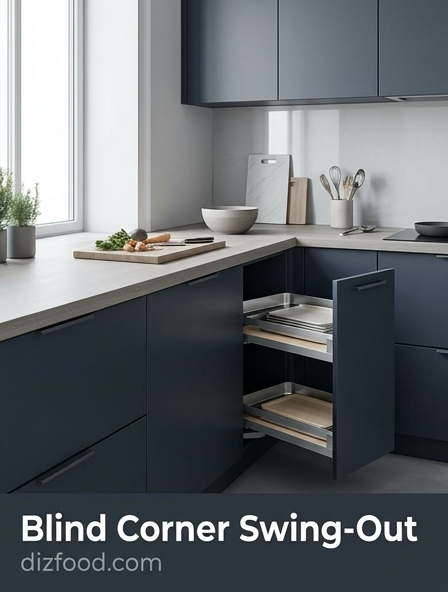
Struggling with that unreachable "dark hole" in your kitchen cabinetry? A blind corner swing-out mechanism is a total game-changer for reclaiming lost space and boosting accessibility. Instead of stretching or straining to reach items tucked away in the back, these innovative shelving systems glide smoothly toward you, bringing every pot and pan into clear view with minimal effort. They maximize every inch of deep, awkward cabinetry, turning a frustrating storage gap into a highly efficient and organized zone for your cookware. If you are weighing your kitchen layout options, it is essential to understand how these units stack up when comparing Corner Lazy Susans vs. Blind Corner Swing-Outs to find the best fit for your home.
Maximizing Kitchen Storage Efficiency
Kitchen storage efficiency is a cornerstone of modern interior design, focusing on the seamless integration of accessibility and volume. In many traditional layouts, the convergence of two cabinet runs creates a "blind" area that is notoriously difficult to utilize. To maximize this space, homeowners are increasingly turning to advanced mechanical inserts that bring the contents of the cabinet to the user, rather than forcing the user to reach into the depths. By implementing a blind corner swing-out system, you effectively reclaim lost square footage and transform a static storage void into a dynamic organizational hub.
- Increased usable surface area by up to 90% compared to fixed shelving.
- Improved organization through specialized non-slip tray surfaces.
- Enhanced visibility of stored items, reducing duplicate purchases.
- Streamlined kitchen workflows by keeping heavy appliances within easy reach.
Efficient storage is not just about having more room; it is about the quality of access. When every inch of a corner cabinet is accounted for, the entire kitchen feels more spacious and functional. This transition from a cluttered "dead zone" to a high-performance storage unit is the ultimate goal of any kitchen renovation or upgrade.
The Challenges of Blind Corner Cabinets
Blind corner cabinets present a unique architectural challenge in kitchen design. These units occur where two perpendicular rows of cabinets meet, resulting in a deep, dark cavern that is partially obstructed by the adjacent cabinet frame. Historically, these areas were referred to as "dead space" because the items stored in the furthest reaches were virtually impossible to retrieve without significant physical effort. The depth of these cabinets, often exceeding 24 inches, makes it difficult for light to penetrate, leading to a "black hole" effect where kitchen tools are forgotten for years.
Standard fixed shelves in these corners require the user to kneel and reach awkwardly, which is not only inconvenient but also poses a risk of strain. Furthermore, the narrow door openings typical of blind corners limit the size of items that can be stored or retrieved. This geometric limitation often leads to inefficient stacking, where items are piled haphazardly, making it necessary to remove several objects just to reach one. Without a proper swing-out or pull-out mechanism, the blind corner remains the least functional part of the kitchen, wasting valuable real estate in an area where every square inch matters for daily food preparation and organization.
How Blind Corner Swing-Out Mechanisms Work
The engineering behind a blind corner swing-out mechanism is a marvel of kinetic design. These systems typically utilize a sophisticated series of glides, pivots, and tracks that allow the shelving units to move in a synchronized fashion. When the cabinet door is opened, the first set of trays is pulled forward and then swung to the side. This movement clears the way for a second set of trays, which are then pulled from the "blind" section of the cabinet into the main opening. This two-stage motion ensures that every item, regardless of how deep it was originally stored, is brought directly into the light and within easy reach.
High-quality mechanisms often feature soft-close technology, which prevents the trays from slamming and protects delicate glassware or heavy cookware from shifting. The hardware is mounted to the floor and side walls of the cabinet, providing a stable foundation for the articulating arms. Modern designs also incorporate adjustable height settings for the trays, allowing users to customize the vertical space based on the height of their specific pots, pans, or pantry items. By utilizing ball-bearing slides and heavy-duty steel components, these systems operate smoothly even when fully loaded, providing a reliable solution for difficult kitchen corners.
Comparing Lazy Susans and Swing-Out Trays
Choosing the right corner solution often comes down to a comparison between the classic Lazy Susan and the modern swing-out tray system. While both aim to solve the problem of inaccessible corners, they function differently and suit different cabinet configurations. Lazy Susans are typically circular or pie-shaped and rotate around a central pole, making them ideal for full-corner cabinets. In contrast, swing-out trays are designed specifically for "blind" corners where only one door provides access. Swing-out units generally offer more surface area and better weight distribution for heavy items compared to the rotating shelves of a Lazy Susan.
| Feature | Lazy Susan | Swing-Out Trays |
|---|---|---|
| Cabinet Type | L-Shaped Corner | Blind Corner |
| Access Style | Rotational | Pull-and-Pivot |
| Space Utilization | Moderate | High |
| Weight Capacity | Lower | Higher |
While Lazy Susans are often more cost-effective and simpler to install, swing-out trays provide a more ergonomic experience by bringing the items completely out of the cabinet. For homeowners seeking a premium feel and maximum visibility, the swing-out mechanism is often the preferred choice for a modern kitchen upgrade.
Ergonomic Benefits of Pull-Out Shelving
Ergonomics in the kitchen is centered on reducing physical strain and improving the ease of movement during daily tasks. Pull-out shelving in blind corners is a primary example of ergonomic design because it eliminates the need for bending, crouching, or overextending. For individuals with back pain, mobility issues, or joint sensitivity, the ability to bring heavy items into the "neutral zone" (between the waist and chest) is a significant advantage. Instead of digging through a dark cabinet, the user simply opens the door and pulls the mechanism toward them, maintaining a comfortable upright posture throughout the process.
Beyond physical comfort, there is a cognitive ergonomic benefit: clarity. When items are neatly arranged on trays that swing out into the light, the mental effort required to locate a specific tool is greatly reduced. This organization reduces the frustration associated with cluttered spaces and speeds up the cooking process. High-quality swing-out systems also require minimal force to operate, often gliding out with just a light touch. This accessibility makes the kitchen a more inclusive space for users of all ages and physical abilities, ensuring that the heart of the home remains functional and welcoming for everyone who uses it.
Top Weight Capacity and Durability Factors
When selecting a blind corner swing-out system, durability and weight capacity are critical factors that determine the longevity of the hardware. These units are often required to hold heavy cast iron pans, stand mixers, and large stacks of ceramic plates. Therefore, the materials used in the construction must be of industrial grade. Most premium systems utilize heavy-duty steel for the arms and tracking, often finished with a chrome or powder coating to prevent rust and corrosion in the humid kitchen environment. The trays themselves are frequently made from high-density plastic, wood, or metal with reinforced bases to prevent sagging over time.
- Typical weight capacity ranges from 15 to 25 kilograms (33 to 55 lbs) per tray.
- High-quality ball-bearing slides ensure smooth operation under heavy loads.
- Reinforced mounting brackets prevent cabinet wall deformation.
- Soft-close dampers reduce mechanical stress during daily use.
It is essential to check the manufacturer's specifications for "dynamic" versus "static" load. A dynamic load refers to the weight the system can safely move, while static load refers to the weight it can hold while stationary. For a busy kitchen, a higher dynamic load capacity is preferable to ensure that the swing-out mechanism does not bind or fail when fully stocked with pantry essentials and heavy cookware.
Optimizing Deep Cabinet Space Utilization
The primary goal of any blind corner hardware is to ensure that the very back of the cabinet is just as useful as the front. Optimization starts with the geometry of the trays. Modern swing-out systems, such as the "cloud" or "kidney" shaped designs, are engineered to hug the contours of the cabinet frame while maximizing the available surface area. By using a tiered approach, these systems allow for vertical organization, which is often neglected in deep cabinets. This means you can store your most-used items on the top tray and seasonal or bulkier items on the bottom tray, keeping everything systematically categorized.
To truly optimize the space, one should also consider the height of the items being stored. Many swing-out mechanisms allow for adjustable tray heights, which is vital for accommodating tall stockpots or cereal boxes. Furthermore, utilizing non-slip liners or integrated railings prevents items from sliding toward the back where they might fall off the tray. When items stay in their designated spots, the movement of the swing-out remains fluid. This level of organization transforms a deep, inefficient cabinet into a high-density storage solution that rivals the accessibility of a walk-in pantry, all within the footprint of a standard base cabinet.
Installation Tips for Blind Corner Hardware
Installing a blind corner swing-out mechanism requires precision and careful planning to ensure the hardware operates correctly within the confined space. Before purchasing a unit, it is vital to measure the internal cabinet dimensions, focusing on the clear opening width and the depth of the "blind" section. Most failures in installation occur because the door hinges or the cabinet face frame obstruct the path of the swinging trays. Following a systematic approach can prevent these common pitfalls and ensure a successful DIY or professional installation.
- Clear the cabinet completely and check for any plumbing or electrical obstructions.
- Use a template, often provided by the manufacturer, to mark the exact screw holes on the floor and side walls.
- Install the main support pillar or track first, ensuring it is perfectly level.
- Attach the articulating arms and test the swing path before mounting the trays.
- Adjust the soft-close tension and tray heights to suit your specific storage needs.
It is also important to consider the "handing" of the unit-whether it is a left-hand or right-hand swing-out-based on which side the blind corner is located. Double-checking these details during the planning phase will save significant time and effort during the actual mounting process.
Best Kitchen Items to Store in Corner Units
Blind corner swing-out units are uniquely suited for bulky, heavy, or awkwardly shaped items that take up too much room in standard drawers. Because these systems bring the contents out of the cabinet, they are perfect for heavy cookware that is difficult to lift from a deep, low shelf. Organizing these items by frequency of use and weight will help maintain the balance of the mechanism and improve your overall kitchen efficiency. The sturdy nature of most swing-out trays makes them the ideal home for the "workhorses" of the kitchen.
- Heavy cast iron skillets and Dutch ovens.
- Large mixing bowls and colanders.
- Small appliances like blenders, food processors, or slow cookers.
- Bulk pantry items such as large bags of flour or sets of canned goods.
- Stovetop kettles and specialized baking pans.
By placing these larger items in the corner unit, you free up your primary drawers for smaller utensils, cutlery, and everyday plates. This strategic distribution of weight and volume creates a more balanced kitchen environment. Using the corner for items that are used once or twice a week, rather than every few hours, also helps minimize the wear on the swing-out hardware while keeping those items perfectly accessible when needed.
Modern Kitchen Accessibility Solutions
Modern kitchen design is increasingly focused on universal design principles, which aim to make environments usable by all people regardless of age or physical ability. Blind corner swing-out mechanisms are a flagship product in this movement. By eliminating the need to reach into dark, low-level spaces, these solutions support "aging in place," allowing older homeowners to maintain their independence in the kitchen without risking injury. The move toward accessibility is not just for the elderly, however; it also benefits busy families and professional chefs who require rapid, effortless access to their tools during high-pressure meal preparation.
In addition to manual swing-outs, the industry is seeing an increase in motorized versions that can be activated with a simple touch or a voice command. These high-tech solutions represent the future of the "smart kitchen," where hardware works in harmony with the user. Even without motorization, the smooth, low-friction glides and ergonomic handles of contemporary swing-out units provide a level of ease that was unimaginable in kitchen design just a few decades ago. As accessibility becomes a standard expectation rather than a luxury, these corner solutions will continue to evolve, blending aesthetic beauty with unparalleled mechanical functionality.


Comments