
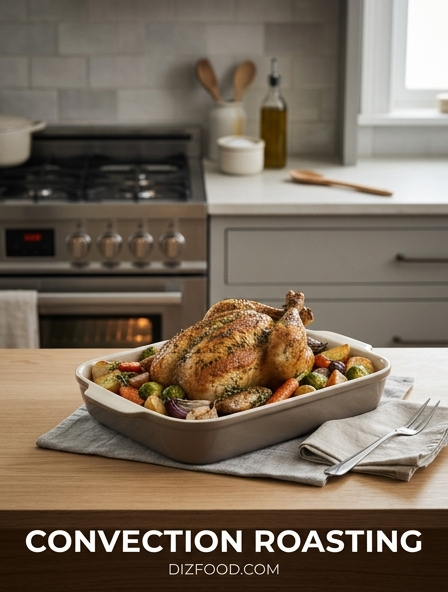
The Science of Convection Heat in Home Cooking
Convection cooking operates on the fundamental principle of heat transfer through the movement of fluids, in this case, air. In a conventional oven, air remains relatively stagnant, creating pockets of varying temperatures and a lingering layer of cool air-known as the boundary layer-immediately surrounding the food. By introducing a high-powered fan and an exhaust system, a convection oven strips away this insulating layer, allowing the hot air to make direct contact with the food surface. This process significantly increases the rate of thermal energy transfer.
The continuous movement of air ensures that the temperature remains uniform throughout the entire oven cavity, eliminating the "hot spots" common in radiant ovens. Furthermore, the circulating air accelerates evaporation, which is essential for certain culinary reactions. This constant airflow facilitates:
- Faster breakdown of connective tissues in proteins.
- Rapid moisture removal for crispier exterior surfaces.
- Enhanced heat penetration, reducing the thermal gradient between the surface and the core of the food.
Essential Differences Between Baking and Convection Roasting
While the terms are often used interchangeably, convection baking and convection roasting utilize different air velocities and heating element configurations. Convection baking typically uses a lower fan speed and relies primarily on the bottom heating element, making it ideal for delicate items like cakes and soufflés that require a gentle rise without being buffeted by intense wind. In contrast, convection roasting utilizes a high-velocity fan and often engages the top broiler element or a third heating element behind the fan itself to create an intense, searing environment.
| Feature | Convection Baking | Convection Roasting |
|---|---|---|
| Fan Speed | Low to Moderate | High Velocity |
| Heat Source | Bottom Element | Top, Bottom, and Rear Elements |
| Goal | Even rise and drying | Intense browning and caramelization |
Choosing the roasting setting is preferable when the goal is a robust crust on a prime rib or a shatteringly crisp skin on a whole chicken, as the higher air volume promotes the Maillard reaction more aggressively than the baking setting.
Optimal Oven Settings for Faster Weeknight Dinners
Utilizing convection roasting settings can reduce total cooking time by approximately 25 to 30 percent, making it an invaluable asset for busy weeknight schedules. To maximize this efficiency, the oven should be properly preheated, and the "Convection Roast" mode should be selected to engage the full power of the internal fan. Because the airflow is so efficient, you can often cook multiple items simultaneously without the need to rotate pans halfway through the process, as the heat distribution is naturally equalized.
To streamline your evening routine, consider these specific settings:
- Select the Convection Roast preset at 375°F for most poultry and vegetable combinations.
- Ensure the oven rack is in the center position to allow air to circulate both above and below the pan.
- Use a perforated tray or a wire rack set inside a rimmed baking sheet to let the high-velocity air reach the underside of your food, eliminating the need to flip items during the cooking cycle.
Achieving Restaurant Quality Browning and Texture
The hallmark of a professional-grade roast is the deep, mahogany-colored crust known as the Maillard reaction. This chemical reaction between amino acids and reducing sugars occurs most effectively in dry, high-heat environments. Convection roasting is the ultimate tool for this because it removes moisture from the surface of the food almost instantly. In a standard oven, the steam escaping from the food can create a humid microclimate that effectively boils or steams the exterior. The convection fan whisks this steam away, ensuring the surface stays dry enough to brown.
To achieve this texture at home, it is essential to avoid overcrowding the pan. If items are placed too close together, the circulating air cannot pass between them, leading to localized "steam zones" that result in pale, soggy textures. By spacing out your ingredients, you allow the moving air to surround each piece of food, creating a 360-degree sear. This technique results in vegetables with crisp edges and tender centers, and meats with a distinct, flavorful bark that mimics the output of a high-end commercial rotisserie or professional roasting oven.
Best Meats and Vegetables for High Velocity Roasting
Not all ingredients react the same way to high-velocity airflow. Ingredients that benefit from rapid moisture loss and high-heat caramelization are the best candidates for convection roasting. Dense, hearty vegetables and fatty proteins perform exceptionally well under these conditions. The moving air helps render fat more efficiently in meats, while the sugars in root vegetables concentrate as the water evaporates, leading to an intense sweetness and a charred exterior.
Consider the following categories for your next convection roast:
- Large Proteins: Whole chickens, turkey breasts, prime rib, and pork loins benefit from the even browning.
- Root Vegetables: Carrots, parsnips, and potatoes develop a thick, crunchy crust.
- Cruciferous Vegetables: Brussels sprouts, broccoli, and cauliflower florets get crispy, "burnt" edges that provide excellent contrast.
- Thick-Cut Tubers: Sweet potatoes and yams, which can often turn mushy in traditional ovens, maintain better structural integrity.
Adjusting Time and Temperature for Convection Success
The primary challenge when transitioning to convection roasting is the "Convection Conversion." Because the moving air is so much more efficient at transferring heat, following a traditional recipe exactly will often lead to overcooked or burnt food. The general rule of thumb used by professional chefs is the "25/25 Rule." This involves reducing the oven temperature by 25 degrees Fahrenheit and expecting the food to be done about 25 percent faster than the recipe indicates.
To successfully adjust your cooking:
- If a recipe calls for 400°F, set your convection oven to 375°F.
- Check for doneness significantly earlier than suggested; for a 60-minute roast, start checking at the 45-minute mark.
- Use a digital meat thermometer to track internal temperatures, as visual cues may be misleading-the exterior may look finished while the interior is still reaching the target temperature.
Meal Planning Strategies for Sheet Pan Convection Meals
Convection roasting is the ultimate technique for sheet pan dinners because it handles the density of a full pan much better than radiant heat. To meal plan effectively, you must group ingredients by their density and moisture content. Since everything is subjected to the same high-velocity air, the goal is to ensure that the meat and the vegetables reach their peak at exactly the same time. This is achieved through strategic chopping and "staggered loading."
For a successful sheet pan strategy:
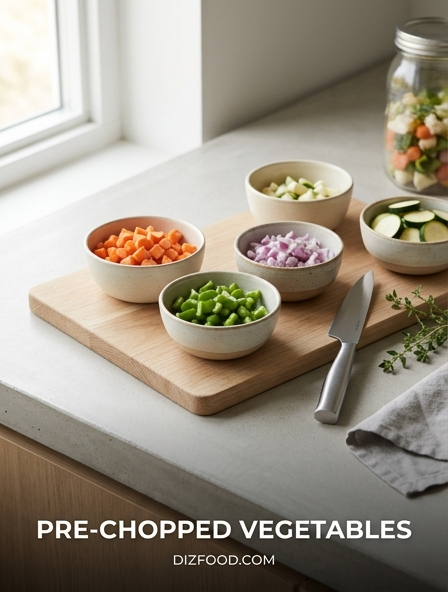
- Uniformity: Cut dense vegetables like potatoes smaller than softer vegetables like zucchini so they cook at the same rate.
- The Stagger: Start your proteins and root vegetables first, then add quicker-cooking items like asparagus or cherry tomatoes in the final ten minutes.
- Zoning: Place larger items toward the edges of the pan where airflow is often most intense.
Must Have Tools for Effective Airflow Distribution
To truly leverage the power of convection roasting, your kitchen hardware must allow for maximum air exposure. Traditional deep roasting pans with high sides are actually counterproductive in a convection environment; the high walls act as a windbreak, shielding the bottom of the food from the moving air and creating a pool of steam. For the best results, you need tools that promote "breathability" around every surface of the ingredient.
Essential gear includes:
- Low-Rimmed Baking Sheets: Use "half-sheet" pans with rims no higher than one inch to allow air to sweep across the surface.
- Wire Cooling Racks: Place an oven-safe wire rack inside the baking sheet. This elevates the meat, allowing the hot air to circulate underneath for total crispness.
- Instant-Read Thermometers: Since convection is faster, a digital probe is vital to prevent overshooting your target temperature.
- Perforated Pizza Pans: These are excellent for roasting smaller vegetables or reheating items that need to stay crisp on the bottom.
Streamlining Your Kitchen Routine with Rapid Roasting
Beyond simply cooking food faster, convection roasting allows for a more organized and productive kitchen routine. Because the oven heats more evenly, you can utilize every rack simultaneously. In a standard oven, the bottom rack might burn while the top rack remains undercooked. In a convection oven, you can roast two or even three sheet pans of vegetables at once, facilitating "batch cooking" for the week ahead. This efficiency reduces the total time the oven is active, which can also keep your kitchen cooler and lower energy consumption over time.
To streamline your process, prepare your ingredients while the oven is preheating-which is also typically faster in convection mode. Because the fan helps with heat recovery, opening the door to check on food results in less temperature loss than in a conventional oven, as the fan quickly redistributes the heat once the door is closed. This reliability allows you to focus on other tasks, like prep work or cleanup, knowing that the convection system is providing a consistent, high-energy environment for your meal.
Professional Tips for Juicy Results and Crispy Skins
The greatest risk of convection roasting is the potential for drying out the food due to the accelerated evaporation. Professional chefs mitigate this by focusing on surface preparation and moisture management. To get that iconic "glass-like" skin on poultry or a perfect crust on beef without losing internal moisture, the surface must be as dry as possible before it even enters the oven. Many pros recommend "air-drying" meat in the refrigerator uncovered for several hours or overnight.
Follow these expert tips for the best results:
- Fat Application: Coat the exterior of the food in a thin, even layer of oil or clarified butter. The fat acts as a heat conductor and helps "fry" the skin in the moving air.
- Dry Brining: Salt the meat well in advance. This draws moisture out, seasons the interior, and then allows the surface to dry out perfectly for browning.
- The Rest: Because convection uses higher energy, the "carry-over" cooking is more significant. Remove meat from the oven 5 degrees before your target temperature and let it rest for at least 15 minutes to allow juices to redistribute.



Comments