
Deciding between no-cook and stovetop meal planning can transform your kitchen efficiency, especially when you're juggling a packed schedule. No-cook meals offer the ultimate convenience, utilizing fresh ingredients like crisp greens, pre-cooked proteins, and hearty grains that require zero heat, making them perfect for scorching summer days or frantic weeknights. On the other hand, stovetop cooking provides that comforting, home-cooked depth of flavor and nutritional versatility that only heat-treated proteins and sautéed aromatics can achieve. Whether you're prioritizing the lightning-fast assembly of a Mediterranean wrap or the savory satisfaction of a 15-minute stir-fry, understanding how these two strategies balance prep time, cleanup, and culinary variety will help you reclaim your evening and keep your household fueled without the stress.
| Feature | No-Cook Planning | Stovetop Planning |
|---|---|---|
| Active Prep Time | 5-15 minutes; assembly-focused. | 15-30 minutes; involves heating/searing. |
| Cleanup Effort | Minimal; 1 cutting board, 1 bowl. | Moderate; pots, pans, and splatters. |
| Nutritional Focus | High heat-sensitive vitamins (C & B). | Improved bioavailability (Lycopene/Beta-carotene). |
| Flavor Profile | Fresh, bright, and acidic. | Umami, caramelized, and savory. |
| Energy/Cost | Zero utility cost; no heat generated. | Low-to-mid utility cost; warms the room. |
| Best For... | Extreme heat or 10-min lunch breaks. | Batch cooking and comforting dinners. |
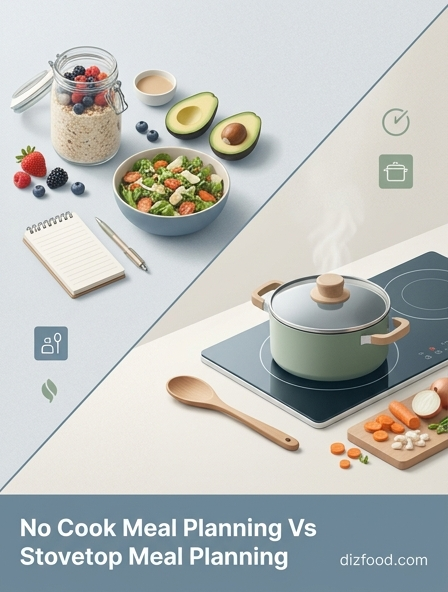
Benefits of No Cook vs Stovetop Meal Planning
Choosing between no-cook and stovetop meal planning often depends on the lifestyle and sensory preferences of the individual. No-cook meal planning focuses on the assembly of fresh, raw, or pre-processed ingredients, offering a significant advantage in terms of nutrient density. Because heat can degrade certain heat-sensitive vitamins, such as Vitamin C and B vitamins, a no-cook approach ensures that these micronutrients remain intact. Furthermore, this method is ideal for those living in warm climates or during summer months, as it prevents the kitchen from becoming uncomfortably hot, maintaining a pleasant home environment without increasing air conditioning costs.
On the other hand, stovetop meal planning provides a level of culinary depth and food safety that raw preparation cannot always match. The application of heat triggers the Maillard reaction, creating complex flavors and savory aromas that are central to many traditional cuisines. Stovetop cooking also expands the variety of proteins and legumes available for consumption, as many items require boiling or sautéing to become edible or to eliminate pathogens. For those seeking comfort and warmth, particularly in colder seasons, the psychological and physical satisfaction of a hot meal is a primary benefit that cold assembly cannot replicate.
- No-cook plans emphasize enzyme preservation and hydration through high-water-content produce.
- Stovetop plans increase the bioavailability of certain antioxidants like lycopene and beta-carotene.
- Cold prep reduces the risk of kitchen-related accidents such as burns or grease fires.
- Hot cooking allows for the softening of tough fibers in grains and root vegetables, aiding digestion for some.
Time Efficiency Comparison for Heat Free and Cooked Meals
Time management is a critical factor in successful meal planning. No-cook meals are generally perceived as the ultimate time-savers because they eliminate the "active cooking" phase. In a heat-free workflow, the transition from preparation to consumption is immediate. This makes it a superior choice for busy professionals or students who may only have fifteen minutes for a lunch break. However, it is important to note that no-cook meals can sometimes involve extensive chopping and washing, which may rival the time spent standing over a stove.
Stovetop cooking requires a more complex timeline that includes pre-heating, active stirring, and monitoring. While it takes longer to bring a dish to the table, stovetop methods allow for "passive" time where ingredients simmer, allowing the cook to perform other tasks. The efficiency of stovetop cooking is often found in the volume; it is easier to cook a large pot of stew that lasts for five days than it is to assemble five individual fresh salads that might wilt if prepared too far in advance.
| Activity | No-Cook Timing | Stovetop Timing |
|---|---|---|
| Preparation | 10-20 minutes (high) | 5-15 minutes (moderate) |
| Cooking/Assembly | 0 minutes | 15-45 minutes |
| Wait/Resting Time | 0 minutes | 5-10 minutes |
| Total Throughput | Fastest for single meals | Better for large batches |
Essential Tools for Raw Prep Versus Stovetop Cooking
The inventory of a kitchen changes significantly based on which meal planning style is prioritized. A no-cook kitchen relies heavily on precision cutting tools and storage solutions. Since ingredients are often served in their natural state, the texture is determined by the cut. High-quality knives, mandolines, and spiralizers are the workhorses of the heat-free kitchen. Additionally, a powerful blender or food processor becomes essential for creating raw sauces, pestos, and gazpachos that provide moisture to the dishes.
In contrast, the stovetop-centric kitchen requires a suite of heat-conducting vessels and temperature-monitoring tools. The variety of cookware-ranging from cast iron skillets for searing to stainless steel stockpots for boiling-dictates the range of recipes possible. Essential tools in this category focus on heat management and safety, such as long-handled spatulas, tongs, and digital meat thermometers. While the no-cook prep station is often a single large cutting board, the stovetop station is a multi-point environment involving the range, the countertop, and the sink.
- No-Cook Essentials: Salad spinner, microplane, julienne peeler, airtight glass containers, and silicone bowl covers.
- Stovetop Essentials: Dutch oven, non-stick frying pan, whisk, splatter guard, and trivets for hot surfaces.
- Shared Tools: Chef's knife, measuring cups, and colanders for rinsing produce or draining pasta.
Nutritional Impact of Fresh Ingredients and Heated Dishes
The nutritional profile of a meal plan is fundamentally altered by the presence or absence of heat. No-cook planning leverages the raw power of enzymes and delicate phytonutrients. For instance, sulforaphane, a compound found in cruciferous vegetables like broccoli and kale, is much more potent when the vegetable is consumed raw. Cold meals also tend to be higher in dietary fiber, as the cellular structures of the plants remain intact, which can promote better gut health and more stable blood sugar levels.
Stovetop meal planning, however, excels in making certain nutrients more accessible to the human body. The process of cooking breaks down tough cellulose walls, which can be difficult for the human digestive tract to process. This breakdown allows the body to absorb minerals like calcium and iron more efficiently from leafy greens like spinach. Additionally, the use of healthy fats in stovetop cooking, such as olive oil or avocado oil, aids in the absorption of fat-soluble vitamins (A, D, E, and K) present in the ingredients. Balancing both methods is often the most nutritionally sound approach.
- Raw ingredients provide higher levels of water-soluble vitamins like Vitamin C and folate.
- Cooking reduces anti-nutrients like oxalates and phytates found in certain grains and greens.
- Heat increases the bioavailability of antioxidants in tomatoes and carrots.
- Stovetop cooking allows for the safe consumption of high-protein legumes and grains.
Cost Savings and Energy Use in Meal Planning Styles
From a financial perspective, both meal planning styles offer different types of savings. No-cook meal planning significantly reduces utility bills. By eliminating the use of a gas or electric range, households can see a measurable decrease in monthly energy consumption. This is particularly impactful in the summer, where cooking heat forces air conditioners to work harder. However, raw meal planning can sometimes be more expensive in terms of grocery costs, as it often requires a higher volume of fresh produce, which can have a shorter shelf life and higher price-per-calorie than pantry staples.
Stovetop meal planning is the king of budget-friendly bulk cooking. The ability to transform dry beans, rice, and inexpensive cuts of meat into flavorful meals via simmering or boiling is a cornerstone of frugal living. While there is a cost associated with the energy used to heat the stove, the lower cost of shelf-stable ingredients often offsets this expense. Furthermore, stovetop cooking allows for the "rescuing" of older produce that might not be appetizing in a raw salad but is perfectly suitable for a sauté or soup.
- No-cook plans save on electricity/gas and reduce the need for specialized cleaning chemicals.
- Stovetop plans utilize low-cost bulk staples like lentils, chickpeas, and oats.
- Raw food waste can be higher due to shorter spoilage windows for fresh greens.
- Energy-efficient stovetop techniques, like using lids and matching burner size to pots, help minimize costs.
Texture and Flavor Profiles of Cold and Hot Menus
The sensory experience of a meal is heavily dictated by the temperature at which it is prepared. No-cook menus are defined by their "bright" and "crisp" profiles. Flavors are usually driven by acidity-think citrus juices, vinegars, and fermented toppings-and the natural sweetness of raw fruits and vegetables. The texture is dominated by crunch and snap, providing high levels of masticatory satisfaction. Because there is no caramelization, the purity of the individual ingredients is the star of the show.
Stovetop menus offer a much broader spectrum of textures, ranging from the silkiness of a pureed soup to the chewy crust of a pan-seared protein. Heat allows for the integration of flavors through simmering, where spices and aromatics meld together over time to create a cohesive taste that is more than the sum of its parts. The "umami" factor is much more prevalent in stovetop cooking, as heat facilitates the release of savory amino acids. This results in a "deeper" flavor profile that many find more satiating for dinner service.
- No-Cook Textures: Crunchy, watery, fibrous, creamy (via avocados or nuts), and zesty.
- Stovetop Textures: Tender, crispy, caramelized, velvety, and chewy.
- Flavor Development: Cold meals rely on infusions and dressings; hot meals rely on reductions and the Maillard reaction.
Best Seasonal Approaches for No Cook and Stovetop Prep
Seasonal meal planning is a natural way to rotate between no-cook and stovetop methods. During the spring and summer, the abundance of leafy greens, berries, cucumbers, and tomatoes makes no-cook planning effortless and delicious. The focus is on hydration and lightness, matching the body's natural inclination for cooler foods during periods of external heat. This period is ideal for master-batching cold grain salads or gazpachos that can be pulled from the refrigerator at a moment's notice.
As the transition into autumn and winter occurs, the kitchen naturally shifts toward the stove. Root vegetables, squashes, and hardy tubers require heat to transform their dense starches into palatable sugars. Stovetop planning in the winter serves a dual purpose: it provides the caloric density needed for colder weather and acts as a secondary heat source for the home. The slow-cooking nature of winter stovetop meals, such as braises and thick porridges, aligns with the slower pace of the season.
- Summer Strategy: Focus on "Assembly Meals" using pre-cooked proteins and seasonal raw vegetables.
- Winter Strategy: Utilize the "One-Pot" method for stews and soups to maximize kitchen warmth and efficiency.
- Spring: Incorporate blanched greens-a quick stovetop flash followed by a cold shock for a hybrid feel.
- Autumn: Shift toward warm grain bowls and sautéed seasonal fruits like apples and pears.
Cleanup and Maintenance Differences in the Kitchen
Cleanup is perhaps the most divisive topic in the no-cook versus stovetop debate. A no-cook meal usually results in a "dry" cleanup. Most of the debris consists of vegetable peels and cuttings, which can be quickly swept into a compost bin. The dishes used are primarily cutting boards, bowls, and knives, which rarely suffer from the stubborn, baked-on food particles that plague stovetop cooking. This simplicity makes no-cook planning highly attractive for individuals who despise spending time at the sink after eating.
Stovetop cooking introduces "wet" and "greasy" cleanup challenges. Sautéing can leave a fine mist of oil on the backsplash and stovetop surface, while boiling pasta or starchy vegetables can lead to spill-overs that require immediate attention. Pots and pans often require soaking or scrubbing to remove carbonized food. However, maintenance in a stovetop kitchen is often about the longevity of the equipment, such as seasoning cast iron or polishing stainless steel, whereas no-cook maintenance focuses on knife sharpening and ensuring plastic storage containers remain stain-free.
- No-cook cleanup is faster and requires less hot water and heavy detergents.
- Stovetop cooking necessitates regular degreasing of the range and ventilation filters.
- The "one-pot" stovetop method is a strategy to bridge the gap and minimize dish volume.
- Food safety cleanup (e.g., raw meat contact) is more common in stovetop prep environments.
Maximizing Efficiency with Heat Free Weekly Meal Plans
To excel at no-cook meal planning, one must master the art of the "component prep." Instead of making specific recipes, the focus is on preparing versatile building blocks that can be mixed and matched. This prevents the "salad fatigue" that many experience when trying to eat raw. Efficiency is found in the way ingredients are processed immediately after purchase. By washing, drying, and pre-cutting all vegetables on a Sunday, the daily assembly of meals becomes a five-minute task throughout the week.
- Prepare the Bases: Wash and tear large quantities of greens, and store them with paper towels to absorb excess moisture.
- Create "Flavor Bombs": Mix three or four distinct dressings or vinaigrettes to vary the flavor profile of the same base ingredients.
- Batch-Process Proteins: Use heat-free options like canned beans, chickpeas, smoked salmon, or rotisserie chicken (store-bought) to add bulk.
- Layer for Longevity: Use the "jar method" for salads, placing wet ingredients at the bottom and hardy greens at the top to prevent wilting.
- Optimize Texture: Keep nuts, seeds, and dried fruits in separate containers to add as a final "crunch" layer just before serving.
Hybrid Strategies for Combining No Cook and Stovetop Methods
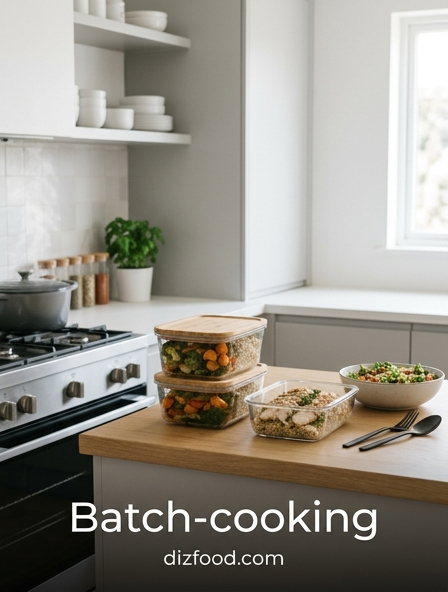
The most successful kitchen workflows rarely stick strictly to one method; instead, they utilize a hybrid strategy that captures the speed of no-cook and the depth of stovetop prep. This approach, often called "Cook Once, Eat Twice," involves using the stove for a single high-volume item that serves as the foundation for multiple cold assemblies. For example, boiling a large pot of quinoa or farro on a Sunday provides a shelf-stable base that can be used in cold Mediterranean salads for the next four days.
Another hybrid technique involves the "Hot Base, Cold Topping" philosophy. This adds contrast to a meal, such as serving a hot, sautéed piece of fish over a cold, crisp slaw. By limiting the stovetop use to just the primary protein or grain, the cook reduces heat output and cleanup time while still enjoying the benefits of a cooked meal. This balance ensures nutritional variety and prevents the monotony of a single preparation style.
- The Grain Foundation: Cook grains in bulk; use half for hot pilafs and half for cold tabbouleh.
- Flash Blending: Use the stovetop to quickly wilt greens or char peppers, then chill them for use in cold wraps.
- Dual-Temp Bowls: Combine warm roasted sweet potatoes with raw kale, pumpkin seeds, and a cold tahini dressing.
- Thermal Efficiency: Use the residual heat from a morning oatmeal pot to steam a few eggs for cold snacks later.

Comments