
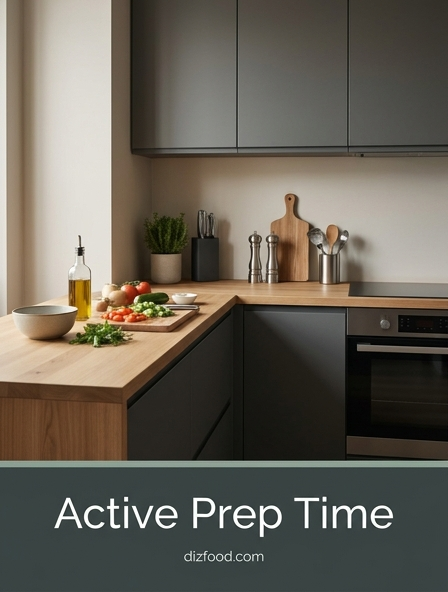
The Core Difference Between Prep and Assembly
Understanding the distinction between active preparation and final assembly is the cornerstone of kitchen efficiency. Active prep time involves the labor-intensive tasks required to transform raw ingredients into usable components. This includes washing, peeling, chopping, marinating, and precooking proteins or grains. These tasks typically require the most concentration and create the most mess, often taking up a significant portion of the total time spent in the kitchen. In contrast, meal assembly is the low-effort process of combining these pre-processed ingredients into a finished dish.
- Active Prep: Creating the "building blocks" such as dicing onions, roasting chicken breast, or simmering a master sauce.
- Assembly: The final five to ten minutes where components are heated, layered, or tossed together for serving.
- Passive Time: Period where food cooks unattended, such as slow cooking or marinating in the refrigerator.
By treating these as two separate phases, home cooks can isolate the "heavy lifting" to specific windows of time. This separation ensures that during busy weeknights, the mental and physical load of cooking is reduced to simple assembly, significantly lowering the barrier to eating healthy, home-cooked meals.
Maximizing Efficiency Through Strategic Ingredient Preparation
To reduce active prep time, one must adopt a systematic approach to ingredient processing. The most effective strategy is task grouping, also known as "parallel processing." Instead of prepping ingredients for a single recipe at a time, you should process all similar items for the entire week in one session. For example, if three different recipes require diced onions, chop all the onions at once. This minimizes the frequency of washing knives, clearing cutting boards, and resetting your workspace.
- Wash and Dry Immediately: Process all greens and sturdy vegetables as soon as they come home from the market.
- Universal Aromatics: Mince garlic and ginger in bulk to keep in the fridge for up to five days.
- Vegetable Grading: Cut vegetables into uniform sizes to ensure even cooking times across different dishes.
- Tool Optimization: Use a food processor for large quantities of grating or slicing to save manual labor.
Strategic prep also involves prioritizing ingredients that have the longest shelf life once cut. Sturdier vegetables like carrots, celery, and peppers can be prepped days in advance, whereas delicate herbs should be handled closer to the time of assembly to maintain freshness and flavor profile.
Designing a Workflow for Rapid Meal Assembly
An efficient kitchen workflow mimics a professional "line" setup, where movement is minimized and speed is prioritized. When moving from the prep phase to the assembly phase, the physical layout of your ingredients determines how quickly a meal hits the table. A logical flow usually moves from the refrigerator to the prep station, then to the heat source, and finally to the plating area. Organizing your prepped components by their role in the final dish can prevent unnecessary searching and clutter.
| Station Component | Purpose | Example Items |
|---|---|---|
| The Base | Bulk and energy | Cooked quinoa, brown rice, mixed greens, or pasta. |
| The Protein | Satiety and structure | Roasted chickpeas, sliced steak, or boiled eggs. |
| The Accent | Flavor and texture | Pickled onions, toasted seeds, or crumbled feta. |
| The Binder | Moisture and cohesion | Vinaigrettes, tahini sauce, or pesto. |
By arranging these containers in the order they will be added to the bowl or plate, you create a seamless assembly line. This method reduces the cognitive load of "deciding" how to build the meal, allowing for a rapid transition from hunger to eating.
Essential Kitchen Tools for Streamlined Food Prep
The quality and appropriateness of your tools directly correlate with the speed of your active prep time. While a single chef's knife is versatile, specific tools are designed to handle repetitive tasks with greater precision and speed. Investing in a few high-quality implements can turn an hour of manual chopping into twenty minutes of streamlined work. Sharpness is the most critical factor; a dull knife requires more force and increases the risk of accidents while slowing down the dicing process.
- Chef's Knife and Bench Scraper: The knife handles the cuts, while the scraper moves ingredients quickly from the board to containers.
- Mandoline Slicer: Ideal for achieving paper-thin, consistent slices of radishes, cucumbers, or potatoes for salads and slaws.
- Kitchen Scale: Essential for consistent portioning and following baking recipes without multiple measuring cups.
- Immersion Blender: Allows for quick blending of dressings and soups directly in the vessel, reducing cleanup time.
Beyond cutting tools, high-quality mixing bowls and a large, stable cutting board are non-negotiable. A board that is too small forces you to stop and clear space constantly, breaking your rhythm and extending your active prep time unnecessarily.
Batch Cooking Techniques to Simplify Weekly Meals
Batch cooking is the proactive practice of preparing large quantities of "modular" components that can be used across various recipes. This technique differs from traditional meal prepping where you cook entire identical meals. Instead, you focus on versatile building blocks. By dedicating a single block of active prep time to cooking large batches of proteins and grains, you eliminate the most time-consuming parts of daily cooking. This approach provides flexibility, allowing you to change flavors throughout the week while maintaining the convenience of pre-cooked food.
- Grain Loading: Cook a large pot of a neutral grain like farro or rice to serve as a base for different cuisines.
- Sheet Pan Proteins: Roast multiple chicken breasts or blocks of tofu simultaneously with mild seasoning.
- Roasted Vegetable Medleys: Use high heat to caramelize sturdier vegetables like broccoli, sweet potatoes, and cauliflower.
- Legume Prep: Boil a large batch of dried beans or lentils to use in salads, soups, or tacos.
Once these components are cooked and cooled, they can be stored separately. This modularity is key; it prevents the flavor fatigue that often comes with eating the exact same meal five days in a row, while still benefiting from the efficiency of bulk preparation.
Smart Storage Solutions for Prepped Ingredients
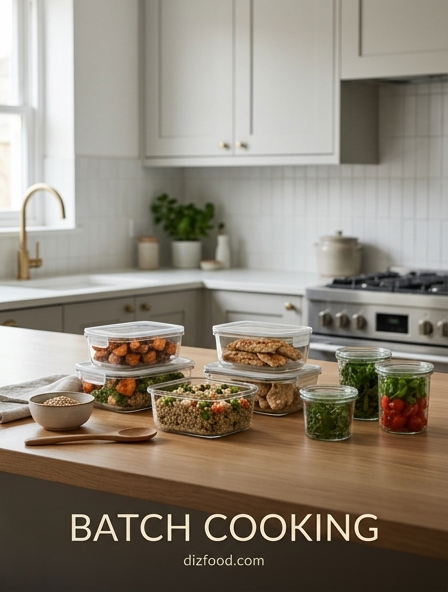
The longevity and accessibility of your prepped ingredients depend heavily on your storage strategy. Improper storage leads to wilted greens, dry proteins, and food waste, which negates the effort put into active prep. To maintain a productive assembly environment, ingredients must be visible and easily accessible. Clear glass containers are preferred over opaque plastic because they allow you to see exactly what you have at a glance, reducing the time spent rummaging through the refrigerator.
| Ingredient Type | Storage Method | Shelf Life |
|---|---|---|
| Leafy Greens | Airtight with a paper towel | 5-7 Days |
| Hard Vegetables | Submerged in water (carrots) | 10-14 Days |
| Cooked Grains | Flat in silicone bags | 4-5 Days |
| Prepared Sauces | Glass jars with tight lids | 7-10 Days |
Labeling is another critical component of storage. Using masking tape and a marker to note the preparation date ensures that you rotate your stock correctly. This "First-In, First-Out" (FIFO) method prevents ingredients from spoiling in the back of the fridge and helps you prioritize which components to use first during your nightly assembly.
Reducing Decision Fatigue with Modular Meal Planning
Decision fatigue is a common barrier to consistent home cooking. After a long day, the mental effort required to choose a recipe and find the ingredients can lead to ordering takeout. Modular meal planning solves this by removing the need for complex decision-making. Instead of planning "Monday is Tacos," you plan a suite of compatible components that can be assembled in various ways. This system relies on having a protein, a starch, a vegetable, and a "flavor booster" (sauce or topping) ready to go.
- The Formula: Base + Protein + 2 Veggies + Sauce + Crunch.
- Versatile Sauces: Prepare one creamy sauce (like tahini) and one bright sauce (like chimichurri) to change the dish's profile.
- Interchangeable Bases: Use the same roasted sweet potatoes for a breakfast hash or a dinner grain bowl.
With this modular approach, assembly becomes an intuitive process. You simply grab one item from each category and combine them. Because the active prep time was handled in advance, the actual "cooking" is reduced to simple choices, making the process faster and much more sustainable for long-term habits.
Balancing Daily Tasks and Weekend Prep Sessions
Finding the right balance between a single "marathon" prep session and daily "micro-prep" is essential for a sustainable kitchen routine. While many find success in a two-hour Sunday session, others prefer smaller, more frequent blocks of time. The goal is to ensure that the active prep time never feels overwhelming. A hybrid approach often works best, where bulk items like grains and proteins are handled on the weekend, while delicate items or specialized tasks are managed in short bursts throughout the week.
- The Sunday Sweep: Focus on items that take 30+ minutes of passive cooking time.
- The Mid-Week Refresh: Spend 15 minutes on Wednesday chopping fresh herbs or making a new dressing.
- Morning Momentum: Use the time while your coffee brews to empty the dishwasher or chop one vegetable for dinner.
By distributing tasks, you avoid the "prep burnout" that occurs when you spend four hours in the kitchen on a day off. This balance keeps the assembly phase quick every night of the week, as the inventory of prepped components is constantly being replenished in manageable increments.
The Art of Assembling Nutritious Plates in Minutes
Once the active prep is complete, the art of assembly allows you to create restaurant-quality plates with minimal effort. The secret lies in the balance of textures and temperatures. A well-assembled plate should feature something warm (like prepped grains), something cool and crisp (like raw radishes or greens), and something creamy (like avocado or sauce). This variety makes a meal feel "complete" even if it only took five minutes to put together. Focusing on nutrient density ensures that these rapid meals are as healthy as they are convenient.
- Layering: Start with the heavy grains or greens at the bottom to provide a foundation.
- Color Integration: Aim for at least three different colors on the plate to ensure a variety of micronutrients.
- Finishing Touches: A squeeze of fresh lemon or a sprinkle of sea salt can elevate pre-prepped ingredients instantly.
By treating assembly as a creative act rather than a chore, you can enjoy the fruits of your prep labor. The "active" portion of this stage is purely about aesthetics and flavor combination, transforming a collection of containers in the fridge into a cohesive, nourishing meal for you and your family.
Maintaining a Productive Kitchen Environment for Assembly
The physical state of your kitchen significantly impacts the speed and enjoyment of meal assembly. A cluttered countertop or a sink full of dishes creates mental friction that makes even simple assembly feel difficult. Maintaining a "ready-to-go" environment means that after your active prep sessions, you reset the space entirely. This includes cleaning all tools, wiping down surfaces, and organizing the refrigerator so that the most frequently used prepped items are at eye level.
| Maintenance Task | Frequency | Benefit |
|---|---|---|
| Clear Countertops | Daily | Provides immediate space for assembly. |
| Empty Dishwasher | Every Morning | Prevents dirty dishes from piling up during prep. |
| Fridge Audit | Twice Weekly | Identifies ingredients that need to be used soon. |
| Tool Sharpening | Monthly | Ensures prep sessions remain fast and safe. |
A productive environment also includes having your "assembly station" stocked with essentials like olive oil, salt, pepper, and clean towels. When everything has a designated place, the transition from entering the kitchen to sitting down at the table is minimized, allowing you to maximize the benefits of your active prep time.


Comments