
Navigating the divide between precision and instinct can be the turning point in your health journey, especially when deciding whether macro tracking or intuitive eating truly optimizes your daily nutrition. While macro tracking offers a data-driven framework for hitting specific body composition goals through meticulous oversight of proteins, fats, and carbohydrates, intuitive eating prioritizes internal hunger cues and fostering a psychological peace with food. Choosing the right method depends on whether you thrive on the structured accountability of "If It Fits Your Macros" (IIFYM) or the long-term sustainability of mindful consumption without a digital scale. Both paths offer unique advantages for metabolic health, and understanding how to balance numerical accuracy with biological signals is the ultimate key to fueled performance and lasting wellness.
| Feature | Macro Tracking (Precision) | Intuitive Eating (Mindfulness) |
|---|---|---|
| Primary Focus | Quantitative data; hitting specific gram targets. | Qualitative signals; honoring hunger/satiety. |
| Best For | Short-term fat loss or muscle hypertrophy. | Long-term weight maintenance and lifestyle. |
| Ease of Use | High effort; requires weighing and logging food. | Moderate effort; requires high self-awareness. |
| Main Benefit | Guaranteed caloric/nutrient intake accuracy. | Reduced food anxiety and improved body image. |
| Potential Risk | Obsessive behaviors or social restriction. | Accidental caloric surplus or nutrient gaps. |
| Required Tools | Digital scales and tracking apps (e.g., Cronometer). | Internal biological cues and mindful presence. |
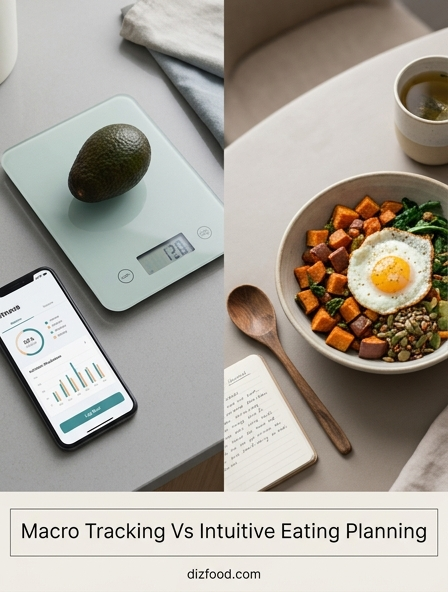
The Fundamentals of Macro Tracking and Intuitive Eating
At the heart of kitchen-based nutrition management lie two distinct philosophies: macro tracking and intuitive eating. Macro tracking, or "If It Fits Your Macros" (IIFYM), is a quantitative approach that focuses on the three primary macronutrients: proteins, carbohydrates, and fats. In this system, every ingredient that passes through the kitchen is measured, weighed, and logged. The primary goal is to reach specific numerical targets tailored to an individual's physiological needs and fitness objectives. This method treats the kitchen like a laboratory, where digital scales and mobile apps are as essential as knives and pans.
In contrast, intuitive eating is a qualitative framework that rejects the clinical nature of tracking. Instead of relying on external data, it encourages individuals to tune into internal biological cues such as hunger, satiety, and cravings. The kitchen becomes a space for sensory exploration rather than measurement. Intuitive eaters do not count calories or weigh their portions; instead, they focus on the "Ten Principles of Intuitive Eating," which include honoring hunger and making peace with food. While macro tracking provides a rigid structure based on energy balance, intuitive eating fosters a psychological relationship with food that prioritizes mental well-being and physical satisfaction over strict numerical output.
Data Versus Discipline Understanding the Core Differences
The divide between macro tracking and intuitive eating is best understood through the lens of data versus internal discipline. Macro tracking relies on objective data to guide decision-making. If the data suggests a person needs more protein, they adjust their meal accordingly. This takes the guesswork out of nutrition but requires a high level of logistical discipline. Intuitive eating, however, requires a different form of discipline-the ability to listen to one's body amidst a world of external influences and emotional triggers. It is the practice of eating until satisfied, not until the plate is empty or the app says the goal is reached.
| Feature | Macro Tracking | Intuitive Eating |
|---|---|---|
| Primary Metric | Grams and Calories | Hunger and Fullness |
| Tools Used | Digital Scale, Tracking App | Mindful Awareness |
| Flexibility | Math-based flexibility | Preference-based flexibility |
| Learning Curve | Technical and logical | Emotional and sensory |
While macro tracking provides immediate feedback through numbers, intuitive eating provides feedback through physical feelings of energy and mood. One is an externalized system of control, while the other is an internalized system of self-regulation. Choosing between them often depends on whether an individual finds safety in numbers or freedom in the absence of them.
The Benefits of Precision Tracking for Specific Goals
For those pursuing specific physical transformations, macro tracking offers a level of precision that intuitive eating cannot match. When the margin for error is slim-such as during a competitive bodybuilding "cut" or a focused muscle-building phase-the kitchen must be managed with accuracy. Tracking ensures that the body receives the exact ratio of nutrients required to preserve lean mass while shedding body fat. It eliminates the cognitive bias that often leads people to underestimate their intake or overestimate their protein consumption.
- Guaranteed Caloric Deficit or Surplus: Precise tracking ensures you are meeting the thermodynamic requirements for your goal.
- Nutrient Optimization: It allows for the manipulation of macros to improve workout recovery and hormonal health.
- Educational Value: Beginners learn the caloric density of various foods, which builds a foundation of nutritional literacy.
- Objectivity: Numbers do not lie, making it easier to troubleshoot stalls in progress without emotional interference.
By using tools like food scales and databases, individuals can enjoy a variety of foods as long as they fit within their daily budget. This "flexible dieting" aspect of macro tracking prevents the feeling of restriction often associated with traditional diets. In the kitchen, this translates to creative recipe modification, where ingredients are swapped to hit targets without sacrificing flavor, providing a sense of control and predictable results.
Developing Body Awareness Through Intuitive Eating Practices
Intuitive eating shifts the focus from the "what" and "how much" to the "why" and "how." The goal is to develop a deep sense of body awareness that has been suppressed by years of external dieting rules. In the kitchen, this means learning to identify the difference between physical hunger and emotional hunger. It involves paying attention to the taste, texture, and aroma of food, which heightens the satisfaction of the meal. When an individual is truly in tune with their body, they can naturally regulate their intake without the need for a scale.
This practice requires unlearning the habit of labeling foods as "good" or "bad." By removing the moral weight of food choices, the individual reduces the urge to binge on "forbidden" items. In an intuitive kitchen, the pantry is stocked with foods that both nourish the body and provide pleasure. Awareness is built by pausing mid-meal to check in: "Is this still tasting good? Am I starting to feel full?" Over time, this creates a sustainable lifestyle where the body's weight stabilizes at its natural "set point." This approach is particularly beneficial for those who find that tracking leads to obsessive thoughts or an unhealthy preoccupation with food, offering a path to peace and physical autonomy.
Psychological Impact of Calorie Counting Versus Mindful Eating
The psychological landscape of nutrition is complex, and the choice between tracking and intuition can significantly affect mental health. Macro tracking provides a sense of security for many; knowing exactly what is being consumed can reduce anxiety around weight gain. However, for others, the constant need to log every morsel can lead to "orthorexia" or a clinical obsession with healthy eating. The pressure to "hit your numbers" can turn a social dinner into a stressful math problem, potentially leading to social isolation or a disconnect from the joy of eating.
Mindful eating, the cornerstone of the intuitive approach, aims to alleviate this stress by fostering a neutral relationship with food. It encourages self-compassion and reduces the guilt associated with overeating. By focusing on the present moment during meal preparation and consumption, individuals can lower cortisol levels and improve digestion. However, the transition from a tracking mindset to an intuitive one can be psychologically jarring. The lack of "guardrails" may cause initial anxiety about losing control. Ultimately, the psychological success of either method depends on the individual's history with food. While one person thrives on the structure of data, another may find that same structure to be a psychological prison, making it essential to choose the method that promotes the most sustainable mental state.
Performance Nutrition Why Athletes Often Choose Macro Tracking
In the world of high-performance athletics, food is viewed primarily as fuel. Athletes often gravitate toward macro tracking because it allows them to synchronize their nutrient intake with their training demands. For an endurance runner or a weightlifter, the timing and quantity of carbohydrates and proteins are critical for glycogen replenishment and muscle protein synthesis. Intuitive eating, while healthy for the general population, can sometimes fall short for athletes who may lose their appetite during intense training cycles, leading to under-fueling and decreased performance.
Macro tracking in an athletic kitchen typically involves "carb cycling" or "nutrient timing." For example, an athlete might consume higher carbohydrates on heavy training days and higher fats on rest days. This strategic manipulation requires the precision of a scale. Additionally, athletes often need to ensure they are consuming enough micronutrients and fiber to support recovery and immune function. By tracking, they can identify gaps in their diet that might lead to deficiencies. While the intuitive approach is excellent for long-term health, the "performance-first" mindset often requires the calculated, data-driven environment that macro tracking provides to ensure every workout is fueled to its maximum potential and every recovery period is optimized for growth.
Breaking the Diet Cycle with an Intuitive Approach
Many people enter the kitchen burdened by a history of "yo-yo dieting," where they swing between extreme restriction and inevitable overindulgence. Macro tracking, if misused, can become just another cycle in this pattern. Intuitive eating is designed specifically to break this cycle by dismantling the "diet mentality." It challenges the idea that there is a "perfect" way to eat and instead promotes food neutrality. When no food is off-limits, the psychological power that "junk food" holds over an individual begins to fade, leading to more moderate and consistent eating patterns.
Breaking the cycle involves honoring the "Satisfaction Factor." It is not just about being full; it is about being satisfied. In an intuitive kitchen, a person might choose a smaller portion of a high-quality, full-fat cheese because it is more satisfying than a large portion of a fat-free alternative. This focus on quality and enjoyment helps to regulate the brain's reward centers. Over time, the desperate need to diet disappears because the person is no longer "failing" or "succeeding" at nutrition; they are simply living. This leads to a more stable weight and a much happier relationship with the kitchen, turning it from a place of restriction into a place of nourishment and self-care.
Common Challenges in Macro Tracking and How to Solve Them
Despite its benefits, macro tracking is not without its hurdles. The most common complaints include the time-consuming nature of logging, the difficulty of tracking meals eaten at restaurants, and the "hidden calories" found in cooking oils and sauces. These challenges can lead to burnout or inaccurate data, which defeats the purpose of the method. To succeed, one must develop systems in the kitchen that streamline the process without sacrificing accuracy.
- Meal Prepping: Weighing and logging large batches of food at once reduces the daily burden of tracking.
- Using a "Recipe Creator": Most apps allow you to input your own recipes, making it easy to log complex home-cooked meals.
- Digital Scale Mastery: Keeping the scale on the counter and using the "tare" function makes weighing ingredients as fast as measuring them by volume.
- Estimation Skills: Learning what 30 grams of protein looks like visually helps when tracking is not possible, such as at social events.
Another challenge is the social aspect of eating. When others are not tracking, it can feel awkward to weigh your portions. The solution lies in balance; many successful trackers use "buffer macros," leaving a few hundred calories unallocated for the end of the day to account for small errors or social bites, ensuring the process remains sustainable for the long term.
Finding Balance with a Hybrid Nutrition Strategy
For many, the most effective approach in the kitchen is not a strict adherence to one philosophy, but a hybrid strategy that utilizes the strengths of both. This "middle ground" involves using macro tracking as a seasonal tool for specific goals, while relying on intuitive eating for maintenance and social flexibility. For instance, an individual might track their intake for four weeks to recalibrate their understanding of portion sizes and then switch to intuitive eating for the following month. This prevents "data fatigue" while ensuring that nutritional goals are still being met.
A hybrid approach often looks like "tracking the big rocks." Instead of logging every spice and vegetable, an individual might only track their total protein and total calories, letting the fats and carbs fall where they may. This provides the necessary guardrails for body composition without the obsessive detail of tracking every gram. In the kitchen, this means weighing the chicken breast but eyeballing the broccoli and rice. This method encourages the development of internal cues while maintaining a level of external accountability. It acknowledges that life is dynamic; some days require the precision of a scientist, while other days require the presence of a diner, allowing for a flexible, lifelong relationship with nutrition.
Choosing the Best Nutrition Path for Your Lifestyle
Ultimately, the "best" nutrition path is the one that you can follow consistently without compromising your quality of life. The kitchen should be a source of health, not a source of chronic stress. To choose the right path, you must assess your current goals, your psychological history with food, and your daily schedule. If you are training for a specific event or need to see tangible data to stay motivated, macro tracking may be the superior choice. It provides a clear roadmap and a sense of accomplishment through quantifiable progress.
On the other hand, if you are looking to heal your relationship with food or find a way of eating that requires zero technology, intuitive eating is the logical destination. It is a long-term investment in self-awareness that pays off in the form of food freedom. Consider the following factors when making your decision:
- Goal Specificity: Are your goals general health or specific aesthetic/performance markers?
- Mental Bandwidth: Do you have the time and energy to weigh and log food daily?
- Emotional Relationship: Does tracking make you feel empowered or restricted?
- Social Lifestyle: How often do you eat food prepared by others?
No matter which path you choose, remember that neither is permanent. You can shift your strategy as your life changes, moving between the precision of the scale and the wisdom of your body as needed to maintain health and happiness.


Comments