
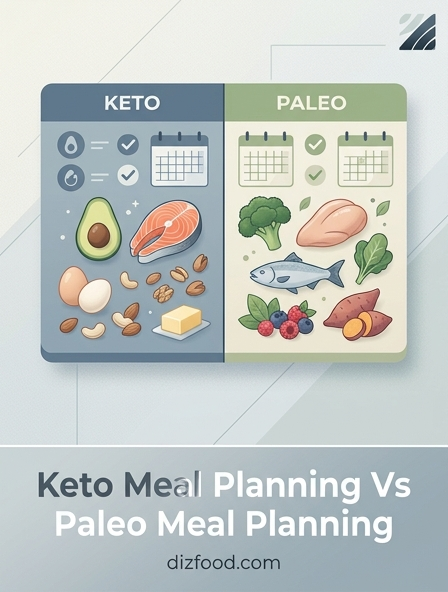
Choosing between Keto and Paleo meal planning often feels like a nutritional crossroads, but the "best" path depends entirely on your specific body composition and metabolic objectives. While both frameworks prioritize whole foods and steer clear of refined sugars, Keto is a high-fat, ultra-low-carb metabolic strategy designed to shift your body into ketosis for rapid fat burning and mental clarity. In contrast, Paleo acts as a lifestyle-centric "ancestral" diet, focusing on food quality by eliminating processed grains and legumes to reduce inflammation and stabilize energy. Whether you are chasing the aggressive weight-loss results of a strict macronutrient ratio or seeking the sustainable, gut-friendly flexibility of prehistoric eating, understanding their core differences is the first step toward reclaiming your health.
| Feature | Keto Meal Planning | Paleo Meal Planning |
|---|---|---|
| Primary Goal | Inducing Ketosis (Metabolic Shift) | Ancestral Nutrition (Whole Food Purity) |
| Macronutrient Focus | 70-80% Fat, 20% Protein, 5-10% Carbs | Flexible ratios; focus on food quality |
| Dairy & Legumes | High-fat dairy allowed; legumes restricted | Strictly no dairy, soy, or legumes |
| Fruit & Veggies | Limited to berries & non-starchy greens | All fruits and root vegetables (starch) allowed |
| Key Health Benefit | Rapid fat loss & insulin sensitivity | Reduced inflammation & improved gut health |
| Best For... | Weight loss & neurological focus | Athletic performance & long-term sustainability |
Understanding the Core Differences Between Keto and Paleo
When organizing a kitchen for specialized nutrition, it is crucial to distinguish between the metabolic objectives of the Ketogenic diet and the evolutionary philosophy of the Paleo lifestyle. While both frameworks encourage the reduction of processed sugars and refined flours, their primary drivers differ significantly. Keto is a nutrient-ratio-driven approach designed to shift the body's internal chemistry into a state of ketosis, where fat becomes the primary fuel source instead of glucose. This requires a meticulous focus on high fat intake and extremely low carbohydrate consumption, regardless of whether a food item was available to our ancestors.
In contrast, Paleo meal planning is rooted in the "Hunter-Gatherer" ideology, emphasizing food quality and the exclusion of agricultural-era staples. In a Paleo kitchen, the focus is on whole, unprocessed foods that humans theoretically consumed during the Paleolithic era. This means that while a Paleo meal might be naturally lower in carbohydrates than a standard diet, it does not mandate the high fat percentages required for ketosis. Paleo allows for natural sugars from fruits and starchy vegetables like sweet potatoes, which would typically be restricted in a Keto environment. Understanding these nuances helps a home cook decide whether they are managing a metabolic state or adhering to a specific food-source philosophy.
Macronutrient Ratios in Keto vs Paleo Meal Prep
The technical structure of meal prep varies significantly when comparing the macronutrient targets of these two popular diets. Keto is mathematically rigid; achieving and maintaining ketosis requires a specific distribution of calories to ensure the liver produces ketones. Paleo, however, is more flexible regarding ratios, focusing instead on the elimination of specific food groups. When prepping containers for the week, a Keto follower must prioritize fat as the foundation of every dish to prevent protein-induced gluconeogenesis from kicking them out of their metabolic state.
| Macronutrient | Typical Keto Ratio | Typical Paleo Ratio |
|---|---|---|
| Fats | 70% - 80% | 35% - 45% |
| Proteins | 15% - 25% | 25% - 35% |
| Carbohydrates | 5% - 10% | 20% - 40% |
Because Paleo does not require the body to remain in ketosis, meal prep can include a wider variety of plant-based carbohydrates. A Paleo plate often looks balanced with a large portion of lean protein and a side of roasted root vegetables. A Keto plate, however, will often feature smaller portions of protein heavily doused in healthy oils or butter, with leafy greens serving as a vehicle for fat rather than a primary source of calories. This distinction in ratios dictates everything from grocery budgets to the types of oils stored in the pantry.
Key Foods Allowed in Keto and Paleo Diet Plans
The overlap between Keto and Paleo grocery lists is substantial, primarily consisting of high-quality meats, fish, and non-starchy vegetables. Both diets advocate for the removal of processed junk, hydrogenated oils, and artificial sweeteners. However, the divergence appears when looking at dairy, tubers, and natural sweeteners. In a Keto kitchen, high-fat dairy like heavy cream and hard cheeses are staples used to hit fat macros, whereas Paleo strictly forbids dairy based on the logic that early humans did not milk livestock.
- Common Ground: Grass-fed beef, wild-caught salmon, pastured eggs, avocado, olive oil, and leafy greens.
- Keto Specifics: Bacon, butter, heavy cream, macadamia nuts, and erythritol or stevia.
- Paleo Specifics: Sweet potatoes, yams, cassava flour, maple syrup, honey, and all varieties of fruit.
When planning a weekly menu, a Paleo cook might prepare a stir-fry using honey as a glaze, whereas a Keto cook would swap the honey for a sugar-free alternative and add extra sesame oil to boost the fat content. Similarly, a Paleo breakfast might include a bowl of mixed berries and nuts, while a Keto breakfast would likely focus on eggs scrambled with high-fat cheese and avocado. These food choices reflect the differing goals: Paleo seeks "clean" ancestral fuel, while Keto seeks "ketogenic" fuel to drive fat adaptation.
How Keto Meal Planning Triggers Fat Burning Ketosis
The primary objective of Keto meal planning is to force the body into a metabolic "back-up" system. Under normal dietary conditions, the body burns glucose from carbohydrates for energy. By planning meals that strictly limit net carbs-usually to under 50 grams per day-the kitchen becomes a laboratory for fat burning. Once glucose and glycogen stores are depleted, the liver begins converting fatty acids into ketones. These ketones cross the blood-brain barrier and serve as an exceptionally efficient fuel source for both the brain and muscles.
Consistency is the most critical element of a Keto meal plan. A single meal containing high-glycemic carbohydrates can trigger an insulin spike, halting ketone production immediately. Therefore, Keto meal planning involves "stealth fat" integration. Chefs often use MCT oil in dressings or "fat bombs" made of coconut oil and cocoa to ensure the body has enough dietary fat to burn while it transitions to utilizing stored body fat. This biological shift often results in suppressed appetite and steady energy levels, provided the meal plan remains disciplined enough to avoid the carbohydrate "creep" found in many processed sauces and seasonings.
The Ancestral Approach to Paleo Meal Structure
Paleo meal planning is less about metabolic manipulation and more about biological compatibility. The theory suggests that the human genome has not significantly evolved since the Paleolithic era, making the modern agricultural diet a mismatch for our digestive systems. Consequently, the Paleo kitchen focuses on nutrient density and the exclusion of anti-nutrients found in grains and legumes. A typical Paleo meal structure revolves around high-quality animal protein and an abundance of plant fiber, mimicking the diverse intake of early foragers.
In a Paleo household, the emphasis is on the "whole food" aspect. This means buying a whole chicken rather than processed nuggets, or making noodles out of zucchini or spaghetti squash instead of wheat. Because there is no need to track macros for ketosis, Paleo eating allows for more variety in seasonal produce. One might enjoy a large bowl of fruit in the summer or starchy root vegetables in the winter. This seasonal flexibility makes Paleo planning feel more intuitive for many, as it relies on the quality of ingredients rather than the quantitative analysis of every gram consumed. The goal is to reduce systemic inflammation and improve gut health by removing foods that were introduced only after the dawn of farming.
Comparing Carbohydrate Limits for Nutritional Success
The most significant point of friction between these two diets is how they handle carbohydrates. In the Keto world, carbohydrates are a strict limit to be avoided. Every gram is accounted for, and most followers prioritize "net carbs" (total carbs minus fiber) to maximize their food volume. In a Keto kitchen, high-carb fruits like bananas or cherries are essentially nonexistent, replaced by small portions of blackberries or raspberries. The focus is on maintaining a flat-lined blood sugar level to prevent any disruption to the ketogenic state.
Paleo, conversely, treats carbohydrates as a spectrum. There is no set limit in Paleo, although the diet is naturally lower in carbs because it eliminates grains and refined sugars. A Paleo athlete might consume 150 to 200 grams of carbohydrates from sweet potatoes and fruit to fuel high-intensity training, which would be impossible on a Keto plan. For someone seeking nutritional success, the choice often depends on their activity level. Those with sedentary lifestyles or insulin resistance often find the strict limits of Keto more effective for weight loss, while active individuals may prefer the Paleo approach, which provides enough glucose for explosive physical performance without the bloat associated with processed grains.
Dairy and Grains: The Major Dietary Divergence
While both diets agree that modern wheat, corn, and rice have no place in a healthy kitchen, they diverge sharply on the subject of the dairy aisle. This difference fundamentally changes how meals are creamed, seasoned, and structured.
- Grains (Shared Exclusion): Both diets eliminate wheat, rye, barley, oats, and corn. This removes gluten and lectins, which are often cited as causes of digestive distress.
- Dairy (The Split): Keto embraces dairy as a high-fat, low-carb tool. Cheese, heavy cream, and sour cream are vital for hitting fat targets. Paleo excludes all dairy (except sometimes ghee), arguing that humans are the only species to drink milk after weaning and the only species to drink the milk of another animal.
- Legumes: Paleo excludes beans, lentils, and peanuts due to phytates and lectins. Keto generally excludes them as well, but primarily because they are too high in starch.
This means a Keto "taco night" might involve a cheese shell filled with meat and sour cream, while a Paleo "taco night" would use a lettuce wrap or a cassava flour tortilla with extra guacamole to provide creaminess without the use of dairy. For those with dairy sensitivities, Paleo offers a cleaner slate, while those who enjoy the satiety provided by fats might find Keto's inclusion of dairy much easier to sustain over several months.
Essential Grocery Staples for Keto and Paleo Kitchens
Building a pantry that supports both Keto and Paleo requires a focus on healthy fats and alternative flours. While their end goals differ, the "perimeter shopping" strategy applies to both: spend most of your time in the meat, produce, and egg sections. However, the specialized ingredients stored in the cupboards will vary based on the specific requirements of each diet's chemistry.
For the Keto kitchen, the staples are often focused on maximizing fat. This includes large jars of coconut oil, avocado oil, and grass-fed butter. Nut butters are common, provided they have no added sugar. For baking, almond flour and coconut flour are used in conjunction with sugar substitutes like monk fruit or allulose. In the fridge, eggs and heavy cream are indispensable for creating quick, high-fat meals.
The Paleo pantry looks slightly different. While it also stocks almond flour and coconut oil, you will find natural sweeteners like raw honey or grade-A maple syrup. Grain-free starches like arrowroot powder or tapioca flour are used as thickeners for sauces. Dried fruits and a wider variety of nuts (excluding peanuts) are common snacks. Both kitchens benefit from a robust spice rack, as flavor must come from herbs and spices rather than sugar-laden pre-made marinades or cornstarch-based thickeners found in standard supermarket aisles.
Long Term Sustainability of Low Carb vs Whole Food Eating
Sustainability is the ultimate test of any dietary meal plan. Keto offers rapid results, particularly for weight loss and blood sugar management, which can be highly motivating. However, the "all or nothing" nature of ketosis can make social situations and travel difficult. The "Keto flu" experienced during the transition phase and the potential for "carb cravings" if electrolytes are not managed can lead to a cycle of yo-yo dieting if the individual does not have a long-term plan for maintenance.
Paleo is often viewed as more sustainable for the average person because it is a "template" rather than a metabolic state. There is no "Paleo flu" caused by eating a piece of fruit. Because it allows for a broader range of food groups (like starchy vegetables and all fruits), it feels less restrictive during social gatherings or at restaurants. However, Paleo can be more expensive, as it places a heavy premium on organic, grass-fed, and wild-caught labels. Keto can be done relatively cheaply using conventional high-fat meats and eggs, though the "clean Keto" version aligns more closely with Paleo's high-quality standards. Ultimately, the most sustainable plan is the one that aligns with an individual's biology and their ability to enjoy the food they prepare in their kitchen every day.
Choosing the Right Meal Plan for Your Health Goals
Selecting between Keto and Paleo depends entirely on your primary health objectives and your relationship with food. If your goal is therapeutic weight loss, reversal of Type 2 diabetes, or managing neurological conditions like epilepsy, the Ketogenic diet offers a powerful metabolic tool that is hard to match. Its ability to stabilize insulin and use body fat for fuel makes it a favorite for those struggling with metabolic syndrome. It requires a "measure and track" mindset that appeals to those who like data and clear boundaries.
If your goals are centered on reducing systemic inflammation, improving athletic performance, or simply eating a "cleaner" diet free from industrial processing, Paleo is likely the better fit. It is particularly effective for those with autoimmune issues who may need to identify food sensitivities by removing dairy and legumes. Paleo encourages a healthier relationship with whole plants and provides the glucose necessary for high-intensity movement. Many people actually find success by starting with a strict Keto protocol to jumpstart weight loss and then transitioning into a Paleo lifestyle for long-term maintenance. By understanding the kitchen requirements of both, you can tailor your meal planning to support your body's specific needs at any stage of your health journey.






Comments