
The Dual Appliance Advantage for Busy Families
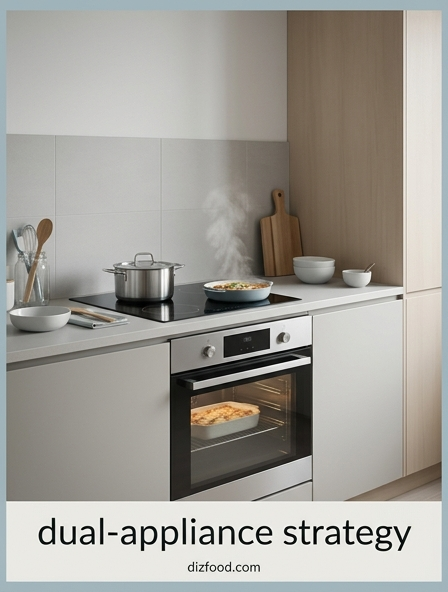
The dual-appliance strategy transforms the domestic culinary landscape by doubling throughput without doubling the effort. For busy families, this means the difference between a staggered dinner and a cohesive, multi-course meal served all at once. By utilizing two primary heat sources, such as an air fryer alongside a traditional oven or a slow cooker paired with a pressure cooker, home chefs can bypass the bottleneck of waiting for a single device to finish its cycle. This approach allows for the simultaneous preparation of disparate textures, such as crispy roasted vegetables and tender braised meats, which would otherwise require sequential cooking times.
- Increased volume for large families or meal-prepping sessions.
- Ability to separate allergens or dietary-specific dishes easily.
- Significant reduction in total time spent standing in the kitchen.
- Greater flexibility in managing complex recipes with different temperature needs.
Ultimately, the advantage lies in the synchronization of the "ready time." When two appliances work in tandem, the chef gains more control over the rhythm of the household, ensuring that the main dish and the side are both at peak temperature when they reach the table.
Top Appliance Pairings for Maximum Speed
Selecting the right combination of tools is essential for optimizing kitchen speed. Not all appliances are created equal when it comes to synergy. Some pairs focus on texture contrast, while others focus on sheer volume. Understanding how these machines complement each other allows for a more fluid cooking experience and faster results.
| Primary Device | Secondary Device | Ideal Meal Type |
|---|---|---|
| Pressure Cooker | Air Fryer | Frozen meats and crispy sides |
| Sous Vide Stick | Cast Iron/Broiler | Precision proteins with a hard sear |
| Rice Cooker | Stovetop Wok | Quick stir-fry and steamed grains |
| Toaster Oven | Convection Oven | Dual-temperature baking and roasting |
The pressure cooker and air fryer combo is particularly effective for those starting from frozen ingredients. While the pressure cooker breaks down tough fibers in record time, the air fryer can quickly crisp up skins or roast vegetables, cutting down the traditional hour-long dinner process to less than thirty minutes from start to finish.
Planning Your Menu for Simultaneous Cooking
Effective dual-appliance usage begins long before the power buttons are pressed. Menu planning must account for the specific strengths and limitations of each device to avoid a power surge or a logistical nightmare. The goal is to select recipes that do not compete for the same type of preparation or space. For example, planning two dishes that both require heavy chopping at the same time will create a prep bottleneck, even if the cooking itself is automated.
- Identify the "set and forget" component, such as a slow-cooked stew or steamed rice.
- Select a high-activity component that requires monitoring, like a pan-seared protein.
- Check the wattage requirements to ensure your kitchen circuit can handle both devices.
- Coordinate the finishing times so that the fastest-cooking item is started last.
By balancing a hands-off appliance with a more active cooking method, you ensure that you are never overwhelmed. This strategic menu design allows for a sophisticated variety of flavors and textures that would be difficult to manage using a single heat source without letting one dish go cold.
Optimizing Kitchen Layout for Multi Tasking
A dual-appliance strategy is only as effective as the physical space in which it is executed. To maximize efficiency, the kitchen layout should be organized into functional zones that minimize unnecessary movement. This is often referred to as the "work triangle," but with multiple appliances, it expands into a "work polygon." Start by clearing dedicated zones for each device, ensuring that they have adequate ventilation and access to power outlets without overlapping cords. Use stable, heat-resistant surfaces to prevent damage during high-temperature cycles.
The placement of prep areas is equally vital. Ideally, your chopping station should be situated between the two appliances, allowing you to pivot from one to the other without walking across the room. If space is limited, consider a vertical approach using tiered cooling racks or appliance garages to keep the main countertop clear. Proper lighting in these zones ensures safety when handling hot inserts or sharp tools. When the physical environment supports the workflow, the cognitive load of managing two cooking processes simultaneously is greatly reduced, leading to a more enjoyable and safer culinary experience.
Reducing Active Prep Time with Smart Tools
To keep up with the speed of dual appliances, the preparation phase must be streamlined. If your air fryer and pressure cooker are both ready to go, but you are still peeling potatoes, the time-saving benefits are lost. Smart tools act as the bridge between raw ingredients and the machines. Utilizing high-speed processors or specialized slicers ensures that the ingredients are ready to be loaded the moment the appliances reach temperature.
- Food Processors: Essential for rapid dicing and shredding of vegetables.
- Mandolines: Perfect for uniform slices that cook evenly in an air fryer.
- Digital Scales: Allow for "dump-and-go" cooking in pressure cookers without dirtying measuring cups.
- Garlic Presses: Speed up the inclusion of aromatics in both devices simultaneously.
By investing in these preparatory helpers, you ensure that the "active" part of your cooking is finished quickly. This allows you to transition into a supervisory role where you simply monitor the timers of your dual devices. This synergy between prep tools and cooking appliances is the secret to achieving a thirty-minute meal that actually takes thirty minutes of your time.
Coordinating Cook Cycles for Hot Meals
The ultimate challenge of the dual-appliance strategy is the synchronization of the "end whistle." Nothing is more frustrating than having a perfectly cooked main dish ready while the side dish still has fifteen minutes on the clock. Coordination requires working backward from the desired serving time. If a whole chicken takes 45 minutes in the convection oven and roasted potatoes take 20 minutes in the air fryer, the potatoes should not be started until the chicken is halfway through its cycle.
- Calculate the total time for each dish, including preheating requirements.
- Factor in "resting time" for meats, which can be done while the second appliance finishes.
- Use a multi-channel timer or a smartphone app to track both devices independently.
- Utilize "Keep Warm" functions on smart appliances to buffer any timing errors.
Mastering this timeline ensures that every component of the meal hits the plate at its optimal temperature. It also reduces the stress of the final minutes of cooking, as you can focus on plating and garnishing rather than frantically checking multiple timers at once.
Energy Efficient Cooking with Dual Devices
Contrary to popular belief, running two small appliances is often more energy-efficient than heating a single large standard oven. A traditional oven requires a significant amount of energy to preheat a large, empty cavity. In contrast, an air fryer or a toaster oven heats a localized space almost instantly. By using a dual-appliance strategy involving these smaller, specialized machines, you can cook a full meal while consuming a fraction of the kilowatt-hours required by a full-sized range.
Furthermore, many modern counter-top appliances use convection or pressure technology to cook food up to 70% faster. This reduction in cooking time translates directly to lower energy bills. When choosing your pairings, look for Energy Star-rated devices or those with automatic shut-off features. This not only saves money but also prevents the kitchen from overheating, which is a common issue when running a large oven for extended periods. In the summer months, this strategy is particularly effective at keeping the home cool while still providing a hot, home-cooked dinner for the entire family.
Streamlining Workflow from Prep to Plate
A successful dual-appliance meal relies on a logical progression of tasks. This workflow should be designed to eliminate "empty hands" time. While one appliance is preheating, you should be prepping the food for the second. While the first is in its main cook cycle, you should be cleaning the prep tools. This assembly-line mentality ensures that by the time the food is served, the kitchen is already halfway back to a clean state.
| Stage | Appliance 1 Action | Appliance 2 Action |
|---|---|---|
| Phase 1 | Preheat / Load Long-Cook | Prep ingredients for Short-Cook |
| Phase 2 | Active Cooking | Load / Start Short-Cook |
| Phase 3 | Resting / Warming | Final Crisping / Finishing |
| Phase 4 | Plating | Plating |
This organized approach prevents the "chaos peak" that often happens right before dinner. By following a structured workflow, the chef remains in control, moving methodically from one task to the next without the frantic energy that usually accompanies multi-tasking in a high-pressure environment.
Cleaning Strategies for Multi Appliance Meals
The downside of using multiple appliances can be the pile of dishes left in the wake. However, smart cleaning strategies can mitigate this burden. Most modern appliances are designed with removable, dishwasher-safe components. The key is to leverage these features immediately. As soon as a basket or pot is emptied, it should be rinsed or placed in the dishwasher to prevent food from drying and hardening, which makes later cleaning much more difficult.
- Use parchment liners or silicone mats in air fryers and toaster ovens.
- De-glaze pressure cooker inserts immediately to loosen burnt-on bits.
- Wipe down the exterior of appliances while they are still warm to remove oil splatter.
- Designate a "dirty zone" for used inserts to keep the main sink clear for hand-washing.
By integrating cleaning into the cooking process, the transition from dinner to relaxation is much faster. Using liners is perhaps the most effective "hack," as it often eliminates the need to scrub the appliance entirely, requiring only a quick wipe of the heating element and a swap of the paper or silicone tray.
Mastering the Art of Parallel Kitchen Production
Mastering parallel production is about moving from a linear mindset to a systems-based mindset. In a professional kitchen, chefs don't cook one dish at a time; they manage multiple stations. You can replicate this at home by viewing your air fryer, pressure cooker, and stovetop as independent stations. This mastery comes with practice and a deep understanding of how different foods react to various heat transfer methods. Over time, you will intuitively know that the steam from the rice cooker can be used to warm tortillas, or that the residual heat in the air fryer can toast nuts while you plate the main meal.
This level of kitchen proficiency allows for incredible creativity. You are no longer limited by the capacity of a single oven rack. You can experiment with complex textures, varying temperatures, and diverse cuisines all within the same meal. Parallel production doesn't just save time-it elevates the quality of the food you serve. As you become more comfortable managing multiple devices, the kitchen transforms from a place of labor into a high-efficiency studio where culinary excellence is achieved through strategic orchestration.


Comments