
The Role of Salt and Osmosis in Brining
Salt is arguably the most critical ingredient in achieving deep flavor penetration. Through the process of osmosis, salt initially draws moisture out of the muscle fibers. However, as the concentration of salt on the exterior increases, the process reverses, and the brine is drawn back into the meat. This mechanism does more than just transport seasoning; it physically alters the protein structure. The salt ions cause the tightly wound protein filaments, such as myosin, to unwind or denature. This creates a more open matrix that can trap and hold water more effectively during the cooking process.
- Equilibrium Brining: Using a precise percentage of salt relative to the weight of the meat and water to prevent over-salting.
- Gradient Brining: Using a high-concentration solution for a shorter period to quickly season the exterior layers.
- Diffusion: The slow movement of salt ions from areas of high concentration to low concentration within the cellular structure.
Because salt is one of the few molecules small enough to truly penetrate deep into the center of a large cut of meat, it acts as a primary vehicle for enhancing juiciness and internal seasoning.
Optimizing Surface Area through Scoring and Piercing
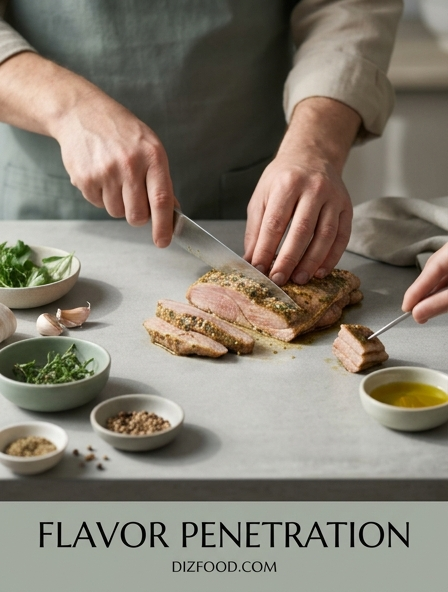
Flavor molecules, particularly those found in herbs and spices, are often too large to penetrate the dense cellular structure of proteins or fibrous vegetables. To overcome this physical barrier, chefs utilize scoring and piercing techniques to increase the available surface area. Scoring involves making shallow, cross-hatch incisions on the surface of the food. This is particularly effective for meats with a thick fat cap, such as duck breast or pork shoulder, as it allows the marinade to bypass the hydrophobic lipid layer and reach the muscle tissue beneath.
Piercing, or jaccarding, involves using a tool with thin needles to create vertical channels through the product. These channels act as conduits for marinades, allowing liquids to bypass the exterior "shield" and deposit flavor directly into the core. While this significantly accelerates the flavoring process, it must be used judiciously. Over-piercing can lead to excessive moisture loss during cooking, as the same channels that allow marinade in also provide an exit path for internal juices. Balancing structural integrity with increased surface access is key to a successful infusion.
Acidic Components for Structural Tenderization
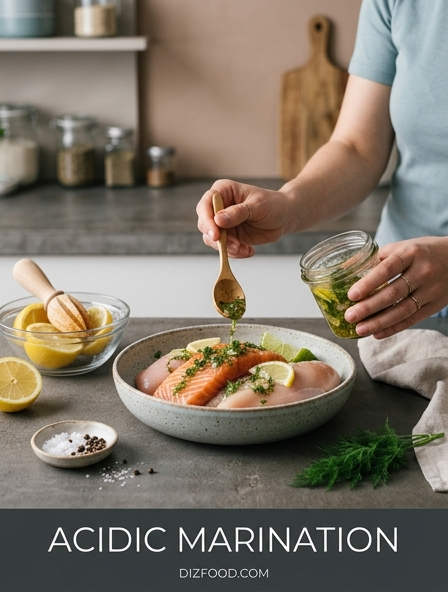
Acids play a dual role in kitchen chemistry by both providing a bright flavor profile and modifying the physical texture of the food. In a marinade, acidic components like citrus juice, vinegar, or yogurt work by denaturing the surface proteins. This chemical "cooking" process breaks down the connective tissues and collagen, making the surface more porous and receptive to other flavor-carrying liquids. However, the depth of penetration for acids is relatively shallow, typically limited to the outermost few millimeters of the ingredient.
| Acid Source | Primary Acid | Effect on Texture |
|---|---|---|
| Lemon Juice | Citric Acid | Rapid surface denaturation; brightens flavor. |
| Vinegar | Acetic Acid | Aggressive breakdown; good for tough fibers. |
| Yogurt | Lactic Acid | Gentle tenderization; creates a thick coating. |
| Wine | Tartaric Acid | Moderate breakdown; adds complex aromatic notes. |
It is crucial to monitor the time food spends in acidic environments. Prolonged exposure can lead to a "mushy" exterior as the proteins become overly degraded, resulting in a chalky mouthfeel rather than a tender one.
Enzymatic Breakdown with Natural Fruit Proteases
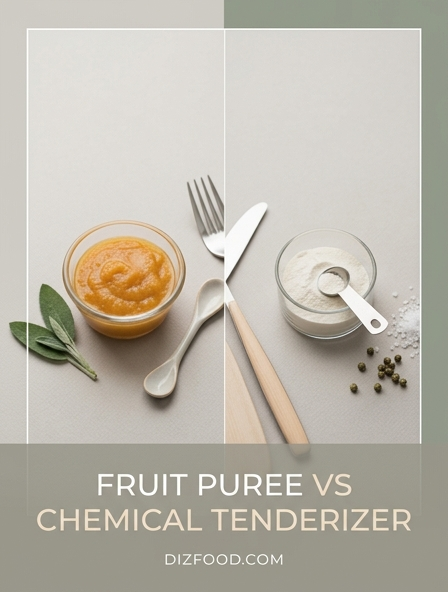
Unlike acids, which use pH to denature proteins, certain fruits contain powerful enzymes known as proteases that actively digest protein chains. These enzymes work like molecular scissors, snipping the long, tough strands of muscle fiber into smaller, softer fragments. This biological approach to flavor penetration allows for a significant change in texture that permits seasonings to migrate more freely through the softened tissue. Because these enzymes are highly efficient, the marinating window is often much shorter than with salt-based or acidic marinades.
- Bromelain: Found in fresh pineapple; extremely aggressive and can liquefy meat if left too long.
- Papain: Derived from papaya; a common ingredient in commercial meat tenderizers.
- Actinidin: Found in kiwi; offers a more moderate rate of breakdown, ideal for delicate meats.
- Ficin: Sourced from figs; provides a rapid enzymatic reaction suitable for dense proteins.
To maximize the benefit of enzymatic breakdown, the fruit should be freshly pureed, as heat processing (like canning) deactivates these sensitive enzymes. Short, controlled bursts of exposure provide the best balance of flavor and structural integrity.
Temperature Control for Accelerated Infusion
The rate of molecular diffusion is directly influenced by temperature. In the context of flavor penetration, heat increases the kinetic energy of the molecules in a marinade, causing them to move and vibrate more rapidly. This increased activity allows salt, sugar, and aromatics to navigate the microscopic gaps in the food's structure more quickly than they would at refrigerated temperatures. Warm marinades can be particularly effective for vegetables with dense cell walls, as the heat softens the pectin that holds the cells together, essentially opening the gates for flavor entry.
However, temperature control requires a careful balance. While warmth accelerates infusion, it also poses food safety risks if proteins are kept in the "danger zone" (40°F to 140°F) for too long. Techniques like sous-vide allow for precise, low-temperature heating that safely speeds up the marinating process while simultaneously beginning the cooking cycle. Conversely, "cold marinating" is safer for long durations but requires more time for the same level of penetration. Understanding the relationship between thermal energy and molecular movement allows for more efficient kitchen workflows.
Utilizing Vacuum Sealing for Forced Penetration
Vacuum sealing is a modern culinary technique that leverages atmospheric pressure to enhance flavor penetration. When food and marinade are placed in a vacuum bag and the air is removed, the external pressure on the food drops significantly. This causes the air and moisture trapped within the cellular structure of the food to expand and escape. When the vacuum is released or the bag seals, the marinade is essentially forced into the newly vacated spaces, resulting in a rapid and deep infusion that would take hours or days under normal conditions.
This method is particularly effective for porous items like mushrooms, watermelon, or cucumber, where the vacuum can completely replace the internal air with a flavored liquid, changing both the taste and the translucency of the ingredient. For denser proteins, the vacuum helps the marinade coat every microscopic crevice of the surface, ensuring that the chemical processes of osmosis and denaturation begin instantaneously. This "forced penetration" saves time and reduces the amount of marinade required, as the tight seal ensures maximum contact between the liquid and the ingredient.
Fat-Based Carriers and Lipid-Soluble Flavor Molecules
Many of the most potent flavor compounds found in spices-such as the piperine in black pepper or the capsaicin in chilies-are hydrophobic, meaning they do not dissolve well in water. Instead, they require a fat-based carrier to be efficiently transported. Using oils, butter, or animal fats in a marinade acts as a vehicle for these lipid-soluble molecules. The fat clings to the surface of the food, creating a concentrated layer of flavor that stays in place more effectively than water-based liquids. Furthermore, fats can penetrate the hydrophobic lipid bilayers of cell membranes more easily than water.
- Infusion: Heating spices in oil first to release fat-soluble aromatics before applying them to the food.
- Emulsion: Combining fats with water-based acids to carry both types of flavor molecules simultaneously.
- Protection: Fats create a barrier that prevents the food from drying out while it absorbs the aromatics.
By selecting the right fat-such as olive oil for Mediterranean notes or toasted sesame oil for East Asian profiles-you not only facilitate better flavor penetration but also add a rich, luxurious mouthfeel to the final dish.
The Impact of Marinating Duration on Texture
While the goal of marinating is usually to maximize flavor, the duration of the process is a critical variable that can dictate the success or failure of a dish. Flavor penetration is not a linear process; it follows a curve of diminishing returns. Salt and small molecules will continue to move inward, but large aromatic compounds will mostly remain on the surface. If a marinade is left too long, the chemical and enzymatic actions that provide tenderization can go too far, leading to a breakdown of the food's structural matrix.
For thin cuts of meat or delicate seafood, marinating times should be kept short-often between 15 and 60 minutes. Denser proteins like beef brisket or whole chickens can handle several hours or even overnight. Over-marinating in acidic or enzymatic solutions results in a mushy, unappealing surface texture that fails to brown properly when heat is applied. The key is to match the duration to the density of the ingredient and the strength of the marinade's active components. Success lies in stopping the process once the optimal balance between flavor depth and structural integrity is achieved.
Emulsification Techniques for Uniform Coating
A common problem in marinating is the separation of oil and water-based ingredients, which leads to uneven flavor distribution. Emulsification is the process of binding these two normally immiscible liquids into a stable, uniform mixture. By creating a stable emulsion, you ensure that every square millimeter of the food's surface is exposed to both the salt/acid (water-phase) and the aromatic spices (oil-phase) simultaneously. This leads to a much more consistent flavor profile across the entire ingredient.
- Mustard: Contains mucilage that acts as a natural emulsifier.
- Egg Yolks: Rich in lecithin, the gold standard for binding oil and water.
- Honey: While not a primary emulsifier, its viscosity helps stabilize mixtures.
- Garlic Paste: Contains proteins and polysaccharides that help hold oil in suspension.
An emulsified marinade also has higher viscosity, meaning it "clings" to the food rather than sliding off to the bottom of the container. This increased contact time is essential for the slow process of flavor migration to occur effectively, especially on smooth surfaces like skin-on poultry.
Post-Marinating Preparation for Enhanced Crust Development
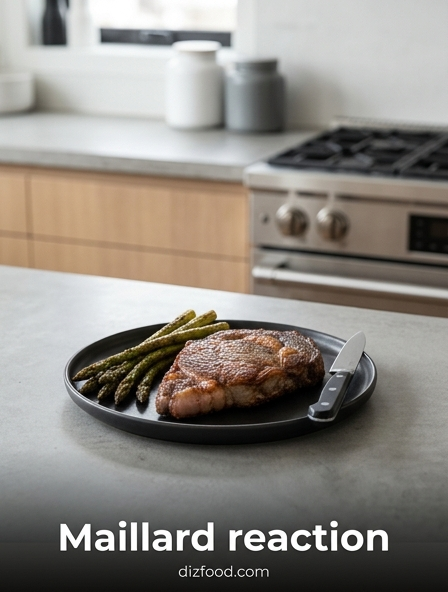
The final step in maximizing the impact of flavor penetration occurs just before the food hits the pan. While a marinade provides internal flavor, it can often hinder the development of a flavorful exterior crust, known as the Maillard reaction. This chemical reaction requires high heat and a dry environment. If the surface of the food is dripping with moisture from a marinade, the initial energy of the pan will be wasted on evaporating that water rather than browning the protein. This results in steamed meat rather than seared meat.
To prevent this, it is essential to pat the food dry with paper towels after removing it from the marinade. This removes excess surface water while leaving the salt and oils that have already begun to penetrate or cling to the fibers. Additionally, any sugars present in the marinade (from honey, fruit juice, or yogurt) should be monitored closely, as they can burn at high temperatures. By properly preparing the surface post-infusion, you ensure a contrast between the deeply seasoned interior and a crisp, savory, well-developed crust on the exterior.

Comments