
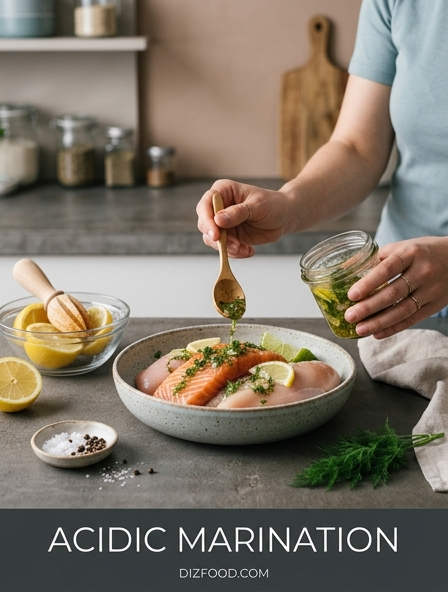
The Science of Acidic Protein Denaturation
Acidic marination is a fundamental culinary technique rooted in the chemical process of protein denaturation. When a marinade containing an acid-such as citric, acetic, or lactic acid-is applied to raw meat, the hydrogen ions in the liquid interact with the complex folds of the protein molecules. These ions disrupt the various chemical bonds, primarily hydrogen bonds and salt bridges, that maintain the protein's specific three-dimensional shape. As these bonds weaken, the tightly coiled proteins begin to unwind and straighten, a process known as uncoiling.
Once the proteins are denatured and uncoiled, they interact with one another to form a loose mesh-like structure. This structural change initially allows the meat to trap more water, potentially increasing juiciness. However, if the denaturation continues for too long or the acid is too concentrated, the proteins will aggregate and bond too tightly, eventually squeezing out moisture. This results in a texture that feels dry and grainy rather than tender. Understanding this delicate balance between uncoiling and over-coagulation is the key to mastering the science of the kitchen.
Choosing the Right Acidic Base for Meat
Selecting the appropriate acidic base is crucial because different acids interact with various types of muscle fibers and fats with varying intensities. The choice depends largely on the toughness of the cut and the desired flavor profile of the final dish. Stronger acids, like those found in vinegars, are effective for breaking down connective tissues in tougher cuts, while milder acids are better suited for delicate proteins like seafood.
- Vinegars: Ideal for beef and pork. Balsamic and red wine vinegars provide deep flavors, while white vinegar offers a sharp, clean profile.
- Citrus Juices: Lemon and lime are classic choices for poultry and fish. They provide a bright, fresh acidity that also acts as a flavor enhancer.
- Dairy: Buttermilk and yogurt contain lactic acid. This is the gentlest form of acidic marination, making it perfect for chicken breasts.
- Wine: Contains tartaric acid. It is excellent for slow-cooked meats, as it helps tenderize while adding complex aromatic compounds.
Matching the strength of the acid to the protein ensures that the meat is tenderized without becoming structurally compromised before it even hits the heat.
How pH Levels Impact Muscle Fiber Structure
The pH scale, ranging from 0 to 14, is a measurement of acidity or alkalinity that directly dictates the behavior of muscle fibers during marination. Most meats have a natural pH of around 5.5 to 6.0. When an acidic marinade is introduced, it lowers the pH level of the meat surface. This shift in the environment changes the electrical charge on the protein molecules. When the pH drops below the "isoelectric point" of the meat proteins, the fibers begin to repel each other, creating space between them.
This expansion of space between the muscle fibers allows the meat to hold onto more liquid, which is why a brief acidic soak can lead to a plumper, juicier result. However, if the pH level drops too low-specifically below 4.0-the proteins begin to break down too aggressively. The connective tissue, primarily collagen, can start to dissolve into gelatin prematurely. While some breakdown is desirable for tenderness, an excessive drop in pH leads to a loss of structural integrity, transforming firm muscle into a mushy, unappealing consistency during the cooking process.
Balancing Acid Fat and Salt for Flavor
A successful marinade is not solely about the acid; it requires a harmonious balance of acid, fat, and salt. These three components work in tandem to transform the flavor and texture of the protein. The acid provides the necessary brightness and tenderizing power, but on its own, it can be overly sharp or harsh. Fat, usually in the form of oil, serves to coat the meat and distribute the fat-soluble aromatics, while also buffering the intensity of the acid to prevent surface "cooking."
- Acid: Tenderizes the surface and provides a "high" note that cuts through richness.
- Fat: Protects the meat from drying out and helps flavor molecules stick to the surface.
- Salt: Acts as the primary flavor enhancer and helps the meat retain moisture through brine-like effects.
When these elements are balanced, the acid enhances the natural savory notes of the meat without dominating the palate. Salt assists the acid by opening up the protein structures further, allowing the flavor-carrying fats and seasonings to penetrate slightly deeper than they would in a salt-free environment.
Marination Timing to Avoid Mushy Texture
Timing is perhaps the most critical variable in acidic marination. Because acids chemically "cook" the protein by denaturing it, leaving meat in a highly acidic environment for too long will lead to irreversible textural damage. The exterior of the meat will become mealy or mushy, while the interior remains unaffected, creating an inconsistent and unpleasant mouthfeel. The duration of marination should be inversely proportional to the strength of the acid and the surface-area-to-volume ratio of the meat.
| Protein Type | Recommended Time | Acid Strength |
|---|---|---|
| Seafood/Fish | 15-30 Minutes | Mild (Citrus) |
| Chicken/Poultry | 2-6 Hours | Medium (Vinegar/Dairy) |
| Pork/Beef | 4-12 Hours | Strong (Vinegar/Wine) |
Exceeding these windows can lead to the "cured" effect seen in ceviche, which is desirable for raw fish but problematic for meats intended to be grilled or seared. Always monitor the meat's surface texture; if it begins to look opaque or white, the acid has already done its work.
The Role of Osmosis in Flavor Penetration
A common misconception in the kitchen is that marinades penetrate deep into the center of a thick cut of meat. In reality, most marinades only penetrate a few millimeters below the surface. This movement of flavor is governed by osmosis and diffusion. Osmosis is the movement of water from an area of high concentration to an area of low concentration across a semi-permeable membrane, while diffusion involves the movement of solutes like salt and small acid molecules.
Salt is one of the few ingredients small enough to truly penetrate the muscle fibers deeply over time. The acid, however, tends to stay on the surface where it works its chemical magic. By breaking down the surface proteins, the acid creates a more porous "entry zone" that allows other flavors, such as those from garlic, herbs, or spices, to cling more effectively to the meat. This ensures that every bite has a concentrated burst of flavor on the exterior, which then seasons the rest of the meat as it is chewed. To maximize penetration, many chefs use techniques like scoring the meat or using thinner cuts to increase the surface area exposed to the osmotic pressure.
Impact of Acids on the Maillard Reaction
The Maillard reaction is the chemical process responsible for the browning and complex flavor development that occurs when meat is seared. This reaction happens between amino acids and reducing sugars under high heat. However, the presence of acid can significantly inhibit this reaction. The Maillard reaction is most efficient in an alkaline or neutral environment (pH 7 or higher). When the surface of the meat is highly acidic, the browning process slows down considerably, which can result in grey, steamed-looking meat rather than a rich, crusty sear.
To counteract this, it is essential to pat the meat thoroughly dry with paper towels before cooking to remove excess surface moisture and acid. In some cases, chefs may even lightly dust the marinated meat with a pinch of baking soda or sugar to neutralize the surface pH just before it hits the pan. Balancing the benefits of tenderization with the need for a high-quality sear is a hallmark of professional technique. If the marinade is too acidic, you may find yourself with meat that is tender on the inside but lacks the savory, caramelized exterior that defines a perfectly cooked steak.
Comparing Citrus Vinegar and Wine Marinades
While all these ingredients provide the necessary acidity for marination, they contain different types of acids that react uniquely with proteins and offer distinct flavor profiles. Citrus juices primarily contain citric acid, which is sharp and volatile. It works very quickly on surface proteins, making it the preferred choice for quick marinades or "cooking" raw fish. However, citric acid can also impart a slightly bitter note if the zest or pith is included in the mixture.
Vinegars contain acetic acid, which is more stable and pungent. Acetic acid is highly effective at cutting through the heavy fats found in pork or beef, and its flavor persists even after high-heat cooking. Wine marinades utilize tartaric and malic acids. These are softer acids that provide a more sophisticated, rounded flavor profile. Wine also contains tannins, which can contribute to the breakdown of proteins in a way that simple vinegars cannot. Because wine has a lower acid concentration than pure vinegar, it allows for longer marination times without the immediate risk of over-denaturation, making it the ideal choice for traditional braises and long-soak roasts.
Using Lactic Acid for Gentle Tenderizing
Lactic acid marination, typically involving yogurt, buttermilk, or sour cream, is arguably the most effective and forgiving method for tenderizing poultry. Unlike the aggressive action of citric or acetic acids, lactic acid works slowly and gently. This is due to its larger molecular size and the presence of calcium in dairy products. Calcium activates naturally occurring enzymes in the meat called calpains, which break down muscle proteins from within, mimicking the natural aging process of the meat.
Furthermore, the thick viscosity of dairy-based marinades ensures that the acid stays in constant contact with the meat's surface while providing a protective coating. This coating prevents the proteins from drying out and creates a unique texture when cooked-often resulting in a tender, almost velvety mouthfeel. This is why dairy marinades are the gold standard for dishes like Tandoori chicken or Southern fried chicken. Because the process is so gentle, meat can often be left in a dairy-based marinade for 12 to 24 hours without the risk of the meat turning mushy, providing a wider window of success for the home cook.
Essential Safety Tips for Acidic Marinating
Food safety is paramount when dealing with acidic marinades, as the chemistry of the acid interacts not just with the meat, but also with the containers and the environment. One of the most important rules is to always use non-reactive containers. Acids will react with metals like aluminum, copper, and unseasoned cast iron, causing the metal to leach into the food. This results in a metallic taste and can even be toxic. Always opt for glass, ceramic, or food-grade plastic containers.
- Refrigeration: Never marinate meat at room temperature. The acidic environment is not a substitute for cold storage, and bacteria can still multiply rapidly.
- No Reusing: Never use leftover marinade as a sauce unless it has been boiled for several minutes to kill any bacteria from the raw meat.
- Containment: Keep marinating meat on the bottom shelf of the refrigerator to prevent any acidic drips from contaminating other foods.
- Disposal: Any marinade that has touched raw meat should be discarded immediately after use.
Following these safety protocols ensures that your culinary experiments remain healthy and delicious.




Comments