
When it comes to mastering the art of the kitchen, the "skin-on vs. skinless" debate is about much more than just extra calories-it is the ultimate secret to controlling flavor penetration. Choosing skinless cuts allows your dry rubs and acidic marinades to make direct contact with the muscle fibers for an instant, bold infusion of seasoning. Conversely, keeping the skin intact acts as a natural culinary barrier that, while slowing initial absorption, facilitates a self-basting process where rendered fats carry fat-soluble flavors deep into the meat during high-heat cooking. Understanding this dynamic ensures you can strategically choose your preparation method to achieve either a concentrated punch of spices or a rich, succulent depth of flavor.
| Feature | Skin-On | Skinless |
|---|---|---|
| Flavor Intake | Indirect; requires scoring for penetration. | Direct; maximum surface area for rubs. |
| Moisture Level | High; skin locks in natural juices. | Lower; prone to drying if overcooked. |
| Texture Contrast | High; provides a "crackling" or crispy finish. | Uniform; soft and consistent throughout. |
| Fat Content | Higher; contains subcutaneous fat stores. | Leaner; reduced lipids and calories. |
| Prep Technique | Needs patting dry and high-heat searing. | Ideal for quick brining or poaching. |
| Best For | Roasting, pan-searing, and air-frying. | Stir-frys, salads, and slow-cooking. |
Thermal Conductivity Dynamics of Skin On versus Skinless Poultry
The thermal conductivity of poultry is significantly altered by the presence of the dermal layer, which acts as a complex composite material during the cooking process. When skin is left intact, it serves as a biological insulator, possessing a different specific heat capacity than the underlying muscle tissue. This layer creates a thermal buffer that slows the initial rate of heat penetration, requiring more energy to bridge the gap between the external cooking environment and the internal protein fibers. In contrast, skinless poultry allows for direct thermal contact with the muscle, facilitating a faster rise in internal temperature due to the absence of the lipid-rich barrier.
- Skin-On: Lower initial thermal conductivity, leading to a gradual temperature ramp-up.
- Skinless: Higher surface-to-core heat transfer rate, increasing the risk of overcooking the exterior.
- Adipose Tissue: The fat layer beneath the skin eventually melts, transitioning from an insulator to a thermal conductor.
Understanding these dynamics is crucial for precision cooking. In skinless cuts, the lack of insulation means that the exterior proteins begin denaturing almost immediately upon exposure to heat. For skin-on cuts, the heat must first dehydrate the skin and render the subcutaneous fat before it can efficiently penetrate the meat. This delay is why skin-on chicken breasts often require several minutes of additional cooking time compared to their skinless counterparts when prepared under identical conditions. The heat must overcome the thermal resistance of the collagen and fat layers before consistent conduction occurs.
How the Dermal Layer Impacts Heat Penetration and Cooking Times
The dermal layer functions as a physical shield that modulates the kinetics of heat penetration. In skinless meat, thermal energy moves via conduction from the surface inward with minimal resistance, often resulting in a steep temperature gradient. This often causes the outer layers of the meat to reach a state of over-coagulation before the center has reached a safe internal temperature. When the skin is present, it absorbs the "thermal shock" of high-heat environments, such as searing or roasting, distributing the energy more evenly across the surface before it moves into the deeper tissues.
| Feature | Skin-On Penetration | Skinless Penetration |
|---|---|---|
| Heat Gradient | Gradual and uniform | Steep and aggressive |
| Average Time Increase | 15% to 25% longer | Baseline reference |
| Surface Resistance | High (Lipid/Collagen) | Low (Myofibrillar) |
Because the skin consists of high concentrations of fat and collagen, it requires a significant amount of latent heat to undergo phase changes-specifically, the melting of fat and the breakdown of connective tissue. This energy consumption effectively "stalls" the heat penetration temporarily. Consequently, chefs must adjust their timelines; a skinless thigh might cook in 12 minutes, whereas a skin-on thigh might require 15 to 18 minutes to ensure the skin is rendered while the interior remains succulent. The skin essentially regulates the speed at which energy is allowed to enter the muscular structure.
Moisture Retention and Juiciness in Skin On vs Skinless Meat
Moisture retention is perhaps the most significant functional advantage of cooking meat with the skin intact. The skin acts as a vapor barrier, significantly reducing the rate of evaporative cooling and moisture loss during the roasting process. As the internal temperature of the meat rises, the proteins contract and expel water. In skinless cuts, this water reaches the surface and evaporates into the dry air of the oven or pan, leading to a dehydrated and "stringy" texture. The skin, however, traps this moisture between the dermal layer and the muscle, effectively basting the meat in its own juices.
This phenomenon is particularly evident in lean cuts like turkey or chicken breast. Without the skin, the exterior surface area is fully exposed to the atmosphere, allowing for rapid desiccation. With the skin, the subcutaneous fat renders and creates a hydrophobic seal. This seal prevents the "wicking" effect where moisture is pulled from the center to the surface and lost. The result is a higher percentage of "bound water" remaining within the protein matrix at the end of the cooking cycle. Measurements of weight loss post-cooking consistently show that skin-on poultry retains approximately 10% to 15% more total weight in the form of internal juices compared to skinless portions cooked to the same internal temperature.
Smoke and Flavor Penetration Differences in BBQ Techniques
In the realm of low-and-slow barbecue, the presence of skin creates a unique set of challenges for flavor penetration. Smoke molecules, such as phenols and carbonyls, are attracted to moist surfaces. In skinless applications, these molecules adhere directly to the muscle fibers and dissolve into the meat's surface moisture, creating a deep smoke ring and intense flavor profile. When skin is left on, it acts as a filter. While the skin itself becomes highly flavored and smoky, it prevents a significant portion of those smoke compounds from reaching the meat directly beneath it.
- Surface Adsorption: Skinless meat provides more surface area for smoke particles to bond with proteins.
- Permeability: Chicken skin is relatively non-porous once the fats begin to render, blocking larger flavor molecules.
- Smoke Ring Development: Nitrogen dioxide reacts more readily with myoglobin in skinless cuts, resulting in a more visible pink ring.
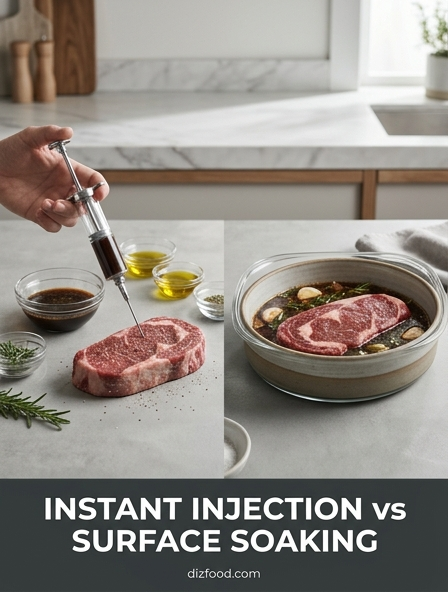
For those seeking maximum smoke infusion, skinless is often preferred; however, this comes at the cost of the texture provided by the skin. Many pitmasters compromise by loosening the skin to allow smoke to circulate underneath or by using skin-on techniques but increasing the intensity of the wood smoke. It is also noted that spices applied to the skin rarely migrate into the meat. Because the dermal layer is a dense barrier, water-soluble rubs cannot penetrate the fat-rich skin, meaning the meat itself remains largely unseasoned unless brine or injections are utilized to bypass the skin barrier.
The Role of Rendered Fat in Enhancing Internal Heat Transfer
While skin initially acts as an insulator, its role shifts dramatically once the rendering process begins. Subcutaneous fat has a high thermal mass and, once liquefied, becomes an efficient medium for heat transfer. As the fat melts, it fills the microscopic gaps between the skin and the meat, creating a "convection" effect on a micro-scale. This liquid fat conducts heat more uniformly than air, ensuring that the entire surface of the muscle is subjected to a constant, even temperature. This process is often referred to as "self-basting," but its thermal implications are just as vital as its flavoring ones.
Rendered fat also helps to prevent the "evaporative stall" often seen in large roasts. By coating the meat in a layer of oil, the skin prevents moisture from reaching the surface to evaporate, which would otherwise cool the meat and slow the cooking process. Instead, the heat is forced inward. This transition from solid fat to liquid oil allows for a more rapid penetration of heat in the latter stages of cooking. In skinless meat, there is no such transition; the meat simply continues to dry out as it heats. The presence of the fat layer ensures that the heat penetration is not just a matter of external air temperature, but of hot liquid conduction, which is far more efficient at denaturing proteins deep within the cut.
Surface Area Exposure and Seasoning Absorption Comparison
The effectiveness of seasoning is directly tied to the available surface area of the muscle tissue. In skinless cuts, every square millimeter of the meat's exterior is available to interact with salt, enzymes, and aromatics. Salt, through the process of osmosis, can penetrate deeply into skinless meat, denaturing proteins and allowing them to hold more water. When the skin is left on, the salt must first navigate the fatty, water-resistant dermal layer, which it cannot do effectively. This results in a highly seasoned skin but a relatively bland interior if traditional surface seasoning is the only method used.
- Direct Contact: Skinless allows rubs to form a "bark" or crust directly on the muscle.
- Barrier Effect: Skin prevents non-fat-soluble seasonings from reaching the meat fibers.
- Infiltration Techniques: Skin-on cooking requires "under-skin" seasoning to achieve flavor penetration.
To achieve comparable flavor penetration in skin-on poultry, culinary techniques must be adapted. This often involves the manual separation of the skin from the breast or thigh to apply dry rubs or compound butters directly to the flesh. Without this intervention, the skin acts as an umbrella, shedding marinades and preventing the seasoning from ever touching the meat. In contrast, skinless cuts absorb marinades much faster, often requiring only a fraction of the time to achieve the same flavor depth, though they lack the protective benefits during the subsequent thermal application.
Internal Temperature Regulation with Natural Skin Barriers
The skin acts as a natural thermostat, regulating the rate at which the internal temperature fluctuates. In a high-heat environment like a commercial oven or a grill, external temperatures can be volatile. Skinless meat is susceptible to these fluctuations, leading to uneven cooking where the thin edges become desiccated before the thickest parts are finished. The dermal layer provides a structural and thermal buffer that smooths out these temperature spikes, allowing for a more controlled and predictable rise in the internal core temperature.
This regulation is partly due to the high collagen content in the skin. As collagen heated, it undergoes a transformation into gelatin-a process that is endothermic, meaning it absorbs heat energy. This absorption of energy provides a "buffer" that prevents the muscle tissue from being hit with the full force of the cooking heat all at once. For the cook, this means a wider "window of perfection." Skinless meat has a very narrow window between "done" and "overcooked" because the heat penetration is so direct. Skin-on meat, due to its slower and more regulated temperature climb, offers the chef more leeway to pull the meat at the exact desired temperature without the risk of a rapid "carry-over" cooking spike.
Maillard Reaction and Texture Development in Skinless Cuts
The Maillard reaction-the chemical reaction between amino acids and reducing sugars that gives browned food its distinctive flavor-behaves differently depending on the presence of skin. In skinless cuts, the Maillard reaction occurs directly on the protein fibers. This creates a "sear" or a crust that is firm and savory. However, because the meat is composed largely of water and protein, achieving a deep sear without overcooking the interior requires extremely high heat and short exposure times. The texture developed is meaty and dense.
| Attribute | Skinless Maillard | Skin-On Maillard |
|---|---|---|
| Primary Component | Muscle Proteins | Collagen & Fat |
| Texture Result | Firm/Crusty | Crispy/Glass-like |
| Flavor Profile | Savory/Umami | Rich/Fatty/Toasted |
With skin-on cuts, the Maillard reaction is primarily focused on the skin's collagen and the sugars present in the dermal layer. This results in a completely different texture: crispiness. The skin can be dehydrated until it becomes brittle and glass-like, a texture impossible to achieve with bare muscle. The skin also protects the meat underneath from the Maillard reaction, keeping it pale and soft. For many, the contrast between the crispy, Maillard-rich skin and the soft, protected meat underneath is the hallmark of professional roasting, whereas skinless browning provides a more uniform, singular texture throughout the exterior of the cut.
Juice Migration and Drip Loss During the Roasting Process
During roasting, the internal pressure of the meat increases as proteins tighten, forcing juices toward the surface. This juice migration is handled differently by skin-on and skinless cuts. In skinless meat, the juices reach the surface and immediately drip into the pan or evaporate. This is known as "drip loss," and it can significantly reduce the final yield of the dish. Because there is no barrier, the migration is unimpeded, leading to a faster loss of internal fluids and a drier final product.
In skin-on meat, the migration of juices is redirected. When the juices hit the fatty underside of the skin, they are partially trapped. The combination of rendered fat and internal juices creates an emulsion that stays in contact with the meat. This not only keeps the surface moist but also contributes to the "fond" in the pan without depleting the meat's internal reserves as aggressively. The skin essentially acts as a one-way valve in some respects, allowing some steam to escape while holding back the heavier oils and juices. Studies in food science indicate that roasting poultry with the skin on, even if the skin is removed before eating, results in a measurably higher moisture content in the breast meat compared to roasting it skinless from the start.
Optimizing Culinary Results for Skin On and Skinless Selections
Optimizing the kitchen outcome requires matching the cooking technique to the presence or absence of the skin. Because skin-on meat provides its own insulation and basting mechanism, it is best suited for dry-heat, long-duration methods. The goal is to provide enough time for the skin to crisp while the meat reaches the target temperature. Conversely, skinless cuts are ideal for fast, high-moisture, or high-flavor-absorption methods where the protective barrier of the skin would be a hindrance rather than a help.
- Skin-On Optimization: Use dry heat (roasting, air-frying) and ensure the surface is as dry as possible before cooking to accelerate the rendering process.
- Skinless Optimization: Use poaching, steaming, or quick searing. Apply marinades early to take advantage of the exposed muscle fibers.
- Temperature Control: Pull skinless cuts 2-3 degrees early, as they have less thermal mass to regulate carry-over heat.
Ultimately, the choice between skin-on and skinless should be dictated by the desired texture and flavor profile. If the priority is a crisp exterior and maximum internal juiciness, skin-on is the superior choice, despite the longer cooking time and the barrier to smoke penetration. If the priority is deep spice infusion, rapid preparation, or lower fat content, skinless allows for more direct interaction between the heat source, the seasonings, and the protein. Understanding the science of how heat and flavor penetrate these different surfaces allows a cook to manipulate the variables of time and temperature to achieve the perfect result every time.

Comments