
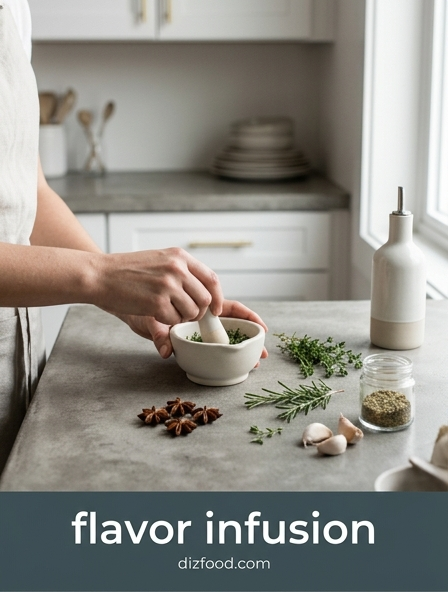
Science of Marination Basics
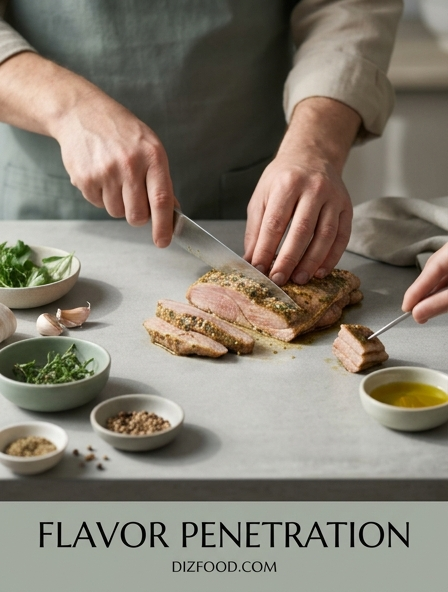
The process of marination is a sophisticated interplay of chemistry and physics designed to enhance the flavor and texture of proteins. At its core, marination relies on the principles of diffusion and osmosis. Diffusion involves the movement of flavor molecules from an area of high concentration-the marinade-into an area of lower concentration, which is the meat. However, most flavor compounds are large molecules that struggle to penetrate deeply into the muscle fibers, often only reaching a few millimeters beyond the surface. This is why the surface-to-volume ratio is critical in determining the effectiveness of a marinade.
- Osmosis: The movement of water across cell membranes to balance salt concentrations.
- Diffusion: The slow migration of aromatics and oils into the outer layers of the tissue.
- Surface Interaction: The chemical reaction between acids or enzymes and the surface proteins.
To maximize the science of infusion, one must consider the polarity of the ingredients. Water-soluble compounds move differently than fat-soluble ones, necessitating a balanced base of both oil and water to ensure all aromatic nuances are successfully transferred to the food item during the soaking period.
Acid Versus Enzyme Tenderization
Tenderization is achieved through two primary chemical pathways: acidic denaturation and enzymatic hydrolysis. While both methods aim to soften the connective tissues and muscle fibers, they function through vastly different mechanisms. Acids, such as vinegar, citrus juice, or wine, work by denaturing the protein strands. This process causes the proteins to unwind and subsequently "tangle," which can initially trap moisture but eventually leads to a toughening of the texture if the exposure is too prolonged. In contrast, enzymes physically break down the protein chains.
| Feature | Acidic Marinades | Enzymatic Marinades |
|---|---|---|
| Primary Sources | Lemon juice, vinegar, yogurt | Pineapple (bromelain), papaya (papain) |
| Mechanism | Protein denaturation | Proteolytic cleavage |
| Texture Effect | Firm then mushy | Soft and jelly-like |
Using enzymes requires precision; ingredients like raw ginger or kiwi contain powerful proteases that can turn a steak into an unappealing paste within hours. Mastering the balance between these two agents allows a chef to manipulate the final bite of the protein with surgical accuracy.
Role of Salt in Moisture Retention
Salt is arguably the most essential component in any marinade because it is one of the few ingredients capable of deep penetration through the muscle structure. Unlike large flavor molecules, salt ions are small enough to travel deep into the fibers via osmosis. Once inside, salt performs a critical function by dissolving a specific protein called myosin. When myosin is dissolved, the muscle fibers relax and create more space to hold onto water molecules during the stressful heat of the cooking process.
- Initial Brining: Salt draws moisture out of the meat through osmotic pressure.
- Reabsorption: As the salt dissolves the proteins, the meat reabsorbs the brine, pulling flavors deep inside.
- Structural Modification: The relaxed protein structure prevents the meat from "wringing out" its juices when the fibers contract during roasting or grilling.
This process, often referred to as "dry brining" or "wet brining" depending on the medium, ensures that the interior of the protein remains succulent. Without salt, a marinade is merely a surface dressing that fails to improve the fundamental juiciness of the dish.
Herb and Spice Infusion Strategies
Maximizing the aromatic potential of herbs and spices requires an understanding of solubility. Many of the essential oils found in spices like peppercorns, cumin, and rosemary are fat-soluble, meaning they release their full flavor profile more effectively when paired with an oil base rather than a purely aqueous one. To enhance the infusion, chefs often utilize "blooming" techniques. Heating spices briefly in a small amount of oil before adding them to the marinade can significantly increase the volatile oil release.
- Dried Herbs: Best suited for long marination cycles as they require time to rehydrate and release flavors.
- Fresh Herbs: Provide bright, volatile notes but can oxidize and turn bitter if left in acidic marinades for too long.
- Crushing and Mincing: Increasing the surface area of aromatics like garlic and ginger accelerates the diffusion of their pungent compounds.
Stratifying the infusion by adding crushed spices early and delicate fresh herbs late in the process ensures a complex, multi-layered flavor profile. This strategic approach prevents the more subtle notes from being overwhelmed by the heavier, more pungent spices.
Selecting Fats for Flavor Carry
Fats serve as the primary vehicle for flavor delivery in a marinade. Since many aromatic compounds are hydrophobic, they require a lipid medium to be transported to the surface of the meat. The choice of fat dictates not only the flavor profile but also the cooking characteristics of the protein. A neutral oil, such as grapeseed or avocado oil, is ideal for high-heat applications like searing because it has a high smoke point and does not interfere with the delicate notes of the herbs.
- Extra Virgin Olive Oil: Adds a peppery, robust flavor but is best for low-to-medium heat.
- Sesame Oil: Extremely potent; usually used as a secondary fat for aromatic contribution.
- Yogurt or Buttermilk: These contain emulsified fats and lactic acid, providing a dual function of flavor carrying and gentle tenderization.
The fat also acts as a protective barrier during cooking, helping to conduct heat evenly across the surface of the meat. This facilitates the Maillard reaction, leading to a superior crust and a more complex flavor profile upon the first bite. Choosing the right lipid is therefore a balance between flavor, heat tolerance, and chemistry.
Marination Times for Different Proteins
The duration of marination is a critical variable that depends entirely on the density and connective tissue content of the protein. Over-marinating is a common mistake that leads to textural degradation, while under-marinating results in a bland interior. Seafood is particularly sensitive; the delicate proteins in fish and shellfish can be "cooked" by acid in a process known as denaturation, similar to ceviche, within minutes. In contrast, dense muscular cuts like beef chuck or lamb leg require significantly more time to allow salt and aromatics to penetrate.
| Protein Type | Recommended Time | Maximum Limit |
|---|---|---|
| Fish and Shellfish | 15 to 30 minutes | 1 hour |
| Chicken and Poultry | 2 to 6 hours | 24 hours |
| Pork and Beef | 4 to 12 hours | 48 hours |
Consistency is key. Smaller cuts, such as cubes for kebabs, require less time than whole roasts due to the increased surface area. Always consider the thickness of the meat when calculating the optimal window for flavor infusion to ensure the center remains unaffected by the structural breakdown of the exterior.
Vacuum Sealing for Rapid Results
Vacuum sealing is a modern technique used to accelerate the marination process through the manipulation of atmospheric pressure. By removing the air from a bag containing the protein and the marinade, the vacuum environment pulls the liquid into the pores and fibers of the meat much faster than standard immersion. This method is particularly useful in professional kitchens where prep time is limited. The pressure change also causes the moisture within the meat to expand, opening up pathways for the infusion of aromatics.
- Preparation: Place the meat and a minimal amount of marinade into a high-strength vacuum bag.
- Compression: The vacuum sealer removes oxygen, forcing the marinade into direct, pressurized contact with the surface.
- Diffusion: The lack of air pockets ensures 100% surface coverage, maximizing the rate of molecular transfer.
Because the process is so efficient, marination times can often be reduced by half or more. However, caution must be exercised with high-acid marinades, as the accelerated penetration can lead to mushy textures much faster than traditional soaking methods. It is a powerful tool for consistency and speed.
Maintaining Meat Texture and Integrity
The primary goal of flavor infusion is to enhance the product without compromising its structural integrity. A common pitfall in marination is the "mushy" surface caused by excessive acid or enzyme exposure. To maintain a firm, steak-like texture, it is vital to balance the pH of the marinade. If a recipe calls for a high volume of vinegar or citrus, consider shortening the marination time or adding a buffering agent like sugar or oil to slow the chemical reaction on the surface.
- Surface Drying: Always pat the meat dry with paper towels after removing it from the marinade to ensure a proper Maillard reaction during searing.
- Temperature Control: Marinate at refrigerated temperatures to keep the muscle fibers tight and prevent bacterial degradation.
- Ratio Awareness: Use only enough marinade to coat the meat; drowning the protein can lead to an uneven, "boiled" texture when it hits the pan.
By monitoring the physical state of the meat throughout the process, you can intervene before the chemical breakdown goes too far. The ideal result is a protein that is seasoned through to the center while retaining a resilient, satisfying chew.
Global Marinade Flavor Profiles
Every culinary tradition has developed unique marination profiles based on locally available acids, fats, and aromatics. These profiles are designed to complement the specific proteins common to the region while providing a balanced sensory experience. Understanding these global templates allows a chef to experiment with flavor infusion while maintaining a cohesive palate. For instance, East Asian marinades often rely on the savory depth of fermented soy, while Mediterranean profiles lean heavily on the brightness of citrus and resinous herbs.
- Korean Bulgoi: Soy sauce, pear juice (for enzymes), sesame oil, and sugar.
- Latin American Adobo: Dried chilies, vinegar, garlic, and oregano.
- Indian Tandoori: Yogurt, lemon juice, ginger-garlic paste, and a complex array of toasted spices.
- Middle Eastern Chermoula: Cumin, lemon, olive oil, coriander, and fresh parsley.
The common thread across all these profiles is the inclusion of an acid to brighten, a fat to carry, and a signature aromatic to define the cultural identity. By swapping these components while maintaining the core ratios, one can traverse the globe through the medium of flavor infusion.
Safety Standards for Marinating Meat
Food safety is paramount when dealing with raw proteins and prolonged infusion times. The most critical rule of marination is to always conduct the process in the refrigerator. Bacteria thrive at room temperature, and the presence of moisture and nutrients in a marinade provides an ideal breeding ground for pathogens. Furthermore, the container material matters; reactive metals like aluminum or unlined copper can react with the acids in a marinade, leaching metallic flavors into the food and potentially causing toxicity.
- Temperature: Keep the marinating protein at or below 40°F (4°C) at all times.
- Cross-Contamination: Never reuse a marinade that has touched raw meat as a sauce unless it has been brought to a rolling boil for several minutes.
- Storage: Use glass, stainless steel, or food-grade plastic bags to avoid chemical leaching.
Discarding any leftover marinade that was used for soaking is the safest practice. If you require the marinade for a glaze or sauce, set aside a portion of the liquid before it ever comes into contact with the raw meat. Following these standards ensures that the final meal is as safe as it is flavorful.

Comments