
Choosing between freezer batching and single-use fresh cooking is the ultimate tug-of-war for kitchen efficiency. If you're looking to minimize daily decision fatigue, batching allows you to prep in bulk, significantly reducing nightly cleanup and active cooking time through economies of scale. Conversely, the single-use fresh method excels for those who prioritize peak nutritional density and the superior textures of just-bought produce, albeit at the cost of more frequent shopping trips and daily labor. By comparing these two distinct workflows, you can strategically align your cooking habits with your lifestyle goals, ensuring your kitchen serves your schedule rather than draining your time.
| Metric | Freezer Batching | Single-Use Fresh |
|---|---|---|
| Active Daily Prep | 5-15 mins (reheating/plating) | 45-90 mins (wash, chop, cook) |
| Grocery Cadence | Bi-weekly or Monthly (Bulk) | 2-4 times per week (Just-in-time) |
| Waste Reduction | High; utilizes all scraps in bulk | Moderate; prone to produce spoilage |
| Cost Efficiency | 15-25% savings via wholesale buys | Premium price for small quantities |
| Texture & Flavor | Stabilized (stews/soups best) | Peak (crisp, vibrant, reactive) |
| Cleanup Demand | One major session; minimal daily | Repetitive daily dishwashing cycles |
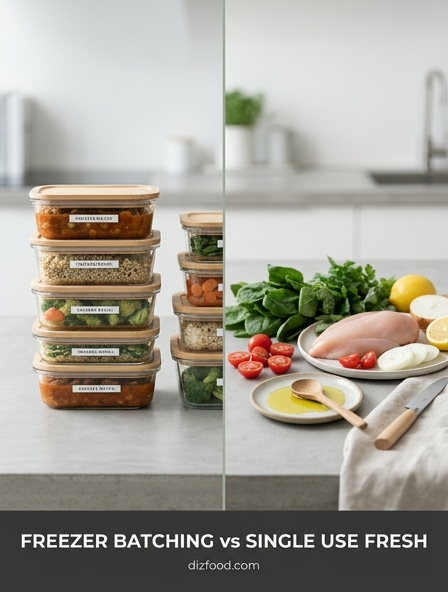
Freezer Batching vs Single Use Fresh Comparison
The debate between freezer batching and single-use fresh cooking centers on the balance between culinary spontaneity and organizational efficiency. Single-use fresh cooking involves purchasing ingredients for a specific meal and preparing it immediately. This method prioritizes the vibrant qualities of just-harvested produce and the nuanced textures of meat that hasn't undergone the crystallization of freezing. It is often favored by those who enjoy the daily ritual of cooking and have easy access to local markets.
In contrast, freezer batching is a systemic approach where large quantities of food are prepared, portioned, and stored for future consumption. This method treats the kitchen more like a production line, focusing on long-term sustainability and the reduction of daily labor. While fresh cooking offers higher flexibility for changing cravings, batching provides a safety net for busy schedules. The following table highlights the core operational differences between these two philosophies:
| Feature | Single Use Fresh | Freezer Batching |
|---|---|---|
| Prep Frequency | Daily or per meal | Once weekly or monthly |
| Ingredient Volume | Small, specific amounts | Bulk quantities |
| Equipment Needs | Standard cookware | Large pots, vacuum sealers |
| Storage Space | Minimal fridge space | Significant freezer capacity |
Ultimately, the choice depends on lifestyle. Those with erratic schedules often find solace in the reliability of a stocked freezer, whereas culinary enthusiasts may prefer the sensory experience of handling fresh ingredients every evening. Both methods can coexist, with fresh elements often being used to garnish or brighten a previously frozen base.
Nutritional Differences Between Fresh and Frozen Batching
The nutritional profile of food is significantly influenced by how it is handled from the point of purchase to the plate. A common misconception is that fresh produce is always superior in vitamins and minerals. However, "fresh" produce in supermarkets often travels long distances and sits in storage, during which time it undergoes oxidation. This process can lead to a gradual loss of heat-sensitive nutrients like Vitamin C and certain B vitamins. When cooking for single-use fresh meals, the time between the store and the stove is the primary variable in nutrient density.
Freezer batching, particularly when using frozen-at-source ingredients or blanching fresh vegetables before freezing, can effectively "lock in" nutritional value. By cooking in large batches and rapidly cooling the food, many antioxidants and minerals remain stable for months. The primary nutritional drawback of batching occurs during the reheating phase; repeated exposure to heat can further degrade sensitive vitamins. To maximize health benefits across both methods, consider these factors:
- Oxidation: Fresh greens lose nutrients faster at room temperature than when frozen.
- Enzymatic Activity: Blanching before freezer batching stops enzymes that cause spoilage and nutrient loss.
- Bioavailability: Some nutrients, like lycopene in tomatoes, are actually more bioavailable after the prolonged simmering often used in batch cooking.
- Additives: Single-use fresh cooking allows for tighter control over daily sodium and oil intake compared to pre-seasoned bulk meals.
While fresh ingredients offer the peak of seasonal nutrition, freezer batching provides a consistent baseline of high-quality nutrients that are not subject to the rapid decay seen in the crisper drawer of a refrigerator.
Cost Efficiency of Batch Cooking vs Daily Fresh Prep
Economically, freezer batching is almost always the more efficient choice for the average household. The ability to purchase ingredients in bulk is the primary driver of these savings. Buying a ten-pound bag of rice, a family pack of chicken, or a bushel of seasonal vegetables significantly lowers the unit price compared to buying small, individual portions for a single meal. Furthermore, batching allows consumers to take full advantage of sales and seasonal surpluses, preserving low-cost ingredients for use when prices inevitably rise.
Daily fresh prep often incurs hidden costs. Frequent trips to the grocery store not only consume fuel but also increase the likelihood of impulse purchases. Small-portion packaging is frequently priced at a premium, as consumers pay for the convenience of not having to store leftovers. When analyzing the financial impact, the following expenses are typically reduced through batching:
- Unit Price Savings: Purchasing at wholesale or "value pack" rates.
- Transportation Costs: Fewer trips to the market translate to less fuel consumption and wear on vehicles.
- Energy Efficiency: Running a full oven or large stockpot once is more energy-efficient than heating appliances every night.
- Waste Reduction: Utilizing every part of a bulk purchase prevents the "partial ingredient" waste common in single-use cooking.
While the initial outlay for a batch cooking session may seem high, the cost per serving is drastically lower. Over a fiscal quarter, a household that prioritizes freezer batching can see grocery bills drop by 20% to 30% compared to a household reliant on daily fresh shopping.
Time Saving Benefits of Freezer Batching Explained
Time is the most valuable commodity in the modern kitchen, and freezer batching is designed to optimize it through the principle of economies of scale. It takes approximately the same amount of time to chop four onions as it does to chop one, and a large pot of chili takes nearly the same simmering time regardless of whether it serves four people or twenty. By consolidating the labor-intensive stages of cooking-chopping, searing, and simmering-into a single session, the cook "reclaims" the hours that would otherwise be spent on daily prep and cleanup.
In a typical fresh-cooking scenario, the process includes meal planning, shopping, prepping, cooking, and cleaning for every single dinner. This can easily consume 60 to 90 minutes daily. With freezer batching, a single four-hour session on a Sunday can produce 15 to 20 meals. On subsequent weeknights, the "prep" time is reduced to the few minutes it takes to thaw and reheat the meal. This eliminates the "decision fatigue" that often leads to ordering expensive and less healthy takeout when time is short.
The time saved also extends to the cleaning process. Washing a single large stockpot and a food processor once a week is far more efficient than washing multiple pans, knives, and cutting boards every evening. For individuals with demanding professional lives or large families, this structural shift in time management is the most significant advantage of the freezer batching lifestyle, turning the kitchen from a source of daily stress into a well-oiled pantry of ready-to-eat options.
Taste and Texture Fresh Cooking vs Freezer Meals
The most significant trade-off in the freezer batching debate is the potential impact on taste and texture. Fresh cooking excels in dishes where the structural integrity of the ingredient is paramount. For example, a stir-fried snap pea or a medium-rare steak relies on immediate heat and serving to maintain its crispness or moisture. Freezing causes water molecules within food to expand into ice crystals, which can rupture cell walls. This is why leafy greens, cucumbers, and soft fruits often become mushy or watery after being thawed.
However, many dishes actually improve with the passage of time and the freezing process. Liquid-based meals like stews, curries, and sauces benefit from "flavor marriage," where spices and aromatics continue to infuse the liquid. The freezing process can also tenderize certain fibers in meat and legumes. To maintain the best quality, it is essential to understand which culinary applications suit which method. A comparison of textural outcomes includes:
- Fresh Best: Salads, light sautés, grilled seafood, and cream-based sauces that may break when frozen.
- Freezer Best: Braised meats, hearty soups, tomato-based ragus, and grain-based casseroles.
- Texture Mitigation: Using vacuum sealers and rapid-chilling techniques can minimize ice crystal damage.
While a freezer meal may never replicate the exact crunch of a fresh garden salad, the depth of flavor in a six-month-aged frozen bolognese often surpasses a quickly made fresh version. Successful kitchen management involves choosing the method that complements the specific ingredients and desired final texture of the dish.
Reducing Food Waste with Freezer Batching Methods
Food waste is a major issue in residential kitchens, often caused by the spoilage of fresh ingredients that were purchased with good intentions but never used. Single-use fresh cooking is highly susceptible to this; a recipe may call for half a bunch of cilantro or two stalks of celery, leaving the remainder to wither in the refrigerator. Freezer batching effectively solves this by ensuring that all components of a purchase are processed and preserved before they can degrade.
When you cook in bulk, you utilize the entirety of your ingredients. Scraps can be turned into stocks, and surplus produce can be integrated into large-format dishes. The freezer acts as a "pause button" on the biological clock of food. This is particularly useful for managing leftovers, which are often forgotten in the fridge and eventually discarded. By portioning and freezing leftovers immediately, you extend their shelf life from three days to three months. Effective waste reduction strategies include:
- Inventory Auditing: Checking the freezer before shopping to avoid duplicate purchases.
- Flash Freezing: Freezing individual items (like berries or meatballs) on a tray before bagging to prevent clumping and ruin.
- Labeling: Using "First-In, First-Out" (FIFO) methods with clear dates to ensure older meals are consumed first.
- Component Freezing: Freezing individual prepared ingredients (like sautéed onions or roasted garlic) to use in future "fresh" meals.
By shifting to a batch-oriented mindset, a household can reduce its total food waste by over 50%, ensuring that every dollar spent at the grocery store results in a consumed calorie rather than a contribution to a landfill.
Environmental Impact of Batching vs Single Use Cooking
The environmental footprint of a kitchen is determined by energy consumption, waste production, and supply chain logistics. Single-use fresh cooking often involves more frequent trips to the store, which contributes to higher carbon emissions from transportation. Additionally, fresh produce usually requires more plastic packaging per unit of food to maintain its appearance and prevent damage during transit. The cumulative energy required to heat a stove or oven for 30 to 60 minutes every night is also significantly higher than the energy used in a single, large-scale cooking session.
Freezer batching does require the constant energy draw of a freezer unit, but modern appliances are increasingly efficient. The ability to buy in bulk reduces the total amount of packaging waste, as larger containers have a better product-to-package ratio. However, batching relies heavily on storage materials like plastic bags, containers, or aluminum foil. To minimize the environmental impact of batching, one should consider the following:
| Factor | Environmental Strategy |
|---|---|
| Packaging | Use reusable silicone bags or glass containers instead of single-use plastic. |
| Energy Use | Keep the freezer full; a full freezer maintains its temperature more efficiently than an empty one. |
| Sourcing | Buy bulk local produce in season to reduce "food miles" before freezing. |
While the freezer itself consumes electricity, the reduction in food waste and transportation emissions typically makes batching the more ecologically responsible choice. By planning meals around bulk seasonal availability, consumers can significantly lower their overall environmental impact while maintaining a high standard of eating.
Meal Planning Strategies for Freezer vs Fresh Lifestyles
Successful kitchen management requires a planning strategy that aligns with one's chosen cooking method. For a "fresh" lifestyle, the focus is on a high-frequency, low-volume rotation. The planner must consider the shelf life of highly perishable items and coordinate shopping trips every two to three days. This allows for a "market-to-table" approach where the menu is dictated by what looks best at the store that morning. It requires a flexible schedule and a repertoire of quick-cooking techniques like pan-searing and poaching.
For a "freezer" lifestyle, the strategy is low-frequency, high-volume. This requires a dedicated planning day to map out recipes that share common ingredients, allowing for efficient bulk prep. A typical freezer plan might involve a "Big Cook" Sunday, where three different large-scale recipes are prepared simultaneously. This strategy relies heavily on an organized inventory system to track what is currently available in the depths of the freezer. Key planning elements include:
- The Core-Ingredient Method: Choosing one protein or vegetable that can be used across multiple batch recipes (e.g., roasted chicken used for soup, pot pie, and enchiladas).
- The Thaw Cycle: Planning to move a frozen meal from the freezer to the fridge 24 hours before consumption for safe, even thawing.
- The Hybrid Approach: Planning for 4 nights of freezer meals and 3 nights of fresh cooking to balance convenience with culinary variety.
Effective meal planning transforms the kitchen from a place of chaotic daily decisions into a structured environment that supports the household's nutritional and financial goals.
The Convenience of Bulk Freezing vs Daily Cooking
Convenience is often the primary motivator for adopting freezer batching. In a world of busy work schedules and extracurricular commitments, the "daily cooking" model can become a burden. The convenience of batching lies in the elimination of the "what's for dinner?" stress. Having a library of pre-made, high-quality meals means that a healthy dinner is only a few minutes away, regardless of how exhausted the cook may be. This "grab-and-go" accessibility is the ultimate defense against the nutritional and financial pitfalls of fast food.
Daily cooking offers a different type of convenience: the ability to change your mind. If you planned on chicken but see a beautiful piece of salmon at the market, the single-use fresh model allows for that pivot. However, this convenience is predicated on having the time and energy to perform the work. For many, the mental load of managing a daily kitchen is more taxing than the physical labor. The following list highlights how batching simplifies daily life:
- Predictability: You know exactly what is in your kitchen and how long it will take to prepare.
- Emergency Preparedness: A stocked freezer provides a buffer during power outages (if the freezer remains closed), illness, or unexpected guests.
- Portion Control: Meals are pre-portioned, which helps in maintaining dietary goals and preventing overeating.
- Lower Cognitive Load: The decision-making process is consolidated into a single planning session once a week or month.
Ultimately, the convenience of freezer batching is structural and long-term, while the convenience of fresh cooking is situational and immediate. Most modern households find that a "freezer-first" approach provides the most consistent relief from daily domestic labor.
Best Ingredients for Freezer Batching vs Single Use Fresh
Not all ingredients are created equal when it comes to temperature changes. Selecting the right components is the secret to successful freezer batching. Ingredients with high water content or delicate cellular structures are poor candidates for the freezer and should be reserved for single-use fresh cooking. Conversely, hearty vegetables and proteins with dense fibers are ideally suited for the long-duration storage of a freezer-batching system. Understanding these distinctions prevents the common "mushy meal" syndrome often associated with frozen food.
When batching, focus on ingredients that are enhanced by long cooking times or that maintain their integrity after thawing. Root vegetables, legumes, and tough cuts of meat are the champions of the freezer. When cooking fresh, prioritize the ephemeral qualities of ingredients that lose their magic within hours of being prepared. The following table categorizes ingredients by their best application:
| Best for Freezer Batching | Best for Single Use Fresh |
|---|---|
| Ground meats, chuck roast, chicken thighs | Fish fillets, scallops, steak (medium-rare) |
| Carrots, potatoes, onions, kale | Lettuce, sprouts, cucumbers, zucchini |
| Lentils, chickpeas, black beans | Asparagus, snap peas, fresh herbs |
| Tomato sauces, pesto, broth-based soups | Hollandaise, mayo-based dressings, cream sauces |
By respecting the physical properties of these ingredients, you can ensure that your freezer meals remain delicious and your fresh meals remain vibrant. Successful kitchen management utilizes both categories to create a diverse and resilient home dining experience.

Comments