
Understanding Meat Structure and Muscle Fibers
To master the art of tenderization, one must first understand the biological composition of meat. Meat is primarily composed of muscle fibers, which are long, thin cells bundled together in sheaths of connective tissue. These fibers, known as myofibrils, contain proteins like actin and myosin that facilitate movement in the living animal. The toughness of a specific cut is largely determined by the amount of collagen and elastin present within these connective tissues. Muscles that perform significant physical labor, such as those found in the legs or shoulders, develop thicker, more resilient collagen networks.
When meat is cooked, these protein structures respond to heat by contracting and expelling moisture. If the collagen is not properly managed, the result is a dry and chewy texture. Understanding the "grain" of the meat-the direction in which the muscle fibers run-is equally vital. By identifying this grain, cooks can strategically manipulate the meat's physical state through various kitchen techniques. The goal of tenderization is to break down these rigid protein strands and dissolve tough connective tissues into silky gelatin, thereby transforming the eating experience.
Mechanical Tenderization Tools and Techniques
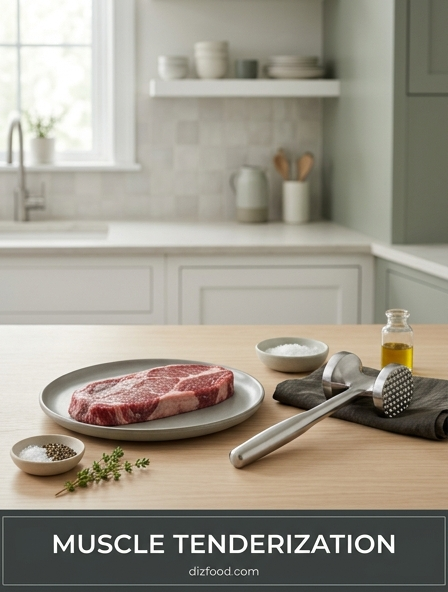
Mechanical tenderization involves the use of physical force to break apart tough muscle fibers and sever connective tissues before the meat ever touches the heat. This process effectively "pre-chews" the meat, making it significantly easier to consume. The most ubiquitous tool for this task is the meat mallet. The mallet usually features two sides: a flat surface for pounding meat to a uniform thickness, and a textured, spiked surface designed to pierce and tear through stubborn fibers. Pounding meat not only tenderizes it but also ensures even cooking, preventing the exterior from drying out before the interior is safe to eat.
Another highly effective mechanical tool is the needle or blade tenderizer. This device uses a series of sharp, narrow blades to create thousands of microscopic incisions across the surface of the protein. These channels serve a dual purpose: they physically interrupt the continuity of long muscle strands and provide pathways for marinades and heat to penetrate the center of the meat more rapidly. While highly effective for steaks and cutlets, mechanical tenderization should be used judiciously to avoid over-processing the meat into a mushy consistency.
The Science of Acidic Marinades
Acidic marinades utilize ingredients such as vinegar, citrus juices, wine, or buttermilk to alter the texture of meat through chemical denaturation. When meat is submerged in an acidic environment, the low pH levels cause the tightly wound protein coils to unwind and relax. This process, known as denaturing, initially allows the muscle fibers to trap more water, resulting in a juicier end product. However, the window for success is narrow; if the meat is left in an acidic solution for too long, the proteins will begin to cross-link and tighten again, eventually squeezing out moisture and creating a mealy or rubbery texture.
| Acid Type | Common Source | Effectiveness |
|---|---|---|
| Citric Acid | Lemon, Lime | High / Fast-acting |
| Acetic Acid | Vinegars | Moderate / Flavorful |
| Lactic Acid | Yogurt, Buttermilk | Mild / Gentle |
Lactic acid, found in dairy products, is often preferred for delicate proteins because it tenderizes more gently than harsh vinegars. Because acids do not penetrate deeply into thick cuts, they are most effective on thin slices or when used in conjunction with mechanical piercing.
Enzymatic Tenderizers and Natural Protease
Enzymatic tenderization is a biological process where specific enzymes, known as proteases, actively digest the proteins within the meat. Unlike acids that merely denature proteins, these enzymes break the peptide bonds that hold the amino acid chains together. Many common fruits contain these powerful enzymes in high concentrations. For instance, papain is derived from papaya, bromelain from pineapple, and actinidin from kiwi. When applied to the surface of meat, these enzymes begin to dissolve both the muscle fibers and the connective tissues, resulting in a significantly softer texture.
- Papain: Highly effective at room temperature; often found in commercial meat tenderizer powders.
- Bromelain: Very aggressive; can quickly turn meat surface to mush if not monitored.
- Actinidin: A milder enzyme found in kiwi that tenderizes without overly aggressive digestion.
- Ficin: Derived from figs; another potent protease used in traditional cooking.
It is important to note that these enzymes are heat-sensitive. They work most efficiently between room temperature and 140°F. Once the meat reaches higher cooking temperatures, the enzymes are neutralized. Therefore, the majority of the tenderizing occurs during the marinating phase and the initial stages of cooking.
Salting and Brining for Moisture Retention
Salting is perhaps the most essential technique for improving the texture and succulence of meat. When salt is applied to the exterior of a protein, it initiates a process called osmosis, initially drawing moisture out. However, within a short period, the salt dissolves into the meat's juices to create a concentrated brine. This brine is then reabsorbed into the muscle fibers through diffusion. Once inside, the salt works to dissolve a specific protein called myosin. By breaking down myosin, the muscle fibers lose their ability to contract tightly during cooking, which allows the meat to retain significantly more moisture.
Wet brining involves submerging meat in a solution of water and salt, often enriched with sugar and spices. This is particularly effective for lean meats like turkey breast or pork chops, which lack the internal fat necessary to stay moist. Dry brining, or "pre-salting," involves applying salt directly to the meat and letting it rest in the refrigerator for several hours. This method is often preferred by chefs as it seasons the meat deeply and dries the surface, which leads to a superior crust or "Maillard reaction" during searing.
Optimal Marinating Times for Different Proteins
Timing is the most critical variable when using chemical or enzymatic tenderizers. Because different proteins have varying densities and fiber structures, a "one size fits all" approach often leads to poor results. Seafood, possessing very little connective tissue, requires the shortest marinating time. Dense red meats, such as beef chuck or flank steak, possess heavy collagen loads and can withstand-and often require-much longer exposure to tenderizing agents to see any significant benefit.
| Protein Type | Acidic Marinade Time | Enzymatic Marinade Time |
|---|---|---|
| Fish/Shrimp | 15-30 Minutes | Not Recommended |
| Chicken/Poultry | 2-6 Hours | 30-60 Minutes |
| Pork/Lamb | 4-12 Hours | 1-2 Hours |
| Beef/Venison | 6-24 Hours | 2-4 Hours |
Exceeding these recommended times can lead to a phenomenon known as "chemical cooking," where the exterior of the meat becomes mushy while the interior remains unaffected. Always consider the thickness of the cut; thinner steaks require less time than thick roasts to achieve the same level of penetration.
The Role of Fats in Flavor and Texture
While fat does not technically break down muscle fibers in the way acids or mallets do, it plays a vital role in the perception of tenderness. This is primarily achieved through intramuscular fat, commonly referred to as marbling. During the cooking process, these small deposits of fat melt and coat the surrounding muscle fibers. This lubrication provides a "slip" that makes the meat feel tender and succulent in the mouth. Furthermore, fat acts as a physical barrier that prevents muscle fibers from bonding too tightly together as they dehydrate under heat.
In leaner cuts where marbling is absent, cooks often utilize techniques like "larding" or "barding." Larding involves inserting strips of fat directly into the meat using a needle, while barding involves wrapping the meat in a layer of fat, such as bacon, before roasting. These methods introduce supplemental lipids that mimic the effects of natural marbling. Beyond texture, fats are essential carriers of flavor, as many aromatic compounds are fat-soluble. Thus, a well-marbled cut provides a sensory experience that combines both physical tenderness and rich, savory depth.
Temperature Control During the Tenderizing Process
Temperature control is the primary mechanism for tenderizing tough, collagen-rich cuts of meat. While quick-cooking methods like grilling are ideal for naturally tender cuts, they are disastrous for tough cuts like brisket or shanks. In these meats, the goal is to convert tough collagen into gelatin. This transformation is not instantaneous; it requires maintaining an internal temperature between 140°F and 160°F for an extended period. The "low and slow" method-using smokers, slow cookers, or sous-vide baths-allows the meat to sit in this target zone long enough for the chemical conversion to occur.
- 100°F - 120°F: Calpains and cathepsins (natural enzymes) are highly active, beginning the tenderization.
- 140°F: Muscle fibers begin to shrink and expel moisture rapidly.
- 160°F: Collagen begins to dissolve and turn into gelatin, providing a silky mouthfeel.
- 200°F+: Connective tissue is fully rendered, allowing "pull-apart" tenderness.
Precise temperature management ensures that the connective tissue is destroyed without over-tightening the muscle fibers. This is why a braised short rib can be simultaneously well-done and incredibly tender.
Common Mistakes That Lead to Tough Meat
Even with the best ingredients, simple procedural errors can result in a tough and unappealing meal. One of the most common mistakes is failing to allow the meat to come to room temperature before cooking. Placing a cold steak onto a hot pan causes the outer fibers to seize and toughen before the center can even begin to warm. Another frequent error is overcrowding the pan, which lowers the temperature and causes the meat to steam in its own juices rather than sear, preventing the development of a flavorful crust.
- Over-marinating: Leaving meat in acid too long, resulting in a chalky or mushy texture.
- Cutting with the Grain: Slicing parallel to muscle fibers, which leaves them long and difficult to chew.
- High Heat for Tough Cuts: Attempting to flash-fry meats that require slow collagen breakdown.
- Using the Wrong Tool: Using a smooth mallet when a spiked one is needed to break fibers.
Finally, many cooks neglect the importance of the "grain." Slicing against the grain is the simplest way to improve the perceived tenderness of any cut, as it shortens the fibers to a length that is easily broken down by human teeth.
Post-Cook Resting for Maximum Juiciness
The tenderization process does not end when the meat is removed from the heat; the resting period is just as critical. During cooking, the heat causes muscle fibers to contract, pushing the internal juices toward the center of the meat where the pressure is lower. If you slice into a piece of meat immediately after cooking, this internal pressure will force the juices out onto the cutting board. This results in a loss of moisture that can make even a perfectly cooked steak feel dry and tough.
Resting allows the temperature of the meat to stabilize and the muscle fibers to relax. As the fibers relax, they reabsorb the juices that were pushed inward, redistributing moisture evenly throughout the cut. This equilibrium ensures that the juices stay within the meat when it is eventually sliced. For a standard steak, a rest of five to ten minutes is sufficient. For larger roasts or whole poultry, a rest of twenty to thirty minutes may be required. Covering the meat loosely with foil during this time helps retain heat without steaming the crust, ensuring the final product is both tender and flavorful.


Comments