
When it comes to mastering the art of the grill or the cast-iron skillet, understanding the distinction between flavor infusion and muscle tenderization is the key to culinary success. Flavor infusion is all about the "wow" factor for your taste buds, utilizing salt, spices, and aromatics to penetrate the outer layers of the meat and enhance its natural profile. On the other hand, muscle tenderization is a structural game; it focuses on breaking down tough connective tissues and collagen-either through mechanical force, enzymatic action, or acidic denaturing-to transform a chewy cut into a succulent masterpiece. Choosing between them depends entirely on your cut of meat: while a premium ribeye simply needs a flavor boost, a stubborn flank steak requires the structural breakdown that only proper tenderization can provide.
| Feature | Flavor Infusion | Muscle Tenderization |
|---|---|---|
| Primary Objective | Enhancing taste and aromatic profile. | Breaking down protein fibers/collagen. |
| Core Mechanism | Osmosis and diffusion of molecules. | Proteolysis (enzymatic) or physical disruption. |
| Key Agents | Salt, sugar, herbs, and spices. | Acids (vinegar), enzymes (papain), or mallets. |
| Depth of Impact | Primarily surface level (1-3mm deep). | Deep structural change throughout the cut. |
| Optimal Timing | 30 mins to 4 hours for most cuts. | 6 to 24 hours (depending on acidity). |
| Best Meat Cuts | Chicken breast, pork chops, seafood. | Chuck roast, flank steak, brisket. |
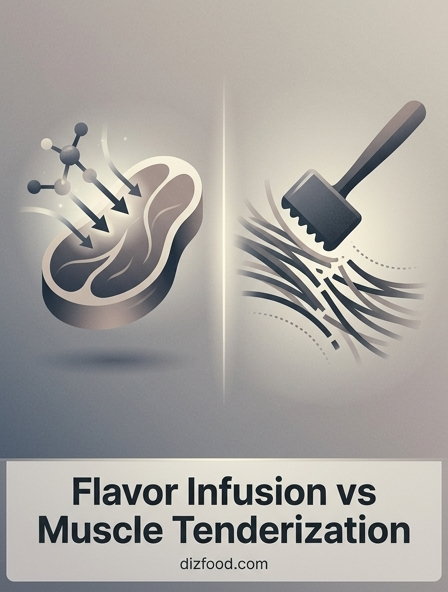
Defining Flavor Infusion and Muscle Tenderization
In the culinary arts, understanding the distinction between flavor infusion and muscle tenderization is essential for mastering meat preparation. Flavor infusion refers to the process of introducing aromatic compounds, spices, and seasonings into the surface layers or the interior of a protein. This process is primarily concerned with the gustatory experience-ensuring that every bite carries the intended profile of herbs, oils, and spices. It relies on the vehicle of fats or liquids to carry volatile compounds into the crevices of the meat.
Muscle tenderization, conversely, is a structural process aimed at altering the physical state of the meat's connective tissues and muscle fibers. While infusion targets the palate, tenderization targets the texture. The goal is to break down collagen and soften the toughened protein strands, making the meat easier to chew and more pleasant to consume. These two processes often occur simultaneously during marination, but they operate through different chemical and physical mechanisms.
- Flavor Infusion: Focuses on volatile organic compounds, aromatics, and surface-level seasoning.
- Muscle Tenderization: Focuses on the denaturation of proteins and the breakdown of collagen.
- Synergy: Effective cooking utilizes both to ensure a harmonious balance between a soft "mouthfeel" and a robust taste.
Recognizing that a marinade can be an excellent flavor enhancer without being an effective tenderizer-and vice versa-allows a chef to choose ingredients more strategically. For instance, a dry rub is excellent for infusion but does little for structural softening compared to an acidic or enzymatic brine.
The Science of Surface Flavor vs Deep Softening
A common misconception in the kitchen is that marinades penetrate deep into the center of a thick cut of meat. In reality, most flavor molecules are too large to move past the first few millimeters of muscle tissue. This creates a "surface flavor" effect where the exterior of the meat is highly seasoned, while the interior remains relatively neutral. Oils and large-chain aromatics effectively coat the outside, creating a flavorful crust during the searing process through the Maillard reaction.
Deep softening, or true tenderization, requires the movement of smaller ions or the physical disruption of the meat's internal architecture. While flavor molecules sit on the surface, salt ions are small enough to penetrate deep into the muscle via osmosis. This deep penetration alters the internal protein structure, allowing the meat to retain more moisture during cooking. Therefore, while the rosemary and garlic might stay on the surface, the salt travels deep to soften the core.
| Feature | Surface Flavor Infusion | Deep Structural Softening |
|---|---|---|
| Primary Agents | Herbs, Spices, Oils, Garlic | Salt, Acids, Proteolytic Enzymes | }
| Penetration Depth | 1-3 millimeters | Deep (via osmosis/diffusion) |
| Main Goal | Aromatic complexity | Texture and moisture retention |
Understanding this spatial limitation is vital. To achieve deep flavor, chefs often use techniques like "injecting" marinades or "scoring" the meat, which provides physical pathways for large flavor molecules to reach the interior sections that osmosis cannot reach.
How Acids Impact Protein Texture and Taste
Acids are among the most common tools used for both flavoring and tenderizing. Common kitchen acids-such as vinegar, citrus juices, wine, and yogurt-work by denaturing the proteins in the meat. This process involves unfolding the tightly wound protein coils, which initially creates a more tender texture. However, the chemical reaction is a delicate balance; if left too long, the denatured proteins will eventually bond back together and squeeze out moisture, resulting in a texture that is ironically tough or unpleasantly mushy.
From a flavor perspective, acids provide a "bright" note that cuts through the richness of animal fats. This creates a balanced profile that stimulates the salivary glands, making the meat taste more succulent. Yogurt and buttermilk are unique acidic agents because their high calcium content activates natural enzymes within the meat, promoting a gentler tenderization process compared to the harshness of high-acetic vinegar.
When using acids, the concentration and the timing are the most critical variables. A highly acidic marinade might require only thirty minutes to effectively "cook" the surface of a fish or a thin poultry cut, whereas a milder acid like wine can be used for several hours on tougher beef cuts. Over-marinating in acid can lead to a "chalky" exterior, where the surface proteins have been completely disintegrated while the center remains untouched.
Mechanical Tenderizing vs Liquid Marination Methods
Mechanical tenderizing involves physical intervention to break muscle fibers and connective tissue. This is often achieved using meat mallets, spiked "jaccard" tenderizers, or even simple scoring with a knife. By physically severing the long strands of protein and the collagen sheaths, the meat becomes inherently more tender before it even touches the pan. This method is particularly effective for fibrous cuts like flank steak or skirt steak, where the grain is prominent and tough.
Liquid marination, on the other hand, relies on chemical processes to achieve its goals. While liquid marinades excel at flavor infusion, they are often less efficient at tenderizing the deep interior of thick cuts compared to mechanical methods. However, liquid methods have the advantage of adding moisture. A well-constructed marinade uses a combination of water, oil, and aromatics to hydrate the surface cells, which helps prevent the meat from drying out under high heat.
- Pounding: Flattens the meat for even cooking and breaks down dense fibers.
- Needling: Uses small blades to create channels, allowing marinades to bypass the surface barrier.
- Soaking: Relies on chemical equilibrium to draw flavors into the outer layers of the protein.
- Vacuum Marinating: Uses pressure changes to force liquids into the pores of the meat more rapidly.
The most effective strategy often combines these two. By mechanically needling a steak before placing it in a liquid marinade, a chef provides "highways" for the liquid to travel deeper into the muscle, merging the benefits of physical fiber disruption with the aromatic advantages of infusion.
The Role of Salt in Moisture and Infusion
Salt is arguably the most powerful ingredient in the kitchen when it comes to the intersection of flavor and texture. Unlike most other seasonings, salt is capable of deep penetration through the process of diffusion. When salt is applied to the surface of meat, it initially draws moisture out through osmosis. However, after a certain period, the salt dissolves into a concentrated brine that is eventually reabsorbed into the muscle fibers.
Once inside, salt performs a critical structural role by denaturing a specific protein called myosin. By dissolving the myosin filaments, the salt creates more space within the muscle structure, allowing it to hold onto more water during the cooking process. This is why a "dry-brined" or "wet-brined" chicken breast remains significantly juicier than one that has been seasoned only immediately before cooking. The salt essentially acts as a chemical tenderizer that works from the inside out.
In terms of flavor, salt is a universal enhancer. It reduces the perception of bitterness and increases the volatility of other aromatic compounds, making the spices in a marinade taste more intense. Without salt, a marinade is merely a surface coating. With salt, the marinade becomes a delivery system that seasons the meat at a molecular level, ensuring that the flavor is not just a crust, but an integral part of the protein's identity.
Enzymatic Breakdown for Superior Meat Texture
Enzymatic tenderization is a biological approach that uses specific enzymes to digest the proteins in meat. These enzymes, known as proteases, work by breaking the peptide bonds that hold muscle fibers together. Common sources of these enzymes include fruits like pineapple (bromelain), papaya (papain), kiwi (actinidin), and ginger (zingibain). Because these enzymes literally "eat" the meat, they are incredibly powerful and can turn even the toughest cut of meat into a soft, steak-like texture in a very short time.
However, enzymatic breakdown requires extreme precision. Unlike acids, which denature proteins, enzymes catalyze a full decomposition of the protein structure. If a marinade containing fresh pineapple juice is left on a piece of meat for too long-sometimes as little as two hours-the meat can lose all structural integrity, resulting in a "mushy" or "pasty" consistency that is highly unappealing. These enzymes are also temperature-sensitive; they are most active between 120°F and 160°F, meaning much of their work is actually done during the early stages of the cooking process.
For superior texture, chefs often use kiwi or ginger, which are milder than pineapple and provide a more controlled breakdown. When applied correctly, enzymatic tenderization creates a "melt-in-the-mouth" quality that cannot be replicated by salt or acids alone. It is especially useful for quick-cooking methods where there isn't enough time for collagen to break down through heat alone, such as in stir-fries or grilled skewers.
Time Variables for Optimal Infusion and Tenderness
Time is the silent ingredient in every marinade, and it dictates the success of both infusion and tenderization. The duration required depends entirely on the thickness of the meat, its fat content, and the potency of the tenderizing agents used. For flavor infusion, a short duration (30 to 60 minutes) is usually sufficient for thin cuts like shrimp or sliced chicken, as the surface area is high relative to the volume. For larger roasts, flavor will never reach the center regardless of time, making overnight marination more about surface intensity than deep penetration.
When considering tenderization, time becomes even more critical. Salt-based brines require several hours to diffuse into the center of a thick steak, whereas high-acid marinades should be limited to avoid "chemical cooking." If the goal is to break down tough connective tissues in a cut like a chuck roast, time in a marinade is less effective than time spent at a low cooking temperature. Marination is a precursor, not a replacement, for the time-dependent breakdown of collagen that occurs during braising or slow-roasting.
- Quick (15-30 min): Best for seafood and thin vegetables; focuses on surface flavor.
- Medium (2-6 hours): Ideal for chicken breasts, pork chops, and thin steaks; allows salt to penetrate.
- Long (12-24 hours): Necessary for large, tough cuts or whole birds; maximizes salt diffusion and moisture retention.
It is important to note that after 24 hours, most marinades reach a point of diminishing returns. Beyond this window, the risk of the meat becoming mushy or overly salty increases significantly without a corresponding increase in flavor quality.
Matching Techniques to Different Meat Cuts
Not all meats respond to marination and tenderization in the same way. The key to a successful kitchen outcome is matching the right technique to the specific biological makeup of the cut. Tender cuts, such as ribeye or beef tenderloin, already have a loose protein structure and high fat content. For these, the focus should be almost entirely on flavor infusion and surface seasoning. Over-tenderizing a premium cut can actually ruin its naturally buttery texture.
Tougher, lean cuts like flank steak, hanger steak, or round roast require a heavy-handed approach to tenderization. These muscles were used frequently by the animal, resulting in thick connective tissue and dense muscle fibers. Here, a combination of mechanical needling and an acidic or enzymatic marinade is essential. For poultry, which is prone to drying out, the focus should be on salt-based brining to ensure the lean breast meat retains moisture during the high heat of roasting or grilling.
Seafood presents the greatest challenge because its proteins are highly sensitive. A marinade that would work for beef will turn fish into ceviche within minutes. For delicate proteins, "late-stage" marination-where flavor is added just 15 minutes before cooking-is the preferred method. By tailoring the intensity of the acid and the duration of the soak to the specific density of the meat, a chef ensures that the structural integrity of the protein is respected while the flavor profile is enhanced.
Common Misconceptions in Marinating Science
One of the most persistent myths in home cooking is that marinades "tenderize" the meat all the way to the bone. As discussed, the molecular reality is that most ingredients simply cannot travel that far. Another common misconception is that adding more oil to a marinade helps it penetrate. In fact, oil is a large-molecule fat that acts as a barrier; while it is excellent for carrying fat-soluble flavors like garlic and thyme, it does nothing to help the marinade "soak" into the water-based muscle fibers.
Many believe that "more is better" when it comes to acidic ingredients like lemon juice. However, excess acid doesn't lead to more tenderness; it leads to a toughened, rubbery exterior because the acid causes the proteins to denature and coagulate too tightly. Similarly, people often mistake the "wetness" of a marinated steak for juiciness. True juiciness comes from internal water retention (facilitated by salt) and rendered fat, not from the liquid clinging to the surface.
- Myth: Marinades penetrate deep into the meat. Reality: Only salt and some water penetrate deeply.
- Myth: Alcohol in wine tenderizes meat. Reality: Alcohol can actually cook the surface and prevent flavor absorption.
- Myth: Sugar tenderizes meat. Reality: Sugar is purely for flavor and surface caramelization (Maillard reaction).
By debunking these myths, cooks can focus on the variables that actually matter: salt concentration, temperature control, and the physical preparation of the meat's surface.
Balancing Flavor Depth with Structural Integrity
The ultimate goal of any kitchen professional is to achieve a perfect balance where the meat is robustly flavored but still retains its characteristic "bite." Structural integrity is what allows a steak to feel like a steak rather than a processed protein. To achieve this balance, one must use a multi-stage approach. First, use salt to ensure deep seasoning and moisture retention. Second, use aromatics in an oil-based medium to coat the surface for a fragrant exterior. Third, use acids or enzymes sparingly and only when the specific cut requires structural softening.
Achieving flavor depth doesn't always require long marination times. Techniques such as "post-cook marination" or "board dressing" allow the meat to rest in a mixture of juices, fats, and herbs after it has been cooked. This ensures that the structural integrity of the meat is preserved by the heat, while the flavor is infused during the resting phase when the muscle fibers are relaxing and capable of reabsorbing liquid.
Ultimately, the kitchen is a laboratory where physics and chemistry meet. By respecting the limits of how flavor moves and how proteins react to different stimuli, you can ensure that every dish is both tender and flavorful. Whether you are using a simple dry rub or a complex enzymatic brine, the focus should always be on enhancing the natural quality of the meat rather than masking it or destroying its texture through over-processing.

Comments