
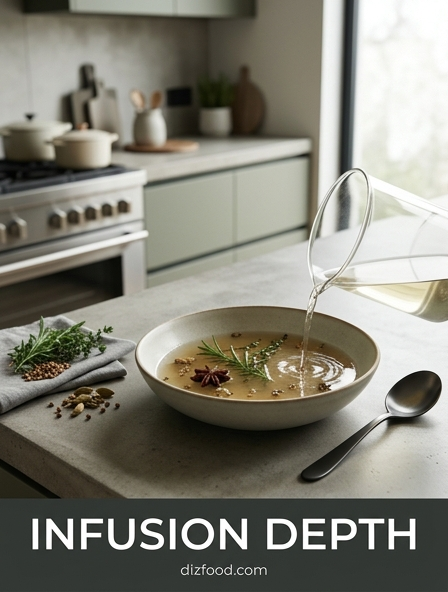
The Science of Osmosis and Meat Penetration
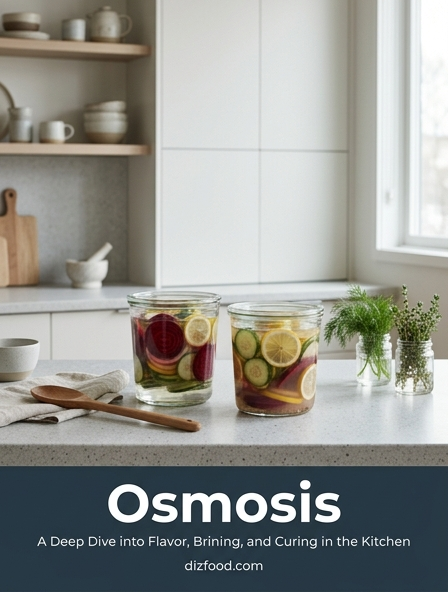
Osmosis is the primary mechanism through which flavor travels from the exterior of a protein to its innermost core. In a culinary context, this process involves the movement of water and dissolved solutes-specifically salt-through semi-permeable cell membranes. When meat is placed in a high-concentration brine, the salt ions migrate into the muscle tissue to reach equilibrium. This shift does more than just transport sodium; it alters the electrical charge of the muscle proteins, causing them to repel each other and create space for moisture. While salt molecules are small enough to navigate this cellular highway, larger flavor molecules like those found in garlic or black pepper typically struggle to move beyond the first few millimeters of the surface.
- Solute Concentration: Higher salt ratios accelerate the initial rate of diffusion.
- Equilibrium: The process slows as the internal and external salt levels balance out.
- Molecular Size: Small ions penetrate deeply, while complex oils often remain superficial.
- Temperature Influence: Warm brines can increase molecular velocity but risk premature protein denaturation.
Breaking the Surface Barrier in Thick Cuts
When dealing with large culinary challenges like a whole pork shoulder or a prime rib roast, the surface-to-volume ratio becomes a significant obstacle for flavor infusion. A standard surface rub rarely reaches the center of these cuts, leading to a "flavor gap" where the exterior is over-seasoned and the interior is bland. To overcome this, chefs must utilize mechanical and chemical interventions. Scoring the fat cap or using a Jaccard tenderizer creates physical channels that allow seasonings to bypass the tough outer fascia. Additionally, the use of proteolytic enzymes found in ingredients like pineapple or papaya can briefly soften the exterior tissue, though these must be used sparingly to avoid an unpleasant, mushy texture.
| Cut Thickness | Recommended Technique | Expected Depth |
|---|---|---|
| 1-2 Inches | Surface Brining | Full Penetration |
| 3-5 Inches | Scoring and Dry Rub | Partial Penetration |
| 6+ Inches | Active Injection | Full Core Saturation |
How Brisket Fiber Density Affects Flavor Absorption
Brisket is one of the most challenging cuts for infusion due to its incredibly dense muscle fibers and high concentration of connective collagen. Unlike more porous cuts, the "flat" of the brisket contains tightly packed parallel fibers that act as a barrier to liquid movement. Flavor absorption in this environment is a marathon, not a sprint. As the meat cooks slowly, the collagen begins to break down into gelatin, which finally allows for some internal movement of rendered fats and dissolved seasonings. To maximize flavor in such a dense environment, many pitmasters follow a specific sequence:
- Trimming the hard fat to expose the grain of the meat.
- Applying a high-nitrate rub to facilitate the development of a smoke ring.
- Utilizing a long-term wet brine to force moisture into the dense fiber bundles.
- Injecting a phosphate-based solution directly into the center to counteract moisture loss during the long smoke.
Overcoming the Turkey Skin Moisture Shield
Turkey skin is an evolutionary marvel designed to keep moisture in and pathogens out, but in the kitchen, it acts as a waterproof barrier that prevents brines and rubs from reaching the breast meat. Simply coating the exterior of the skin with salt and herbs results in seasoned skin but bland meat. To achieve true infusion depth, the chef must navigate beneath this shield. This is done by carefully separating the skin from the flesh without tearing it, creating a pocket for herb-infused fats or dry brines. Furthermore, the fat layer immediately beneath the skin can actually repel water-based marinades, which is why a "dry brine" approach-applying salt directly to the flesh-is often more effective than traditional immersion. This direct contact allows salt to denature the surface proteins of the breast, ensuring the meat remains succulent throughout the roasting process.
Comparing Surface Rubs vs Deep Tissue Injection
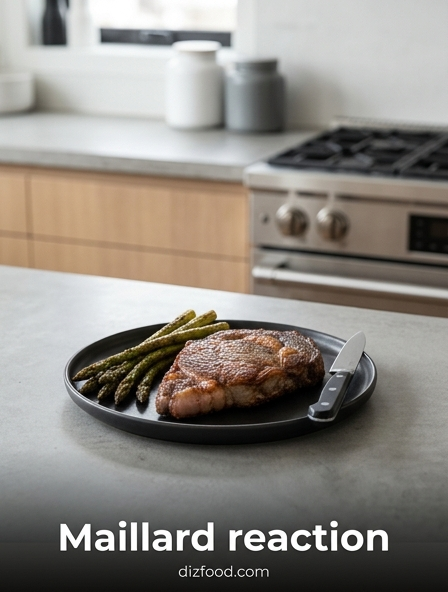
The choice between applying a surface rub and performing a deep tissue injection depends entirely on the desired flavor profile and the physical dimensions of the meat. A surface rub is designed to create a "bark"-a complex, caramelized crust formed through the Maillard reaction and smoke particles. This provides high-intensity flavor bursts but rarely seasons the interior. Conversely, deep tissue injection bypasses the exterior entirely, delivering a pressurized solution of salt, phosphates, and flavor extracts directly into the muscle groups. While injections ensure every bite is seasoned and moist, they do not contribute to the exterior texture. Most professional environments utilize a combination of both to ensure a multidimensional eating experience where the crust complements the tender, flavorful core.
| Feature | Surface Rub | Tissue Injection |
|---|---|---|
| Primary Goal | Crust and Bark | Internal Moisture |
| Flavor Profile | High Intensity, Pungent | Subtle, Uniform |
| Equipment | Hands/Shaker | Syringe/Pump |
The Role of Salt in Structural Tenderness
Salt is more than a seasoning; it is a structural modifier that dictates the texture and tenderness of the meat. When salt ions penetrate the muscle tissue, they interact with the protein filaments, specifically myosin. At concentrations between 1% and 3%, salt causes these filaments to dissolve and swell. This physical change increases the water-holding capacity of the meat, meaning it can withstand higher internal temperatures without becoming dry or stringy. This deep-level infusion is what separates a standard roast from one that is "fork-tender." The salt essentially creates a gel-like matrix within the muscle fibers that traps water, ensuring that even as the proteins contract during the cooking process, the moisture remains locked in place rather than being squeezed out like a sponge.
- Myosin Solubilization: Breaking down protein structures to improve bite.
- Water-Holding Capacity: Retaining juices during the heat-induced contraction.
- Proteolytic Activation: Encouraging natural enzymes to tenderize from within.
Time Requirements for Maximum Marination Reach
The rate of infusion is governed by Fick's laws of diffusion, which suggest that flavor penetration is a function of time and distance squared. In practical kitchen terms, a liquid brine typically penetrates meat at a rate of approximately one millimeter per hour in a refrigerated environment. This means that for a thick steak, a two-hour soak may suffice, but for a large ham, several days are required. Rushing this process leads to "ring seasoning," where the outer edge is over-cured while the center remains gray and flavorless. To calculate the necessary time for maximum reach, chefs must consider the following stages:
- The Initial Strike: Rapid absorption of surface salt within the first 30 minutes.
- The Diffusion Phase: The slow migration of ions toward the center of the cut.
- The Equilibrium Hold: Resting the meat after marinating to allow flavors to redistribute.
Why Center Cut Flavor Defines BBQ Success
In competitive barbecue and high-end culinary arts, the "center cut" is the ultimate test of a chef's skill. Any amateur can produce a flavorful exterior crust, but ensuring that the geometric center of a three-inch thick brisket slice tastes as vibrant as the edge requires mastery of infusion depth. If the center lacks flavor, the palate experiences a significant drop-off in satisfaction, making the meat feel heavy or greasy rather than balanced. Success is defined by the "uniformity of the bite," where the salt, acidity, and smoke have permeated every fiber. Achieving this requires a holistic approach, combining long-term dry brining to season the core and controlled temperature management to prevent the exterior from drying out before the interior can finish its chemical transformation.
Internal Moisture Retention During Long Roasts
Long roasts are subject to the "stall," a phenomenon where evaporative cooling on the surface halts the rise of internal temperature. During this hours-long process, the meat is at high risk of losing its internal moisture reservoir. Deep flavor infusion acts as a safeguard against this drying. By introducing salts and phosphates deep into the tissue prior to roasting, the chef increases the meat's ability to hold onto its natural juices despite the prolonged heat exposure. As the exterior dehydrates to form a crust, the chemically modified interior proteins maintain a tight grip on water molecules. This creates a pressure gradient that helps keep the center succulent. Key factors in this retention include:
- Phosphate Binding: Using food-grade phosphates to enhance moisture magnetism.
- Capillary Action: The movement of melted fats through the fiber channels.
- Resting Period: Allowing the internal pressure to stabilize before slicing.
Essential Equipment for Deep Flavor Infusion
Achieving professional-grade infusion depth requires specialized tools designed to bypass the natural defenses of animal proteins. While basic soaking is traditional, modern kitchens utilize mechanical assistance to speed up and deepen the process. A meat injector is the most critical tool, allowing for the direct placement of liquids into the deep tissue. For surface treatments, a vacuum sealer can be used to create a low-pressure environment that forces marinades into the pores of the meat more rapidly than standard atmospheric pressure. Each tool serves a specific purpose in the infusion workflow:
- Multi-Needle Injectors: For large-scale, uniform distribution of brines.
- Vacuum Tumblers: To massage meat and open up fiber structures for faster absorption.
- Jaccard Tenderizers: Creating thousands of microscopic entry points for rubs.
- Brine Pumps: Providing consistent pressure for thick-cut curing.



Comments