
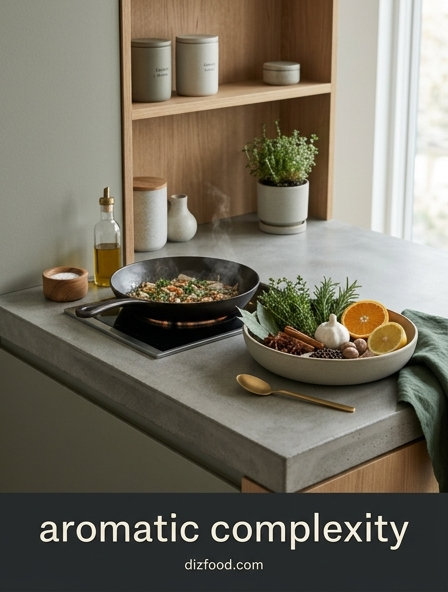
The Science of Aromatic Flavor Infusion
Flavor infusion is a complex thermodynamic process where volatile compounds transition from a solid source into a liquid medium, typically a lipid or an aqueous solution. In the kitchen, this is the foundational step for creating depth. Aromatics like garlic, ginger, and peppercorns contain essential oils that are hydrophobic, meaning they require a fat source-such as olive oil or butter-to effectively capture and carry their essence. When heat is applied, the kinetic energy increases, causing the molecular structures of the aromatics to break down and release esters and phenols into the surrounding medium.
However, temperature control is critical; excessive heat can cause these delicate volatile compounds to evaporate or oxidize, resulting in bitter off-flavors rather than a clean aromatic profile. The concentration gradient also plays a vital role. By increasing the surface area of the aromatics through fine mincing or crushing, you provide more pathways for the flavor compounds to migrate into the carrier. Understanding the balance between time, temperature, and solvent type allows a chef to engineer a flavor profile that is both intense and harmonious.
Essential Herbs and Spices for Natural Depth
The strategic selection of herbs and spices defines the character of a dish, moving it from simple sustenance to a multi-sensory experience. Hard herbs, such as rosemary, thyme, and bay leaves, are rich in resins and can withstand long cooking times, slowly releasing their earthy, pine-like notes. In contrast, soft herbs like basil, cilantro, and parsley are highly volatile and should be introduced toward the end of the infusion process to preserve their bright, floral characteristics.
- Rosemary: Provides a woody, camphor-like backbone suitable for fats.
- Star Anise: Adds a sweet, licorice-like complexity through its anethole content.
- Coriander Seeds: Offers citrusy, toasted notes when cracked and toasted.
- Cardamom: Delivers a cool, menthol-like aromatic lift to heavy sauces.
To maximize depth, one must consider the "synergy of spice," where the combination of multiple aromatics creates a profile greater than the sum of its parts. For instance, pairing the heat of black pepper with the warmth of cumin can bridge the gap between high-frequency citrus notes and low-frequency earthy tones, ensuring the palate is engaged across all flavor registers.
Balancing Acids and Oils for Maximum Tenderness
A successful marinade is a functional emulsion of acids and oils, each serving a distinct purpose in the pursuit of texture and flavor. Acids, such as citrus juice, vinegar, or yogurt, work to denature the surface proteins of the meat. This process unwinds the tightly coiled protein strands, allowing moisture to be trapped within the structure, which results in a more tender mouthfeel. However, prolonged exposure to high-acidity environments can eventually turn the meat mushy as the proteins break down too far.
| Component | Function | Common Examples |
|---|---|---|
| Acids | Protein Denaturation | Lemon juice, Balsamic vinegar, Buttermilk |
| Oils | Flavor Carrier & Protection | Grapeseed oil, Avocado oil, Sesame oil |
| Emulsifiers | Binding Agent | Dijon mustard, Egg yolk, Honey |
Oils act as a protective barrier and a delivery vehicle for fat-soluble aromatics. By coating the protein, the oil ensures that the herbs and spices stay in contact with the surface, while also preventing the acid from being too aggressive. The ideal ratio typically falls between three parts oil to one part acid, ensuring the meat remains lubricated during the cooking process while still benefiting from the enzymatic softening of the acidic component.
Mastering the Art of Layering Fragrant Aromatics
Building a complex aromatic profile requires a disciplined approach to layering, ensuring that no single ingredient overwhelms the others. This process usually begins with the "heavy" aromatics-those that require fat and heat to unlock their potential. As the dish progresses, lighter, more volatile elements are introduced to create a sense of freshness and lift.
- The Foundation: Sautéing onions, carrots, and celery (mirepoix) in fat to create a sweet, savory base.
- The Heart: Adding dry spices and toasted seeds to the fat to bloom their essential oils.
- The Brightness: Introducing fresh ginger, garlic, or lemongrass during the last few minutes of high-heat cooking.
- The Finish: Garnishing with fresh leafy herbs and citrus zest just before serving.
This sequential approach ensures that the dish has "legs"-a flavor that persists from the first bite to the aftertaste. By respecting the heat tolerance of each ingredient, you prevent the muddying of flavors that occurs when all components are added simultaneously. Layering allows for a chronological release of aromas that engages the diner's senses throughout the meal.
The Role of Salt in Enhancing Natural Extracts
Salt is far more than a seasoning; it is a powerful catalyst in the extraction of aromatic compounds. Through the process of osmosis, salt draws moisture out of aromatic vegetables like onions and mushrooms, concentrating their natural sugars and flavors. This moisture then dissolves the salt, creating a brine that can more deeply penetrate the fibers of the main ingredient, carrying aromatic molecules along with it. Furthermore, salt acts as a flavor "unmasker" by suppressing bitterness and enhancing our perception of sweetness and umami.
When used in a marinade, salt alters the physical structure of muscle fibers. It dissolves a protein called myosin, which allows the muscle to absorb and retain more liquid during cooking. This results in a juicier final product that is seasoned from the inside out. Without a sufficient salt concentration, even the most herb-rich infusion will taste flat, as the palate requires the presence of sodium ions to trigger the receptors that identify complex aromatic profiles. For optimal results, a concentration of 1% to 1.5% salt by weight is generally recommended for long infusions.
Enzymatic Marinating for Superior Meat Texture
Beyond simple acid-based tenderization, enzymatic marinating utilizes biological catalysts found in certain fruits and fungi to break down connective tissues. Proteases, such as bromelain found in pineapple, papain in papaya, and actinidin in kiwi, are highly effective at cleaving peptide bonds in collagen and elastin. This is particularly useful for tougher cuts of meat that would otherwise require hours of braising. Because these enzymes are incredibly potent, the timing of the infusion must be strictly monitored.
If left for too long, enzymatic marinades can over-process the meat, resulting in a mealy or pasty texture that lacks structural integrity. For thin cuts, as little as thirty minutes can be sufficient to achieve the desired tenderness. Interestingly, these enzymes are deactivated by heat, so their primary work is done during the cold-soak phase. When paired with aromatics like ginger or scallions, enzymatic bases create a sophisticated flavor profile that is synonymous with many traditional tropical and East Asian cuisines. This technique represents a bridge between biology and culinary art, providing a precise tool for texture management.
Cold Infusion Versus Rapid Room Temperature Techniques
The speed at which aromatics infuse into a medium is governed largely by temperature, but the quality of the resulting flavor can vary significantly between cold and hot methods. Cold infusion, often performed in a refrigerator over 12 to 24 hours, is a gentle process. It excels at capturing the "top notes"-the delicate, bright, and floral aromas that are easily destroyed by heat. This method is ideal for delicate oils, vinegars, and water-based extractions like cold-brew teas or herb-infused waters.
| Method | Timeframe | Aromatic Profile |
|---|---|---|
| Cold Infusion | 12-48 Hours | Bright, floral, clean, nuanced |
| Room Temp | 2-4 Hours | Balanced, moderate intensity |
| Rapid Heat | 5-15 Minutes | Bold, toasted, savory, heavy |
Rapid room temperature or heated infusions are preferred when the goal is to extract deep, toasted, or spicy notes. The application of heat accelerates the movement of molecules, allowing for a much faster extraction. However, this speed comes at the cost of volatility; many of the subtle nuances of fresh herbs are lost to the air. Choosing the right method depends entirely on the desired final application: cold for elegance and freshness, hot for impact and depth.
Unlocking Umami Through Fermented Marinade Bases
Umami, the fifth taste, is characterized by a savory, lingering sensation often associated with glutamates and ribonucleotides. Fermented bases-such as soy sauce, miso paste, fish sauce, and Worcestershire sauce-are concentrated sources of these compounds. When used as the foundation of a marinade, they provide a chemical "depth charge" that enhances the inherent savoriness of meats and vegetables alike. These ingredients are the result of long-term microbial breakdown, which simplifies complex proteins into flavor-packed amino acids.
- Miso: Offers a creamy, fermented sweetness and rich body.
- Fish Sauce: Provides a pungent, salty punch that mellows into pure savoriness.
- Soy Sauce: A versatile source of both salt and deep umami.
- Liquid Aminos: A modern alternative providing similar glutamate richness.
The beauty of fermented bases lies in their ability to act as a bridge between disparate ingredients. The complex chemical profile of a fermented sauce can tie together the sharpness of an acid and the heat of a spice, creating a rounded, professional-grade flavor profile. This is why a small amount of fish sauce can enhance a Bolognese or a dash of soy sauce can improve a beef stew without making the dish taste specifically like the condiment itself.
Fresh Versus Dried Aromatics in Long Marinations
The choice between fresh and dried aromatics is not merely one of convenience, but of chemical concentration. Dried herbs are essentially concentrated versions of their fresh counterparts; however, the drying process often causes the loss of lighter, water-soluble aromatic molecules while retaining heavier, oil-soluble ones. This makes dried herbs like oregano, marjoram, and bay leaves exceptionally well-suited for long-duration marinades and slow-cooking processes, where they have ample time to rehydrate and slowly release their potent essences.
Fresh aromatics, conversely, contain a high water content and a full spectrum of volatile oils. They are superior for short-term infusions where a "just-picked" brightness is the goal. In a long marination (exceeding 24 hours), fresh herbs can sometimes develop "off" notes as their cell walls break down and oxidation takes over. A common professional technique is to use dried herbs for the long-duration marinade to build a sturdy flavor foundation, then finish the dish with a handful of fresh herbs to provide the necessary aromatic lift and visual appeal. Understanding this duality is key to maintaining flavor balance over time.
Timing Your Infusion for Optimal Aromatic Impact
Timing is perhaps the most overlooked variable in the quest for aromatic complexity. The duration of an infusion must be tailored to the density of the food and the potency of the aromatics used. While it is tempting to believe that "longer is better," there is a point of diminishing returns where the texture of the protein degrades or the aromatics begin to lose their distinctiveness, blending into a generic, muddy flavor profile.
- Seafood: 15 to 30 minutes. Delicate proteins absorb flavor quickly and can be easily "cooked" by acids.
- Poultry: 2 to 6 hours. Allows penetration through the skin and into the shallow muscle layers.
- Pork and Beef: 6 to 24 hours. Required for the flavors to bypass dense muscle fibers.
- Vegetables: 30 minutes to 2 hours. Porous structures take on aromatics rapidly.
To achieve the best results, one should consider the "surface-to-volume" ratio. Small cubes of meat require significantly less time than a whole roast. Furthermore, if using high-potency ingredients like cloves or truffle oil, the timing must be even more precise to prevent these dominant notes from masking the natural flavor of the primary ingredient. Mastering timing ensures that each element of the dish remains distinct yet integrated.


Comments