
The Science of Muscle Fibers
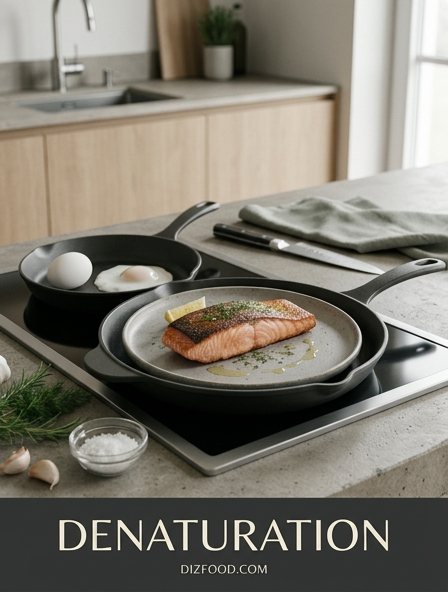
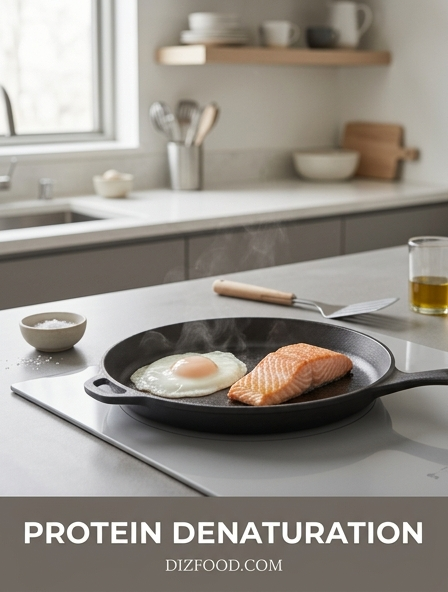
At the microscopic level, meat consists of complex muscle fibers primarily composed of two proteins: actin and myosin. In their native state, these proteins are intricately folded and held together by delicate hydrogen bonds. When heat is introduced during the cooking process, the kinetic energy causes these molecules to vibrate violently. This internal movement eventually overcomes the strength of the bonds, leading to denaturation-the process where the protein strands begin to uncoil and lose their original shape. As these strands straighten, they reveal reactive sites that allow them to bond with neighboring proteins, a secondary stage known as coagulation.
- Myosin: Begins denaturing at temperatures between 104°F and 122°F, contributing to the initial firming of the meat.
- Actin: Requires higher temperatures, typically between 150°F and 163°F, resulting in significant shrinkage and juice loss.
- Sarcoplasmic Proteins: These enzymes and myoglobin denature between 130°F and 150°F, altering the color of the meat.
Understanding this transition is vital for chefs because the degree of denaturation directly influences the chewiness and moisture level of the final dish. When proteins denature too rapidly or excessively, the resulting structure becomes overly dense and dry, as the tightening fibers squeeze out the internal water content.
Acidic Marinating and Protein Breakdown
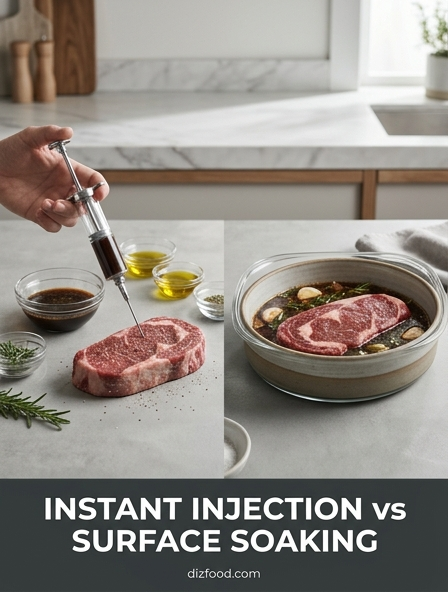
Acidic marinades, utilizing ingredients like vinegar, lemon juice, or yogurt, use chemical energy rather than thermal energy to initiate denaturation. The high concentration of hydrogen ions in these liquids disrupts the electrostatic interactions that stabilize protein structures. This chemical attack forces the protein chains to unwind prematurely, creating a softer texture on the surface of the meat. However, if left for too long, the process can over-denature the proteins, turning the exterior mushy or chalky as the structural integrity completely collapses.
- Penetration: The acid slowly migrates from the surface toward the center, though it rarely penetrates deeply into thick cuts.
- Unfolding: Hydrogen ions break salt bridges, causing the protein strands to expand and lose their tight configuration.
- Texture Modification: The loosened fibers hold slightly more water initially, but eventually contract, altering the bite of the meat.
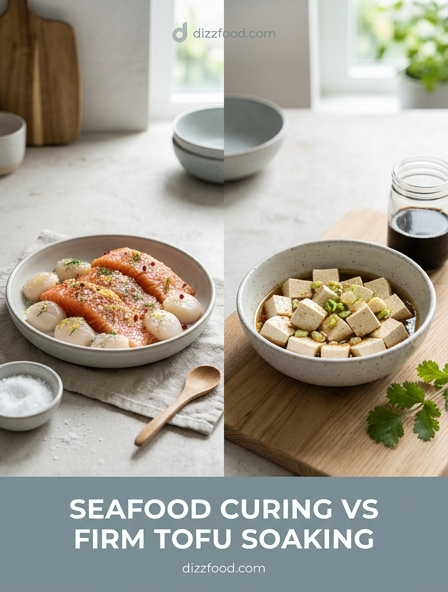
This technique is particularly effective for thinner cuts of meat or seafood. In the case of ceviche, the acid levels are high enough to fully denature the fish proteins without any heat, effectively "cooking" the flesh through chemical restructuring alone. This demonstrates that denaturation is a broad chemical phenomenon not strictly tied to temperature.
The Role of Salt in Denaturation
Salt is perhaps the most powerful tool in a kitchen for controlling protein structure. Beyond seasoning, sodium chloride interacts with muscle proteins-specifically myosin-to alter their physical state. When salt is applied, it dissolves into ions that shield the electrical charges on the protein chains. This shielding effect reduces the repulsive forces between proteins, allowing them to denature and then partially re-bond in a way that creates a more open, gel-like matrix. This transformed structure is much better at trapping water molecules during the stressful process of cooking.
| Concentration | Effect on Protein | Resulting Texture |
|---|---|---|
| Low (<1%) | Minimal structural change | Natural fiber resistance |
| Moderate (1-3%) | Partial myosin solubilization | Tenderized, better moisture retention |
| High (>5%) | Extensive denaturation and curing | Firm, dense, and preserved (e.g., ham) |
By encouraging certain proteins to dissolve and denature at lower temperatures, salt lowers the threshold at which the meat begins to firm up. This allows the chef to achieve a desired level of doneness while maintaining a higher degree of tenderness and succulence compared to unsalted meat.
Breaking Down Tough Connective Tissue
Connective tissue, primarily collagen, is the "glue" of the animal body, providing strength to muscles that perform heavy work. Unlike the delicate proteins found in muscle fibers, collagen is a robust triple-helix structure that is resistant to brief heating. Denaturing collagen requires a specific environment of moisture and sustained temperature. When the internal temperature of a tough cut of meat reaches approximately 160°F to 180°F, the collagen strands finally begin to lose their structural rigidity. The heat breaks the cross-links between the helices, causing them to unravel into individual gelatin strands.
- Collagen: Provides toughness when raw; transforms into silky gelatin when denatured.
- Elastin: Found in ligaments; largely resistant to denaturation and remains "gristly" regardless of cooking time.
- Silver Skin: A dense layer of connective tissue that must be removed manually as it does not denature easily.
This transformation is the secret behind successful braising and slow-roasting. As the collagen denatures into gelatin, it coats the muscle fibers in a lubricating richness. This creates the paradox of "fall-apart" tenderness in meats that were originally the toughest parts of the animal, provided sufficient time was allowed for the chemical unraveling.
Enzymes as Natural Tenderizers
Biological denaturation can be achieved through the use of proteases-enzymes that specifically target and break down protein bonds. Many fruits contain these enzymes naturally, offering a way to tenderize meat without the aggressive use of heat or strong acids. These enzymes act like molecular scissors, cleaving the long peptide chains into shorter fragments. This process effectively pre-denatures the meat, softening the muscle fibers and the connective tissue before the pan even gets hot. However, because these enzymes are highly efficient, they must be managed carefully to prevent the meat from losing all structural integrity.
- Papain: Derived from papaya; highly effective at breaking down both muscle fiber and collagen.
- Bromelain: Found in pineapple; very aggressive and can quickly turn meat surface to mush.
- Actinidin: Found in kiwi; a milder protease that provides a more controlled tenderizing effect.
- Ficin: Derived from figs; similar to papain but less commonly used in home kitchens.
For these enzymes to work, they require direct contact with the meat. Since they are large molecules, they do not penetrate deeply, making them most effective for thin steaks or as a surface treatment. Heat eventually denatures the enzymes themselves, stopping their activity once the cooking process begins.
How pH Levels Alter Texture
The acidity or alkalinity of the cooking environment, measured by pH, dictates the electrical state of proteins. Every protein has an "isoelectric point," which is the pH level where its net electrical charge is zero. For most meat proteins, this is around a pH of 5.0 to 5.5. At this point, proteins are most likely to clump together and squeeze out water, leading to a dry, tough texture. By moving the pH away from this point-either toward more acidic or more alkaline conditions-chefs can manipulate the degree of denaturation and water-holding capacity.
| pH Level | Chemical Environment | Effect on Denaturation |
|---|---|---|
| 3.0 - 4.0 | Highly Acidic | Rapid surface denaturation; significant softening. |
| 5.2 | Isoelectric Point | Maximum tightening; significant moisture loss. |
| 8.0 - 9.0 | Alkaline | Increased water retention; slippery texture (e.g., velveted meat). |
In Chinese cuisine, "velveting" meat involves using baking soda (an alkaline agent) to raise the pH. This prevents the proteins from bonding too tightly during denaturation, resulting in a remarkably tender, slippery texture even when cooked at high heat. Conversely, acidic marinades lower the pH, which also helps in denaturation but often results in a different, more crumbly texture.
Moisture Retention through Brining
Brining leverages the power of salt-induced denaturation to protect meat from drying out during high-heat cooking. When a cut of meat is submerged in a 3% to 6% salt solution, the ions travel into the cells and begin to partially denature the structural proteins. This uncoiling allows the muscle fibers to expand and create more space for water molecules. Furthermore, the salt dissolves some of the proteins that usually act as "anchors," preventing the fibers from contracting as tightly when they are eventually exposed to heat. This results in a product that can lose more weight during cooking while still remaining juicier than its un-brined counterpart.
- Diffusion: Salt ions move into the meat to equalize concentration.
- Solubilization: Filaments like myosin begin to dissolve and lose their rigid structure.
- Hydration: The uncoiled proteins bind with water, increasing the weight of the meat by up to 10%.
The beauty of brining is that it provides a safety buffer. Even if the meat is slightly overcooked and the proteins continue to denature and contract, the extra moisture trapped within the salt-denatured matrix ensures the final result remains palatable and moist.
The Chemistry of Collagen Softening
The transformation of collagen into gelatin is a hallmark of "low and slow" cooking. Collagen is composed of three polypeptide chains wrapped in a tight, reinforced spiral. Denaturing this structure is not a matter of simply reaching a temperature; it is a kinetic process that requires time. As heat is applied, the thermal energy breaks the cross-links that hold the triple helix together. In the presence of water, these uncoiled strands undergo hydrolysis, where water molecules insert themselves into the broken bonds, preventing the strands from re-forming their tough structure and instead creating a soft, viscous gel.
- Phase 1: Swelling of collagen fibers as they begin to absorb heat.
- Phase 2: Shrinkage of fibers (around 140°F), which can initially make meat feel tougher.
- Phase 3: Unwinding of the triple helix and conversion into soluble gelatin (starting at 160°F+).
This process is the reason why a pot roast or a brisket must be cooked far beyond "well-done" temperatures. While the muscle fibers themselves are technically overcooked and dry, the abundance of denatured collagen-now gelatin-provides a mouthfeel that our brains perceive as extreme tenderness and moisture.
Time Factors in Protein Unraveling
Denaturation is not an instantaneous event but a progression that is heavily influenced by the rate of heat transfer. When meat is cooked at a very high temperature, the proteins denature and coagulate so rapidly that they form a dense, impenetrable web. This rapid contraction forces out the intracellular fluids before the connective tissues have any chance to soften. Conversely, slow cooking allows for a more controlled denaturation. This provides sufficient time for the chemical bonds to break and for the proteins to settle into a more tender configuration without the violent expulsion of moisture.
- Fast Heating: Leads to "short" denaturation where fibers snap together tightly, resulting in a rubbery texture.
- Slow Heating: Encourages gradual uncoiling and allows for the conversion of collagen to gelatin simultaneously.
- Resting: Post-denaturation, resting allows the remaining proteins to relax and partially re-absorb some of the liberated juices.
The relationship between time and temperature is the most critical balance a chef must manage. A steak needs high heat for a short time to denature the surface for crust formation, whereas a pork shoulder needs low heat for a long time to denature the internal connective framework.
Achieving the Perfect Steak Texture
The quest for the perfect steak is essentially an exercise in managing different types of denaturation across a single cut of meat. The exterior requires rapid, high-temperature denaturation to facilitate the Maillard reaction-a complex browning process-and to create a structural "crust" that offers a contrast to the interior. Inside, the goal is to keep denaturation to a minimum, specifically targeting the myosin while leaving the actin mostly in its native state. This ensures the meat remains tender and retains the maximum amount of its natural juices.
| Doneness | Internal Temp | Denaturation State |
|---|---|---|
| Rare | 125°F | Myosin just beginning to uncoil; actin native. |
| Medium | 140°F | Myosin fully denatured; actin beginning to tighten. |
| Well Done | 160°F+ | All major proteins denatured and tightly coagulated. |
By understanding that the transition from tender to tough is a direct result of the protein unraveling and bonding process, cooks can use precision tools like sous-vide or instant-read thermometers to stop the denaturation at the exact moment the desired texture is achieved. This scientific approach removes the guesswork from the kitchen.

Comments