
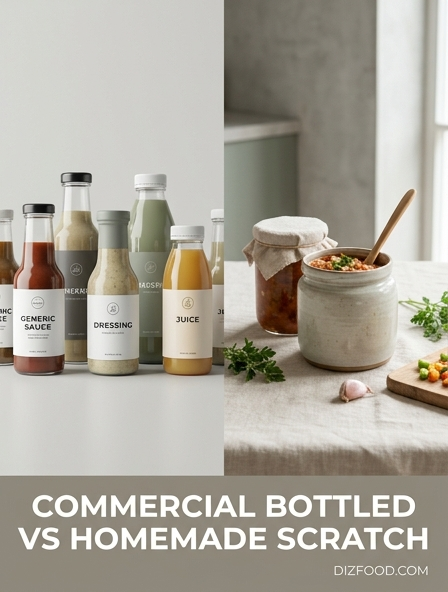
When it comes to culinary excellence, the tug-of-war between the convenience of commercial bottled sauces and the soulful depth of homemade scratch recipes often defines the final quality of your meal. While off-the-shelf options offer unmatched speed and consistent stabilization for busy weeknights, they frequently sacrifice the vibrant, nuanced flavor profiles and nutritional integrity found in from-scratch creations. Choosing to craft your own bases allows for total mastery over sodium levels and ingredient sourcing, effectively elevating a standard dish into a signature gourmet experience. Ultimately, the decision hinges on whether you prioritize the time-saving efficiency of a pre-made shortcut or the unparalleled aromatic complexity that only fresh, unprocessed ingredients can bring to your kitchen table.
| Feature | Commercial Bottled | Homemade Scratch |
|---|---|---|
| Flavor Profile | Static; muted by pasteurization. | Vibrant; customizable acidity/spice. |
| Prep Time | Instant (0 mins). | Variable (15-60+ mins). |
| Ingredient Purity | Contains stabilizers & preservatives. | 100% whole foods; no additives. |
| Shelf Life | 6-12 months (unopened). | 3-7 days (highly perishable). |
| Cost per Serving | Higher (paying for packaging/labor). | Lower (buying raw bulk ingredients). |
| Culinary Impact | Standardized; predictable results. | Professional; high-end complexity. |
Ingredient Quality and Preservative Breakdown
The fundamental divergence between commercial bottled products and homemade scratch recipes begins with the integrity of the raw materials. Commercial manufacturers are often beholden to the requirements of large-scale distribution, which necessitates the use of ingredients optimized for stability rather than flavor. In a typical bottled dressing or sauce, you will frequently encounter highly processed seed oils, such as soybean or canola oil, which serve as inexpensive fillers. Conversely, scratch cooking allows the chef to prioritize cold-pressed extra virgin olive oil or avocado oil, which provide superior monounsaturated fats and a more robust polyphenolic profile.
Preservatives represent the most significant chemical addition in the commercial sector. To prevent spoilage during months of warehouse storage, brands rely on several key additives:
- Sodium Benzoate: Used to inhibit the growth of potentially harmful bacteria, mold, and yeast in acidic environments.
- Calcium Disodium EDTA: A sequestering agent that prevents minerals from promoting rancidity and color loss in fats.
- Potassium Sorbate: A polyunsaturated fatty acid salt that acts as a wide-spectrum antimicrobial agent.
When preparing food from scratch, these chemicals are entirely unnecessary. Freshness is maintained through natural acidity-like lemon juice or vinegar-and the cold chain of a home refrigerator. While the absence of these preservatives means a shorter window for consumption, it ensures that the palate is not coated in the metallic or bitter aftertaste often associated with industrial stabilizers. By controlling the quality of every gram of spice and every drop of oil, the home cook eliminates hidden "processing aids" that have no place in a gourmet kitchen.
Cost Comparison per Serving Analysis
Evaluating the economic impact of homemade versus commercial goods requires a granular look at the price per fluid ounce and the "convenience tax" applied to retail items. While a $6.00 bottle of premium vinaigrette may seem reasonable, the cost of its individual components-water, vinegar, sugar, and dried herbs-usually totals less than $1.00 when scaled down. The remaining $5.00 covers the packaging, marketing, transport, and retail markup. When ingredients are purchased in bulk, the savings become even more pronounced.
The following table illustrates the typical cost breakdown for a standard 12-ounce batch of Caesar dressing:
| Component | Commercial Brand (Premium) | Homemade (Bulk Ingredients) |
|---|---|---|
| Base Oil / Fat | $1.80 (Soybean blend) | $0.95 (Olive oil) |
| Flavorants (Cheese/Spices) | $1.20 (Processed powder) | $0.60 (Fresh Parmesan/Garlic) |
| Packaging & Logistics | $2.50 (Bottle/Shipping) | $0.05 (Reusable jar) |
| Total Cost | $5.50 | $1.60 |
The primary barrier to achieving these savings is the initial investment in pantry staples. However, once a kitchen is stocked with vinegars, oils, and dry spices, the incremental cost of producing a new batch of sauce is negligible. Over a fiscal year, a household that transitions from bottled condiments to scratch-made versions can save hundreds of dollars, while simultaneously consuming higher-quality fats and proteins that would be prohibitively expensive in a pre-packaged format.
Flavor Profile and Taste Complexity
The sensory experience of a scratch-made sauce is fundamentally different from its commercial counterpart due to the "volatility of aromatics." Many of the compounds that give fresh herbs, garlic, and citrus their vibrant flavor are highly volatile, meaning they dissipate shortly after the cell walls are broken. A bottled sauce that has sat in a warehouse for six months cannot compete with the bright, sharp notes of a dressing prepared ten minutes before service. In commercial production, flavors are often "flattened" through pasteurization, a heat process that kills bacteria but also mutes delicate flavor nuances.
To compensate for this loss of vibrancy, commercial brands often rely on a "heavy-handed" seasoning profile characterized by three primary notes: salt, sugar, and acid. This creates a predictable but one-dimensional taste. In contrast, homemade preparations allow for a tiered flavor architecture:
- Top Notes: Freshly squeezed citrus zest or minced herbs that provide an immediate aromatic impact.
- Middle Notes: Ground spices or fermented components like miso or anchovy paste that provide body.
- Base Notes: High-quality fats and aged vinegars that provide a lingering, satisfying finish on the tongue.
Furthermore, commercial products often contain "natural flavors," which are lab-derived essences designed to mimic real food. These can lead to a "chemical fatigue" on the palate. Scratch cooking utilizes whole-food aromatics that interact with the main dish, enhancing the secondary ingredients rather than overpowering them with a standardized, syrupy glaze.
Convenience vs Preparation Time Tradeoffs
The most compelling argument for commercial bottled goods is the elimination of labor. For many home cooks, the act of measuring, whisking, and cleaning up after making a sauce is a significant hurdle during a busy weeknight. A bottled sauce represents "instant utility." You can go from refrigerator to plate in five seconds. This convenience is not just about the mixing time, which usually takes five to ten minutes, but also the shopping time involved in ensuring all individual perishables, such as fresh cilantro or shallots, are on hand and fresh.
However, the trade-off involves a hidden "quality-time" deficit. While opening a bottle is fast, the meal's overall satisfaction may be lower, leading to more frequent snacking or less interest in eating healthy greens. To bridge the gap, many chefs employ a "hybrid prep" strategy. This involves making a large batch of a "mother sauce" or base vinaigrette during a weekend meal-prep session. This provides the convenience of a bottle throughout the week with the superior nutritional profile of a scratch-made product.
Another factor in the time equation is the cleanup. A commercial bottle is a single-use vessel that goes into the trash or recycling. Scratch making requires a blender, a whisk, or at the very least, a glass jar. When time is the scarcest resource, the premium paid for a bottled sauce is essentially a purchase of minutes. For the dedicated culinary enthusiast, however, the five minutes spent emulsifying a dressing is considered an essential ritual that defines the soul of the meal, making the "time cost" an investment rather than an expense.
Nutritional Value and Sodium Content
When analyzing the nutritional labels of commercial sauces, the most glaring issue is the disproportionate amount of sodium and hidden sugars. Salt acts as both a flavor enhancer and a preservative, leading manufacturers to push sodium levels to the upper limits of palatability. A single two-tablespoon serving of a commercial BBQ sauce or teriyaki glaze can contain upwards of 25% of the recommended daily intake of sodium. When multiplied by the several servings typically used in a family meal, the sodium load becomes a significant health concern for those managing hypertension or heart health.
Homemade versions allow for a radical reduction in these additives without a total loss of flavor. The home cook can substitute salt with umami-rich alternatives or citrus acids. Consider these typical nutritional differences:
- Sugar Control: Many bottled dressings use high-fructose corn syrup as the second ingredient. Homemade recipes can use small amounts of honey, maple syrup, or simply rely on the sweetness of roasted vegetables.
- Oil Quality: Commercial products favor omega-6 heavy oils. Homemade versions can utilize heart-healthy omega-3 sources.
- Micronutrient Density: Freshly blended sauces retain vitamins (like Vitamin C in lemon juice) that are typically destroyed by the heat of commercial bottling.
By shifting from the bottle to the bowl, the cook regains control over the caloric density of the dish. Commercial sauces are often thickened with modified food starches to create a "rich" mouthfeel with cheap ingredients, adding unnecessary carbohydrates. Scratch cooking achieves texture through the emulsion of whole fats or the reduction of liquids, resulting in a product that is more satiating and nutritionally transparent.
The Role of Chemical Emulsifiers
One of the most obvious differences between a bottle of store-bought dressing and a homemade one is the state of the emulsion. If you leave a homemade vinaigrette on the counter for ten minutes, the oil and vinegar will naturally separate. In contrast, a commercial bottle remains perfectly homogenous for months. This unnatural stability is achieved through the use of chemical emulsifiers. These substances work by having both a hydrophilic (water-loving) and a lipophilic (oil-loving) end, allowing them to bridge the gap between liquids that would otherwise repel each other.
The following table lists common industrial emulsifiers and their natural, scratch-made counterparts used to achieve similar textures:
| Industrial Emulsifier | Function in Bottled Sauce | Natural Scratch Alternative |
|---|---|---|
| Xanthan Gum | Provides high viscosity and "cling" to salads. | Dijon Mustard or Reduced Purees |
| Soy Lecithin | Prevents fat separation in creamy sauces. | Fresh Egg Yolks (Lecithin-rich) |
| Polysorbate 60 | Maintains air bubbles in whipped toppings. | Heavy Cream or Aquafaba |
| Modified Starch | Adds thickness without adding fat. | Gelatin or Vegetable Reductions |
While these additives are generally recognized as safe by regulatory bodies, there is emerging research regarding their impact on the gut microbiome and intestinal permeability. For the home cook, the "inconvenience" of having to shake a jar before use is a small price to pay for avoiding synthetic gums and modified starches. Using natural emulsifiers like honey or mustard not only creates a more pleasant, "clean" mouthfeel but also ensures the digestive system isn't processing laboratory-designed stabilizers.
Customization and Flavor Control Benefits
The most significant limitation of a commercial product is its static nature; it is designed to appeal to the widest possible demographic, which often leads to a "middle-of-the-road" flavor profile. It is rarely spicy enough for the heat enthusiast, nor is it ever subtle enough for a delicate poached fish. Scratch cooking removes these boundaries, allowing for infinite micro-adjustments that align the sauce perfectly with the specific ingredients of the day. This level of customization is what separates a mechanical meal from a culinary experience.
When cooking from scratch, you can adjust the profile based on several key variables:
- The Acid-Fat Balance: If you are serving a fatty cut of meat, you can increase the vinegar or lime juice in your sauce to cut through the richness.
- Heat Levels: You can choose between the slow burn of cayenne, the smoky depth of chipotle, or the sharp sting of fresh ginger.
- Texture Variation: You can leave a salsa chunky for a rustic feel or strain a coulis through a fine-mesh sieve for a professional, silken finish.
This flexibility also addresses dietary restrictions and allergies with ease. A bottled sauce might contain traces of gluten, dairy, or nuts due to cross-contamination or as hidden thickeners. When you control the ingredients, you can effortlessly swap out soy sauce for liquid aminos or replace dairy-based cream with blended cashews. This ensures that the final product is not just "safe," but specifically tailored to the biological needs and taste preferences of those at the table, a feat no commercial bottling plant can replicate.
Environmental Impact and Packaging Waste
The environmental footprint of the commercial sauce industry is vast and multi-layered. Every 12-ounce bottle of dressing represents a chain of carbon-intensive events: the manufacturing of the glass or plastic container, the printing of adhesive labels, the cardboard casing for transport, and the fuel required to ship heavy, liquid-filled pallets across the country. Plastic bottles, in particular, contribute to the global crisis of microplastics, as many are never successfully recycled and instead break down in landfills or oceans over centuries.
Transitioning to scratch-made staples significantly reduces a household's contribution to this waste stream. A single large bottle of high-quality vinegar and a tin of olive oil can produce dozens of batches of dressing, effectively replacing twenty or thirty individual plastic bottles. The primary vessel for homemade sauces is typically a reusable glass jar, which can be washed and repurposed indefinitely. This "zero-waste" approach extends to the ingredients themselves; scratch cooking often utilizes "scraps" that might otherwise be discarded, such as herb stems, citrus peels, or the last remnants of a mustard jar, further increasing the sustainability of the kitchen.
Moreover, the centralized production model of commercial goods relies on global supply chains that are often opaque. Ingredients for a single bottled sauce may come from three different continents. By sourcing fresh, local ingredients for scratch-made versions-such as honey from a local apiary or herbs from a windowsill garden-the cook drastically reduces the "food miles" associated with their meal. This shift promotes a more circular, localized food economy that prioritizes ecological health over the logistical efficiencies of industrial food conglomerates.
Shelf Life and Storage Considerations
The trade-off for the purity of scratch-made products is a significantly abbreviated shelf life. Commercial sauces are engineered to be "shelf-stable," meaning they can sit at room temperature in a grocery store for a year or more without bacterial growth. This is achieved through high-heat processing (pasteurization) and pH manipulation. Once opened, these products still last for months in the refrigerator because the preservatives continue to inhibit spoilage. This longevity provides a sense of security for the consumer but comes at the cost of enzyme activity and nutritional vitality.
Homemade sauces, lacking these chemical shields, require more diligent storage practices. To maximize the lifespan of scratch-made goods, consider these storage protocols:
- Airtight Sealing: Use glass Mason jars with tight lids to prevent oxidation and the absorption of "fridge smells."
- Temperature Control: Store homemade emulsions in the coldest part of the refrigerator, usually the back of the bottom shelf, rather than the door.
- Acidity as a Guard: Increasing the ratio of vinegar or lemon juice can naturally extend the life of a dressing by creating an inhospitable environment for microbes.
Generally, a fresh vinaigrette will last 1-2 weeks, while a dairy-based dressing should be consumed within 3-5 days. While this requires more frequent preparation, it encourages a "fresh-first" philosophy in the kitchen. Smaller batches ensure that the ingredients are always at their peak. For items like pesto or herb oils that spoil quickly, freezing them in ice cube trays offers a way to preserve the scratch-made quality for months without the need for synthetic additives, providing a bridge between the convenience of the bottle and the integrity of the garden.
Culinary Performance and Texture Differences
In the world of professional cooking, the "mouthfeel" of a sauce is as important as its flavor. Commercial sauces often suffer from a "glazy" or "slimy" texture caused by an over-reliance on cornstarch and xanthan gum. These thickeners create a product that sits on top of the food rather than integrating with it. If you pour a commercial bottled marinade over meat, it often forms a thick, sugary film that burns easily on the grill. A scratch-made marinade, however, uses the natural enzymes in fresh ingredients to tenderize the proteins while providing a thinner, more penetrative liquid.
The performance of fats also varies wildly between the two categories. Commercial dressings often use oils that have been winterized to prevent them from solidifying in the fridge. This process strips the oil of certain waxes and fats that contribute to a rich, coating texture. Homemade dressings using high-quality fats will slightly thicken when chilled, creating a luxurious "velvet" quality that clings to salad leaves without weighing them down. When tossed with warm pasta or vegetables, a scratch-made sauce will "break" slightly and mingle with the natural juices of the food, creating a cohesive dish.
Finally, there is the issue of "reduction." Many scratch-made sauces are designed to be cooked down, intensifying in flavor and thickening naturally through evaporation. Commercial sauces, often stabilized with gums, do not reduce well; they instead become gummy or overly salty when heated. Scratch cooking allows for the use of deglazing techniques-using wine or stock to lift browned bits from a pan-which creates a depth of flavor and a silky texture that is technically impossible to achieve with a pre-thickened, bottled product. The result is a superior culinary harmony where the sauce acts as a partner to the main ingredient, rather than a mask.

Comments