
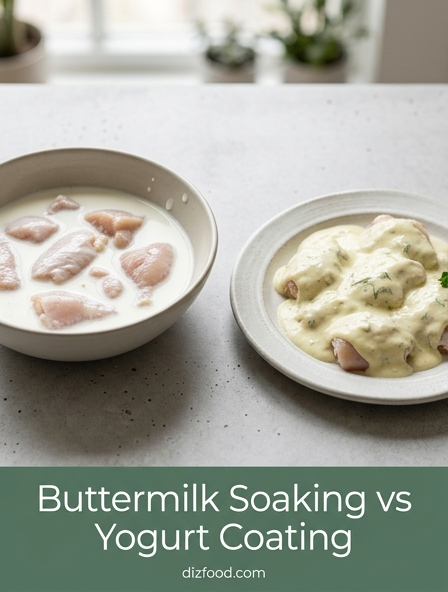
Ever wonder why your favorite fried chicken is so succulent or why tandoori chicken practically melts in your mouth? The secret lies in the acidic marination battle between buttermilk and yogurt. While both utilize mild lactic acid to gently break down tough muscle fibers without turning the meat to mush, they offer distinct culinary advantages. Buttermilk acts more like a penetrating brine, hydrating the chicken from the inside out and creating a perfect "glue" for breading. In contrast, yogurt provides a thick, enzymatic coating that stays put, insulating the meat against high heat while adding a tangy depth of flavor. Choosing between them depends on whether you are aiming for the ultimate deep-fried crunch or a beautifully charred, spice-infused roast.
| Feature | Buttermilk Soaking | Yogurt Coating |
|---|---|---|
| Texture | Thin liquid; deep penetration. | Thick paste; surface insulation. |
| Primary Benefit | Maximum hydration & tenderness. | Enzymatic breakdown & charring. |
| Best For | Fried chicken, wings, nuggets. | Grilling, roasting, kebabs. |
| Flavor Profile | Mildly tangy, buttery finish. | Bright, acidic, and savory. |
| Marination Time | 4 to 24 hours (best overnight). | 30 mins to 6 hours (quick acting). |
| Result | Shatter-crisp crust; dripping juicy. | Tenderized "melt" with smoky crust. |
The Science Behind Dairy Marinades
Dairy-based marinades operate on a fundamentally different biochemical level than their vinegar or citrus-based counterparts. While harsh acids can denature proteins too quickly, often resulting in a mealy or mushy exterior, dairy products like buttermilk and yogurt utilize a gentler approach. The primary agents at work are lactic acid and calcium. Lactic acid is a mild organic acid that slowly breaks down the connective tissues and protein structures in meat, allowing for a subtler, deeper tenderization process that does not compromise the integrity of the muscle fibers as rapidly as acetic or citric acids.
Calcium plays a secondary but equally vital role in the kitchen. It activates naturally occurring enzymes within the meat known as calpains. These enzymes are responsible for the natural aging process of meat, breaking down toughening proteins from the inside out. When a chef submerged chicken or lamb in a dairy bath, they are essentially accelerating the ripening process. This dual action of acid and calcium ensures that the meat remains succulent while achieving a level of tenderness that is difficult to replicate with water-based brines.
- Gentle Acidification: Lactic acid maintains a pH level that tenderizes without dissolving the surface.
- Enzymatic Activation: Calcium ions trigger internal proteolysis for structural softening.
- Protein Buffer: The fats and proteins in dairy shield the meat from the aggressive drying effects of salt.
- Osmotic Balance: Dairy marinades help regulate moisture exchange between the liquid and the protein cells.
Buttermilk vs Yogurt Tenderizing Power
While both ingredients are staples of the culinary world, their physical consistency and chemical concentrations dictate different results in the kitchen. Buttermilk, traditionally the liquid left over after churning butter, is now commercially produced by adding cultures to low-fat milk. It is highly acidic and relatively thin, which allows it to penetrate deeply into the crevices of the meat. This makes it the superior choice for deep-frying applications where a thin, uniform coating is required to bond with seasoned flour.
Yogurt, conversely, is significantly thicker and contains a higher concentration of lactic acid bacteria. Because of its viscous nature, yogurt sits on the surface of the meat longer, creating a thick, protective "blanket." This is particularly advantageous for high-heat cooking methods like grilling or roasting, where the thick coating prevents the meat from drying out. The choice between the two often comes down to the desired thickness of the marinade and the specific cut of meat being prepared.
| Feature | Buttermilk | Yogurt |
|---|---|---|
| Consistency | Thin, liquid-like | Thick, viscous |
| Acid Intensity | Moderate | High to Very High |
| Penetration Depth | Deep and fast | Surface-level and slow |
| Ideal Cooking Style | Frying / Submersion | Grilling / Roasting |
Flavor Impact of Lactic Acid
The flavor profile of a dairy marinade is defined by the unique tang of lactic acid. Unlike the sharp, aggressive bite of white vinegar, lactic acid provides a creamy, mellow sourness that rounds out the savory notes of the meat. This acidity acts as a flavor enhancer, stimulating the salivary glands and making the natural juices of the protein taste more intense. In the kitchen, this tanginess serves as a perfect foil for heavy spices, such as cayenne pepper, smoked paprika, or cumin, cutting through the heat and providing a balanced palate.
Beyond the immediate acidity, dairy marinades introduce a complex "cultured" flavor profile. As the meat sits in the marinade, the fats in the buttermilk or yogurt absorb fat-soluble aromatics from added herbs and spices. This creates a more integrated flavor experience where the spices are not just sitting on the surface but are carried into the outer layers of the protein by the dairy fats. The result is a sophisticated depth of flavor that tastes fermented and rich rather than just salty or sour.
Furthermore, the sugars present in dairy-specifically lactose-contribute to a subtle sweetness. This sweetness undergoes caramelization during the cooking process, adding a layer of toasted, nutty flavor notes that are absent in oil-based marinades. This makes dairy the preferred medium for chefs looking to create a multi-dimensional taste profile that evolves from the first bite to the finish.
Achieving the Perfect Golden Crust
The quest for a golden-brown, crispy exterior is where dairy marinades truly shine. This is largely due to the Maillard reaction, a chemical reaction between amino acids and reducing sugars that gives browned food its distinctive flavor and color. Because buttermilk and yogurt are rich in both proteins and lactose (milk sugar), they provide the perfect fuel for this reaction. When subjected to heat, the sugars in the dairy caramelize rapidly, producing a deep mahogany hue that is visually stunning and flavor-dense.
- Sugar Caramelization: Lactose browns at a lower temperature than muscle meat, providing early color development.
- Surface Dehydration: The proteins in the dairy form a thin film that dries out quickly in the heat, leading to crispness.
- Fat Conductance: The residual fats in the marinade help conduct heat evenly across the uneven surface of the meat.
- Crumb Bonding: The viscosity of the dairy acts as a biological glue, ensuring that breading or flour adheres firmly without flaking off.
In frying, the buttermilk interacts with the starch in the flour to create "crags" and "nooks." These small, irregular bumps increase the surface area of the crust, leading to more crunch per square inch. In roasting, a yogurt coating will dehydrate into a concentrated, savory skin that traps juices while providing a charred, blistered texture that is the hallmark of professional-grade tandoori or roasted poultry.
Moisture Retention and Protein Breakdown
One of the greatest challenges in the kitchen is preventing lean meats from becoming dry and stringy. Dairy marinades address this through the process of protein denaturation and water-holding capacity. As the lactic acid gently unravels the tightly coiled proteins in the meat, it creates a mesh-like structure that can trap and hold onto water molecules. This means that even when the meat is exposed to high temperatures, it loses less internal moisture than unmarinated meat.
The fats in yogurt and buttermilk also contribute to the perception of moisture. These fats coat the muscle fibers, providing a lubricating mouthfeel that mimics the presence of internal marbling. For lean cuts like chicken breast or pork loin, this "artificial marbling" is essential for a succulent result. The breakdown of collagen into gelatin is also slightly accelerated by the acidic environment, further contributing to a silky, tender texture that feels moist on the tongue.
- Hydration Barrier: The dairy solids form a semi-permeable barrier that slows down the evaporation of internal juices.
- Fiber Relaxation: Relaxed protein fibers provide less resistance when chewing, releasing juices more easily.
- Emulsification: Dairy acts as an emulsifier between the meat's natural oils and the added moisture of the marinade.
- Structural Softening: The breakdown of the perimysium (connective tissue) allows for a cleaner "bite" without the "snap" of tough fibers.
Traditional Fried Chicken vs Tandoori Styles
The culinary applications of buttermilk and yogurt are best exemplified by comparing American Southern fried chicken and Indian tandoori preparations. In the Southern tradition, buttermilk is used as a soaking agent. The chicken is often submerged for several hours, allowing the thin liquid to penetrate the meat thoroughly. When the chicken is removed, the thin, acidic film that remains is just enough to hydrate the flour dredging, creating the iconic flaky, craggy crust that characterizes the style. The focus here is on the contrast between the tender interior and the thick, crunchy exterior.
In contrast, tandoori style relies on the thick, paste-like consistency of yogurt. The marinade is heavily spiced and applied as a thick coating that stays on the meat throughout the cooking process. In the intense heat of a clay tandoor oven, the yogurt doesn't just tenderize; it forms a secondary "skin." This skin chars and blisters, creating a smoky, tangy layer that is inseparable from the meat itself. While the buttermilk method focuses on a separate crust, the yogurt method focuses on an integrated, flavored surface. Both methods leverage dairy to protect the meat from intense heat, whether it comes from boiling oil or a 900-degree oven.
These two styles represent the global reach of dairy marinades. While the specific ingredients vary-buttermilk in the West and dahi (yogurt) in the East-the underlying science of using cultured dairy to transform protein remains a universal culinary principle. Each style exploits the physical properties of the dairy base to achieve a specific textural goal suited to the local cooking technology.
Texture Comparison in Roasted Meats
When roasting meats, the choice between buttermilk and yogurt significantly alters the final mouthfeel of the exterior. Because roasting is a dry-heat method, the way the marinade evaporates and reacts with the air determines the "bite" of the meat. A buttermilk marinade, being thinner, tends to produce a very thin, almost glazed skin. It is excellent for turkey or whole chickens where you want the natural skin to become translucent and snappy. The buttermilk enhances the browning without adding significant bulk to the surface.
A yogurt-coated roast, however, results in a much more substantial texture. As the water evaporates from the yogurt, the milk solids and proteins concentrate into a savory, slightly chewy crust. This is often referred to as a "masala" in certain cuisines. This crust provides a significant textural contrast to the soft meat beneath it. The thickness of the yogurt allows it to hold onto large particles of cracked pepper, whole seeds, or chopped herbs, which would otherwise fall off a thinner buttermilk-moistened surface.
| Roasting Attribute | Buttermilk Result | Yogurt Result |
|---|---|---|
| Skin Texture | Crispy, thin, snappy | Soft, charred, concentrated |
| Aromatic Retention | Moderate (thin layer) | High (holds chunky spices) |
| Browning Speed | Rapid and uniform | Slower, creates "blisters" |
| Surface Finish | Smooth and glossy | Textured and matte |
Best Marination Times for Results
Timing is critical when working with dairy marinades to avoid over-denaturing the meat. Because the acid in dairy is gentle, it requires more time than a vinegar-based marinade, but there is still a ceiling beyond which the texture begins to suffer. For small, tender cuts like chicken nuggets or shrimp, a short soak of 30 to 60 minutes is usually sufficient to impart flavor and a slight textural improvement. For larger, tougher cuts like bone-in chicken thighs or lamb shoulder, a longer duration is necessary to allow the calcium and lactic acid to work through the dense muscle fibers.
- Short Soak (30 mins - 2 hours): Ideal for seafood and thin poultry cutlets. Provides surface flavor and minor browning benefits.
- Standard Soak (4 - 8 hours): The "sweet spot" for most chicken parts. Ensures deep tenderization and optimal moisture retention.
- Long Soak (12 - 24 hours): Necessary for tough red meats or thick-cut pork. Maximum enzymatic breakdown occurs in this window.
- Over-Marination (24+ hours): Risk of the meat becoming too soft or "mushy." The surface proteins may begin to disintegrate unpleasantly.
It is important to remember that the thickness of the marinade affects timing. Yogurt marinades, because they move more slowly, can often be left on the meat slightly longer than buttermilk without the risk of the meat becoming waterlogged. Always marinate in the refrigerator to keep the dairy stable and prevent bacterial growth, and ensure the meat is fully coated for consistent results across the entire cut.
Coating Adhesion and Surface Texture
The "glue-like" properties of dairy are a primary reason for their popularity in breaded and fried foods. In the kitchen, the goal of breading is to create a shell that stays attached to the meat even after it is sliced. Buttermilk is the gold standard for this. When meat is dipped in buttermilk and then tossed in flour, the lactic acid begins to slightly dissolve the surface starches of the flour. This creates a sticky paste that binds the dry coating to the protein fibers. As the meat hits the hot oil, this paste hardens into a singular, unified crust.
Yogurt offers a different type of adhesion. Because it is already thick, it doesn't need to interact with flour to create a coating; it *is* the coating. For gluten-free or low-carb cooking, a thick yogurt marinade can provide the "body" that breading normally would. When roasted at high temperatures, the yogurt proteins coagulate into a firm layer that mimics the bite of a traditional crust. This is particularly useful for delicate fish or vegetables that might be overwhelmed by a heavy flour-based breading.
- Protein Linkage: Dairy proteins cross-link with meat proteins to prevent the "bald spot" syndrome in fried foods.
- Starch Hydration: Buttermilk provides the exact amount of moisture needed to hydrate flour without making it gummy.
- Viscosity Control: Yogurt can be thinned with lemon juice or thickened by straining to control the final coating thickness.
- Texture Variation: Buttermilk produces "flakes," while yogurt produces a "shell."
Choosing the Right Dairy Base
The decision to use buttermilk or yogurt ultimately depends on the specific culinary goal and the cooking equipment available. If the objective is to produce the classic, craggy, and ultra-crunchy crust of American fried chicken, buttermilk is the indispensable choice. Its liquidity ensures every nook and cranny is reached, and its acidity provides a clean, bright finish that cuts through the heaviness of the oil. It is the workhorse of the deep fryer, designed to facilitate a secondary coating of dry ingredients.
Conversely, if the goal is a flavorful, charred, and succulent piece of grilled or roasted meat, yogurt is the superior option. Its ability to carry heavy spice loads and protect the meat from the direct flame of a grill makes it ideal for outdoor cooking and high-heat roasting. Yogurt is not just a marinade; it is a sauce component and a protective barrier all in one. It is best suited for bold flavors and techniques where the marinade itself is intended to be consumed as part of the final dish.
Chefs should also consider the fat content. Full-fat Greek yogurt will provide a much richer, creamier result than low-fat buttermilk. For leaner meats, the higher fat content of yogurt can be a lifesaver, providing the necessary lipids for a satisfying mouthfeel. In the end, understanding the physical and chemical differences between these two dairy giants allows a cook to manipulate texture and flavor with precision, ensuring that whether fried or roasted, the meat is always at its peak potential.

Comments