
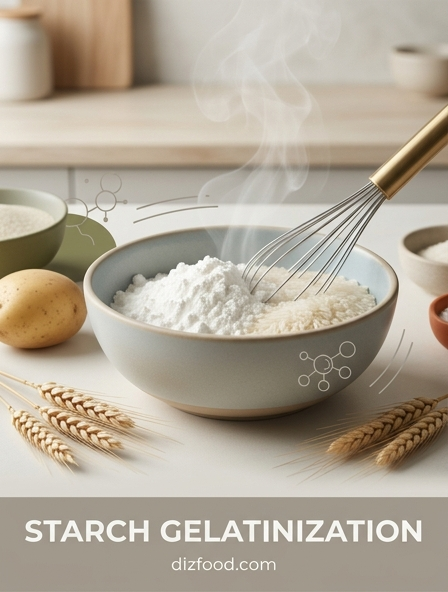
Understanding Starch Granule Swelling
Starch granules are densely packed, semi-crystalline structures found within the cells of plants like potatoes and grains. In their raw state, these granules are insoluble in cold water and remain relatively inert. However, once introduced to a heated liquid environment, the physical state of the granule begins to shift. This process is the foundation of starch gelatinization, where water molecules penetrate the granule, causing it to expand significantly. The swelling occurs as the internal hydrogen bonds between the starch molecules are disrupted by the kinetic energy of heat.
As the granules continue to absorb water, they lose their organized crystalline structure and become increasingly amorphous. This transformation is irreversible once a certain volume is reached. The following factors influence the rate and extent of this swelling:
- The botanical source of the starch (e.g., tuber vs. cereal).
- The ratio of surrounding water to the amount of starch present.
- The presence of solutes like sugar or acid which can inhibit swelling.
- The duration of exposure to the heat source.
Eventually, the granules reach a maximum volume, creating a viscous suspension that alters the texture of the food. If the swelling continues past its peak, the granules may rupture, leading to a loss of viscosity and a change in the overall mouthfeel.
The Role of Heat and Hydration
Heat and hydration are the twin catalysts for the transformation of raw starch into a palatable gel. Without sufficient moisture, the starch granules cannot expand, and without heat, the water cannot break through the tight molecular bonds of the amylopectin and amylose chains. The process typically begins in a kitchen environment when temperatures rise above 60°C. At this point, the energy provided by the heat allows water molecules to move more rapidly and wedge themselves into the starch matrix. This creates a state of plasticization, where the granules become soft and pliable.
| Phase | Temperature Range | Physical Change |
|---|---|---|
| Initial Swelling | 50°C - 65°C | Water begins to enter the amorphous regions. |
| Irreversible Gelatinization | 65°C - 85°C | Loss of birefringence; maximum water absorption. |
| Granule Rupture | Above 90°C | Starch molecules leach into the surrounding liquid. |
Hydration must be managed carefully; if the exterior of a starch-heavy food hydrates too quickly compared to the interior, it can create a barrier that prevents heat from penetrating efficiently. This balance is critical in achieving a uniform texture throughout the dish, ensuring no gritty, ungelatinized cores remain.
Breaking Down Amylose and Amylopectin
To understand the texture of gelatinized starch, one must look at the two primary polysaccharides involved: amylose and amylopectin. Amylose is a linear molecule that provides structure and firmness. During the gelatinization process, amylose molecules are the first to leach out of the swelling granules. Once cooled, these molecules tend to reassociate through a process called retrogradation, which creates a firm gel or a crusty exterior. In contrast, amylopectin is a highly branched molecule that contributes to the viscosity and "stickiness" of the starch paste.
The interaction between these two molecules determines the final culinary outcome:
- High-amylose starches tend to form stronger, more rigid gels.
- High-amylopectin starches (like waxy maize) produce clear, cohesive pastes that do not gel easily.
- The leaching of amylose creates a "glue" that binds cells together or provides a surface for browning.
In a potato, the ratio of these molecules dictates whether the interior will be fluffy or waxy. During frying or baking, the amylose that migrates to the surface of the cell walls helps create the structural integrity necessary for a crisp bite, while the internal amylopectin maintains the moisture and softness that characterizes a perfectly cooked vegetable.
Temperature Thresholds for Soft Interiors
Achieving a soft, buttery interior in starchy foods is dependent on hitting specific temperature thresholds. Each starch variety has a unique gelatinization range, but most culinary starches undergo their most significant transformation between 60°C and 75°C. When a potato or dough reaches this internal temperature, the granules have absorbed enough moisture to fully expand and soften. If the temperature remains too low, the starch remains crystalline and tastes "raw" or "mealy." Conversely, exceeding these temperatures for too long can lead to the breakdown of the starch matrix, resulting in a gummy or glue-like consistency.
In professional kitchens, precise temperature control allows for the optimization of texture. For instance, holding a potato at a lower gelatinization temperature (around 65°C) for an extended period can activate enzymes like pectin methylesterase. This enzyme strengthens the cell walls, allowing the starch to gelatinize without the cells falling apart entirely. This technique is often used in the first stage of "triple-cooked" fries to ensure the interior remains fluffy and intact during the subsequent high-heat frying stages. Monitoring these thresholds ensures that the chemical transition from hard granule to soft gel is completed thoroughly.
Selecting High Starch Potato Varieties
The success of starch gelatinization in the kitchen often begins with the selection of the raw ingredient. Not all potatoes are created equal; they are generally categorized by their starch content into "mealy" or "waxy" types. Mealy potatoes, such as the Russet or Idaho, possess a high starch-to-water ratio. This makes them ideal for processes where a fluffy, light, and dry interior is desired. During cooking, the high concentration of starch granules ensures that plenty of amylose is available to swell and create the desired texture.
| Potato Type | Starch Content | Best Culinary Use |
|---|---|---|
| Russet (Burbank) | High (Mealy) | Frying, Baking, Mashing |
| Yukon Gold | Medium | Roasting, Boiling |
| Red Bliss | Low (Waxy) | Salads, Soups, Steaming |
Waxy potatoes contain more simple sugars and less starch. Their granules are less prone to breaking apart, which helps them hold their shape. However, for a fry or a baked potato where the goal is a soft, gelatinized core, high-starch varieties are superior. The high density of starch granules ensures that as they swell, they push against each other, creating the pressure necessary for a light, aerated internal structure rather than a dense, translucent one.
Cellular Expansion and Texture Change
The texture of a cooked potato is a result of both starch gelatinization and the behavior of the plant's cellular structure. As the starch granules within the cells swell, they exert physical pressure on the cell walls. This internal pressure, combined with the heat-induced weakening of the pectin "glue" that holds cells together, causes the cells to round out and slightly separate. This phenomenon is known as "sloughing" or cellular expansion. In high-starch varieties, this expansion is so robust that the cells effectively become individual packages of gelatinized starch.
The resulting texture is perceived by the palate as "fluffy" because the individual cells can separate easily when chewed. If the starch content is low, the cells do not expand as much and stay tightly bound by pectin, leading to a firmer, waxier texture. The following changes occur during this transition:
- Pectin degradation allows for easier cell separation.
- Starch granules fill the entire intracellular space.
- Water is relocated from the tissue into the starch granules.
- The overall density of the tissue decreases as air pockets are created.
Understanding this cellular mechanics allows chefs to manipulate textures by adjusting cooking times and temperatures to encourage or inhibit this expansion.
Moisture Trap During the Frying Process
Frying is a unique cooking method because it involves simultaneous dehydration and gelatinization. When a starchy food item is submerged in hot oil, the surface moisture evaporates almost instantly, creating a desiccated crust. This crust acts as a functional barrier, or a "moisture trap," for the interior of the food. While the outside is becoming crisp and brown due to the Maillard reaction, the water trapped inside is heated rapidly, facilitating the gelatinization of the internal starch granules.
This trapped steam is essential for the soft texture of a French fry. Without the rapid formation of a crust, the internal moisture would escape, leaving the fry hollow or tough. The efficiency of this moisture trap depends on the initial starch concentration. High-starch potatoes form a more robust internal gel that holds onto the remaining steam, ensuring that the interior remains hydrated and fluffy. The pressure from the trapped steam also helps to push the gelatinized starch against the inner walls of the crust, reinforcing the structure and preventing the fry from collapsing as it cools. This balance between the dry, crunchy exterior and the moist, gelatinized interior is the hallmark of expertly fried foods.
Achieving the Perfect Fluffy Consistency
The "fluffiness" of a starch-based dish is a specific textural state where the gelatinized starch granules are fully hydrated but not overly agitated or broken. To achieve this consistency, especially in mashed potatoes or fries, one must respect the starch's delicate nature after gelatinization has occurred. If the starch is over-worked-such as by using a high-speed blender for mashed potatoes-the swollen granules rupture, releasing a flood of amylose. This free-floating starch creates a sticky, glue-like paste rather than a light, aerated mash.
To optimize fluffiness, consider these steps:
- Rinse cut potatoes to remove excess surface starch that can lead to sticking.
- Start cooking in cold water to ensure even heat distribution and uniform gelatinization.
- Drain and "dry" the cooked starch briefly over low heat to remove excess surface moisture before finishing.
- Use gentle tools, like a ricer or food mill, to separate cells without shearing the granules.
By preventing the release of excess amylose outside of the cell walls, the cook preserves the individual "packets" of gel. This maintains the structural integrity of the tissue while providing the soft, melting sensation that defines the perfect fluffy interior in everything from gnocchi to baked potatoes.
The Science of Internal Softness
Internal softness in starchy vegetables is essentially a transition from a solid, crystalline state to a viscoelastic gel state. This change is governed by the laws of thermodynamics and polymer science. As the starch granules absorb water and heat, they undergo a glass transition, where the rigid molecules become mobile. This molecular mobility is what we perceive as "softness." The more completely the starch is gelatinized, the less resistance the food offers to the teeth, resulting in a tender mouthfeel.
However, softness is also influenced by the breakdown of the primary cell wall. Hemicellulose and pectin, which provide the "skeleton" of the plant tissue, dissolve during the cooking process. In the presence of heat, these polysaccharides lose their ability to hold the cells in a rigid matrix. When this cellular breakdown is paired with the internal swelling of starch granules, the result is a total loss of the original raw crunch. The science of softness, therefore, is a delicate interplay between the hydration of starch polymers and the thermal degradation of the plant's structural fibers. If either process is incomplete, the food will retain an undesirable firmness or "woody" texture.
Optimizing Gelatinization for Better Fries
Optimizing starch gelatinization for fries often involves a multi-stage cooking process. The first stage, typically a parboil or a low-temperature blanch in oil, is designed to gelatinize the starch thoroughly from the edge to the center without browning the exterior. This ensures that the internal structure is set. Some chefs use an acidic soaking solution, such as water with vinegar, during this stage. The acid slows the breakdown of pectin, allowing the starch to gelatinize while the potato strip maintains its physical shape and structural integrity.
The second stage of cooking, usually at a much higher temperature, focuses on creating the crust. Because the interior is already gelatinized, the high heat can focus on rapid evaporation and the Maillard reaction. This "double-fry" method is successful because it separates the two physical requirements of a great fry:
- Primary Cook: Full starch gelatinization and cellular softening.
- Secondary Cook: Dehydration of the surface and development of aromatic compounds.
Furthermore, allowing the fries to cool between stages encourages a small amount of retrogradation. This makes the starch granules more robust, leading to a sturdier fry that stays crisp longer and possesses a more complex, satisfying internal texture.

Comments