
If you're chasing that elusive, glass-shattering crunch in your fried favorites, the showdown between rice flour and cornstarch is a culinary game-changer you need to know. While both are gluten-free powerhouses, they bring distinct vibes to the kitchen; cornstarch acts as a moisture-absorbing hero that creates a delicate, airy snap, whereas rice flour offers a sturdier, long-lasting bite that resists getting soggy even under heavy sauces. Whether you're perfecting a light-as-air tempura or a robust Southern fried chicken, understanding how these starches interact with heat and moisture is the secret to achieving professional-grade texture and the ultimate crispy finish every single time.
| Feature | Rice Flour | Cornstarch |
|---|---|---|
| Crunch Profile | Hard, granular, long-lasting snap. | Light, delicate, "melt-in-mouth" crisp. |
| Oil Absorption | Very low; keeps food less greasy. | Moderate; absorbs more than rice flour. |
| Browning Ability | Develops a deep, golden-brown hue. | Stays pale; best for translucent batters. |
| Best Culinary Use | Fried chicken, tempura, gluten-free baking. | Velveting meat, thickening sauces, dredging. |
| Moisture Barrier | Excellent; stays crispy under sauces. | Fair; can become soft/rubbery when cooled. |
| Structure | High protein/starch mix; holds shape well. | Pure starch; creates a brittle, fragile film. |
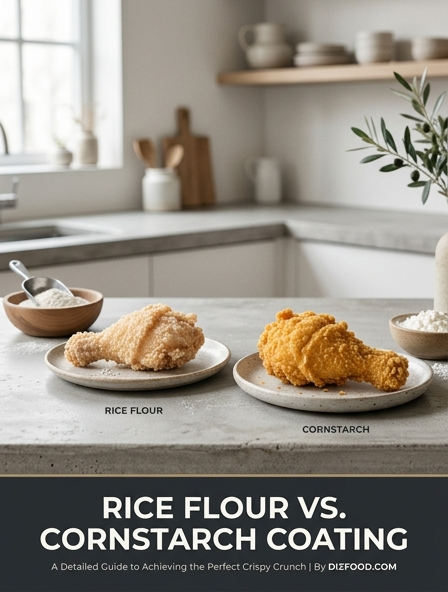
Rice Flour vs Cornstarch Coating Basics
In the world of professional and home frying, the choice of coating determines the final character of the dish. Rice flour and cornstarch are the two most popular gluten-free alternatives to traditional wheat flour, each offering a distinct chemical profile that reacts uniquely to hot oil. Rice flour is made from finely milled rice and contains a small amount of protein and fiber alongside its starch content. Because it lacks gluten, it cannot develop the elastic, chewy network found in wheat, resulting in a coating that is naturally brittle and crisp.
Cornstarch, on the other hand, is a pure starch extracted from the endosperm of the corn kernel. It is a powdery, ultra-fine substance that serves as a powerful thickening agent and a superior frying medium. While rice flour provides a more substantial "crust," cornstarch is prized for its ability to create a thin, translucent, and glass-like shell. Understanding the fundamental differences between these two starts with their ingredient profiles:
- Rice Flour: Contains approximately 6-7% protein; provides a dense, sturdy crunch; stays crisp for long periods.
- Cornstarch: Nearly 100% starch; creates a delicate, airy, and brittle texture; allows for maximum surface area expansion.
Choosing between them often depends on the desired thickness of the coating. Rice flour is frequently used in heavier batters or for dredging meats that require a rugged exterior, such as Korean fried chicken. Cornstarch is the gold standard for lighter applications where the natural flavor and texture of the protein should shine through without being overshadowed by a heavy breading.
The Science of Ultimate Crispiness
The pursuit of the perfect crunch is a matter of molecular structure, specifically the ratio of amylose to amylopectin within the starch. Both rice flour and cornstarch are high in amylose, which is a linear glucose polymer. When these starches are hydrated and then subjected to the intense heat of deep-frying, they undergo a process called gelatinization. As the water evaporates, the starch molecules realign into a rigid, crystalline structure that we perceive as crispiness.
Cornstarch is particularly effective because its granules are incredibly small and uniform. When fried, it forms a continuous, moisture-resistant film around the food. This film acts as a barrier, preventing the steam inside the food from escaping too quickly while simultaneously blocking oil from soaking in. The result is a high-contrast texture where the interior remains succulent while the exterior remains dry and brittle.
Rice flour behaves slightly differently due to its protein content. The proteins in rice flour undergo the Maillard reaction more readily than pure cornstarch, contributing to a different type of structural integrity. While cornstarch creates a "shattering" crispness, rice flour creates a "snapping" crunch. Furthermore, rice flour has a lower water-binding capacity than wheat flour, meaning it sheds moisture faster in the fryer. This rapid dehydration is the secret to why rice flour-coated foods often feel less greasy and hold their structural integrity better when tossed in wet sauces or glazes.
Comparing Texture and Crunch Levels
The sensory experience of eating fried food is defined by the resistance the coating provides against the teeth. While both ingredients are used to achieve "crispiness," the specific mouthfeel of rice flour is significantly different from that of cornstarch. Rice flour produces a thicker, more opaque layer that mimics the traditional "breaded" feel without the heaviness of gluten. It is ideal for dishes where you want a substantial bite that can stand up to heavy handling.
Cornstarch produces what chefs refer to as a "glassy" crunch. Because the layer is so thin and the starch is so refined, it shatters into tiny pieces upon impact. This makes it the preferred choice for delicate seafood or vegetables. To better understand how these textures compare in a kitchen environment, consider the following technical characteristics:
| Feature | Rice Flour | Cornstarch |
|---|---|---|
| Primary Texture | Hard, sandy, and snapping | Brittle, delicate, and shattering |
| Coating Thickness | Medium to Thick | Thin to Paper-thin |
| Longevity | High (stays crisp for 30+ mins) | Moderate (softens as it cools) |
| Mouthfeel | Granular and substantial | Smooth and light |
In many Asian cuisines, the two are used interchangeably depending on the specific regional style. For example, a Taiwanese popcorn chicken might favor the granular snap of coarse sweet rice flour, whereas a Cantonese-style fried fish might rely on the silky, light dusting of cornstarch to maintain the elegance of the dish.
Oil Absorption and Calorie Impact
One of the most significant advantages of moving away from wheat-based coatings is the reduction in oil absorption. Wheat flour contains gluten, which acts like a sponge, soaking up fat during the frying process. Rice flour and cornstarch, being gluten-free, naturally repel oil to a much higher degree. However, between the two, rice flour is often cited as the champion of low-oil frying. Studies have indicated that rice flour can absorb up to 50% less oil than traditional wheat flour and even less than cornstarch in certain wet-batter applications.
The reason for this lies in the surface tension and the way the starches interact with water. Rice flour creates a more hydrophobic surface during the initial stages of frying. Because it does not hold onto as much water, there are fewer "voids" created by escaping steam for oil to rush into. This results in a finished product that is significantly lower in calories and grams of fat, making it a "healthier" alternative for those who enjoy fried foods but want to minimize grease consumption.
Cornstarch is also relatively low in oil absorption compared to wheat, but its fine particles can sometimes form a dense sludge if the batter is too thick, which may trap more oil if the temperature of the fryer drops. To maximize the health benefits and minimize calories when using these starches, it is essential to maintain a consistent frying temperature of at least 350°F (175°C). High heat ensures that the starches seal instantly, preventing any excess oil from penetrating the interior of the food.
Best Recipes for Rice Flour
Rice flour is a versatile workhorse in many global cuisines, particularly in Southeast Asia and parts of the Indian subcontinent. Its ability to create a rugged, long-lasting crunch makes it the ideal choice for foods that are meant to be eaten over a longer period or served at room temperature. One of the best applications for rice flour is in the preparation of Karaage, or Japanese-style fried chicken, where a mix of rice flour and wheat is often used to ensure the chicken stays crunchy even after being packed into a bento box.
Another classic use case is for Indo-Chinese "Manchurian" dishes or Indian Pakoras. When vegetables like cauliflower or onions are coated in a spiced rice flour batter, the flour forms a protective shell that prevents the vegetables from becoming mushy. The high heat of the oil turns the rice flour into a savory, cracker-like exterior that provides a perfect contrast to the soft interior. Some of the top recipes for rice flour include:
- Vietnamese Bánh Xèo: Savory crepes that rely on rice flour for their signature lacy, crisp edges.
- Korean Fried Chicken: Often uses rice flour in the second fry to achieve an ultra-crisp, "shattering" skin that holds sauce without getting soggy.
- Gluten-Free Calamari: Provides a sandy, Mediterranean-style texture that pairs perfectly with lemon and aioli.
- Southern Fried Catfish: A common substitute for cornmeal to achieve a finer, lighter crunch.
Because rice flour is relatively flavor-neutral, it carries seasonings well. Whether you are adding five-spice powder, cayenne, or garlic salt, the flour acts as a vehicle for flavor without the "cereal" taste that cornstarch or wheat flour sometimes imparts.
Why Cornstarch Wins for Tempura
Tempura is defined by its ethereal, cloud-like coating that is both crispy and incredibly light. To achieve this, the batter must be kept cold and mixed minimally to prevent any gluten from forming-even if using wheat flour. However, the secret to the most successful professional-grade tempura often involves a high percentage of cornstarch. Cornstarch wins in this category because of its ability to expand and create tiny air pockets when it hits the hot oil.
When cornstarch is whisked into a thin slurry with ice-cold sparkling water, the carbonation and the starch work together to create a lace-like structure. As the water evaporates instantly in the fryer, the cornstarch sets into a delicate lattice that doesn't feel like a "crust" so much as a crisp extension of the ingredient itself. This is why a shrimp tempura looks spiked and textured rather than smooth; the cornstarch allows the batter to "bloom" in the oil.
Furthermore, cornstarch provides a transparency that rice flour cannot match. In high-end Japanese dining, the aesthetic of the food is as important as the taste. Cornstarch allows the vibrant green of a shiso leaf or the bright orange of a carrot to be visible through the coating. It provides the necessary protection to cook the vegetable through without browning the exterior excessively, maintaining the fresh, garden-like appearance of the ingredients. For any dish requiring a "whisper-thin" coating, cornstarch remains the undisputed champion.
The Perfect Blend for Fried Chicken
While rice flour and cornstarch are excellent on their own, the most advanced fried chicken recipes often utilize a blend of both, sometimes even incorporating a small amount of all-purpose wheat flour. This "triple threat" approach balances the strengths of each ingredient. The wheat flour provides the browning and the classic "flavor" of fried chicken, the rice flour adds a hard, structural snap that resists sogginess, and the cornstarch contributes a light, airy crispness that prevents the breading from becoming too dense.
A common ratio for a high-performance dry dredge is 50% all-purpose flour, 25% rice flour, and 25% cornstarch. This combination ensures that the chicken has enough gluten to adhere to the skin, but enough starch to remain crispy even when doused in spicy buffalo sauce or a sweet soy glaze. If you are aiming for a purely gluten-free version, a 1:1 ratio of rice flour to cornstarch is the gold standard. To achieve the best results with this blend, follow these steps:
- Double Dredge: Dip the chicken in the starch blend, then a liquid (like buttermilk or egg), then back into the starch for maximum crags.
- Resting Period: Let the coated chicken sit for 10 minutes before frying. This allows the starches to hydrate and "grip" the meat.
- Temperature Control: Fry at 325°F initially to cook through, then finish at 375°F to activate the cornstarch's crisping properties.
This hybrid method is the secret behind famous "extra crispy" fast food and high-end gastropub chicken alike. It provides a multi-dimensional crunch that satisfies the palate through different levels of texture, from the large crags to the micro-bubbles on the surface.
Browning Characteristics and Visual Appeal
The visual appeal of fried food is largely determined by the Maillard reaction-the chemical reaction between amino acids and reducing sugars that gives browned food its distinctive flavor and color. Rice flour and cornstarch behave very differently in this regard. Rice flour, containing some protein, will brown more easily than cornstarch. A chicken wing coated in rice flour will develop a beautiful, golden-tan hue that signals to the brain that the food is savory and well-cooked.
Cornstarch, being a pure carbohydrate with virtually no protein, is highly resistant to browning. If you fry something exclusively in cornstarch, it can remain pale or white even when it is fully cooked and perfectly crisp. This can be a double-edged sword. On one hand, it is excellent for foods where you want to preserve the natural color of the ingredient (like tofu or white fish). On the other hand, it can sometimes look undercooked or unappealing if the diner is expecting a dark, golden crust.
To overcome the "pale" look of cornstarch, many chefs add a small amount of sugar, honey, or soy sauce to the liquid component of the batter. Alternatively, mixing cornstarch with a bit of paprika or turmeric can provide a visual "cheat" to give the appearance of browning without the need for protein-driven caramelization. When deciding between the two for a dinner party, consider the desired aesthetic: rice flour for a rustic, golden-brown look, and cornstarch for a clean, modern, and light appearance.
Moisture Retention in Fried Batters
The greatest enemy of any fried coating is moisture. After a piece of food is removed from the fryer, the residual heat in the center continues to cook the interior, releasing steam. In a traditional wheat flour coating, this steam gets trapped against the gluten wall, turning the crispy exterior into a soggy, doughy mess within minutes. Rice flour and cornstarch are much more efficient at managing this moisture migration, though they do so in different ways.
Rice flour's structure is somewhat porous on a microscopic level, allowing steam to escape more freely than wheat flour. This "breathability" is why rice flour coatings stay crunchy for so long; the steam passes through the crust rather than saturating it. Cornstarch, conversely, works by creating a very tight, moisture-resistant barrier. While this makes for a great initial crunch, if the food inside is particularly watery (like a zucchini or a very fatty piece of meat), the steam can eventually soften the cornstarch from the inside out.
To maximize moisture retention in the meat while ensuring the batter stays dry, the following tips are useful:
- Dry the Surface: Always pat the protein bone-dry with paper towels before applying rice flour or cornstarch.
- Salt Early: Salt the meat 30 minutes prior to draw out surface moisture, then wipe it away.
- Wire Racks: Never rest fried food on a flat plate; use a wire cooling rack to allow steam to escape from the bottom of the coating.
Final Verdict for Your Next Meal
In the debate between rice flour and cornstarch, there is no single winner; rather, there is a right tool for every specific culinary job. Your choice should be dictated by the protein you are using, the sauce you plan to apply, and how quickly the food will be consumed. Rice flour is the ultimate choice for durability and a heavy-duty crunch. If you are making a meal that involves tossing fried items in a wet sauce-such as General Tso's Chicken or Sweet and Sour Pork-rice flour is the superior option. Its ability to maintain its "snap" even when coated in liquid is unmatched by any other starch.
Cornstarch is the definitive choice for elegance and immediacy. If you are serving a delicate appetizer, like salt and pepper squid or vegetable tempura, that will be eaten immediately after it leaves the pan, cornstarch provides a sophisticated, light-as-air experience. It doesn't weigh down the palate and allows the flavor of the primary ingredient to remain the star of the show. For the best of both worlds, remember the hybrid approach: use rice flour for the "bone" of the crunch and cornstarch for the "skin" of the crispiness. By mastering these two gluten-free powerhouses, you can achieve restaurant-quality results in your home kitchen, ensuring every fried dish is a textural masterpiece.

Comments