
Mastering the art of crispiness starts with understanding how your cookware manages heat during intense cooking sessions. Leveraging thermal mass is a game-changer for maintaining stable temperatures, especially when dropping cold ingredients into hot oil. By using heavy-duty materials like cast iron, you create a significant heat reservoir that minimizes sudden temperature drops. This consistent thermal energy ensures food fries evenly rather than soaking up excess oil, resulting in a superior texture and golden finish. It's all about choosing a vessel that works with you to keep the sizzle steady throughout the entire process. This balance of heat management is a key factor when comparing an Electric Deep Fryer Vs. Stovetop Dutch Oven.
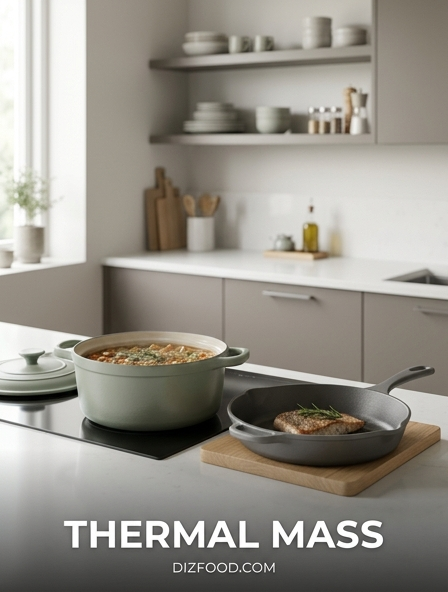
Understanding Thermal Mass in the Professional Kitchen
In the context of a high-volume professional kitchen, thermal mass refers to the ability of a material to absorb, store, and release heat energy. While professional chefs often focus on the responsiveness of a pan, thermal mass represents the opposite quality: stability. A vessel with high thermal mass acts as a heat reservoir, ensuring that the temperature remains constant even when the cooking environment changes. This is particularly vital in environments where large quantities of food are processed simultaneously, as it prevents the wild temperature fluctuations that can ruin delicate proteins or produce uneven results.
The mastery of thermal mass allows a kitchen to operate with greater predictability. When a heavy-duty roasting pan or a thick-bottomed stockpot is properly saturated with heat, it provides a consistent energy source that radiates into the food. This stored energy helps maintain the "momentum" of the cooking process. Understanding how different materials store this energy is the first step toward achieving professional-grade searing, roasting, and frying, as it shifts the focus from the flame's intensity to the cookware's internal energy state.
Selecting Heavyweight Materials for Maximum Heat Retention
Choosing the right material is essential for maximizing heat retention. In a professional setting, the density and specific heat capacity of the cookware determine its thermal performance. Materials like cast iron and high-grade copper are often favored for their ability to hold onto energy, though they serve different functions. While stainless steel is prized for its non-reactive properties, it often requires a heavy aluminum or copper core to provide the necessary thermal mass for heavy-duty tasks.
| Material | Density (kg/m³) | Heat Retention Quality |
|---|---|---|
| Cast Iron | 7,200 | Excellent (High Mass) |
| Carbon Steel | 7,800 | High (Efficient Transfer) |
| Copper | 8,960 | Moderate (High Conductivity) |
| Ceramic | 2,500 | High (Slow Release) |
When selecting cookware, chefs must consider the weight-to-performance ratio. A heavier pan generally indicates a higher thermal mass, meaning it will take longer to heat up but will provide a more stable cooking surface. This stability is the key to preventing the "cool-down" effect that occurs when raw ingredients are introduced to the pan, ensuring that the cooking process begins immediately upon contact.
The Role of Cast Iron and Carbon Steel in Frying
Cast iron and carbon steel are the workhorses of the professional frying station due to their exceptional thermal mass. Unlike thin non-stick pans that lose their temperature the moment food touches the surface, these materials maintain a high baseline temperature. This allows for the immediate formation of a Maillard crust, which is essential for flavor development and moisture retention. In deep-frying or shallow-frying scenarios, the sheer weight of these materials acts as a buffer against the cooling effect of the food.
- Enhanced Searing: The dense molecular structure of cast iron provides a sustained heat discharge that carbonizes sugars efficiently.
- Seasoning Durability: These metals build a natural polymer layer that thrives under the high-energy conditions of thermal mass cooking.
- Energy Efficiency: Once these pans reach the desired temperature, they require less active gas or induction energy to maintain their heat level.
- Durability: The thickness required for high thermal mass also makes these pans resistant to warping under extreme professional heat.
While carbon steel is lighter and more maneuverable, it still offers significant thermal inertia compared to aluminum. For chefs, the choice between the two often comes down to the balance between physical weight and the specific heat requirements of the dish being prepared.
How Thermal Inertia Prevents Sudden Oil Temperature Drops
Thermal inertia is the physical property that describes how slowly an object's temperature reaches that of its surroundings. In frying, this property is the chef's greatest ally. When cold ingredients-such as breaded chicken or frozen fries-are dropped into hot oil, they naturally absorb heat, causing the oil's temperature to plummet. If the vessel holding the oil lacks sufficient thermal mass, the temperature drop can be so severe that the food begins to boil in the oil rather than fry, resulting in a greasy, soggy product.
A heavy-walled pot with high thermal inertia effectively "recharges" the oil as it loses energy. The heat stored in the metal walls of the pot radiates back into the liquid medium, stabilizing the temperature almost instantly. This prevents the oil from falling below the crucial 325°F to 375°F range required for crisping. By maintaining this equilibrium, the thermal mass ensures that the steam escaping the food creates a pressure barrier, preventing oil absorption and resulting in a cleaner, crispier final texture that meets professional standards.
Strategies for Preheating Dense Cookware for Success
To effectively utilize thermal mass, the cookware must be fully saturated with heat before cooking begins. Because dense materials like cast iron or heavy stoneware have low thermal conductivity, they do not heat up evenly if placed over a small, intense flame. Improper preheating leads to "hot spots" where the center of the pan is scorching while the edges are relatively cool, defeating the purpose of using a high-mass vessel.
- Gradual Warming: Start the pan on a low flame to allow the heat to migrate from the center to the perimeter.
- Oven Preheating: For the most uniform thermal saturation, place the cookware in a hot oven for 20 minutes before moving it to the stovetop.
- The Water Test: Flick a few drops of water onto the surface; if they bead and dance (the Leidenfrost effect), the thermal mass is sufficiently charged.
- Oil Timing: Only add the cooking oil once the metal is fully heated to prevent the oil from breaking down during the long preheating phase.
Following these steps ensures that the entire volume of the metal acts as a singular heat battery. This preparation phase is the most critical step in ensuring that the thermal reserves are ready to handle the introduction of cold ingredients without a loss in performance.
Minimizing Recovery Time Between Frying Batches
In a commercial kitchen, throughput is vital. Recovery time-the interval required for the oil and pan to return to the target temperature after a batch is removed-can be a significant bottleneck. Cookware with high thermal mass significantly reduces this window. Because the heavy material retains a vast amount of latent heat, it does not require the burner to do all the heavy lifting to bring the oil back to temperature. Instead, the pan itself acts as a secondary heat source.
When a chef uses a thin pan, the recovery time might take several minutes, during which the kitchen's pace slows down. Conversely, a high-mass Dutch oven or heavy skillet can recover in a fraction of the time. This efficiency allows for back-to-back frying batches without the risk of the later batches becoming oily or undercooked. Managing this recovery period is essential for maintaining food quality during peak service hours, as it ensures that the tenth order of the night is cooked with the same precision and heat intensity as the first order.
The Science of Heat Capacity and Consistent Frying
Consistency in the kitchen is a matter of physics. Specific heat capacity is the amount of heat per unit mass required to raise the temperature by one degree Celsius. While water has a very high heat capacity, metals have lower capacities but higher densities. This means that a thick iron pan can store a massive amount of energy relative to its volume. When frying, this stored energy provides a consistent environment that negates the variables of flame fluctuations or ambient kitchen drafts.
The science of heat capacity explains why a "heavy" pan feels more reliable to a professional. It provides a steady state of energy transfer. In consistent frying, you want a predictable rate of heat flow into the food. High thermal mass cookware dampens the "noise" of the heat source, creating a smooth, constant delivery of energy. This allows the chef to set a flame and trust that the pan will maintain its state, leading to repeatable results across dozens of servings. This scientific predictability is what separates professional execution from home cooking, where thin pans often lead to erratic and disappointing results.
Impact of Cookware Thickness on Temperature Stability
The gauge or thickness of a pan is the primary factor determining its total thermal mass. A thicker pan provides more "depth" for heat storage. This thickness acts as a buffer, preventing the surface temperature from reacting too violently to the cold air or cold food. In professional kitchens, the thickness of a pan's base is often the first thing a chef checks before purchasing new equipment.
| Thickness (mm) | Application | Stability Level |
|---|---|---|
| 1.5 mm - 2.0 mm | Sautéing, tossing | Low (Fast Response) |
| 3.0 mm - 5.0 mm | Searing, pan-frying | High (Steady Heat) |
| 7.0 mm + | Braising, deep-frying | Maximum (Extreme Inertia) |
A thin pan will have hot spots where the burner flames touch the metal, whereas a thick pan allows the heat to spread laterally through the mass of the metal before reaching the cooking surface. This lateral heat spread is what creates an even temperature across the entire diameter of the pan. For tasks like frying, where uniformity is essential to prevent some pieces of food from burning while others remain raw, the thickness of the material is non-negotiable for achieving a professional finish.
Managing Cold Food Volume Against Thermal Reserves
Even the heaviest pan has its limits. A common mistake in professional kitchens is overloading a high-mass pan with too much cold volume at once. Thermal mass acts like a battery; it has a finite amount of stored energy. If the volume of cold food-such as a large bag of frozen shrimp-exceeds the thermal reserves of the pan and oil, the system will still "crash," leading to a failure in the frying process. Managing this ratio is a key skill for any line cook.
The rule of thumb is to maintain a high ratio of thermal mass to food mass. This might mean frying in smaller batches or using a much larger vessel than seems necessary for the amount of food being cooked. By respecting the "energy budget" of the cookware, the chef ensures that the temperature drop remains within a manageable 10-to-15-degree range rather than a 50-degree plunge. This careful management allows the thermal mass to stay in its optimal performance zone, providing enough leftover energy to kickstart the next batch immediately after the current one is pulled from the heat.
Optimizing Surface Area and Mass for Uniform Heat Distribution
The final element of thermal mass strategy involves the relationship between the pan's geometry and its weight. A wide, shallow pan provides a large surface area for moisture to evaporate, which is essential for crisping. However, if that wide pan is too thin, it will lose heat rapidly to the air. The ideal professional frying vessel optimizes both surface area and mass, ensuring that the broad cooking surface is backed by enough metal to keep that surface hot from edge to edge.
Uniform heat distribution is the result of this optimization. When the mass is distributed evenly across a wide surface, the entire cooking area becomes a source of radiant heat. This is particularly important for large items like whole fish or multiple cutlets, where parts of the food might overhang the central heat source. A pan with high thermal mass will carry the heat to those outer edges, ensuring the entire ingredient is cooked at a uniform rate. By balancing the physical footprint of the pan with its internal energy storage capacity, chefs can achieve perfect, golden-brown results across every square inch of the cooking surface.

Comments