
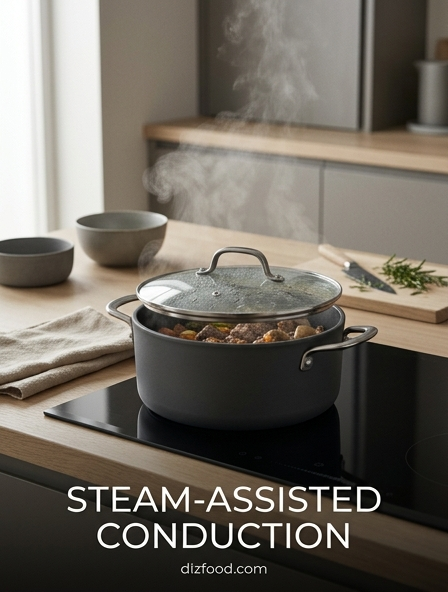
The Science of Steam Assisted Conduction
Steam-assisted conduction is a hybrid cooking methodology that leverages the direct heat of a cooking surface alongside the high thermal energy of water vapor. In a traditional dry-heat environment, energy is transferred through metal-to-protein contact, often resulting in uneven cooking where the exterior overcooks before the interior reaches the desired temperature. By introducing a small amount of moisture into a sealed pan environment, the cook creates a dual-action thermal process. The metal base provides the high intensity required for searing, while the steam acts as a pervasive medium that surrounds the food, transferring heat through every available surface area simultaneously.
- Conduction: Rapid molecular vibration transfer from the pan to the food surface.
- Phase Change: The energy released as water transitions from liquid to gas and back.
- Thermal Equilibrium: Faster normalization of temperature between the pan and the food's core.
This method significantly increases the efficiency of the kitchen environment. The presence of steam prevents the surface of the food from drying out, which in turn maintains a higher thermal conductivity within the ingredient itself, as water is a far better conductor of heat than dry air or dehydrated fibers.
Efficient Heat Transfer Mechanisms
The efficiency of steam-assisted conduction lies in the latent heat of vaporization. When water turns into steam, it absorbs a massive amount of energy. When that steam hits the cooler surface of the food, it condenses, releasing that stored energy directly into the ingredient. This process is far more rapid than convection in a standard oven. Because the food is in direct contact with the pan, the bottom receives high-intensity conductive heat, while the upper and side surfaces are bombarded by condensing steam molecules.
| Medium | Heat Transfer Efficiency | Primary Method |
|---|---|---|
| Dry Air | Low | Convection |
| Steam | High | Latent Heat Release |
| Metal Pan | Very High | Direct Conduction |
This multi-modal approach reduces the time required for heat to penetrate the center of dense proteins or vegetables. By utilizing the condensation cycle, the chef ensures that the food is heated from all directions without the need for total immersion in liquid, which would otherwise dilute flavors and wash away surface fats and seasonings.
Retaining Natural Meat Juices
One of the primary challenges in frying meat is the loss of moisture through evaporation. As the exterior temperature rises, muscle fibers contract and squeeze out internal fluids. In a dry pan, these fluids evaporate instantly, leaving the meat dry. Steam-assisted conduction creates a high-humidity microclimate under the lid that halts the evaporation process. Because the surrounding air is saturated with water vapor, the internal juices of the meat are less likely to transition into gas and escape into the atmosphere.
- Vapor Pressure: High external humidity counters the internal pressure of the juices.
- Capillary Action: Moisture remains trapped within the cellular structure.
- Surface Hydration: Prevents the formation of a thick, dry "gray band" beneath the crust.
This retention is vital for texture and flavor. The steam acts as a physical barrier, ensuring that the moisture remains inside the fibers where it can dissolve salts and flavor compounds. The result is a protein that feels significantly heavier and more succulent upon serving, as the weight loss typically associated with frying is mitigated by the controlled humidity of the cooking environment.
Balancing Maillard and Moisture
The Maillard reaction, responsible for the savory crust and brown color of cooked meats, requires high temperatures and low moisture. This presents a paradox when using steam. To achieve the perfect balance, the chef must sequence the application of heat and moisture. By searing the food initially in a dry, hot pan, the Maillard reaction is initiated. Once a sufficient crust is established, adding a small amount of liquid and covering the pan allows the steam to cook the interior without undoing the chemical changes on the surface.
- Preheat the pan to a high temperature to ensure immediate searing.
- Apply the protein and develop a golden-brown exterior on at least one side.
- Deglaze with a minimal amount of water, stock, or wine.
- Immediately cover the pan to trap the steam and finish the internal cooking.
This technique prevents the crust from becoming overly hard or leathery. The brief exposure to steam softens the very outer layer of the sear just enough to make it palatable while the interior reaches safety. Careful management of the lid removal allows any excess surface moisture to evaporate at the very end, restoring the desired crispness before the dish is plated.
Optimal Pan Temperature Settings
Successful steam-assisted conduction requires precise temperature management. If the pan is too cold, the added liquid will not vaporize quickly enough, leading to "stewing" rather than steaming. If the pan is too hot, the liquid may undergo the Leidenfrost effect, where droplets skitter across the surface without effectively creating a steam blanket. The goal is to maintain a surface temperature that allows for both a sear and a rapid phase change of the added liquid upon contact.
| Stage | Target Temperature | Outcome |
|---|---|---|
| Initial Sear | 400°F - 450°F | Maillard Reaction |
| Liquid Addition | 350°F - 375°F | Rapid Steam Generation |
| Steam Finishing | 212°F (Ambient) | Gentle Internal Cooking |
Monitoring the pan's thermal mass is essential. Heavy-bottomed pans, such as cast iron or multi-clad stainless steel, are preferred because they do not drop in temperature significantly when the liquid is added. This stability ensures a consistent output of steam, which is necessary for the timing of the cooking process to remain predictable across various types of ingredients.
Benefits of Controlled Humidity
Controlled humidity within the cooking vessel fundamentally changes how heat interacts with food surfaces. In a dry pan, the exterior can easily exceed 300°F, while the interior remains cold. This steep temperature gradient causes the outer layers to overcook. By introducing steam and covering the pan, the humidity levels rise to near 100%. This creates a "thermal buffer" where the temperature of the air around the food is capped at the boiling point of water, preventing the exterior from burning while the core catches up.
- Uniformity: Heat is distributed more evenly across irregular shapes.
- Energy Conservation: Less fuel is required as steam transfers energy faster than dry air.
- Flavor Infusion: Steam can carry aromatic compounds from herbs or spices into the food.
Furthermore, controlled humidity reduces the oxidation of fats during the cooking process. In dry-heat frying, fats can break down and develop off-flavors when exposed to high heat and oxygen. The steam displaces much of the oxygen in the pan, protecting the delicate oils and natural fats within the food, resulting in a cleaner and more vibrant flavor profile in the finished dish.
Softening Fibrous Muscle Tissues
Meats containing high amounts of connective tissue, such as collagen, benefit immensely from steam-assisted conduction. While dry heat tends to tighten these fibers, making them tough and chewy, the presence of moisture at specific temperatures facilitates the hydrolysis of collagen into gelatin. This transformation is what creates the "melt-in-your-mouth" texture found in braised dishes, but steam-assisted frying achieves this in a fraction of the time. The conductive heat from the pan breaks down the surface, while the steam penetrates deeply to soften internal structures.
- Steam molecules penetrate the interstitial spaces between muscle fibers.
- The heat-moisture combination weakens the protein bonds in collagen.
- Fibers begin to slide past one another rather than clumping together.
This is particularly useful for medium-tough cuts like flank steak or chicken thighs. By using a lid to trap steam, you effectively create a low-pressure steaming environment that mimics the effects of a slow cooker but maintains the structural integrity and charred flavor of a pan-sear. The result is a texture that is both resilient and tender, offering a superior mouthfeel compared to meat cooked solely with dry conduction.
Improving Heat Penetration Speed
The physics of heat penetration is the primary bottleneck in kitchen efficiency. In dry cooking, heat must move through the food via conduction, which is a slow process depending on the water content and density of the item. Steam-assisted conduction improves this speed by increasing the surface heat transfer coefficient. When steam condenses on the food, it provides a constant, high-energy thermal contact that is much more effective than the stagnant air layer found in a typical pan or oven. This allows the core of the food to reach its target temperature much faster.
- Reduced Cooking Time: Often 20-30% faster than dry frying.
- Greater Reach: Steam reaches crevices and bone-in areas that the pan cannot touch.
- Consistent Core: Reduces the risk of a raw center in thick-cut steaks or chops.
By shortening the time the food spends on the heat, you also reduce the window of opportunity for the exterior to become charred or bitter. This speed is a critical advantage in professional kitchens where throughput is essential, but it is equally valuable for the home cook looking to prepare thick vegetables or proteins without the need for a lengthy preheating or roasting cycle.
Avoiding Dry Overcooked Results
Overcooking is often the result of heat moving too aggressively through the food's exterior. Steam-assisted conduction acts as a safeguard against this common error. The presence of water vapor ensures that the temperature of the food's surface does not rise uncontrollably. Because water evaporates at 212°F (at sea level), the steam creates a temperature ceiling. This ceiling provides the cook with a larger "margin of error," as the food is less likely to transition from perfectly cooked to scorched in a matter of seconds.
- The steam layer absorbs excess heat energy from the pan.
- The high humidity prevents the surface proteins from becoming brittle.
- The cooking process becomes more predictable and less sensitive to minor heat fluctuations.
This method is especially forgiving for lean proteins like chicken breast or white fish, which have very little fat to protect them from drying out. By using steam to assist the conduction, the cook ensures that the delicate proteins are gently coaxed to their finishing temperature. This results in a final product that is plump and hydrated, with a consistent texture from the edge to the center, eliminating the "rubbery" quality often associated with over-fried lean meats.
Steps to Perfect Tender Frying
To execute the perfect tender fry using steam-assisted conduction, one must follow a disciplined sequence of temperature and moisture management. The process begins with a dry, high-heat environment to develop flavor and ends with a moist, controlled environment to ensure tenderness. This duality is the secret to restaurant-quality results at home. It requires a heavy pan with a tight-fitting lid and a keen eye for when the liquid has done its job.
- Heat a heavy skillet with a small amount of high-smoke-point oil until shimmering.
- Sear the food on one side for 2-3 minutes until a deep crust develops.
- Flip the food, then add approximately two tablespoons of liquid (water or broth).
- Immediately cover with a lid and reduce the heat to medium-low.
- Wait 3-5 minutes, then remove the lid to allow the remaining moisture to evaporate.
The final step of removing the lid is crucial. It allows the residual heat of the pan to "re-crisp" the bottom of the food, ensuring that the steam hasn't made the exterior soggy. This final 30-second flash of dry heat restores the textural contrast between the crunchy exterior and the steam-softened, juicy interior, completing the cycle of steam-assisted conduction.



Comments