
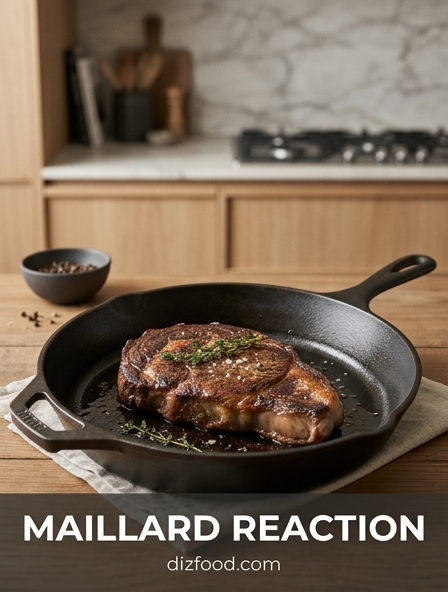
Understanding the Maillard Reaction Science
The Maillard reaction is a fundamental chemical process that occurs during cooking, responsible for the distinct flavors and browned colors of seared meat, toasted bread, and roasted coffee. This complex interaction begins when the carbonyl group of a reducing sugar reacts with the nucleophilic amino group of an amino acid. Unlike caramelization, which involves only the breakdown of sugars at very high temperatures, the Maillard reaction is a form of non-enzymatic browning that can occur at lower temperatures, typically accelerating significantly between 140°C and 165°C.
As the reaction progresses, it produces hundreds of different flavor compounds, which then break down to form even more new flavor compounds. These molecules provide the savory "umami" profile that distinguishes a boiled piece of beef from a pan-seared steak. Because the reaction is so intricate, the specific types of proteins and sugars present in a food item dictate the final aromatic outcome. Scientific understanding of this process allows chefs to manipulate variables such as heat, time, and ingredient composition to achieve consistent results in the kitchen.
Optimal Temperatures for Perfect Searing
Temperature control is the most critical variable when attempting to trigger the Maillard reaction effectively. While the reaction can happen slowly at room temperature, it requires significant thermal energy to occur rapidly enough for culinary purposes. The "sweet spot" for searing generally lies between 280°F and 330°F (140°C to 165°C). If the surface of the food remains below this range, the reaction proceeds too slowly, often resulting in food that is overcooked internally before a flavorful crust can form on the exterior.
However, it is equally important to avoid exceeding 355°F (180°C) for extended periods. Once temperatures rise too high, a different chemical process called pyrolysis takes over. Pyrolysis is essentially burning or charring, which creates bitter carbonized flavors and potentially harmful compounds. To maintain the optimal window, chefs often use heavy-bottomed pans, such as cast iron or stainless steel, which possess high thermal mass. These materials help maintain a steady temperature even when cold food is introduced to the surface, ensuring the Maillard reaction begins immediately upon contact.
Role of Sugars and Amino Acids
The Maillard reaction is a targeted chemical marriage between reducing sugars and amino acids. Not all sugars are created equal in this context; reducing sugars like glucose, fructose, and lactose possess a free aldehyde or ketone group that allows them to donate electrons to the amino acids. Common table sugar, or sucrose, is not a reducing sugar in its natural state, but it can break down into glucose and fructose during the cooking process, eventually contributing to the browning effect.
The specific amino acids involved are what determine the final flavor profile of the dish. For example, the amino acid cysteine reacts with sugars to produce savory, meaty flavors, while proline contributes to the aroma of baked bread and popcorn. Because different foods have different protein structures, the results are highly variable:
- Red Meats: High in various amino acids that produce deep, savory, and roasted notes.
- Dairy: Contains lactose and whey proteins, leading to butterscotch and toasted milk flavors.
- Vegetables: Lower protein content usually results in more subtle, nutty aromas compared to meats.
Managing Surface Moisture for Crispy Crusts
Moisture is the primary enemy of the Maillard reaction. This is because water boils at 212°F (100°C) at sea level, a temperature far below the threshold required for rapid browning. As long as there is surface moisture on a piece of meat or a vegetable, the thermal energy from the pan will be consumed by the process of evaporation rather than heating the food's surface to the necessary 280°F. Essentially, the food will steam rather than sear until the water is completely gone.
To manage this, professional techniques focus on surface dehydration. Patting meat dry with paper towels is the most immediate solution. Advanced techniques include dry-brining, where salt is applied to the surface hours in advance. This initially draws moisture out via osmosis, but the salt eventually dissolves and the brine is reabsorbed, leaving the surface cells seasoned but relatively dry. Air-chilling poultry in the refrigerator uncovered is another highly effective method to ensure the skin is primed for a crisp, Maillard-rich finish upon hitting the hot oil.
Why Dry Heat Is Essential for Frying
The distinction between wet and dry heat cooking is fundamental to achieving the Maillard reaction. Wet heat methods, such as boiling, poaching, or steaming, are limited by the boiling point of water. Because these methods surround food with water or steam, the temperature never rises high enough to initiate the complex chemical browning required for deep flavor development. This is why boiled chicken appears pale and lacks the aromatic complexity of fried or roasted chicken.
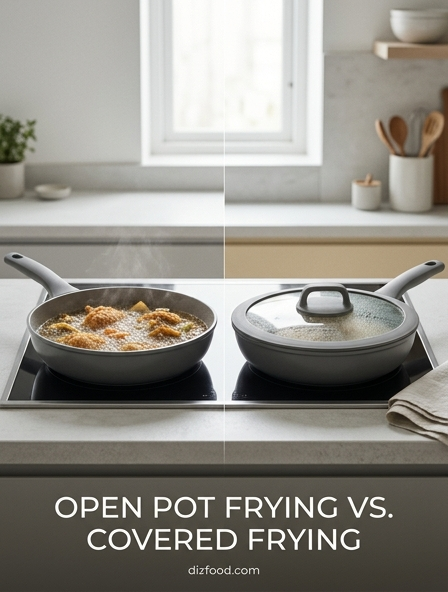
Dry heat methods, including frying, roasting, and grilling, utilize air or fat as the heat transfer medium. Fat can be heated far beyond the boiling point of water without evaporating, allowing it to deliver intense heat directly to the food's surface. In deep frying, even though the food is submerged in liquid oil, it is considered a dry heat method because oil contains no water. The high temperature of the oil instantly vaporizes surface moisture, creating a protective barrier of steam while allowing the Maillard reaction to transform the exterior into a golden, flavorful crust.
Achieving the Professional Golden Brown Finish
The visual hallmark of a successful Maillard reaction is the "GBD" rule: Golden Brown and Delicious. Achieving this consistently requires more than just high heat; it requires patience and visual cues. When meat is first placed in a pan, it often sticks to the surface. This is due to proteins forming bonds with the metal. As the Maillard reaction progresses and the surface dehydrates, a crust forms that naturally releases from the pan. Forcing the food to move too early will tear the fibers and ruin the finish.
To achieve a professional result, consider these steps:
- Preheat the cooking vessel until the oil shimmers or just begins to smoke.
- Place the item in the pan and leave it undisturbed for several minutes.
- Check for a deep mahogany color before flipping.
- Deglaze the pan afterward with liquid to capture the "fond"-the concentrated browned bits stuck to the bottom which are packed with Maillard compounds.
This systematic approach ensures the exterior is fully developed without overcooking the center.
Impact of pH Levels on Browning Speed
The acidity or alkalinity of the cooking environment significantly influences the speed of the Maillard reaction. In acidic conditions (low pH), the amino groups of proteins become protonated, meaning they gain a hydrogen ion and become less reactive with sugars. This slows down the browning process considerably. Conversely, in alkaline conditions (high pH), the amino groups are more active, which accelerates the chemical reactions, leading to faster browning and more intense flavor development.
Chefs often manipulate pH to achieve specific textures and colors. A classic example is the pretzel; the dough is dipped in a lye or baking soda solution (alkaline) before baking to create its characteristic dark brown, glossy crust. Similarly, adding a pinch of baking soda to sautéing onions will cause them to brown and soften much faster than they would in a neutral environment. However, one must be careful, as too much alkalinity can lead to a soapy flavor or an unpleasantly mushy texture, so balance is key when adjusting pH for browning.
Developing Complex Aromas and Deep Flavors
While the visual change is obvious, the true magic of the Maillard reaction lies in the olfactory and gustatory experience. The reaction produces a wide array of molecules, including pyrazines and pyridines, which provide nutty, toasted, and savory aromas. These compounds are so potent that they can be detected by the human nose in incredibly small concentrations. This complexity is why the smell of a steak searing on a grill is so universally appetizing compared to the smell of raw or boiled meat.
Longer, slower cooking at slightly lower temperatures within the Maillard range can sometimes produce a more complex flavor profile than a quick, high-heat sear. This is seen in the traditional "low and slow" roasting of meats or the long caramelization of onions. By extending the time the food spends in the reactive zone, you allow for secondary and tertiary reactions to occur, where the initial products of the Maillard reaction continue to break down and recombine, creating layers of flavor that range from earthy and bitter to sweet and floral.
Best Oils for High-Heat Maillard Reactions
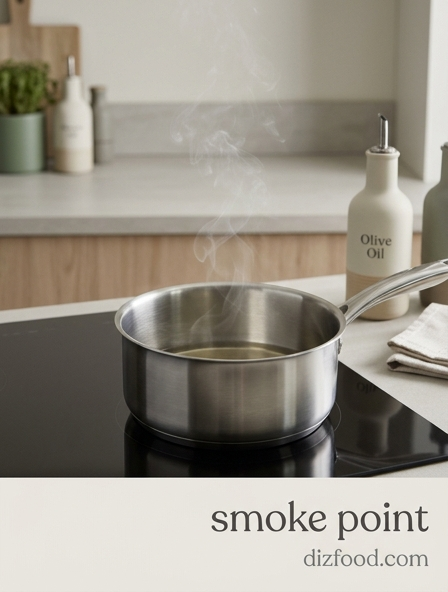
Choosing the right cooking fat is essential for facilitating the Maillard reaction without introducing off-flavors from burnt oil. The "smoke point" of an oil is the temperature at which it begins to break down and release bluish smoke. If an oil breaks down before the Maillard reaction is complete, it will impart a bitter, acrid taste to the food. Therefore, high-heat searing requires oils with high smoke points and neutral flavor profiles.
| Oil Type | Smoke Point | Best Use |
|---|---|---|
| Avocado Oil | 520°F (270°C) | Extreme high-heat searing |
| Ghee (Clarified Butter) | 450°F (232°C) | Steaks and browning proteins |
| Grapeseed Oil | 420°F (216°C) | General pan-frying |
| Canola/Vegetable Oil | 400°F (204°C) | Everyday high-heat cooking |
Avoid using extra virgin olive oil or unrefined nut oils for high-heat browning, as their low smoke points will lead to smoke and flavor degradation before the desired crust is achieved.
Common Mistakes That Prevent Perfect Searing
Even with high-quality ingredients, certain technical errors can sabotage the Maillard reaction. One of the most common mistakes is overcrowding the pan. When too many cold items are added at once, the temperature of the pan drops drastically. Furthermore, the moisture released from the food becomes trapped between the pieces, creating a localized steaming environment that prevents the temperature from rising above 212°F. It is always better to sear in batches than to rush the process.
Other frequent errors include:
- Using cold food: Meat straight from the fridge takes longer to heat up, often overcooking the inside before the outside browns.
- Constant flipping: Moving the food too often prevents the surface from maintaining the constant contact heat necessary for a crust.
- Insufficient preheating: Adding food to a cold pan leads to sticking and poor color development.
- Low smoke point fats: Using butter or flax oil that burns before the meat sears.
By avoiding these pitfalls, you ensure that the chemical conditions for browning are optimized, resulting in superior flavor and texture.


Comments