
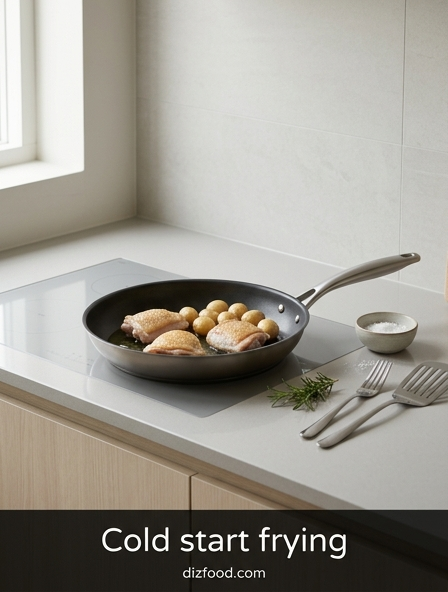
The Mechanics of Cold Start Frying
Cold start frying is a culinary technique that defies the traditional "hot oil first" rule by placing ingredients into a pan of room-temperature oil before turning on the heat. As the stove ignites, the oil and the food rise in temperature simultaneously. This gradual incline in heat facilitates a unique thermal exchange where the exterior of the food begins to dehydrate slowly rather than being instantly seared or shocked by high temperatures. This method is particularly effective for starchy items like potatoes or dense proteins that require deep heat penetration without burning the surface.
- Minimal Splattering: Since moisture is released gradually as the oil warms, there is no violent reaction between water and hot fat.
- Deep Thermal Saturation: The slow rise ensures the center of the food reaches the safe zone by the time the exterior is golden.
- Reduced Oil Absorption: Contrary to popular belief, the outward pressure of escaping steam prevents excessive oil from soaking into the food.
The convection currents within the warming oil create a gentle environment that allows for precision control over the browning process, making it an ideal choice for home cooks seeking restaurant-quality consistency.
Defining the Glass Like Crunch Texture
The hallmark of a successful cold start fry is a texture often described as "glass-like." Unlike the heavy, breaded crust found in traditional deep-frying, cold starting produces a remarkably thin, brittle, and translucent exterior. When bitten into, this surface shatters into delicate shards rather than crumbling like a standard batter. This phenomenon occurs because the slow heating process allows the surface starches to gelatinize and then dehydrate into a rigid, crystalline structure before the oil reaches maximum frying temperatures.
This texture is most sought after in dishes like French fries or potato wedges, where a contrast between a fluffy interior and a snap-prone exterior is desired. Because the moisture is driven out so thoroughly during the ramp-up phase, the resulting crust remains crisp for a significantly longer duration than traditional methods. The glass-like quality is not just a tactile experience but also a visual one, as the food often develops a glossy, varnished appearance that signals a perfectly even fry. This delicate balance of structural integrity and thinness defines the pinnacle of the cold start technique.
Moisture Management for Superior Crispness
At the heart of any frying process is the struggle between moisture and fat. Cold start frying manages this dynamic through a prolonged evaporation phase. As the oil climbs from room temperature to approximately 212°F (100°C), the water within the food begins to turn into steam. This steam travels from the core to the surface, creating a protective barrier that prevents the oil from infiltrating the interior while simultaneously drying out the skin.
- Evaporation Phase: Water begins to exit the food surface as the oil warms up.
- Dehydration Phase: The surface becomes sufficiently dry to allow the Maillard reaction to occur later.
- Crisp Retention: The thorough removal of surface water ensures the food doesn't turn soggy as it cools.
Because the moisture removal is so methodical, the food ends up with less internal steam trapped inside after cooking. Traditional frying often leaves a reservoir of moisture in the center that eventually migrates outward, softening the crust within minutes. Cold starting effectively pre-empts this issue, leading to a product that maintains its structural snap even as it reaches room temperature on the serving plate.
Benefits of Gradual Oil Temperature Increase
The primary advantage of a gradual temperature increase is the unprecedented level of control it offers the cook. In traditional frying, the window between "perfectly golden" and "burnt" can be seconds. With cold start frying, the ramp-up time extends this window, allowing for visual monitoring of the color development. This slow ascent prevents the thermal shock that often causes delicate skins to blister or tear, ensuring a smooth and aesthetically pleasing finish. Furthermore, the gradual heat allows for better fat rendering in skin-on proteins, which will be explored in later sections.
From a safety and convenience perspective, the cold start method is superior for domestic kitchens. There is no need to hover over a pot with a thermometer waiting for a specific strike point, nor is there the danger of dropping wet food into a 375°F vat of oil. The process is quieter, cleaner, and more forgiving. By the time the oil reaches a vigorous bubble, the food has already undergone significant structural changes, making it more resilient to the intense heat of the final browning stage.
Achieving Uniform Heat Distribution
Uniformity is the greatest challenge when frying dense or irregularly shaped items. Standard frying techniques often result in a "bullseye" effect, where the outer centimeter is overcooked or dry while the center remains raw or cold. Cold start frying solves this by utilizing the oil as a heat-conductive medium that warms the food from the outside in at a rate the center can keep up with. As the oil temperature rises, the heat has sufficient time to conduct through the density of the ingredient, ensuring the internal temperature rises in tandem with the exterior oil.
This is particularly beneficial for thick-cut potatoes or bone-in chicken pieces. By the time the oil reaches the 325°F to 350°F range, the internal structure of the food is already near its target temperature. This synergy eliminates the need for par-boiling or double-frying, which are common workarounds in traditional recipes. The result is a consistent texture from edge to edge, where the interior is fully rendered and creamy, perfectly encased in a uniformly browned shell that shows no signs of localized scorching or undercooked pockets.
The Role of Starch in Surface Dehydration
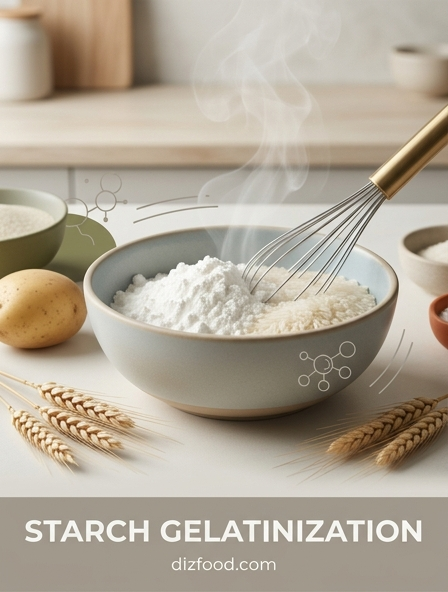
Starch is the essential building block of a crispy crust, and cold start frying maximizes its potential through a process called starch retrogradation and gelatinization. As the food sits in the warming oil, the starches on the surface absorb any residual moisture and begin to swell. This creates a starchy "gel" layer. As the heat continues to rise beyond the boiling point of water, this gel layer undergoes intense dehydration, hardening into a rigid, honeycomb-like matrix that provides the characteristic crunch.
- Amylose Release: Slow heating helps pull amylose to the surface, forming a stronger film.
- Pore Formation: Small steam vents create a micro-textured surface that increases surface area.
- Polysaccharide Breakdown: Complex carbohydrates break down into simpler sugars, aiding browning.
Without the slow ramp-up, these starches are often "flashed" into a crust too quickly, trapping moisture beneath them and leading to a leathery rather than crispy texture. The cold start method allows the starch to transition through all its necessary chemical phases, ensuring that by the time the oil is hot enough for frying, the surface is perfectly primed for a brittle, golden finish.
Preventing Overcooking with Cold Oil Starts
One of the counterintuitive benefits of cold start frying is its ability to protect the food from overcooking. In high-heat frying, the exterior is subjected to extreme temperatures immediately, which can cause the outer fibers to tighten and squeeze out moisture, leading to a dry result. Because the cold start method builds heat slowly, the proteins are tempered. The gentle start acts as a buffer, allowing the cook to pull the food from the heat the moment the desired color is reached, with the confidence that the interior is already done.
This method effectively lowers the "thermal gradient" between the oil and the food. A lower gradient means the heat moves more predictably. For items like chicken wings or duck legs, this prevents the common issue of the skin becoming carbonized before the fat has rendered or the meat has reached a safe internal temperature. It transforms the frying process from a race against time into a controlled culinary procedure. The reduced thermal stress preserves the integrity of the food's cells, resulting in a juicier, more succulent interior that contrasts sharply with the hardened exterior shell.
Fat Rendering for Flavor and Texture
Cold start frying is a masterclass in fat management, particularly when dealing with skin-on proteins or fatty cuts of meat. When meat is dropped into hot oil, the skin instantly seizes, trapping subcutaneous fat underneath it. This often results in a rubbery layer of unrendered fat between the crispy skin and the meat. By starting cold, the fat has time to melt and liquefy as the temperature climbs. This rendered fat then joins the frying oil, contributing its own flavor to the process and thinning out the skin for a much crispier result.
- Liquefaction: Subcutaneous fat begins to melt at low temperatures.
- Integration: The rendered fat mixes with the cooking oil, enhancing the flavor profile.
- Thinning: As fat leaves the skin, the skin becomes thinner and more capable of becoming brittle.
This is why the cold start method is the preferred way to cook bacon or duck breast in a pan. The gradual heat ensures that the fat is fully "rendered out," leaving behind only the protein structure of the skin to crisp up. The result is a much deeper, more complex flavor and a texture that is light and airy rather than greasy or heavy.
Selecting the Right Oil for Cold Frying
While the cold start method is more forgiving in terms of temperature control, selecting the correct oil remains vital for both flavor and safety. Because the oil spends a longer total time on the heat compared to traditional frying, it must be oxidatively stable. High-polyunsaturated oils can break down over the extended heating cycle, potentially creating off-flavors. Neutral oils with high smoke points are generally preferred, as they allow the natural flavors of the food and the rendered fats to shine through without interference.
| Oil Type | Smoke Point | Best Use |
|---|---|---|
| Peanut Oil | 450°F | Excellent for potatoes and chicken. |
| Grapeseed Oil | 420°F | Neutral flavor, very clean finish. |
| Canola Oil | 400°F | Budget-friendly and versatile. |
| Avocado Oil | 520°F | Highest stability for long cooks. |
It is important to avoid oils with low smoke points, such as extra virgin olive oil or unrefined nut oils, as they may begin to smoke and degrade before the food has finished its browning cycle. Selecting a stable fat ensures that the final product tastes fresh and is free from the acrid notes associated with oil breakdown.
Comparing Traditional and Cold Start Results
Comparing these two methods reveals distinct differences in the final product. Traditional frying excels at creating thick, craggy crusts with heavy batters, but it often struggles with internal doneness in thick items. Cold start frying, conversely, produces a cleaner, more refined crunch that highlights the ingredient itself. In terms of oil absorption, studies have shown that cold start fries can actually contain up to 20% less oil than their traditionally fried counterparts, as the constant outward pressure of steam during the heating phase acts as a barrier.
- Prep Time: Cold start requires no pre-heating of oil, saving time at the beginning.
- Cleanliness: Significant reduction in oil mist and splatter in the kitchen.
- Texture: Cold start is glass-like and brittle; traditional is crunchy and often chewy.
- Consistency: Cold start is much easier for beginners to replicate with success.
Ultimately, the choice depends on the desired outcome. For a classic battered fish, traditional hot-start frying is necessary. However, for the ultimate potato or a perfectly rendered piece of poultry, the cold start method offers a sophisticated alternative that yields superior moisture control, more even cooking, and a unique, long-lasting crispness that traditional methods simply cannot match.

Comments