
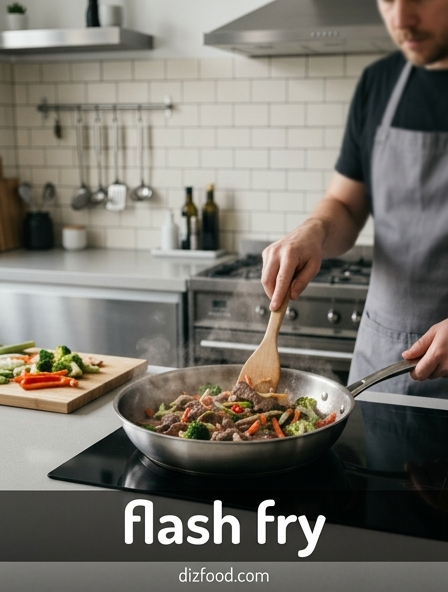
The Maillard Reaction and Color Development
In the high-heat environment of flash frying, the Maillard reaction acts as the primary driver for both flavor complexity and visual appeal. This chemical process occurs between reduced sugars and amino acids, typically accelerating once the surface temperature of the food exceeds 140°C (285°F). Because flash frying involves brief immersion in extremely hot oil, the reaction must occur rapidly before the interior overcooks. This creates a gradient of browning that signals the development of aromatic compounds like pyrazines and alkylpyrazines, which provide the characteristic "fried" scent.
- Melanoidins: These are the brown polymers responsible for the deep golden hue of the crust.
- Aroma Compounds: Hundreds of volatile molecules are produced, contributing to nutty and savory profiles.
- Surface pH: The speed of the Maillard reaction is highly sensitive to the alkalinity of the food surface.
During the flash fry, the rapid evaporation of surface water allows the temperature to rise far above the boiling point. This thermal jump is necessary to transition from simple dehydration to the complex rearrangement of molecular structures that define a perfectly browned exterior. Without this rapid heat transfer, the food would appear pale and lack the deep, savory umami notes associated with professional searing techniques.
Starch Gelatinization and Texture Formation
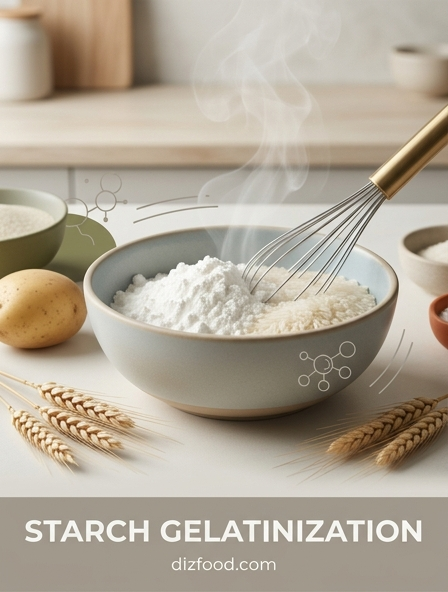
Starch gelatinization is the foundational process that gives flash-fried items their structural integrity and contrasting textures. When starchy batters or coatings are plunged into hot oil, the granules begin to absorb any available moisture, swelling until they eventually burst and release amylose and amylopectin. This transition from a crystalline state to a disordered gel happens almost instantaneously in flash frying. The resulting matrix acts as a scaffold, trapping air bubbles and steam to create a light, porous crust that becomes rigid upon further heating.
- Hydration: Water from the batter or the food surface penetrates starch granules.
- Swelling: Granules expand significantly as thermal energy disrupts hydrogen bonding.
- Setting: The heat causes the protein and starch network to cross-link, "locking" the texture in place.
The efficiency of this process determines whether the final product is crispy or leathery. In flash frying, the goal is to achieve full gelatinization within seconds, followed immediately by dehydration. This sequence ensures the interior remains succulent while the exterior develops a glass-like crunch. If the oil temperature is too low, gelatinization occurs slowly, leading to a heavy, grease-laden coating rather than a delicate, airy shell.
The Role of Surface Dehydration
Surface dehydration is the critical bridge between raw preparation and a crispy finished product. In flash frying, the extreme heat of the oil causes an immediate phase change of liquid water into steam at the food's boundary layer. As this water escapes, it creates a "dry zone" on the surface. This zone acts as an insulator, preventing the interior from reaching the same high temperatures as the oil, thereby preserving the moisture within the food. The faster this dehydration occurs, the more distinct the transition between the crunchy exterior and the tender interior becomes.
This rapid loss of moisture is also what allows the surface temperature to rise above 100°C. Once the surface is sufficiently dry, the chemical reactions responsible for color and flavor can proceed. If surface dehydration is hindered-perhaps by overcrowding the fryer or using a low-smoke-point oil-the food effectively boils in the oil rather than frying. This results in a soggy texture and an oil-soaked crust, as the outward flow of steam is not strong enough to prevent the oil from penetrating the pores of the food. Continuous steam release is the cook's best defense against excessive grease absorption.
Optimal Finishing Temperatures for Crispness
Achieving the perfect crunch in flash frying is highly dependent on maintaining precise oil temperatures during the final seconds of cooking. The temperature must be high enough to finalize the dehydration of the crust but not so high that it induces carbonization or the breakdown of the frying medium. For most flash-fry applications, the window for success is narrow, often requiring a recovery temperature that compensates for the initial drop when food is introduced.
| Frying Stage | Temperature Range | Physical Outcome |
|---|---|---|
| Initial Immersion | 175°C - 185°C | Rapid steam release and crust setting. |
| Flash Finishing | 190°C - 200°C | Maximum crispness and Maillard browning. |
| Oil Breakdown | Above 210°C | Acrylamide formation and burnt flavors. |
Monitoring these thresholds ensures that the lipid-to-crust interaction remains favorable. When finishing at the higher end of the spectrum, the kinetic energy of the oil facilitates the final "snap" of the starch matrix. This temperature range also helps in lowering the viscosity of the oil, allowing it to drain more effectively once the food is removed from the heat source, resulting in a cleaner, less oily mouthfeel.
Heat Transfer Dynamics in Deep Frying
Flash frying is an exercise in high-intensity heat transfer, utilizing oil as a highly efficient conductive medium. Unlike roasting or baking, where air acts as an insulator, oil surrounds the food, providing uniform thermal energy to every crevice. This process is characterized by three distinct phases: initial heating, surface boiling, and the falling rate period. During the surface boiling phase, the convection currents within the oil are at their most turbulent, driven by the violent escape of steam from the food's surface.
- Convection: The movement of hot oil around the food ensures even cooking.
- Conduction: Heat moves from the oil to the food's surface and then toward the center.
- Evaporative Cooling: Steam escaping the food keeps the interior temperature from rising too rapidly.
The efficiency of this heat transfer is what makes flash frying unique. Because oil has a higher heat capacity than air, it can deliver energy much faster. This allows for the "flash" effect, where the exterior is transformed in a matter of seconds. Controlling the dynamics involves managing the volume of oil relative to the food mass to prevent significant temperature fluctuations that would interrupt the steady flow of heat and steam.
Moisture Migration and Crust Stability
After the flash frying process is complete, the battle for texture continues through moisture migration. Within the food, there is a significant vapor pressure gradient between the moist, hot interior and the dry, crispy exterior. As the food cools, water vapor from the center naturally moves outward toward the crust. If this migration is not managed, the crust will absorb this internal moisture, losing its crispness and becoming soft-a phenomenon often referred to as "sogging."
To maintain crust stability, it is essential to allow for proper venting immediately after frying. Placing fried items on a wire rack rather than a flat surface prevents steam from being trapped underneath, which would otherwise accelerate the rehydration of the crust. The structural integrity of the crust depends on how well the starch-protein matrix was set during the fry. A well-developed crust with high density can resist moisture migration longer than a thin, porous one. In professional kitchens, this is why resting periods are just as critical as the frying time itself, ensuring the steam has a path to escape into the atmosphere rather than into the crispy shell.
The Chemistry of Surface Alkalinity
The pH level of a food's surface plays a transformative role in how it reacts to flash frying. Alkalinity serves as a catalyst for the Maillard reaction, significantly lowering the energy required for browning to occur. By slightly increasing the pH-often through the use of baking soda or alkaline water washes-chefs can achieve a deep, mahogany color and a distinctively "snappy" texture in a fraction of the time. This is particularly useful in flash frying, where the window for heat exposure is extremely limited.
- Proton Removal: Alkaline environments promote the deprotonation of amino groups.
- Accelerated Browning: Higher pH levels increase the rate of sugar-amino acid condensation.
- Textural Modification: Alkalinity can break down certain pectin structures, leading to a different style of crunch.
However, balance is key. Excessive alkalinity can lead to an unpleasantly "soapy" flavor or an overly dark appearance that tastes bitter. When used correctly, such as in the preparation of certain tempuras or pretzels, surface alkalinity ensures that the food develops a robust, flavorful crust before the interior has a chance to dry out. It is a chemical shortcut to achieving professional-grade results in high-speed cooking environments.
Oil Absorption and Lipid Interaction
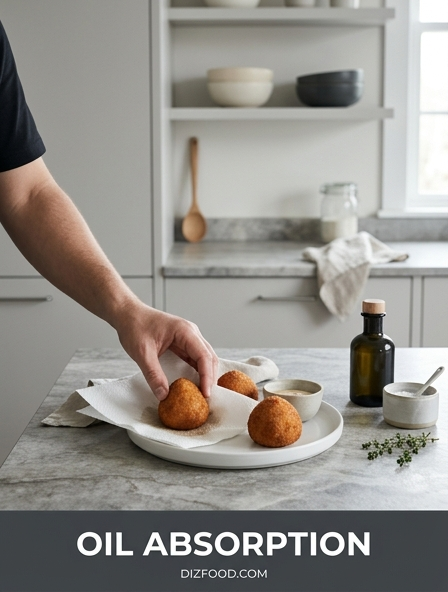
Oil absorption in flash frying primarily occurs not during the frying itself, but during the cooling phase. While the food is in the hot oil, the internal steam pressure creates an outward force that prevents oil from penetrating deep into the structure. As the food is removed and begins to cool, that steam condenses, creating a partial vacuum within the pores of the crust. This vacuum can pull surface oil into the food, leading to a greasy final product if not handled correctly.
- Pore Size: Smaller, more uniform pores in the batter reduce the volume of oil that can be trapped.
- Surfactants: Overused oil contains polar compounds that increase oil-to-food contact, leading to higher absorption.
- Viscosity: Hotter oil is less viscous and drains away more easily than cooler oil.
To minimize lipid interaction, flash frying must be done at temperatures high enough to maintain strong internal pressure. Furthermore, vigorous shaking or blotting immediately upon removal is necessary to strip away excess surface oil before the cooling vacuum draws it in. Understanding this relationship between pressure and temperature is vital for creating fried foods that feel light and clean on the palate.
Vapor Pressure and the Steam Barrier
The concept of the steam barrier is fundamental to the physics of flash frying. When food enters the oil, the immediate vaporization of surface moisture creates a violent, protective envelope of steam. This vapor pressure acts as a physical barrier, momentarily shielding the food from direct contact with the liquid oil. This is why you see vigorous bubbling; those bubbles are actually steam escaping from the food, pushing back against the surrounding lipid medium. This phenomenon is essential for preventing the food from becoming saturated with oil early in the cooking process.
The strength of this barrier is determined by the temperature of the oil and the moisture content of the food. If the oil is not hot enough, the vapor pressure will be insufficient to hold back the oil, resulting in immediate infiltration. Conversely, if the heat is too high, the steam barrier may be so violent that it ruptures the delicate batter or coating. Mastering flash frying involves finding the "sweet spot" where the steam barrier is consistent and strong enough to facilitate rapid dehydration while keeping the oil on the outside where it belongs, ensuring a perfect balance of textures.
Structural Changes During Final Searing
The final seconds of a flash fry involve a series of rapid structural changes that finalize the product's morphology. As the last of the surface moisture is expelled, the protein networks (such as gluten or egg proteins) and the starch granules undergo a final "setting" phase. This is characterized by the polymerization of lipids and the cross-linking of proteins, which hardens the exterior into a rigid, crystalline lattice. This final sear is what determines the "microsurface" of the food-the tiny peaks and valleys that provide the tongue with the sensation of crispness.
| Structural Element | Transformation | Resulting Texture |
|---|---|---|
| Proteins | Denaturation & Linkage | Firmness and "Snap" |
| Starch | Retrogradation (Partial) | Brittle, Glassy Layer |
| Lipids | Surface Adhesion | Rich Mouthfeel |
During this phase, the food also undergoes significant shrinkage as the cellular structure collapses slightly from the loss of water. This contraction can concentrate flavors and create a more dense, satisfying bite. The goal of the final sear is to hit the peak of these structural changes just as the food is pulled from the heat, capturing the maximum contrast between the hardened shell and the softened core.



Comments