
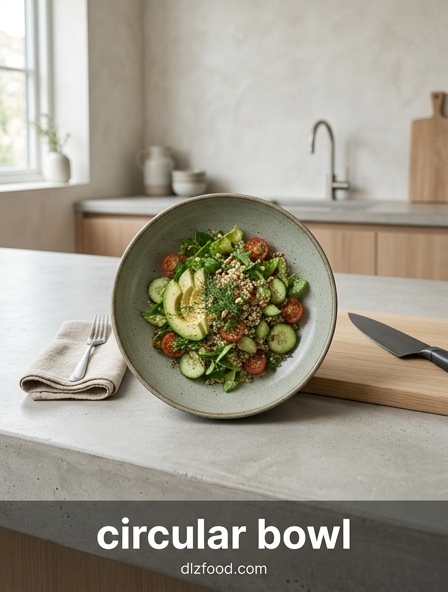
The Physics of Fluid Motion
The circular bowl serves as a perfect vessel for understanding fluid dynamics within a culinary context. Unlike rectangular containers, the absence of sharp corners allows liquids to move in a continuous, laminar flow. When a spoon stirs a soup or a whisk aerates a batter, the circular boundary encourages the formation of a gentle vortex. This motion ensures that ingredients are incorporated evenly without becoming trapped in "dead zones" where stagnant pockets of flour or spices might otherwise accumulate. The centripetal force generated during stirring pushes heavier particulates toward the center or suspends them uniformly throughout the liquid medium.
- Reduction of turbulent drag during high-speed whisking.
- Promotion of natural convection currents in hot liquids.
- Prevention of ingredient buildup in right-angled junctions.
- Enhanced aeration for delicate emulsions and foams.
Furthermore, the curvature of the bowl wall guides the liquid back toward the center, creating a self-correcting flow pattern. This physical harmony not only aids in the preparation phase but also influences the way liquids behave when being poured or consumed. The lack of structural resistance provided by the circle makes it the most efficient shape for managing the kinetic energy of fluids in the kitchen.
Superior Heat Retention Properties
Thermal efficiency is a hallmark of the circular bowl, primarily due to its minimized surface area-to-volume ratio compared to shallow or angular vessels. In thermodynamics, heat loss occurs most rapidly at the surface and through the walls of a container. A spherical or hemispherical shape encloses the maximum volume of food with the least amount of external surface exposure. This structural advantage ensures that hearty stews and porridges remain at an ideal serving temperature for a significantly longer duration, enhancing the overall dining experience.
| Vessel Shape | Surface-to-Volume Efficiency | Heat Loss Rate |
|---|---|---|
| Circular Bowl | High | Low |
| Square Dish | Medium | Moderate |
| Rectangular Tray | Low | High |
The consistent wall thickness usually found in ceramic or glass circular bowls also contributes to even thermal radiation. Heat is stored within the material and reflected back into the food uniformly, preventing the rapid cooling that occurs in vessels with protruding corners, which act like cooling fins. This makes the circular bowl the superior choice for meals that rely on sustained warmth to maintain texture and flavor profile.
Ergonomic Comfort and Handling
The design of the circular bowl is deeply rooted in human ergonomics, mirroring the natural cupping shape of the human hand. When holding a bowl, the fingers naturally curve to follow the exterior arc, providing a secure and stable grip that is difficult to achieve with angular objects. This tactile connection is especially important in casual dining settings or when consuming comfort foods like soup. The weight distribution in a circular bowl is balanced around a central axis, making it less likely to tip or tilt unexpectedly during transport from the kitchen to the table.
- Natural alignment with the palmar arch of the hand.
- Balanced center of gravity for one-handed carrying.
- Smooth edges that eliminate pressure points on the skin.
- Intuitive tilting mechanism for finishing the last drops of liquid.
Beyond the physical grip, the circular shape offers a sense of security. The lack of sharp edges reduces the risk of accidental injury or discomfort. This ergonomic synergy between the vessel and the user enhances the sensory pleasure of eating, allowing the focus to remain on the meal rather than the mechanics of managing the container. Whether used for prep work or serving, the circular bowl remains the most comfortable tool in the kitchen inventory.
Enhanced Aroma Concentration
The geometry of a circular bowl plays a vital role in the olfactory perception of food. As steam rises from a hot dish, the curved walls of the bowl act as a funnel, concentrating the volatile aromatic compounds and directing them toward the diner's nose. In a flat or wide-rimmed plate, these aromas disperse rapidly into the surrounding air, diluting the sensory impact of the meal. The depth and curvature of a bowl create a micro-environment where the scent of herbs, spices, and proteins is intensified, priming the palate for the flavors to come.
This "chimney effect" is particularly noticeable in deep bowls used for ramen or phá». The rising heat carries the essence of the broth upward, while the narrowed opening of certain bowl designs traps a layer of aromatic steam. This concentration of scent is essential because much of what we perceive as taste is actually derived from our sense of smell. By containing and directing these vapors, the circular bowl ensures that the complexity of a dish is fully realized. It transforms a simple meal into a multi-sensory event, highlighting the subtle nuances of the ingredients that might otherwise be lost to the kitchen's ambient air flow.
Seamless Spoon Interaction
The interaction between a spoon and a circular bowl represents a peak of functional design. The radius of most standard spoons is designed to complement the interior curvature of the bowl, allowing for a smooth, sweeping motion that captures food effectively. In a square or rectangular container, the corners present a physical barrier where small amounts of food inevitably become stuck, leading to waste and frustration. The circular bowl eliminates these "blind spots," ensuring that every morsel of a grain dish or every drop of a sauce can be easily retrieved.
- Continuous contact between the utensil edge and the vessel wall.
- Reduction of "clinking" noise through smooth transitions.
- Efficient collection of viscous liquids like honey or yogurt.
- Minimized scraping force required to clear the surface.
This seamless interaction also protects the longevity of both the bowl and the cutlery. Without the need to dig into sharp corners, the risk of chipping the glaze or scratching the surface is greatly reduced. The rhythmic, circular motion allowed by this geometry creates a more fluid and satisfying eating process, where the utensil glides along the surface in a natural arc, mirroring the shape of the vessel itself.
Aesthetic Symmetry in Plating
In the world of culinary arts, visual presentation is as critical as flavor, and the circular bowl offers a timeless aesthetic advantage. The circle is a symbol of unity and completeness, providing a natural frame that draws the eye toward the center of the dish. Professional chefs often utilize the symmetry of the bowl to create focal points, using the circular boundary to contain vibrant colors and textures. Whether it is a colorful grain bowl or a delicate dessert, the concentric nature of the vessel provides a sense of balance that is inherently pleasing to the human eye.
The absence of vertical or horizontal orientation allows the bowl to be placed on a table in any direction while maintaining its visual integrity. This makes it a versatile tool for various plating styles, from rustic heaps of pasta to meticulously arranged layers. The shadows cast within a curved bowl also add depth to the presentation, highlighting the relief of the food and making it appear more appetizing. By utilizing the geometric simplicity of the circle, the plating becomes an intentional composition where the vessel acts as a silent partner, enhancing the food's natural beauty without competing for attention.
Uniform Temperature Maintenance
Maintaining a consistent temperature across a dish is essential for both food safety and taste. Circular bowls excel at this because their shape promotes a more uniform distribution of heat through the food mass. In containers with corners, the edges often cool down much faster than the center, leading to an uneven eating experience where some bites are lukewarm while others remain piping hot. The radial symmetry of a bowl ensures that the distance from the center to any point on the wall is relatively consistent, facilitating a balanced thermal gradient.
| Feature | Circular Bowl Benefit |
|---|---|
| Heat Distribution | Radial symmetry prevents cold spots. | Gradual and predictable transition. |
| Edge Cooling | Minimized due to lack of protruding angles. |
This property is particularly beneficial for temperature-sensitive items like risottos or custards. When the temperature is held steady throughout the vessel, the texture of the food remains consistent from the first bite to the last. This thermal stability also prevents the condensation that can form when hot food meets the rapidly cooling corners of a square dish, which can often lead to the sogginess of certain ingredients. The circular bowl provides a controlled environment that preserves the chef's intended temperature profile.
Simplified Cleaning and Hygiene
From a sanitation perspective, the circular bowl is the gold standard for kitchen hygiene. The primary challenge in cleaning kitchenware is the removal of organic matter from tight spaces. Circular vessels have no crevices, seams, or sharp angles where bacteria or mold can hide. A sponge or brush can travel the entire interior surface in one continuous motion, ensuring that every millimeter is scrubbed and rinsed effectively. This ease of cleaning is not just a convenience; it is a critical factor in preventing cross-contamination and ensuring food safety.
- Total surface accessibility for cleaning tools.
- Efficient water drainage during the drying process.
- No hidden corners for stubborn food residue.
- Compatibility with circular dishwasher spray patterns.
Furthermore, the rinsing process is more effective in a curved vessel. Water swirls around the interior, using its own kinetic energy to flush out soap and food particles. In contrast, square containers often require manual attention to the corners to ensure no film is left behind. The smooth, non-porous finish of most circular bowls, combined with their accessible geometry, makes them the most hygienic option for high-volume kitchens where rapid and thorough cleaning is essential for maintaining professional standards.
Emotional Comfort of Circular Shapes
The preference for circular bowls often extends beyond the physical and into the psychological. In design psychology, soft curves and circles are associated with safety, inclusivity, and comfort, whereas sharp angles can trigger a subtle "fight or flight" response in the subconscious. This is why "comfort foods" are almost universally served in bowls. The act of holding a round, warm bowl provides a tactile sense of groundedness and "nesting" that a flat plate cannot replicate. The bowl wraps around the food, just as the hands wrap around the bowl, creating a closed loop of warmth and nourishment.
This emotional connection influences how we perceive the taste and quality of our meals. A soup served in a round ceramic bowl feels more nurturing than the same soup served in a square plastic container. The circle represents a lack of conflict and a sense of wholeness, which aligns perfectly with the restorative nature of eating. In many cultures, the bowl is a symbol of the communal experience, meant to be shared and passed around, further cementing its role as a vessel of emotional and social significance in the kitchen and dining room alike.
Efficient Surface Area for Evaporation
The rate at which a dish cools or thickens is largely dependent on the surface area available for evaporation. Circular bowls provide a controlled environment for this process. For a chef reducing a sauce or a diner waiting for a hot oatmeal to reach an edible temperature, the ratio of the bowl's opening to its depth is key. The wide mouth of a bowl allows for steady steam release, while the narrowing base keeps the bulk of the liquid insulated. This balance allows for "top-down" cooling, where the surface temperature drops quickly while the interior remains warm.
- Regulated steam release for temperature control.
- Facilitation of skin formation on puddings and sauces.
- Optimized surface tension for decorative garnishes.
- Predictable reduction rates for hot liquids.
Moreover, the circular surface allows for an even distribution of surface tension. This is particularly important for dishes that feature oil droplets, foam, or floating garnishes like croutons. The tension pulls equally toward the edges, keeping the presentation centered and preventing the "clumping" that occurs in the corners of rectangular dishes. By managing evaporation and surface dynamics efficiently, the circular bowl ensures that the food's texture remains optimal throughout the duration of the meal.

Comments