
Ever wondered if that small ceramic vessel in your cupboard is a ramekin or a miniature soufflé dish? While they may look like culinary siblings, choosing the right size and shape is the secret to achieving that iconic vertical rise or a perfectly caramelized crust. Ramekins are the versatile workhorses of the kitchen, typically sized for individual servings (1-6 oz) and built with thick walls to withstand high-heat tasks like torching crème brûlée. In contrast, soufflé dishes are larger, statement-making vessels designed with specific height-to-width ratios that encourage delicate egg-white batters to climb upward without collapsing. By matching your recipe's volume to the correct vessel, you ensure even heat distribution and professional-grade presentation for everything from molten lava cakes to airy savory bakes.
| Feature | Ramekin | Soufflé Dish |
|---|---|---|
| Standard Capacity | 1 oz to 8 oz (Individual) | 1 quart to 2.5 quarts (Family-style) |
| Wall Geometry | Short, thick, often fluted | Tall, thin, strictly vertical |
| Primary Function | Custards, crumbles, & dipping | High-rise egg-based bakes |
| Heat Retention | High; keeps centers creamy | Moderate; promotes rapid, even lift |
| Surface Area | Wide relative to depth | Deep relative to diameter |
| Best For | Crème Brûlée, Pot Pies, Lava Cakes | Cheese Soufflés, Bread Pudding |
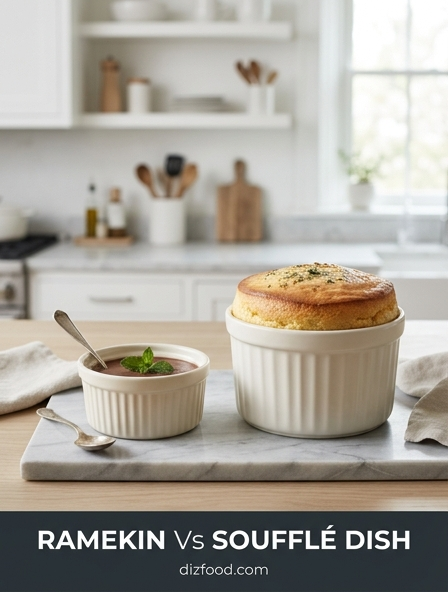
Ramekin vs Soufflé Dish Key Differences
In the culinary world, distinguishing between a ramekin and a soufflé dish is essential for achieving the desired outcome of specific recipes. While both are circular, heat-resistant ceramic vessels used for baking, their primary differences lie in their scale and intended function. A ramekin is essentially a miniature version of a soufflé dish, designed specifically for individual portions. These vessels typically hold between one and twelve ounces of volume, making them perfect for single-serve desserts or side dishes. In contrast, a soufflé dish is often much larger, capable of holding several quarts, and is intended to produce a centerpiece dish meant for sharing.
Structurally, both vessels usually feature straight sides and a fluted exterior, though the soufflé dish requires these straight walls to facilitate the vertical climb of egg-based batters. The following table highlights the core physical differences between the two:
| Feature | Ramekin | Soufflé Dish |
|---|---|---|
| Typical Volume | 1 oz to 10 oz | 1 quart to 2.5 quarts |
| Standard Diameter | 3 to 4 inches | 6 to 10 inches |
| Primary Purpose | Individual servings/Dips | Family-style baked goods |
| Wall Height | Short to Medium | Deep and Tall |
Beyond size, the ramekin is more versatile for kitchen preparation and "mise en place," whereas the soufflé dish is a specialized tool optimized for the physics of rising air and protein expansion. Choosing the wrong size can lead to uneven cooking or a lack of structural integrity in delicate bakes.
Defining the Ramekin and Its Primary Uses
A ramekin is a small, cylindrical dish used for both preparation and serving in professional and home kitchens. Derived from the French word "ramequin," these vessels have become staples due to their durability and heat resistance. Most ramekins are made from high-quality ceramic, stoneware, or porcelain, allowing them to withstand the high temperatures of an oven or the direct flame of a kitchen torch. Their design usually includes a flat base and slightly thick walls to provide even insulation for delicate fillings.
While often associated with Crème Brûlée, the functionality of a ramekin extends far beyond sweets. They are used daily in various capacities, including:
- Mise en Place: Holding pre-measured spices, chopped herbs, or minced aromatics during the cooking process.
- Condiment Service: Serving individual portions of butter, ketchup, aioli, or salad dressing.
- Savory Sides: Baking mini pot pies, shepherd's pies, or individual servings of macaroni and cheese.
- Small Snacks: Presenting nuts, olives, or candies for guests in an organized manner.
The standard 4-ounce ramekin is considered the "gold standard" for individual desserts, providing the perfect portion size that is neither too heavy nor too small. Because they are designed to be served directly to the diner, ramekins often feature aesthetically pleasing glazes and the iconic vertical fluting on the exterior walls, which adds a touch of elegance to the presentation.
The Unique Design of a Soufflé Dish
The design of a soufflé dish is a triumph of culinary engineering. Unlike standard casserole dishes or cake pans, the soufflé dish is characterized by its perfectly vertical, un-tapered sides. This specific geometry is not an aesthetic choice but a functional necessity. When a soufflé batter is placed in the oven, the air bubbles trapped in the whipped egg whites expand. The straight walls provide a direct, unobstructed path for the batter to climb upward. If the sides were sloped or curved, the expanding proteins would lose their structural grip, resulting in a collapsed or lopsided bake.
Another hallmark of this dish is the glazed interior. The smoothness of the glaze, often combined with a coating of butter and sugar or breadcrumbs, reduces friction, allowing the soufflé to slide upward easily. The exterior fluting, while decorative, also increases the surface area of the vessel slightly, which can aid in the transfer of heat from the oven air to the dish's ceramic body. This ensures that the outer edges of the soufflé set quickly enough to support the rising center.
The depth of a soufflé dish is also significantly greater than that of a ramekin. While a ramekin might only be two inches deep, a standard soufflé dish can reach four or five inches in height. This depth is required to contain the large volume of base sauce-such as a béchamel or chocolate ganache-before the whipped whites are folded in. The height also helps insulate the bottom of the dish, preventing the base from burning before the top has properly browned and set.
Comparing Sizes and Volume Capacities
Understanding the volume capacity of these vessels is crucial for recipe scaling. A recipe designed for a single large soufflé dish cannot simply be poured into a single ramekin; it must be distributed among several. Generally, ramekins are categorized by their ounce capacity, whereas soufflé dishes are often categorized by quarts or liters. The overlap occurs in the "large ramekin" and "mini soufflé" range, which can cause some confusion for novice bakers.
Common capacities for these kitchen tools include the following ranges:
- Extra Small Ramekins (1-2 oz): Ideal for dipping sauces, flavored salts, or a single pat of compound butter.
- Standard Ramekins (4-6 oz): The most common size for Crème Brûlée, molten lava cakes, and individual mousses.
- Large Ramekins (8-12 oz): Frequently used for individual savory gratins, pot pies, or "jumbo" muffins.
- Small Soufflé Dishes (16-24 oz): Often referred to as "pint" dishes, these serve 1-2 people.
- Standard Soufflé Dishes (1.5-2.5 quarts): The traditional size for family-style dinner or dessert soufflés, serving 4-6 people.
When selecting a dish, it is important to remember that a soufflé batter typically doubles in volume. Therefore, the capacity of the dish should be roughly twice the volume of the unbaked base. If you use a 2-quart dish for a 2-quart recipe, the batter will overflow onto the oven floor. Conversely, if the dish is too large, the soufflé will never peak above the rim, losing the dramatic visual effect that defines the dish.
Structural Differences for Heat Distribution
The thermal properties of ramekins and soufflé dishes are influenced by their material thickness and surface area. Because ramekins are small, they have a high surface-area-to-volume ratio. This means that heat from the oven penetrates the center of the food very quickly. This rapid heat transfer is why ramekins are preferred for items like lava cakes, where you want the outside to bake firmly while the center remains liquid. The small mass of the ramekin also allows it to cool down relatively quickly once removed from the oven, preventing overcooking.
Soufflé dishes, being much larger and holding a greater mass of food, require more consistent and gradual heat distribution. Most high-quality soufflé dishes are made of thick-walled porcelain or stoneware. These materials act as heat sinks; they absorb energy and radiate it steadily into the batter. This is vital for a soufflé, as a sudden spike in temperature can cause the exterior to burn before the center has expanded, while a drop in temperature can cause the entire structure to fail. The thick base of a soufflé dish protects the bottom of the delicate egg mixture from the intense direct heat of the oven rack.
Furthermore, the material density differs. Porcelain is often used for soufflé dishes because it is non-porous and highly conductive, ensuring the heat is distributed evenly from the bottom to the top edge. Ramekins, while often made of the same materials, can also be found in thinner ceramic or even tempered glass versions because their smaller size makes them less prone to the catastrophic structural failures that can plague larger baked goods.
When to Use a Ramekin for Small Desserts
Ramekins are the preferred choice for desserts that require precise portioning and individual presentation. Their design is particularly suited for dishes that need to be "set" or "torched." For example, Crème Brûlée is almost exclusively prepared in wide, shallow ramekins. The increased surface area allows for a larger layer of caramelized sugar, which is the dish's signature feature. Because the custard is delicate, the ramekin's ability to be placed in a water bath (bain-marie) is essential for preventing curdling.
Some of the best desserts to prepare in ramekins include:
- Chocolate Lava Cakes: The ceramic walls help form a sturdy cake "shell" while the core remains molten.
- Panna Cotta: While often unmolded, the ramekin serves as the perfect chilled mold for these cream-based treats.
- Fruit Crumbles: Individual portions ensure everyone gets an equal amount of topping and fruit filling.
- Bread Pudding: Small ramekins help the pudding cook through without the edges becoming too dry or tough.
Using ramekins also allows for customization. In a single baking session, a chef can create various versions of the same dessert-such as adding different fruits to each individual crumble-to accommodate dietary restrictions or taste preferences. Additionally, ramekins offer a more sophisticated presentation than scooping portions out of a large communal bowl, making them a favorite for dinner parties and formal events where the "reveal" of the dessert is part of the experience.
Baking the Perfect Soufflé in Proper Bakeware
Success with a soufflé is 50% technique and 50% using the correct vessel. While the batter provides the potential for lift, the dish provides the track for that lift to follow. To ensure a perfect rise in a large soufflé dish, the preparation of the vessel itself is paramount. Unlike other cakes where you might flour the pan, a soufflé requires a specific friction-based environment. Bakers must follow a disciplined preparation process to ensure the dish functions as intended.
- Greasing: Apply softened butter to the interior walls using upward vertical strokes. This aligns the fats in the direction of the rise.
- Coating: Dust the butter with granulated sugar (for sweet) or grated parmesan/breadcrumbs (for savory). Shake out the excess. This provides "footholds" for the egg whites to grip as they climb.
- Cleaning the Rim: Run a thumb around the inner edge of the rim to create a small "channel." This prevents the batter from sticking to the top and ensures a straight upward expansion.
- Placement: Place the dish on a preheated baking sheet to ensure the bottom starts cooking immediately, providing the initial burst of steam needed for the rise.
A true soufflé dish's height is critical here because it supports the "chimney" effect. As the steam expands the air cells, the vertical walls keep the structure from collapsing outward. Without this specific bakeware, even the best-whisked egg whites will likely spread horizontally and fail to achieve the iconic "hat" look that marks a successful soufflé. The ceramic material also retains heat well enough to keep the soufflé inflated for a few minutes after it leaves the oven, allowing time for it to be brought to the table.
Are Ramekins and Soufflé Dishes Interchangeable
In many cases, ramekins and soufflé dishes can be used interchangeably, provided you adjust the baking time and monitor the volume ratios. If a recipe calls for one 2-quart soufflé dish, you can typically distribute the batter into six to eight 6-ounce ramekins. This is a popular choice for hostesses who prefer to serve guests individual soufflés rather than slicing a large one, which can be messy and cause the remaining portion to deflate rapidly.
However, there are technical limitations to this swap. A large soufflé in a single dish bakes differently than several small ones. The center of a large dish stays moist longer, resulting in a creamier, almost sauce-like interior. Small ramekins, conversely, will cook through much faster. If you follow the timing for a large dish while using ramekins, you will likely end up with overbaked, dry egg sponges rather than delicate soufflés. Furthermore, the "lift" is often more dramatic in a large dish due to the greater volume of expanding air.
When swapping a ramekin for a larger dish in savory applications, such as a gratin or baked dip, the results are usually excellent. The only real risk is overflow. Because ramekins have lower walls, they are less forgiving if the food bubbles vigorously. Generally, you can use a soufflé dish as a large ramekin, but you cannot always use a ramekin for a task that requires the deep, insulating volume of a full-sized soufflé dish. Always leave at least a half-inch of headspace to prevent kitchen messes.
Material Guide Ceramic vs Porcelain vs Glass
The material of your bakeware significantly impacts its durability and performance in the kitchen. Most professional-grade ramekins and soufflé dishes are made from ceramic materials, but the specific type of ceramic matters. Porcelain is generally considered the superior choice for both vessels. It is fired at extremely high temperatures, making it non-porous, incredibly hard, and resistant to chipping. Porcelain also has excellent thermal shock resistance, meaning it is less likely to crack when moved from a cold countertop into a hot oven.
Stoneware is another common material, often favored for its rustic aesthetic and variety of colors. While stoneware is excellent at retaining heat, it is slightly more porous than porcelain and can sometimes absorb oils or odors if the glaze is compromised. It is perfect for slow-baked savory dishes like French onion soup or individual casseroles. The weight of stoneware also provides a premium feel that many home cooks enjoy for tabletop presentation.
Tempered glass is a third, though less traditional, option. The benefits and drawbacks of glass include:
- Transparency: You can see the sides of the food, which is helpful for checking the browning of a crust or the layers of a trifle.
- Heat Transfer: Glass conducts heat more slowly than metal but faster than thick ceramic, which can sometimes lead to uneven browning.
- Thermal Sensitivity: Glass is more prone to shattering from thermal shock compared to high-quality porcelain.
- Cleaning: Glass is generally very easy to clean and is almost always dishwasher safe.
For high-stakes baking like a soufflé, porcelain remains the gold standard because its smooth surface and consistent heat conduction are unmatched by glass or rougher ceramics.
Choosing the Best Bakeware for Individual Servings
When building a kitchen collection, choosing between ramekins and soufflé dishes often comes down to your entertaining style. If you frequently host dinner parties, a set of six to eight 6-ounce ramekins is an indispensable investment. They offer a level of portion control and elegance that larger dishes cannot match. When shopping, look for "stackable" ramekins; these have a small lip on the bottom that allows them to nest securely, saving significant cabinet space. This is a common feature in professional kitchens but is often overlooked in consumer products.
For those who enjoy the drama of a centerpiece meal, at least one 2-quart soufflé dish is necessary. When selecting a large dish, prioritize weight and wall thickness. A flimsy, thin-walled dish will not provide the insulation needed for a successful rise. Check that the interior glaze is perfectly smooth, as any imperfections can catch the batter and prevent it from climbing. Aesthetic choices like color and fluting pattern are secondary to the functional requirements of straight walls and thermal mass.
- Assess Volume: Determine if you most often cook for a crowd or for individual plating.
- Check Temperature Ratings: Ensure the bakeware is rated for at least 450°F and is broiler-safe if you plan to make Crème Brûlée.
- Evaluate Versatility: Choose neutral colors like white or cream if you want the dishes to match any table setting.
- Verify Maintenance: Confirm if the pieces are dishwasher and microwave safe to ensure they fit into your daily routine.
Ultimately, having a combination of both vessels provides the most flexibility. Ramekins handle the daily prep and small treats, while the soufflé dish stands ready for those special occasions where a impressive, towering bake is the star of the show.


Comments