
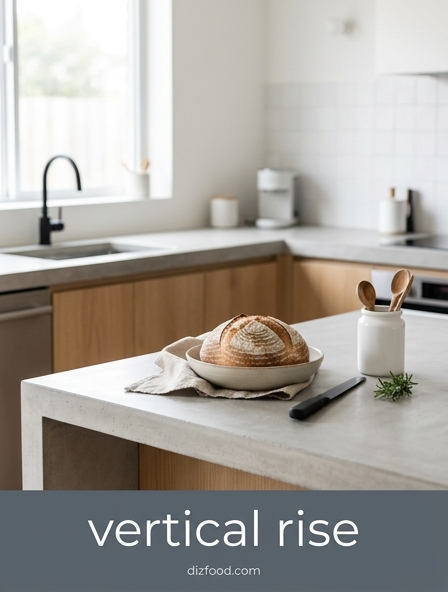
The Science of Yeast and Fermentation
Yeast is a living organism central to the vertical rise of bread and various pastries. Through the process of fermentation, yeast cells consume simple sugars present in the flour and convert them into ethanol and carbon dioxide gas. This gas becomes trapped within the dough's elastic matrix, creating microscopic bubbles that expand and push the dough upward. The rate of this expansion is heavily influenced by the environment, particularly temperature and hydration levels.
- Saccharomyces cerevisiae: The primary yeast species used for commercial baking.
- Temperature Sensitivity: Yeast activity peaks between 75°F and 85°F; temperatures above 140°F kill the organism.
- Osmotic Pressure: High concentrations of salt or sugar can inhibit fermentation by drawing water out of yeast cells.
To achieve maximum vertical height, a baker must balance the fermentation speed. Slow fermentation at cooler temperatures often results in smaller, more stable bubbles, whereas rapid fermentation can lead to large, irregular voids that may collapse under their own weight during the final stages of the bake.
Optimal Oven Temperatures for Maximum Lift
The phenomenon known as "oven spring" occurs during the first few minutes of baking. When dough is introduced to a high-heat environment, the gases trapped inside expand rapidly, and the yeast undergoes a final burst of activity before perishing. Setting the correct initial temperature is vital to ensure the dough reaches its maximum vertical potential before the crust hardens and prevents further expansion.
| Bread Type | Target Temperature | Primary Rise Mechanic |
|---|---|---|
| Artisan Sourdough | 450°F - 500°F | Steam and Gas Expansion |
| Enriched Brioche | 350°F - 375°F | Gradual Protein Set |
| Puff Pastry | 400°F - 425°F | Water Vaporization |
Lower temperatures are often used for enriched doughs containing sugar and fat to prevent premature browning, while lean doughs require intense heat to maximize the physical expansion of trapped air and steam before the protein structure undergoes denaturation and sets permanently.
Perfecting Gluten Structure for Structural Integrity
Vertical rise is impossible without a strong, elastic framework to contain expanding gases. Gluten is formed when two proteins found in wheat flour, glutenin and gliadin, hydrate and bond. These bonds create a net-like structure that provides the necessary tension for the dough to climb upward rather than spreading outward. Achieving this balance requires precise mechanical manipulation through kneading or folding.
- Hydration: Water acts as the catalyst for protein bonding; without it, gluten cannot form.
- Mechanical Work: Kneading aligns protein strands, turning a shaggy mass into a cohesive, smooth membrane.
- Resting: Autolyse or resting periods allow the gluten network to relax, preventing the dough from tearing during expansion.
If the gluten is too weak, the dough will collapse like a popped balloon. If it is too tight or over-worked, the resistance will be too great, resulting in a dense, stunted loaf. The goal is to reach the "windowpane stage," where the dough can be stretched thin enough to see light through it without breaking.
Chemical Leaveners and Proper Activation
In applications like cakes, muffins, and quick breads, vertical rise depends on chemical reactions rather than biological fermentation. Baking soda and baking powder are the primary agents used to generate carbon dioxide instantaneously. Understanding the chemical triggers for these substances is essential for preventing a flat or sunken final product.
- Baking Soda: Requires an acidic component like buttermilk, lemon juice, or cocoa powder to release gas.
- Baking Powder: Contains both an acid and a base; double-acting varieties release gas once when moistened and again when heated.
- Sieving: Even distribution through dry ingredients prevents localized over-expansion and "tunnels."
Timing is critical when working with chemical leaveners. Once the liquid hits the dry ingredients, the reaction begins immediately. Delays in placing the batter into the oven can result in a loss of potential volume as the gas escapes into the atmosphere. For maximum height, ensure the oven is fully preheated before the wet and dry ingredients are combined.
Steam Injection Techniques for Bread Crust
Steam plays a paradoxical role in vertical growth: it keeps the surface of the dough moist and supple. Without steam, the exterior of the loaf dries out quickly in the dry heat of the oven, forming a rigid crust that acts as a straitjacket, pinning the dough down. By introducing moisture, the baker delays this crust formation, allowing the internal gases to push the dough to its absolute limit.
- Dutch Ovens: Trap the natural moisture escaping from the dough to create a self-steaming environment.
- Lava Rocks: Placing a pan of hot rocks at the bottom of the oven and adding water creates an immediate burst of steam.
- Spritzing: Using a spray bottle to mist the oven walls provides a controlled amount of humidity.
In addition to promoting volume, steam gelatinizes the starches on the surface of the dough. This leads to a thin, crispy crust with a characteristic sheen. Once the "oven spring" period is over-typically the first 10 to 15 minutes-the steam should be vented to allow the crust to brown and harden.
The Importance of Precise Proofing Times
Proofing is the final rise before the dough enters the oven, and it is perhaps the most delicate stage of the process. This phase allows the yeast to relax the gluten slightly while filling the structure with air. If a dough is under-proofed, it will have too much internal tension and may rupture violently in the oven. Conversely, over-proofed dough has exhausted its yeast and weakened its structure, leading to a total collapse.
- The Finger Poke Test: Gently press the dough; if it springs back slowly and leaves a slight indentation, it is ready.
- Volume Visuals: Most recipes suggest waiting until the dough has doubled in size, though this varies by flour type.
- Environmental Control: A proofing box or a warm, draft-free corner ensures consistent results.
Mastering the timing of the "final proof" ensures that there is still enough residual sugar for the yeast to consume during the initial heat of the bake. This ensures the loaf achieves that sought-after verticality and a light, airy crumb rather than a dense, squat profile.
Mastering the Art of Scoring for Expansion
Scoring is the practice of cutting the surface of the dough with a sharp blade, or lame, just before baking. This is not merely decorative; it provides a designated path for the dough to expand. Without a score, the internal pressure will cause the loaf to burst at its weakest point, often resulting in jagged tears and an asymmetrical shape that lacks height.
- Depth of Cut: Typically between 1/4 and 1/2 inch; too shallow won't open, too deep may cause collapse.
- Angle of Entry: Holding the blade at a 30-degree angle creates a "flap" that rises to form a crusty "ear."
- Pattern Strategy: A single long vertical cut promotes width-wise expansion, while a cross or square promotes upward lift.
The score acts as a release valve. As the gases expand in the heat, the cuts open wide, allowing the bread to bloom upward. Consistent scoring requires a confident, swift motion to avoid dragging the dough, which can deflate the delicate aeration achieved during the proofing stage.
How Flour Protein Content Affects Height
The protein content of flour is the primary determinant of how much height a baked good can sustain. Flour is composed mainly of starches and proteins. The higher the protein percentage, the more gluten can be developed, and the stronger the resulting structure. This is why different flours are categorized by their intended use and their specific protein ranges.
| Flour Type | Protein Range | Vertical Potential |
|---|---|---|
| Cake Flour | 6% - 8% | Low (Tender/Soft) |
| All-Purpose | 10% - 12% | Moderate (Versatile) |
| Bread Flour | 12% - 15% | High (Structural) |
For breads requiring significant vertical rise, such as sourdough or baguettes, high-protein bread flour is essential. The robust gluten network can withstand the vigorous expansion of CO2. In contrast, using high-protein flour in a sponge cake would result in a tough texture that inhibits the delicate lift provided by whipped eggs, demonstrating that more protein is not always better for every type of rise.
Aeration Secrets for Sponges and Soufflés
In many delicate desserts, vertical rise is achieved not through yeast or chemicals, but through mechanical aeration. This involves incorporating air into eggs or cream to create a foam. The air bubbles trapped in the protein matrix expand when heated, causing the batter to climb the walls of the container. This technique requires a gentle hand and precise temperature management.
- Egg White Stability: Use room temperature whites and ensure no fat or yolk is present to maximize foam volume.
- Folding Technique: Use a flat spatula to cut through the center and lift from the bottom to avoid popping air bubbles.
- Sugar Addition: Adding sugar gradually stabilizes the protein bonds, creating a glossy, flexible meringue.
Soufflés, in particular, rely on the rapid expansion of air. The ramekin walls are often brushed with butter in upward strokes to "guide" the batter as it rises. If the foam is over-mixed or the oven door is opened prematurely, the temperature drop will cause the air to contract, leading to an immediate and irreversible loss of height.
Essential Bakeware for Consistent Vertical Growth
The vessel used for baking significantly impacts how heat is transferred to the dough or batter. Vertical rise is often a race against gravity and time, and the right bakeware can provide the necessary support and heat distribution to ensure a successful climb. Material thickness, conductivity, and shape all play critical roles in the final architecture of the bake.
- Pullman Pans: Straight, high sides force the dough upward rather than outward, creating uniform slices.
- Cast Iron: Provides intense, radiant heat that mimics a professional stone oven for maximum oven spring.
- Anodized Aluminum: Offers excellent heat conductivity for cakes, ensuring they rise evenly before the edges overcook.
Properly prepared bakeware is also essential. For example, ungreased chiffon cake pans allow the batter to "climb" the walls and stick, providing physical support as the cake cools upside down. Conversely, for bread, a preheated Dutch oven creates the steam-rich environment necessary for the dough to expand freely without the resistance of a premature crust.


Comments