
Deciding between a placemat and a tablecloth often comes down to the specific "vibe" you want for your dining experience and how much of your furniture you wish to showcase. While a tablecloth provides a seamless, classic backdrop that protects the entire surface and hides imperfections, placemats offer a modern, versatile approach that highlights the natural beauty of your wood or stone table while guarding against direct heat and spills. Whether you are hosting a formal holiday gala or a quick weeknight dinner, understanding the functional trade-offs-from laundry demands to aesthetic impact-will help you curate the perfect table setting for any occasion.
| Feature | Tablecloth | Placemat |
|---|---|---|
| Surface Coverage | 100% (Full protection & hides table wear) | Partial (Protects specific dining zones) |
| Formal Ambience | High; traditional and elegant aesthetic | Casual to semi-formal; modern appeal |
| Maintenance | Requires full laundering & ironing | Easy spot cleaning or individual washing |
| Visual Impact | Uniform color/pattern; covers table material | Frames the plate; showcases table texture |
| Spill Management | Absorbs across the whole surface | Localized; spills may hit exposed table |
| Storage/Versatility | Bulky; needs folding/hanging | Compact; easy to stack and swap styles |
Placemats vs Tablecloths Main Differences
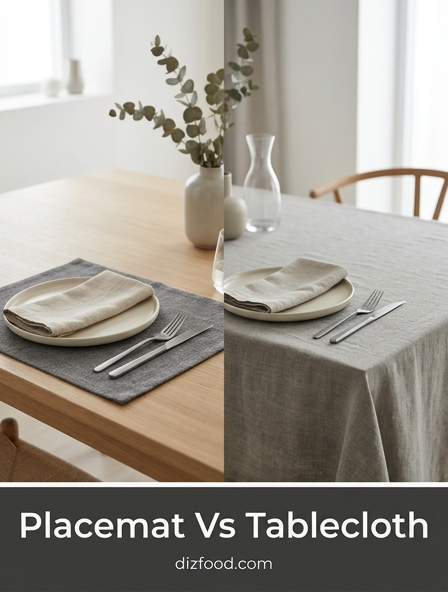
The primary distinction between placemats and tablecloths lies in their physical coverage and the visual atmosphere they create within a kitchen or dining space. A tablecloth is designed to drape over the entire surface of the table, often hanging over the edges to provide a unified, seamless foundation for a meal. This full-coverage approach completely masks the underlying table material, which is ideal for changing the room's color palette or hiding imperfections in the furniture. In contrast, placemats are individual mats positioned at each seat, designed to frame a single place setting. They leave the majority of the tabletop exposed, allowing the natural grain of wood or the sleekness of stone to remain a visible part of the decor.
| Feature | Tablecloth | Placemat |
|---|---|---|
| Coverage | Full surface and edges | Individual seating areas |
| Visual Impact | Unified and formal | Segmented and modern |
| Table Visibility | Hidden | Mostly visible |
| Primary Use | Banquets, holidays | Daily meals, casual dining |
Beyond physical dimensions, the two options differ in how they dictate the rhythm of a meal. Tablecloths tend to soften the acoustics of a room by absorbing the clatter of silverware and plates against a hard surface. Placemats, while offering localized sound dampening, do not provide the same acoustic overhaul. From a functional standpoint, a tablecloth protects the entire piece of furniture from dust and ambient sunlight, whereas placemats focus specifically on the "strike zones" where heat, moisture, and debris are most likely to occur during active consumption.
Pros and Cons of Placemats
Placemats offer a high degree of versatility and convenience, making them a staple in modern kitchens. Their smaller size makes them incredibly easy to store, as they can be stacked in a drawer without the complex folding required for large linens. For families with children, placemats are often preferred because they contain messes to a localized area, preventing a spilled glass of milk from soaking a large, expensive fabric across the entire table. However, their modular nature means they lack the cohesive, finished look that a full drape provides.
- Pro: Easy to clean, especially versions made of silicone, plastic, or treated cork.
- Pro: Cost-effective way to swap styles and colors frequently.
- Pro: Highlights the natural beauty of the dining table itself.
- Con: Leaves large areas of the table vulnerable to scratches between settings.
- Con: Can slide around on slick surfaces like glass if they lack a non-slip backing.
- Con: Requires more pieces to be aligned perfectly to look organized.
While the pros often outweigh the cons for daily use, users must consider the material carefully. Fabric placemats can still stain and may require frequent laundering, while rigid placemats are more durable but less formal. The main drawback remains the lack of comprehensive protection; if a serving dish is placed in the center of the table without a trivet or runner, the placemats do nothing to prevent heat rings on the wood. Despite this, their ability to be set and cleared in seconds makes them the go-to choice for the fast-paced environment of a contemporary kitchen.
Benefits of Traditional Tablecloths
Traditional tablecloths bring an undeniable sense of occasion and elegance to any dining environment. By covering the entire table, they act as a canvas that ties together the disparate elements of a room, including the walls, flooring, and cabinetry. This is particularly beneficial in open-concept kitchens where the dining table serves as a central visual anchor. The full drape of a tablecloth provides a soft, tactile experience for diners, removing the coldness of hard surfaces like marble or metal and replacing it with the comfort of high-quality cotton, linen, or polyester blends.
Beyond aesthetics, tablecloths serve several practical purposes that individual mats cannot match. They provide a "blank slate" that can hide a worn or mismatched table, allowing an old piece of furniture to look brand new. They also offer superior noise reduction; the layer of fabric acts as a muffler for the clinking of glassware and the sliding of serving platters. This creates a more intimate and quiet atmosphere, which is often desired during long dinner parties or holiday gatherings where conversation is the focus.
- Total Surface Protection: Shields every square inch from scratches, dust, and sunlight.
- Atmospheric Transformation: Instantly changes the mood from casual to formal.
- Uniformity: Creates a singular, cohesive backdrop for centerpieces and floral arrangements.
- Acoustic Dampening: Reduces the harsh sounds of a busy dining room.
The continuity of a tablecloth also facilitates easier centerpiece styling. Without the visual "breaks" created by placemats, designers can use runners, candles, and vases more effectively to create a professional look. For large groups, a tablecloth eliminates the awkwardness of overlapping mats, providing a shared space that feels inclusive and organized.
Protecting Your Table Surface Effectively
The longevity of a kitchen table often depends on how well it is shielded from the daily rigors of heat, moisture, and physical impact. Both placemats and tablecloths play vital roles in this protection, but they do so in different ways. A tablecloth acts as a universal barrier, preventing fine scratches from sliding objects and protecting the finish from the UV rays that can cause wood to fade over time. However, a thin fabric tablecloth offers very little protection against heavy impacts or intense heat. If a boiling pot is placed directly on a standard cotton cloth, the heat will transfer straight through to the wood finish, potentially causing a permanent white heat mark.
Placemats, particularly those made of thicker materials like cork, woven vinyl, or quilted fabric, offer superior localized protection. Because they are often denser than a single layer of a tablecloth, they provide a more effective buffer against the thermal shock of hot plates. To protect a table effectively, one must consider the specific vulnerabilities of the material. For instance, a glass table requires protection from scratches and fingerprints, which placemats handle well, while a soft pine table needs the full-surface protection of a tablecloth to prevent dings from dropped utensils across its entire expanse.
For the ultimate protection strategy, many homeowners utilize a multi-layered approach. This might include a flannel-backed vinyl protector underneath a decorative fabric tablecloth, or the use of heavy-duty placemats on top of a cloth. This creates several layers of insulation and impact resistance. When choosing protection, always prioritize the "danger zones"-the areas directly under plates and the central space where serving dishes reside-ensuring that whatever linen is chosen has the thermal resistance required for the types of meals typically served in the household.
Maintenance and Cleaning Comparisons
The ease of maintenance is often the deciding factor when choosing between placemats and tablecloths for a busy kitchen. Tablecloths, due to their size, represent a more significant commitment when it comes to laundering. A single spill on one corner of a tablecloth usually necessitates washing the entire piece, which can be a bulky task for standard home washing machines. Furthermore, larger linens often require extensive ironing or steaming to remove wrinkles after drying, as a crumpled tablecloth can look unkempt rather than cozy. This makes them less practical for daily use in households with high activity or young children.
Placemats offer a much more modular approach to cleanliness. If one person spills their soup, only that specific mat needs to be cleaned or replaced, leaving the rest of the table intact. Many modern placemats are designed with "wipe-clean" technology, utilizing materials like polypropylene or treated faux leather that do not require a washing machine at all. This significantly reduces the water and energy usage associated with kitchen maintenance. However, woven placemats can be difficult to clean, as crumbs and liquids can become trapped in the crevices of the weave, necessitating a deep scrub or a delicate wash cycle.
- Tablecloth Maintenance: Requires full wash cycles, long drying times, and often pressing or ironing.
- Wipeable Placemats: Immediate cleanup with a damp cloth; no laundry required.
- Fabric Placemats: Easy to toss in with a regular load of towels, but may shrink or fray over time.
- Stain Treatment: Easier to spot-treat a small mat than to find a stain on a 120-inch cloth.
Durability also factors into maintenance. A tablecloth that is washed frequently will eventually show signs of fading and thinning, whereas a rotation of placemats distributes the wear and tear across several smaller items. For those who prioritize a low-maintenance lifestyle, the combination of a high-quality wood finish and wipeable placemats is often the most efficient solution for the modern kitchen.
Formal Dining vs Everyday Use
The context of a meal dictates whether a placemat or a tablecloth is more appropriate. For everyday use-breakfast, a quick lunch, or a casual family dinner-placemats are the industry standard. They reflect the relaxed, functional nature of daily life, allowing for quick setup and even quicker cleanup. Their aesthetic is often more modern and minimalist, fitting perfectly with the "grab-and-go" culture of contemporary kitchens. Placemats also encourage a more casual interaction with the furniture, as diners don't feel the need to be overly cautious about a large, pristine piece of fabric draping over their laps.
Formal dining, however, almost exclusively calls for a tablecloth. Whether it is a wedding, a holiday feast, or a formal dinner party, the presence of a tablecloth signals to guests that the event is special and deserves extra care. A floor-length or deep-drop tablecloth adds a sense of luxury and architectural weight to the dining room that placemats cannot replicate. It creates a sense of "theatre," where the table is transformed into a stage for the food and conversation. In these settings, the tablecloth is often paired with cloth napkins and fine china to complete the sophisticated look.
The transition between these two styles can be managed by varying the materials used. For instance, a linen placemat can feel quite elevated for a Sunday brunch, bridging the gap between casual and formal. Conversely, a checkered polyester tablecloth can feel perfectly at home for a casual backyard-style indoor picnic. Ultimately, the choice depends on the "formality level" of the menu and the desired guest experience. If the goal is a long, lingering meal with multiple courses, the comfort and elegance of a tablecloth are usually the preferred choice to keep guests feeling pampered and relaxed.
Enhancing Your Tablescape Aesthetic
Creating an attractive tablescape is an art form that involves balancing color, texture, and height. Placemats act as frames for your dinnerware, making each setting pop against the table surface. They are excellent for introducing geometric patterns or bold textures, such as round braided seagrass or rectangular slate. Because they are individual units, you can experiment with "mismatched" but coordinated sets to create a boho-chic look. This individual focus draws the eye to the craftsmanship of the plates and the arrangement of the cutlery, making the dining experience feel personalized and curated.
Tablecloths, conversely, provide a broad strokes approach to aesthetics. They set the "base note" for the room. A crisp white linen cloth suggests purity and classicism, while a dark, moody velvet or heavy cotton can make a room feel cozy and grounded. The way a tablecloth drapes at the corners adds a vertical element to the decor, softening the sharp lines of the table legs and chairs. This creates a more holistic visual experience where the table is seen as a singular decorative object rather than a collection of individual spots. To enhance the aesthetic further, one can use the following techniques:
- Layering: Using a runner over a tablecloth to add a secondary color or pattern.
- Contrast: Choosing placemats that contrast sharply with the table color (e.g., black mats on a light oak table).
- Texture Play: Combining a smooth silk-blend tablecloth with rough, organic-textured placemats.
- Color Blocking: Using solid-colored linens to create a bold, modern graphic look.
When designing a tablescape, think about the "top-down" view as well as the "eye-level" view. A tablecloth changes the eye-level view by hiding the underside of the table, while placemats focus almost entirely on the top-down perspective. By understanding these visual dynamics, you can choose the option that best complements your existing kitchen decor and the specific mood you wish to evoke for your guests.
Cost Effectiveness and Durability
When evaluating the financial aspect of kitchen linens, placemats are generally the more budget-friendly entry point. Because they use significantly less fabric and are easier to manufacture, consumers can often purchase a full set of high-quality placemats for a fraction of the cost of one premium, large-format tablecloth. This lower price point allows for more frequent updates to the kitchen's look, enabling homeowners to own multiple sets for different seasons or moods without a significant investment. Furthermore, if a single placemat is permanently damaged, only one item needs to be replaced, whereas a ruined tablecloth usually requires a completely new purchase.
However, durability varies greatly depending on the material. A high-quality, heavy-duty tablecloth made from treated polyester or thick damask can last for decades if it is only used occasionally for holidays and special events. Because it isn't subjected to daily scrubbing or constant movement, its lifespan can be quite long. Placemats used for three meals a day, on the other hand, face a high rate of attrition. Heat, constant wiping, and the friction of plates being moved can wear down the edges and surfaces of cheaper mats within a year or two.
| Factor | Placemats | Tablecloths |
|---|---|---|
| Initial Cost | Low to Moderate | Moderate to High |
| Replacement Frequency | Higher (daily wear) | Lower (occasional use) |
| Repairability | Replace individual unit | Whole piece replacement |
| Storage Life | High (flat storage) | High (if kept dry) |
In the long run, the most cost-effective strategy is often to invest in one high-quality, neutral tablecloth for special occasions and a rotation of durable, easy-to-clean placemats for daily use. This preserves the expensive linen for when it truly matters while providing functional, inexpensive protection for the table during the rest of the year.
Mixing Placemats with Tablecloths
The practice of layering placemats on top of a tablecloth is a sophisticated design choice that combines the benefits of both worlds. This technique is often seen in high-end restaurants and professionally styled homes because it adds depth and complexity to the table setting. The tablecloth provides the foundational color and full-surface protection, while the placemats add a secondary layer of texture and define the individual dining zones. This layering is not just for looks; it provides an extra shield for the tablecloth itself, catching the majority of crumbs and spills so that the large linen stays cleaner for longer.
To successfully mix these elements, one must consider the visual weight of the patterns and colors. If the tablecloth has a busy floral or geometric pattern, it is best to use solid-colored, simple placemats to avoid visual clutter. Conversely, a plain white or cream tablecloth is the perfect backdrop for vibrant, intricately woven, or uniquely shaped placemats. This combination also allows for more creative use of shapes; for example, placing round woven chargers or placemats on a rectangular tablecloth can break up the hard angles and create a more organic, inviting feel.
- Start with a neutral base: A solid tablecloth in white, grey, or navy works with almost any mat.
- Coordinate textures: Pair a smooth cotton cloth with a chunky jute mat for a rustic look.
- Mind the scale: Ensure the placemats are large enough to hold the plate and cutlery without looking cramped on the cloth.
- Protect the cloth: Use heat-resistant placemats on top of the cloth to prevent the fabric from scorching.
This "double-up" method is particularly effective during holiday dinners where the table is crowded. The placemats provide a clear "territory" for each guest, preventing the settings from bleeding into one another on the vast expanse of the tablecloth. It also makes the post-dinner cleanup slightly easier, as you may only need to shake out the placemats and spot-clean the cloth rather than doing a full heavy laundry load.
Choosing the Right Table Linens
Selecting between a placemat and a tablecloth-or deciding to use both-requires an assessment of your lifestyle, your furniture, and your aesthetic goals. Start by considering the material of your table. If you have a beautiful, handcrafted live-edge wood table, you likely want to show it off, making placemats the logical choice. If your table is a functional but uninspired piece of utility furniture, or if it has seen better days, a tablecloth can instantly elevate it to a design feature. Consider also the shape of your table; while tablecloths are available for round, oval, and rectangular shapes, finding the perfect fit can sometimes be a challenge, whereas placemats are universally compatible with any table geometry.
Next, think about your household's daily habits. If you have a busy kitchen with children who use the table for crafts and homework as well as meals, durability and ease of cleaning should be your top priorities. In this case, wipeable placemats are unbeatable. If you frequently host dinner parties or value a ritualistic approach to dining, investing in a collection of high-quality tablecloths will serve you better. Don't be afraid to mix and match; many people find that they prefer placemats for breakfast and lunch, but enjoy the transition to a tablecloth for the evening meal to mark the end of the workday.
Finally, consider your storage capacity. If you live in a small apartment with limited drawer space, a bulky collection of tablecloths may be impractical compared to a slim stack of mats. Ultimately, the "right" choice is the one that minimizes your stress during cleanup while maximizing your enjoyment of the space. By keeping a few options of each on hand, you can adapt your kitchen environment to suit any occasion, from a solitary morning coffee to a festive gathering of friends and family.


Comments