
Choosing the right vessel can transform a simple caffeine fix into a mindful ceremony, yet the debate between the robust mug and the elegant teacup often comes down to a balance of science and soul. While a thick-walled ceramic mug is the ultimate companion for long, cozy mornings where heat retention is your top priority, the delicate porcelain teacup is engineered for sensory appreciation, allowing the liquid to cool slightly to reveal complex aromatic notes. Whether you are cradling a hefty brew to power through a workday or sipping a fine Oolong during a quiet afternoon break, understanding how volume, material density, and surface area affect your drink's flavor profile is the secret to perfecting your unique brewing ritual.
| Feature | Standard Mug | Traditional Teacup |
|---|---|---|
| Average Capacity | 8 oz - 15 oz (Large volume) | 5 oz - 8 oz (Small portions) |
| Heat Retention | High; thick walls maintain temp | Low; wide rim cools liquid faster |
| Material Density | Heavy stoneware or ceramic | Fine bone china or porcelain |
| Flavor Profile | Focuses on body and warmth | Accentuates aromatics and top notes |
| Ergonomics | Full-hand grip / Cradling | Dainty handle / Two-finger hold |
| Best Ritual For | Coffee, lattes, herbal infusions | Green, white, and floral teas |
Defining the Mug and Teacup
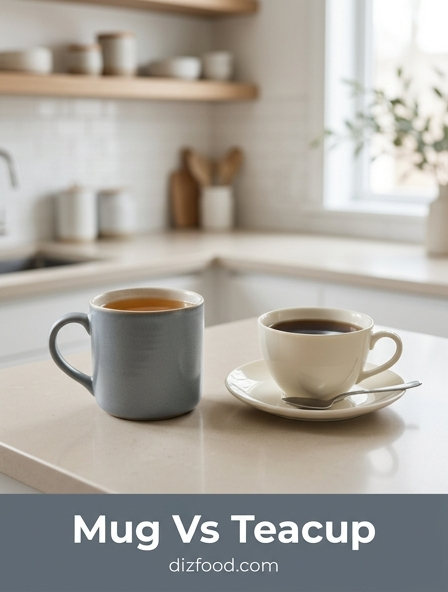
In the landscape of kitchenware, the distinction between a mug and a teacup is defined primarily by form, function, and capacity. A mug is a sturdy, cylindrical vessel designed for utility and volume. It typically features straight or slightly tapered sides and a heavy base, prioritizing stability and the containment of large amounts of liquid. Mugs are the workhorses of the morning, capable of holding anywhere from eight to twenty ounces of a beverage. They are designed to be held firmly, often with a full-finger grip, reflecting a casual and practical approach to drinking.
Conversely, a teacup is a more refined and delicate vessel, characterized by its wide, flared rim and a significantly smaller capacity, usually ranging from four to six ounces. The design of a teacup is often dictated by the beverage it contains; the wide opening allows for the quick cooling of hot tea and encourages the release of aromatic compounds. Unlike the mug, which stands alone, the teacup is almost always part of a set, paired with a matching saucer. While a mug is built for the individual's long-term hydration or caffeine needs, the teacup is designed for the ritual of a short, concentrated drinking experience, often in a social or formal setting. The structural differences highlight a fundamental split between high-volume convenience and aesthetic precision.
Material Differences and Durability
The materials used to manufacture these vessels significantly impact their weight, durability, and tactile feel. Mugs are commonly crafted from heavy-duty ceramic, stoneware, or thick glass. These materials are chosen for their resilience against the rigors of daily use, including high-temperature dishwashers and the occasional bump against a granite countertop. Stoneware mugs, in particular, are fired at high temperatures to create a dense, non-porous surface that resists chipping and cracking, making them ideal for a busy kitchen environment.
Teacups, however, are frequently made from more sophisticated materials like porcelain or fine bone china. Bone china is prized for its remarkable translucency and strength, allowing for much thinner walls without becoming overly fragile. This creates a lightweight, elegant experience that emphasizes the quality of the tea. However, this refinement comes at the cost of durability; teacups are more prone to chipping and are often too delicate for standard dishwasher cycles. The choice of material defines the vessel's lifespan and the context in which it is used.
| Feature | Mug | Teacup |
|---|---|---|
| Primary Material | Stoneware, Ceramic | Porcelain, Bone China |
| Wall Thickness | Thick and heavy | Thin and delicate |
| Durability | High / Impact resistant | Low / Fragile |
| Dishwasher Safe | Generally yes | Often hand-wash only |
Heat Retention and Liquid Volume
Thermal dynamics play a crucial role in the design of mugs versus teacups. A mug is engineered to keep a large volume of liquid hot for an extended period. The thick walls of a ceramic mug act as an insulator, absorbing heat and then slowly releasing it back into the liquid. Because the top opening of a mug is usually narrower relative to its total volume, there is less surface area for heat to escape through evaporation. This makes the mug the superior choice for someone who likes to sip their beverage over the course of thirty minutes or an hour while working or relaxing.
In contrast, the teacup is designed for a beverage meant to be consumed at a specific, slightly cooler temperature. The wide, shallow bowl of a teacup maximizes the surface area of the liquid, facilitating rapid cooling. Since tea is often brewed with boiling water, the teacup's design helps the drink reach a palatable temperature quickly. Furthermore, the smaller volume ensures that the tea is finished before it becomes cold. While a mug prioritizes heat longevity for bulk consumption, the teacup prioritizes immediate temperature regulation for a series of small, fresh servings poured from a teapot that retains the bulk of the heat.
The Role of the Saucer
The presence or absence of a saucer is one of the most immediate visual cues distinguishing these two vessels. For a teacup, the saucer is an indispensable companion that serves several functional and etiquette-related purposes. It provides a stable landing spot for the cup, protecting table surfaces from heat damage or condensation. Historically, the saucer was even used for cooling the tea; in some cultures, it was common to pour small amounts of tea from the cup into the saucer to drink it more quickly. Today, it primarily serves as a rest for a used spoon or a discarded tea bag, keeping the tablecloth clean.
Mugs rarely include a saucer because they are designed for individual, mobile use. Instead of a saucer, a mug might be paired with a coaster, but this is an accessory rather than a part of the vessel's identity. The lack of a saucer reinforces the mug's status as a standalone tool for casual hydration. Because mugs are larger and heavier, a matching ceramic saucer would be bulky and difficult to store. The saucer's absence in mug culture reflects a move toward minimalism and the elimination of unnecessary components in modern, fast-paced living.
- Protects furniture from heat rings and spills.
- Provides a designated place for stirring spoons.
- Acts as a catchment for drips running down the side of the cup.
- Elevates the aesthetic presentation in formal settings.
- Allows for the placement of small accompaniments like a biscuit or sugar cube.
Handle Design and Grip Ergonomics
Ergonomics vary wildly between these two types of drinkware. The handle of a mug is designed for comfort and security. Most mugs feature a "C" shaped or "D" shaped handle large enough for two, three, or even four fingers to pass through. This allow the user to wrap their hand around the body of the mug for warmth or to lift the significant weight of 16 ounces of liquid with ease. The grip is robust, mirroring the mug's utilitarian nature. In many cases, the handle is positioned to balance the center of gravity, preventing the vessel from tipping as it is lifted toward the face.
Teacup handles are an exercise in grace rather than raw grip. They are often too small for a finger to pass through comfortably; instead, they are meant to be pinched between the thumb and the index finger. This delicate grip encourages slower, more mindful movements. Some traditional teacup handles are purely decorative, featuring ornate loops or gold-leafed scrollwork. The ergonomics of a teacup are not about hauling weight, but about maintaining a refined posture. This difference in handle design dictates the physical interaction the user has with their drink, shifting the experience from a functional "chug" to a sophisticated "sip."
Cultural Origins and Historical Context
The history of the teacup is deeply rooted in the East, specifically in China, where tea was originally consumed from small, handleless bowls. When tea was introduced to Europe in the 17th century, these bowls were adapted to Western tastes. The handle was added by European potters in the mid-18th century to prevent the aristocracy from burning their fingers, a modification that gave birth to the modern teacup. Throughout the Victorian era, the teacup became a symbol of social status, with elaborate tea services used to demonstrate wealth and knowledge of complex social rituals.
Mugs have a much more ancient and varied lineage, with versions made of wood, bone, or lead dating back to the Neolithic period. However, the modern ceramic mug as we know it gained popularity during the Industrial Revolution. As coffee consumption rose and the workforce moved into offices and factories, there was a need for a sturdy, high-capacity vessel that could withstand frequent use and hold enough caffeine to power a long workday. The evolution of these vessels follows two distinct paths of human development:
- The teacup evolved as an artistic pursuit of the leisure class.
- The mug evolved as a functional necessity for the working class.
- Global trade influenced the materials, shifting from local clay to imported porcelain.
- Modern design has blurred these lines, but their historical identities remains intact.
Formal Etiquette Versus Casual Comfort
Etiquette defines the "when" and "where" of choosing between a mug and a teacup. The teacup is the undisputed king of formal gatherings, such as weddings, high tea, or official receptions. In these environments, the teacup signals a level of decorum and respect for the occasion. There are specific rules associated with the teacup, such as not clinking the spoon against the sides and never leaving the spoon in the cup while drinking. It is a vessel that demands focus and adherence to social norms, making it the perfect choice for hosting guests in a structured manner.
The mug represents the antithesis of formality. It is the vessel of choice for "me time," early mornings in pajamas, or casual catch-ups with close friends. There is no "proper" way to hold a mug, and the lack of rules associated with it provides a sense of psychological comfort. In a professional office environment, the personalized mug is a staple, often used as a form of self-expression through printed designs or slogans. While the teacup is about how you appear to others, the mug is about how you feel yourself. This cultural divide ensures that both vessels have a permanent, though separate, place in the modern kitchen cabinet.
Best Vessels for Coffee and Tea
While the names suggest their primary uses, the actual experience of coffee and tea can be altered by the choice of vessel. Generally, tea is better suited for a teacup if it is a high-quality loose-leaf variety like Oolong or Darjeeling. The wide rim allows the delicate aromas to reach the nose, which is responsible for a large portion of the flavor perception. For herbal infusions that need to be steeped at specific temperatures and consumed quickly before they become bitter, the teacup provides the ideal environment.
Coffee, on the other hand, is almost universally preferred in a mug. Beverages like lattes and cappuccinos require the extra volume to accommodate steamed milk and foam. Furthermore, because coffee is often consumed as a stimulant to start the day, the large capacity of a mug ensures a steady supply of caffeine without the need for constant refills. However, there are exceptions; a small espresso is often served in a demitasse, which shares more characteristics with a teacup than a mug. Ultimately, the vessel should match the intensity and volume of the drink.
- Mugs: Best for Lattes, Americanos, and hearty Breakfast Teas with milk.
- Teacups: Best for Green Tea, White Tea, and Floral Infusions.
- Mugs: Ideal for adding marshmallows to hot chocolate.
- Teacups: Best for tasting sessions where small samples are preferred.
Cleaning and Storage Considerations
Maintenance is a practical factor that often dictates which vessel gets used more frequently. Mugs are generally easier to care for. Their wide interiors allow for easy scrubbing with a sponge, and their robust construction means they can be stacked in a cupboard or hung from hooks under a shelf to save space. Because they are used for coffee, which can leave oily residues, the ability to withstand high-temperature dishwasher cycles is a major benefit. Most modern mugs are also microwave-safe, allowing for easy reheating of forgotten drinks.
Teacups require a more cautious approach. The tannins in tea can easily stain the fine white surface of porcelain or bone china, requiring prompt rinsing after use. Because of their delicate handles and thin rims, they should not be stacked directly on top of one another, as this can lead to hairline fractures. Instead, they are best stored on a dedicated tea rack or with protective felt liners between them. The saucers must also be stored, which effectively doubles the footprint of the collection in a kitchen cabinet. For many, the extra effort required to clean and store a teacup set is a worthwhile trade-off for the elegance they bring to the table.
Choosing the Right Cup for You
Deciding between a mug and a teacup ultimately depends on the specific moment and your personal lifestyle. If your priority is a long, uninterrupted period of warmth while you read a book or tackle a project, the mug is your best ally. Its weight provides a grounding sensory experience, and its capacity supports the sustained consumption of your favorite beverage. For those who value the "hygge" lifestyle or need a reliable companion for a commute, the mug's durability and heat retention make it the logical choice.
On the other hand, if you view the act of drinking as a ritual or a break from the chaos of the day, the teacup offers a more intentional experience. It forces you to slow down, to pour smaller amounts, and to appreciate the aesthetic beauty of the vessel itself. When choosing, consider the following factors:
- How much time do you have to finish your drink?
- Are you drinking for comfort or for a formal social interaction?
- Do you prefer the tactile feel of heavy stoneware or light porcelain?
- Does your kitchen have the space for a full tea service with saucers?
By understanding these nuances, you can curate a kitchen collection that serves both your practical needs and your aesthetic desires, ensuring that every sip is taken from the perfect vessel.

Comments