
Mastering the Five Core Taste Elements
Understanding the fundamental interactions between the five primary tastes-salty, sweet, sour, bitter, and umami-is the foundation of expert seasoning control. Every dish relies on a delicate equilibrium where these elements either enhance or suppress one another. For instance, salt can suppress bitterness while simultaneously enhancing sweetness, making it a versatile tool for flavor correction. A successful chef learns to identify which element is missing by analyzing the profile of the dish at various stages of the cooking process.
- Salty: Enhances existing flavors and suppresses bitterness.
- Sour: Provides brightness and cuts through heavy fats.
- Sweet: Balances heat and tempers excessive acidity or bitterness.
- Bitter: Adds complexity and depth, often found in greens or charred elements.
- Umami: Provides a savory "meatiness" and a long-lasting mouthfeel.
By mastering these interactions, you gain the ability to manipulate how a diner perceives the food. If a sauce feels flat, it may lack umami; if it feels cloying, it likely needs a touch of acid to provide a refreshing finish.
Precision Salting Techniques for Enhanced Flavor
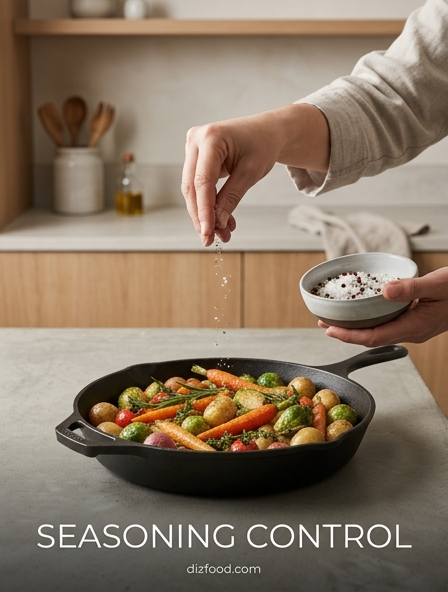
Salt is arguably the most critical ingredient in any kitchen, acting as a flavor magnifier rather than just a seasoning. Precision salting involves understanding both the timing and the physical application of salt to achieve uniform results. Salting from a height allows for a more even distribution across the surface of the food, preventing concentrated pockets of saltiness. Furthermore, the type of salt used-whether it be fine sea salt, coarse kosher salt, or delicate finishing flakes-dictates the texture and immediate impact on the palate.
- Season early and often to allow salt to penetrate the cellular structure of proteins.
- Use coarse salts for better tactile control and visibility during the prep phase.
- Utilize finishing salts at the very end to provide a crunch and a concentrated burst of flavor.
- Account for moisture loss; as liquids reduce, salt concentrations increase significantly.
Effective salting also involves moisture management. Salt draws out juices from vegetables and meats, which can be harnessed to create a natural brine or a flavorful fond in the pan. Mastering this technique ensures that every bite is seasoned from within, rather than just on the exterior.
Balancing Richness with Targeted Acid Use
Acidity is the secret weapon that brings a "high-definition" quality to heavy or rich dishes. When a meal feels weighted down by fats or starches, a targeted application of acid can pierce through that density, cleansing the palate and highlighting subtle nuances. This balance is not about making a dish taste sour, but rather about using low pH ingredients to provide a necessary counterpoint to lipids. Different acids bring different profiles, from the sharp citrus notes of a lemon to the mellow, fermented depth of a high-quality vinegar.
| Acid Type | Best Application | Flavor Profile |
|---|---|---|
| Lemon/Lime Juice | Seafood, fresh vegetables | Sharp, bright, floral |
| Sherry Vinegar | Stews, pan sauces | Nutty, complex, mild |
| Rice Vinegar | Glazes, dressings | Sweet, delicate, clean |
Incorporating acid at the end of the cooking process preserves its volatile aromatic compounds. If added too early, the bright notes may dissipate, leaving only a dull sourness behind. Precise control over acid levels transforms a "good" dish into a professional-grade culinary experience.
Building Depth Through Layered Spice Application
Achieving a complex flavor profile requires more than simply tossing a handful of spices into a pot. Layering involves introducing different spices at specific intervals to maximize their potential. Whole spices, for example, benefit from "blooming" in hot oil or fat at the beginning of the process. This releases fat-soluble compounds that ground spices cannot replicate. As the cooking progresses, ground spices can be added to provide a more immediate aromatic punch, while delicate herbs are reserved for the final moments to maintain their fresh integrity.
- Blooming: Frying whole spices in oil to extract deep, toasted notes.
- Mid-Phase Infusion: Adding ground spices to liquids to build a cohesive base.
- Finishing: Using toasted spice dusts or fresh herbs for aromatic top-notes.
- Toasting: Dry-roasting seeds before grinding to enhance nuttiness.
This tiered approach ensures that the dish has a "beginning, middle, and end" on the palate. Without layering, spices can often taste muddy or one-dimensional, failing to provide the sophisticated depth found in professional cuisine.
The Impact of Timing on Seasoning Success
Timing is the invisible ingredient that dictates how seasoning integrates with food. When salt is added to meat hours before cooking, it has time to dissolve and denature proteins, leading to a juicier result. Conversely, seasoning a steak immediately before it hits the pan creates a crust without drawing out internal moisture. For liquid-based dishes like soups and braises, the timing of seasoning is even more critical due to the physical reality of evaporation and reduction.
- Initial Seasoning: Establish a baseline flavor during the sauté or sear phase.
- Reduction Check: Taste after liquids have reduced by half to monitor salt concentration.
- Final Adjustment: Fine-tune salt, acid, and heat just before plating.
If you season a large pot of stock to perfection at the beginning, it will inevitably be over-salted once it reduces. Professional seasoning control requires a forward-thinking mindset, anticipating how the flavors will evolve as heat and time interact with the ingredients. Constant tasting at every stage of the process allows for incremental adjustments rather than drastic, often irreversible, late-stage corrections.
Incorporating Umami for Savory Complexity
Umami, the "fifth taste," provides the foundational savory depth that makes food craveable. It is the taste of glutamates and nucleotides, often found in fermented, aged, or dried ingredients. While salt provides sharpness, umami provides a rounded, lingering sensation on the tongue. In professional seasoning control, umami is used to bridge the gap between various ingredients, creating a more cohesive and satisfying flavor profile. Using umami-rich components can also allow a chef to reduce overall sodium intake without sacrificing taste perception.
- Fermented pastes like miso or gochujang add both salt and depth.
- Dried mushrooms and kombu provide clean, earthy umami notes.
- Aged cheeses, such as Parmesan, offer a concentrated savory punch.
- Anchovies or fish sauce disappear into sauces, leaving only a rich backbone.
- Tomato paste, when caramelized, becomes an umami powerhouse for stews.
By strategically adding these "umami bombs," you can enhance the perceived "meatiness" of any dish, including vegetarian options. The key is to incorporate these ingredients in a way that they support the primary flavors rather than overpowering them with their own specific identities.
Professional Tools for Superior Seasoning Control
Precision in the kitchen is often a direct result of the tools used to measure and apply seasonings. While "seasoning to taste" is the ultimate goal, professional equipment provides the consistency required for high-volume or high-stakes environments. Digital scales that measure to the tenth of a gram are essential for replicating spice blends or curing mixes. Similarly, the method of application-whether through a fine-mesh sieve or a specific type of mill-can change how a seasoning interacts with the surface area of the food.
| Tool | Primary Function | Advantage |
|---|---|---|
| Microplane | Zesting and fine grating | Maximizes surface area for aromatics |
| Digital Gram Scale | Exact measurement | Ensures recipe consistency |
| Mortar and Pestle | Crushing whole spices | Releases oils better than electric grinders |
Using a dedicated tasting spoon is another vital practice. By using a clean spoon for every taste, you maintain hygiene while allowing yourself to focus entirely on the balance of flavors without any outside interference. These tools, when used correctly, remove the guesswork from the seasoning process.
Harmonizing Bitter and Sweet Flavor Profiles
The relationship between bitterness and sweetness is one of the most sophisticated aspects of seasoning control. Bitterness is often viewed negatively, yet it provides the necessary "edge" that prevents a dish from being cloying. Sweetness, on the other hand, is the primary foil for bitterness. In professional cooking, balancing these two elements is key to dishes featuring ingredients like radicchio, coffee, dark chocolate, or charred brassicas. When a dish is too bitter, a subtle addition of sugar or honey can round out the sharp edges without making the final product taste like a dessert.
- Use honey or maple syrup to glaze bitter vegetables like Brussels sprouts.
- Incorporate dark chocolate into savory chili to add a complex bitter-sweet base.
- Balance a bitter kale salad with a dressing containing a touch of agave or fruit juice.
- Utilize charred elements to provide a "controlled" bitterness that offsets sweet glazes.
This harmony creates a dynamic eating experience where the palate is constantly engaged. The goal is to reach a point where neither element dominates, but both contribute to a multifaceted profile that evolves as it is consumed.
Correcting Seasoning Imbalances in Finished Dishes
Even the most experienced chefs occasionally find a dish has veered off course. Correcting an imbalance in a finished dish requires a calm, systematic approach rather than a frantic addition of more ingredients. If a dish is over-salted, adding a starch like a potato can absorb some salt, but dilution or adding fat is often more effective. If a dish is too spicy, fat and sweetness are the primary remedies to coat the tongue and neutralize the capsaicin. Correcting a seasoning error is about understanding the chemical relationship between the five tastes.
- Identify the dominant error (e.g., too acidic, too salty).
- Select the appropriate counter-element (e.g., sugar for acid, fat for salt).
- Add the corrective ingredient in tiny increments, tasting after each addition.
- Adjust the volume if necessary; sometimes doubling the base is the only fix.
Most seasoning errors are fixable with patience. However, the best correction is prevention. By tasting frequently and seasoning in stages, you minimize the risk of reaching a point where the dish requires a major structural overhaul.
Developing Your Palate for Precise Adjustments
A chef's most important tool is a refined palate. Developing this sense requires mindful practice and a conscious effort to deconstruct every flavor you encounter. It is not enough to know that a dish "tastes good"; you must understand why it works and what could make it better. This involves tasting ingredients in their raw state, as well as at various stages of the cooking process. Over time, your brain builds a library of flavor interactions, allowing you to predict how a pinch of salt or a splash of vinegar will alter the final outcome.
- Practice "blind tasting" to identify hidden ingredients in complex sauces.
- Taste components separately before combining them to see how they change.
- Maintain a clean palate by drinking water or eating neutral crackers between tastings.
- Focus on the "finish" or the aftertaste of a dish, which often reveals seasoning gaps.
Developing your palate also means understanding your own biases-some people are more sensitive to salt, while others have a high tolerance for spice. By knowing your baseline, you can adjust your seasoning to ensure it appeals to a broad range of diners while maintaining your professional standards.





Comments