
Choosing between a standard drinking glass and a refined goblet is more than just a matter of style; it's about how you interact with your favorite beverages. While the humble drinking glass offers rugged versatility and a comfortable grip for everyday hydration, the goblet introduces an element of sophistication with its characteristic stem and wide bowl, designed to preserve temperature and enhance aromatic profiles. Whether you are hosting an elegant dinner party or enjoying a casual iced tea, understanding the functional nuances-from heat transfer to grip ergonomics-will help you select the ideal vessel to truly elevate your drinking experience.
| Feature | Drinking Glass (Tumbler) | Goblet |
|---|---|---|
| Structure | Flat base, straight or tapered sides. | Stemmed base with a rounded bowl. |
| Thermal Control | Hand warmth transfers to liquid. | Stem prevents hand heat from warming drink. |
| Best Use | Daily hydration, water, juice, soda. | Wine, craft beer, iced water, cocktails. |
| Aesthetics | Casual, minimalist, and practical. | Formal, elegant, and decorative. |
| Sensory Focus | Functional volume and easy access. | Enhanced aroma collection and visual clarity. |
| Durability | High; often thicker and stackable. | Delicate; requires careful hand-washing. |
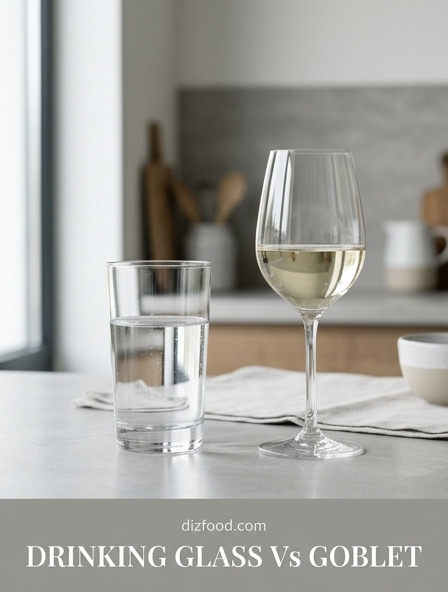
Defining the Drinking Glass and Goblet
The distinction between a standard drinking glass and a goblet is fundamental to culinary presentation and liquid consumption. A drinking glass is broadly defined as a cylindrical or tapered vessel used for holding liquids. It typically features a flat base that sits directly on the table surface. Drinking glasses are the workhorses of the kitchen, designed for high-frequency use and versatility across various meal types. They come in numerous forms, such as highballs, tumblers, and juice glasses, each tailored to specific volume requirements and beverage types.
In contrast, a goblet is characterized by its specific anatomical structure, which includes a bowl, a stem, and a base. While a drinking glass focuses on utility, the goblet is designed with an emphasis on elegance and specific beverage enhancement. Historically, goblets were crafted from precious metals or high-quality glass to signify status or to celebrate special religious and social ceremonies. In modern kitchenware, the goblet remains a distinct category often associated with wine or formal water service, separating itself from the common glass through its elevated profile.
- Drinking Glass: Usually rim-heavy or balanced at the base, focused on storage capacity.
- Goblet: Top-heavy design supported by a central pillar, focused on presentation.
- Historical Context: Glasses evolved from clay and wood cups; goblets evolved from chalices.
Structural Differences Between Glasses and Goblets
The structural integrity and silhouette of these two vessels differ significantly, influencing how they are manufactured and stored. A drinking glass is essentially a single-unit body where the walls rise directly from the floor of the vessel. This direct connection provides a low center of gravity, making them remarkably stable. The thickness of the glass in a standard tumbler is often uniform, though reinforced bases are common to prevent tipping and breakage during heavy use in busy households.
The goblet features a more complex three-part construction. The bowl holds the liquid, the stem provides a grip point, and the foot ensures the vessel remains upright. This architecture is not merely for show; the stem serves to separate the hand from the bowl, which is a critical functional difference. Because of this multi-part assembly, goblets are generally more fragile than drinking glasses, particularly at the points where the stem meets the bowl and the base. The structural differences are summarized in the following table:
| Feature | Drinking Glass | Goblet |
|---|---|---|
| Base Type | Flat / Direct Contact | Pedestal / Footed |
| Stem Presence | None | Integrated Stem |
| Center of Gravity | Low and Stable | High and Elevated |
| Wall Thickness | Variable (often thick) | Usually Thin/Refined |
Stemmed Versus Stemless Drinkware Design
The debate between stemmed and stemless designs often centers on the balance between thermal control and modern convenience. Stems are the defining feature of the goblet and serve a primary thermodynamic purpose: they prevent the heat from the drinker's hand from transferring to the liquid inside the bowl. This is particularly vital for chilled beverages like white wines or craft beers that are best enjoyed at specific temperatures. By holding the stem, the consumer ensures the beverage remains cold for a longer duration while also preventing unsightly fingerprints on the bowl's surface.
Stemless designs, which encompass almost all standard drinking glasses, prioritize ease of maintenance and storage. Without a fragile stem, these vessels are easier to clean in a dishwasher and take up significantly less vertical space in kitchen cabinets. While some modern "wine glasses" have moved toward a stemless aesthetic to fit a contemporary lifestyle, they technically lean closer to the drinking glass category in terms of handling. The choice between the two often involves prioritizing the beverage's temperature stability versus the practicalities of household chores.
- Temperature Regulation: Stems keep the liquid isolated from body heat.
- Maintenance: Stemless glasses are more durable and dishwasher-friendly.
- Storage: Glasses stack more easily; goblets require specific spacing.
Formal Dining Goblets vs Everyday Drinking Glasses
The context of a meal often dictates which vessel is appropriate for the table. Everyday drinking glasses are designed for the "grab-and-go" nature of a modern kitchen. They are used for breakfast juices, mid-day hydration, and casual family dinners. Because they are frequently handled by children and adults alike, they are built to withstand the rigors of frequent clinking, washing, and occasional drops. Their aesthetic is typically simple, focusing on clean lines that match any casual dinnerware set.
Formal dining goblets, however, are reserved for choreographed table settings and celebratory events. In a formal "place setting," the water goblet is the largest glass and is positioned above the knives. Its presence signals a more sophisticated dining experience. Goblets add a vertical dimension to the table, creating a sense of visual rhythm when paired with wine glasses and flatware. While a drinking glass is a tool for hydration, a goblet is an instrument of ceremony, often used to toast or to signal the transition between courses in a multi-course meal. The ritual of setting the table with goblets elevates the psychological perception of the meal from a routine necessity to a special event.
Best Beverages for Traditional Drinking Glasses
Traditional drinking glasses are the ideal choice for high-volume, non-alcoholic, or casual beverages. Their design is conducive to the addition of large amounts of ice, making them the preferred vessel for cold drinks that require dilution or significant chilling. The straight walls of a highball or Collins glass are perfect for carbonated beverages, as they help maintain the effervescence of sodas and sparkling waters. Furthermore, the substantial weight of a glass tumbler provides a satisfying hand-feel for hearty drinks like milk or thick fruit smoothies.
- Iced Tea and Lemonade: The large capacity allows for plenty of ice and garnishes like lemon slices or mint sprigs.
- Water: For daily hydration, a sturdy glass is more practical for frequent refills throughout the day.
- Carbonated Sodas: The simple geometry of the glass prevents excessive foaming while pouring.
- Juices: Smaller juice glasses provide the appropriate portion size for concentrated morning beverages.
Because these glasses often have wide openings, they are also easier to fill from dispensers or pitchers. This makes them the logical choice for self-service stations at gatherings or family-style meals where efficiency and volume are prioritized over the subtle aromatic nuances of the beverage.
When to Serve Drinks in a Goblet
Serving a drink in a goblet is a deliberate choice intended to enhance the sensory experience of specific beverages. Beyond the traditional use for wine, goblets are exceptionally well-suited for water service in formal settings, craft beers (particularly Belgian ales), and certain iced cocktails. The wide, rounded bowl of a goblet allows for better aeration of the liquid, which can help release the aromatic compounds in high-quality beverages. This "nose" of the drink is often lost in a standard flat-sided drinking glass.
Additionally, goblets are the standard for serving "fancy" non-alcoholic drinks, such as sparkling cider or infused mocktails, during celebratory occasions. The stem allows the drinker to swirl the liquid-a movement that is both elegant and functional for mixing flavors. Whenever the goal is to slow down the pace of consumption and encourage the guest to savor the flavor and aroma, the goblet is the superior vessel. It acts as a visual cue that the liquid contained within is special and should be treated with more attention than a standard glass of water. It is also the preferred choice for heavy, rich drinks like eggnog or certain dessert-style beverages where a smaller, more decorative portions are desired.
Material Composition and Durability Comparison
The materials used in the construction of glasses and goblets play a massive role in their longevity and clarity. Drinking glasses are typically made from soda-lime glass, which is cost-effective, thick, and highly resistant to chemical erosion from dishwasher detergents. This makes them ideal for the repetitive cycle of a high-traffic kitchen. Some high-end drinking glasses may use tempered glass, which is treated with heat to increase strength and ensure that if the glass does break, it shatters into small, less dangerous pieces.
Goblets are often crafted from finer materials, including lead-free crystal. Crystal contains minerals like magnesium or zinc, which allow the glass to be spun much thinner while maintaining structural integrity. This results in the "ring" sound when clinked and provides superior light refraction, making the beverage sparkle. However, this refinement comes at the cost of durability; goblets are more prone to chipping and "glass sickness" (cloudiness) if not hand-washed. The following table highlights the material trade-offs:
| Attribute | Standard Glass | Crystal Goblet |
|---|---|---|
| Clarity | Moderate (slight green tint) | High / Brilliant |
| Impact Resistance | High | Low |
| Dishwasher Safe | Yes | Recommended Hand-wash |
| Weight | Heavy / Solid | Light / Delicate |
Visual Aesthetics in Table Settings
Aesthetics play a crucial role in how we perceive the taste and quality of a meal. Drinking glasses provide a grounded, modern, and minimalist look. When arranged on a table, they offer a clean horizontal line that feels approachable and relaxed. They are available in various textures-such as hammered glass, fluted patterns, or colorful tints-which can add a pop of personality to a casual breakfast nook or an outdoor patio setting. Their simplicity allows the colors of the beverage, like a bright orange juice or a deep green smoothie, to be the primary focus.
Goblets, on the other hand, introduce drama and verticality. The height of a goblet draws the eye upward, creating a more dynamic table landscape. Ornate goblets with etched patterns or gold rims can serve as centerpieces in their own right, reflecting candlelight and overhead chandeliers to create an atmosphere of luxury. Designers often use a mix of both vessels to create "depth" on a table, placing a sturdy drinking glass for water alongside a delicate goblet for wine. This contrast in heights and shapes creates a sophisticated visual hierarchy that signals to guests that they are participating in a curated dining experience rather than just a quick meal.
Ergonomics and Handling Comfort
The physical interaction between the hand and the vessel is a key factor in ergonomics. A drinking glass is designed for a full-palm grip. The user wraps their fingers around the circumference of the glass, providing maximum control and stability. This is particularly important for larger 16-ounce or 20-ounce tumblers that can be quite heavy when full. The ergonomic challenge with glasses is often "sweating" or condensation; a cold glass can become slippery, which is why many drinking glasses feature textured exteriors or tapered shapes to prevent the hand from sliding.
Goblets offer a completely different ergonomic experience centered on the stem. The grip is usually concentrated between the thumb and the first two fingers. This reduces the amount of effort required to lift the vessel, as the weight is balanced differently. While it feels more delicate, the stem actually provides a very secure point of control for tilting and swirling. However, for individuals with limited grip strength or tremors, the high center of gravity in a goblet can make it more difficult to handle than a low-profile drinking glass. Consideration for the user's comfort is paramount when selecting drinkware for guests.
- Glass Grip: Full hand contact, stable, but susceptible to condensation slipperiness.
- Goblet Grip: Precision finger contact, keeps hands dry, but less stable overall.
- Weight Distribution: Glasses are bottom-heavy; goblets require careful balance during movement.
Choosing the Right Vessel for Your Occasion
Selecting between a drinking glass and a goblet ultimately depends on the balance of three factors: the beverage being served, the formality of the event, and the practical environment of the kitchen or dining room. If you are hosting a backyard barbecue where guests are standing and moving around, the stability and durability of a drinking glass are unbeatable. The lower risk of tipping and the ease of replacement make it the logical choice for high-energy social environments. On the other hand, for a sit-down anniversary dinner, the goblet is the essential choice to mark the gravity of the occasion.
When making your final decision, consider the following checklist to ensure the vessel matches the moment:
- Is the beverage temperature-sensitive? Use a goblet to keep it cold via the stem.
- Is the setting casual or formal? Use glasses for casual and goblets for formal.
- Is there a risk of breakage? Choose sturdy glasses for children's parties or outdoor use.
- What is the storage capacity? If cabinet space is limited, versatile drinking glasses offer more utility.
- Does the drink have a strong aroma? A goblet's bowl shape will enhance the olfactory experience.
By understanding the structural, functional, and aesthetic differences between these two iconic pieces of kitchenware, you can ensure that every drink is served in a way that maximizes both enjoyment and practicality.

Comments