
There's nothing quite like savoring a drink at its absolute peak temperature, whether you're warming up with a rich espresso or cooling down with a crisp, iced infusion. Mastering temperature preservation for your favorite beverages is about more than just convenience; it's about protecting the integrity of every flavor note from the first sip to the last. By selecting the right materials and insulated designs, you can prevent ambient air or hand heat from compromising your drinking experience. Elevating your home bar or kitchen setup starts with understanding how different vessels influence thermal stability and aroma. To refine your glassware collection, it is helpful to understand the functional differences in the drinking glass vs goblet debate.
The Science of Thermal Insulation
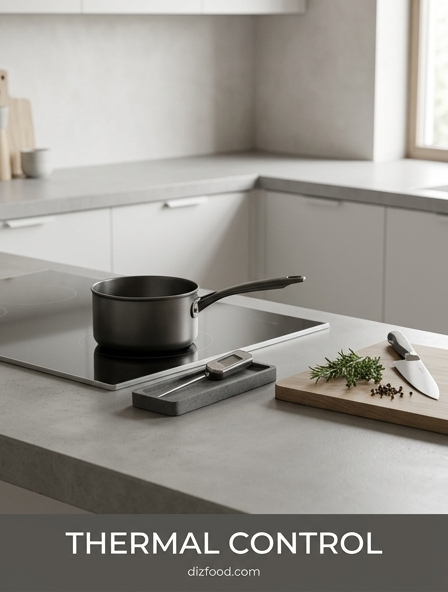
Thermal insulation in the kitchen hinges on the fundamental laws of thermodynamics, specifically the mitigation of heat transfer via conduction, convection, and radiation. In a culinary environment, the primary goal is to maintain a specific temperature gradient between the food or beverage and its surrounding atmosphere. Materials with low thermal conductivity, such as wood, silicone, and specialized plastics, are utilized to impede the movement of kinetic energy at a molecular level. By introducing these barriers, the rate of temperature equalization is significantly slowed.
Effective insulation often involves trapping air or creating a vacuum, as air is a poor conductor of heat compared to solids or liquids. This principle is applied to everything from oven mitts to high-end carafes. Understanding these mechanisms allows for greater precision in both the cooking process and the preservation of flavor, as many chemical compounds in food are highly sensitive to thermal fluctuations over time.
- Conduction: The transfer of heat through direct physical contact between molecules.
- Convection: The movement of heat through the circulation of liquids or gases.
- Radiation: Energy transfer via electromagnetic waves, often minimized by reflective surfaces.
- Thermal Mass: The capacity of a material to absorb and store heat energy for stability.
Essential Glassware for Heat Retention
Selecting the correct glassware is a critical component of thermal management for any beverage enthusiast. While traditional soda-lime glass provides basic insulation, advancements in material science have popularized borosilicate glass in the kitchen. This material is particularly valued for its low coefficient of thermal expansion, which makes it highly resistant to thermal shock. When hot liquids are poured into these vessels, the glass maintains its structural integrity while minimizing the rate at which heat escapes into the environment.
Specialized designs, particularly double-walled construction, significantly enhance these insulating properties. These vessels create an internal pocket of air that acts as a buffer, protecting the user's hands from extreme temperatures while simultaneously preserving the internal state of the drink. This ensures that the beverage remains within its ideal serving window for a much longer duration than single-walled alternatives.
| Glass Type | Thermal Benefit |
|---|---|
| Borosilicate | High resistance to extreme temperature fluctuations. |
| Soda-Lime | Standard insulation suitable for room-temperature use. |
| Double-Walled | Prevents condensation and significantly slows heat loss. |
| Tempered Glass | Increased durability and tolerance for high-heat environments. |
Preheating Your Morning Coffee Mug
The thermal mass of a ceramic or glass mug can drastically impact the final temperature of a freshly brewed beverage. When hot coffee is poured into a room-temperature vessel, a substantial amount of thermal energy is immediately transferred to the mug to reach equilibrium. This results in a rapid temperature drop of the liquid, often causing it to fall below the ideal drinking range of 155°F to 175°F within mere minutes. Preheating is a simple yet vital technique used to mitigate this initial energy loss.
By raising the internal temperature of the vessel before the beverage arrives, you ensure that the energy from the coffee remains within the liquid. This practice is essential for those who appreciate the nuanced flavor profiles of specialty beans, as the perceived acidity and sweetness of coffee change as the temperature shifts. A preheated mug provides a stable environment for these flavors to persist.
- Fill the mug to the brim with boiling or near-boiling water from a kettle.
- Allow the water to sit for approximately thirty to sixty seconds to warm the material.
- Discard the water and immediately dry the interior of the mug with a cloth.
- Pour the freshly brewed coffee into the now-tempered vessel for maximum retention.
Chilling Techniques for Crisp White Wines
White wines require specific thermal conditions to properly express their aromatic complexity and acidity. If served too warm, the alcohol becomes overly prominent, masking the delicate floral and fruit notes. Conversely, over-chilling can mute the flavors entirely. Mastering the art of the quick chill involves maximizing the surface area contact between the bottle and the cooling medium. Because water is a more efficient conductor of heat than air, an ice bath is significantly faster than a standard refrigerator.
To accelerate the cooling process even further, adding salt to the ice water lowers the freezing point of the liquid. This allows the bath to reach sub-zero temperatures without solidifying, drawing heat away from the wine bottle at an accelerated rate. This method is the professional standard for reaching service temperatures in under twenty minutes.
- Use a mixture of 50% ice and 50% cold water to ensure maximum bottle contact.
- Incorporate two tablespoons of salt to lower the bath's temperature via freezing point depression.
- Rotate the bottle every five minutes to ensure uniform cooling throughout the liquid.
- Utilize a thermal sleeve to maintain the temperature once the bottle is removed from the ice.
The Role of Vacuum Sealed Containers
Vacuum sealing represents the pinnacle of passive thermal control in modern kitchenware. By removing the air between two walls of stainless steel, manufacturers create a near-perfect barrier against both conduction and convection. Since a vacuum contains no molecules, kinetic energy cannot easily pass through the void. This technology is what allows modern carafes and travel tumblers to keep liquids hot for over twelve hours or cold for twenty-four.
The efficacy of these containers is measured by their ability to maintain a steady internal state regardless of extreme external conditions. This makes them indispensable for professionals who require consistent beverage quality throughout a long workday. Additionally, many vacuum-sealed vessels incorporate a copper or silver lining on the inner wall to reflect infrared radiation, further reducing energy transfer and ensuring the contents remain at the desired temperature.
| Feature | Functional Impact |
|---|---|
| Vacuum Gap | Eliminates conductive and convective heat transfer paths. |
| Reflective Lining | Reduces heat loss caused by infrared radiation. |
| Sealed Lid | Prevents evaporative cooling and stops external air entry. |
| Stainless Steel | Provides structural durability and easy sanitization. |
Maintaining Optimal Steeping Temperatures
Achieving the perfect cup of tea is a delicate exercise in thermal management. Different tea varieties require specific temperatures to extract the desired polyphenols and essential oils without releasing excessive tannins, which cause bitterness. For instance, delicate green teas are easily scorched by boiling water, while robust black teas require high heat to fully develop their flavor profile and body. Consistency during the steeping process is vital for a balanced brew.
If the water cools too quickly during the three to five minutes of infusion, the extraction process slows down significantly, leading to a weak and unbalanced result. Using heavy ceramic or cast iron teapots, which have high thermal mass, can help retain the necessary energy during the steep. Covering the vessel is also essential to prevent heat loss through evaporation.
- White Tea: 160°F - 175°F for a delicate and sweet extraction.
- Green Tea: 170°F - 185°F to avoid excessive grassiness and bitterness.
- Oolong Tea: 185°F - 205°F for complex and layered aromatic development.
- Black and Herbal Teas: 208°F - 212°F for full-bodied strength and depth.
Smart Gadgets for Consistent Sips
Modern kitchen technology has introduced a new era of precision with active thermal gadgets. These devices move beyond passive insulation by incorporating internal heating elements, sensors, and microprocessors. App-controlled mugs allow users to set a specific temperature down to the degree, ensuring that every sip is as perfect as the first. These gadgets typically use rechargeable lithium-ion batteries to power a heating coil located in the base of the vessel, which activates whenever the liquid drops below the target temperature.
Furthermore, induction-based warming plates offer a sleek way to keep teapots at a constant temperature without the need for open flames or cumbersome tea cozies. This integration of electronics into everyday drinkware addresses the common frustration of beverages going cold before they can be fully enjoyed, providing a high-tech solution to a thermodynamic problem.
- Sync the vessel with a smartphone application via Bluetooth or Wi-Fi.
- Select the desired temperature based on the specific beverage type being consumed.
- Receive a notification on your device once the liquid reaches the set point.
- Monitor battery levels to ensure continuous thermal regulation during use.
How Ice Quality Affects Dilution
Ice is often an overlooked component of thermal control, yet its quality dictates the dilution rate and clarity of a chilled drink. The density of the ice determines how quickly it melts; "wet" or cloudy ice contains trapped air and impurities, which create a larger surface area and cause it to dissolve rapidly. This introduces excess water into the beverage, prematurely altering the flavor balance and mouthfeel. High-quality ice is essential for maintaining the integrity of spirits.
Professional-grade ice is often clear and dense, created through directional freezing. This method pushes air bubbles and minerals to one side, leaving a solid, crystal-clear block. Large spheres or cubes are preferred for high-end cocktails because they have a lower surface-area-to-volume ratio, providing maximum cooling power with minimum water dilution over time.
- Large Cubes: Best for slow-sipping spirits to minimize water melt and dilution.
- Crushed Ice: Ideal for rapid cooling and intentional dilution in specific cocktails.
- Clear Ice: Lacks impurities and air, ensuring a slower and more even melt.
- Ice Spheres: Offer the most efficient cooling with the least surface contact.
Double Walled Vessels and Heat Transfer
Double-walled vessels utilize a "bottle within a bottle" design to exploit the insulating properties of a stagnant air gap or a vacuum. In these containers, the inner wall holds the beverage while the outer wall remains at room temperature. This physical separation is key to disrupting the path of heat transfer. When a hot liquid is inside, the heat must pass through the inner glass, across the gap, and then through the outer glass to escape into the air.
This design not only keeps the liquid hot but also prevents the "sweating" associated with cold drinks. Condensation occurs when warm, moist air hits a cold surface; by keeping the outer wall at ambient temperature, double-walled vessels eliminate this messy byproduct. This makes them both a functional and aesthetic choice for modern kitchens and dining rooms.
| Transfer Type | Mitigation Strategy |
|---|---|
| Conduction | Physical gap prevents direct contact between the two walls. |
| Convection | Air or vacuum in the gap restricts fluid movement and energy flow. |
| Radiation | Internal reflective coatings can be added to bounce heat back. |
| Condensation | Outer wall temperature remains safely above the local dew point. |
Serving Standards for Artisanal Teas
The service of artisanal teas requires strict adherence to thermal standards to honor the craftsmanship of the leaves. Beyond the initial steeping temperature, the vessel used for serving plays a pivotal role in the sensory experience. Traditional Yixing clay teapots, for instance, are prized for their high heat retention and porous nature. The size of the serving vessel also matters; smaller cups allow the tea to cool to a drinkable temperature quickly while the remaining tea stays hot in a covered pot.
In professional settings, a "fairness cup" or Gong Dao Bei is used to ensure that the tea is uniform in strength and temperature before being distributed to guests. This prevents the tea at the bottom of the pot from becoming over-extracted or too cold. Adhering to these standards ensures a consistent and premium experience from the first pour to the last.
- Warm the teapot and all serving cups with hot water prior to service.
- Decant the tea into a fairness cup to equalize temperature and flavor profile.
- Serve in small portions to maintain a high heat-to-volume ratio in the cup.
- Use a lid on the primary vessel to trap steam and maintain thermal energy.



Comments