
Mastering the Pinch Grip for Knife Control
The foundation of professional knife skills rests upon the pinch grip, a technique that prioritizes stability and pincer-like precision over brute force. By choking up on the blade-placing the thumb and the side of the index finger directly onto the metal of the bolster-the chef transforms the knife into an extension of the arm. This grip eliminates the wobbling often associated with holding only the handle, allowing for microscopic adjustments during intricate tasks like julienning shallots or dicing garlic. The remaining fingers wrap around the handle, but the control center remains at the fulcrum point between the thumb and forefinger.
- Increases leverage for tougher root vegetables.
- Reduces wrist fatigue during high-volume prep work.
- Enhances safety by preventing the blade from slipping laterally.
- Facilitates a smoother rocking motion for mincing herbs.
When the pinch grip is mastered, the transition between aggressive chopping and delicate slicing becomes seamless. This manual dexterity ensures that every cut is intentional, promoting even cooking times and a professional aesthetic that defines high-level culinary execution.
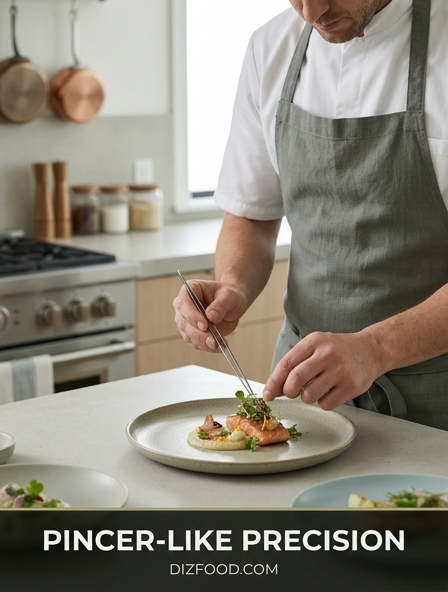
Elevating Plate Aesthetics with Fine Tweezers
Culinary tweezers have moved from the specialized kits of Michelin-starred chefs to the standard toolsets of modern home cooks. Unlike standard tongs, which can crush delicate proteins or wilted greens, fine-tipped tweezers offer the pincer-like precision required to place micro-garnishes with absolute intent. This tool allows for the manipulation of elements that are too small or fragile for human fingers, ensuring that the negative space on a plate remains clean and undisturbed by accidental contact.
| Tweezer Type | Primary Culinary Use |
|---|---|
| Offset Tweezers | Placing delicate herbs over high-rimmed bowls. |
| Straight Tweezers | Vertical stacking of micro-greens or flower petals. |
| Curved Tweezers | Navigating tight spaces in complex dessert plating. |
The use of tweezers reflects a philosophy of restraint and meticulousness. By treating every sesame seed or sprig of chervil as a critical design component, the chef elevates a meal into a visual narrative. This level of accuracy is essential for achieving the symmetry and balance expected in contemporary fine dining presentations.
The Role of Hand Dexterity in Seasoning
Seasoning is rarely about volume; it is about the tactile feedback of the "pinch." A chef's ability to gauge the exact weight of salt between their thumb and first two fingers determines the flavor profile of the entire dish. This pincer-like precision allows for the even distribution of crystals from a height, which ensures that the seasoning does not clump in one area but rather rains down uniformly across the surface of the food. Developing this muscle memory is a core component of professional training.
- Reach into the salt cellar using only the tips of the fingers.
- Feel the grain size to adjust the pressure of the pinch.
- Release the seasoning slowly while moving the hand in a circular motion.
- Observe the coverage to ensure no "dead zones" remain on the ingredient.
Sophisticated seasoning also involves the delicate application of finishing salts and spices. The physical connection between the hand and the ingredient fosters a deeper understanding of seasoning ratios, moving the cook away from standardized measurements and toward a more intuitive, sensory-driven approach to flavor development.
Precision Garnishing for Professional Visual Impact
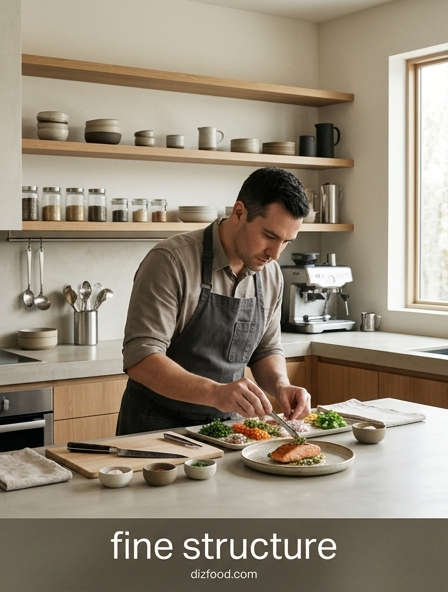
Garnishing is the final act of culinary composition, requiring a steady hand and a keen eye for detail. Whether it is placing a single flake of gold leaf on a chocolate ganache or arranging translucent radish slices in a radial pattern, the process demands pincer-like precision to avoid smudging sauces or disturbing the structural integrity of the dish. A well-executed garnish serves as a functional map for the diner, hinting at the flavors hidden within the recipe while providing necessary textural contrast.
- Use needle-nose tweezers for micro-flowers.
- Apply oils via squeeze bottles for uniform droplet sizing.
- Utilize fine mesh strainers for a light, even dusting of powders.
- Position aromatics at the natural focal point of the plate.
Precision in garnishing separates the amateur from the professional. It demonstrates a respect for the ingredients and a commitment to the diner's sensory experience. By focusing on the minute details, a chef can transform a simple soup or salad into a sophisticated work of art that commands attention before the first bite is taken.
Chopsticks and the Art of Mindful Consumption
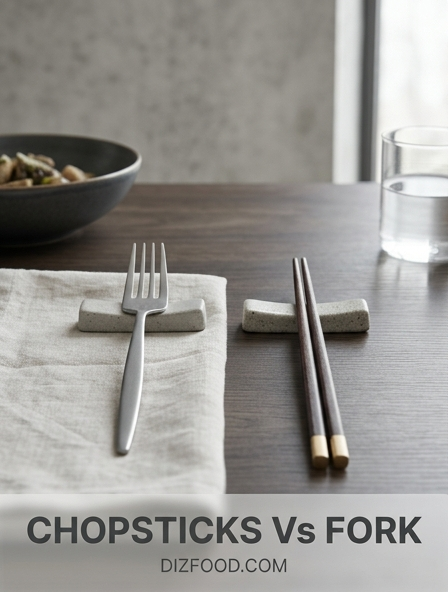
The use of chopsticks is perhaps the ultimate expression of pincer-like precision at the dining table. Unlike the blunt utility of a spoon or the piercing force of a fork, chopsticks require the user to engage fine motor skills to gently grasp, lift, and transport food. This mechanism encourages a slower pace of eating, allowing the brain to better register signals of fullness and satisfaction. Mindful consumption begins with the deliberate act of selecting a single morsel, focusing the eater's attention entirely on the texture and temperature of the item.
Beyond their functional use, chopsticks serve as a bridge between the diner and the chef's intent. They allow for the careful deconstruction of complex dishes without ruining the presentation for others. This precise control over portions ensures that each bite is composed exactly as desired, maintaining the intended ratio of protein, vegetable, and sauce. The dexterity required to use them effectively fosters a sense of elegance and presence that enriches the overall culinary experience, turning a simple meal into an exercise in focus and appreciation.
Small Bite Presentations for Maximum Flavor
In the world of amuse-bouches and hors d'oeuvres, the challenge lies in packing an explosion of flavor into a singular, bite-sized vessel. Achieving this requires pincer-like precision during the construction phase, as multiple layers of flavor and texture must be balanced within a very small footprint. Every element, from the base crisp to the final acid drop, must be positioned with care to ensure the bite holds together and delivers the intended sequence of tastes upon consumption.
| Layer | Function | Precision Tool |
|---|---|---|
| Base | Structural integrity and crunch. | Offset spatula |
| Core | Primary protein or vegetable flavor. | Plating tongs |
| Accent | Acidity or heat to cut through richness. | Fine-tip dropper |
The construction of small bites is a miniature architectural feat. Because the diner consumes the entire piece at once, the chef has absolute control over the flavor delivery. This precision ensures that no single component overwhelms the others, creating a harmonious and memorable experience that stimulates the palate for the courses to follow.
Ergonomic Tools for Superior Culinary Accuracy
Modern kitchen tool design has increasingly focused on ergonomics to facilitate pincer-like precision. Tools that are shaped to fit the natural contours of the hand allow for better control and reduced strain, which is vital during repetitive or highly detailed tasks. For instance, a well-designed paring knife with a tapered bolster allows the fingers to sit closer to the blade's edge, providing better feedback and more accurate peeling or shaping. High-quality tools are balanced to feel weightless, becoming an extension of the chef's intent.
- Contoured handles for a secure, non-slip grip.
- Lightweight materials to prevent hand fatigue.
- Textured surfaces on grip points for enhanced tactile feedback.
- Proportionate sizing for specific hand-driven tasks.
Investing in ergonomic tools is not merely about comfort; it is about the quality of the final product. When a tool feels natural in the hand, the cook can focus entirely on the precision of the movement rather than the mechanics of the grip. This synergy between human dexterity and tool engineering is what allows for the consistent execution of complex culinary techniques.
The Connection Between Grip and Texture Perception
The way a chef grips an ingredient or a tool directly influences their perception of texture and resistance. Pincer-like precision involves using the sensitive nerve endings in the fingertips to detect the ripeness of a fruit, the elasticity of a dough, or the doneness of a steak. This tactile feedback loop is essential for making real-time adjustments during the cooking process. A heavy, palm-based grip numbs these sensations, whereas a light, finger-focused grip provides a wealth of information about the physical state of the food.
Understanding this connection allows for a more nuanced approach to food preparation. By maintaining a delicate touch, a cook can feel the exact moment when gluten strands begin to align in bread dough or when the fibers of a fish fillet start to flake under gentle pressure. This heightened awareness prevents over-processing and ensures that the natural integrity of the ingredient is preserved. Ultimately, the ability to "listen" with the fingertips through a precise grip is what separates mechanical cooking from true culinary mastery.
Achieving Consistency in Delicate Food Preparation
Consistency is the hallmark of a professional kitchen, and it is achieved through the repetitive application of pincer-like precision. Whether it is folding dozens of identical dumplings or piping perfectly uniform macarons, the ability to replicate a specific hand movement is critical. This consistency ensures that every guest receives the same experience and that every item in a batch cooks at exactly the same rate. Without manual precision, variation in size or shape leads to uneven results and a loss of professional standards.
- Establish a clear visual or physical template for the task.
- Maintain a consistent hand position and grip throughout the process.
- Use small, controlled movements to minimize physical variance.
- Regularly check the output against the standard to ensure accuracy.
Achieving this level of uniformity requires patience and a high degree of motor control. By focusing on the minute details of the grip and the release, a cook can produce hundreds of identical components with mechanical accuracy. This dedication to precision is what builds a restaurant's reputation for excellence and reliability.
Refining Table Manners with Precise Utensil Use
Etiquette at the dining table is often a display of pincer-like precision, where the handling of utensils reflects a sense of control and refinement. Using a knife and fork to remove bones from a whole fish or to navigate a delicate pastry requires a soft touch and accurate movements. The goal is to eat with minimal disruption to the food's structure and no audible contact between metal and porcelain. This precision is not about stiffness, but rather about the grace and efficiency of movement.
- Hold the fork with the tines facing down for controlled piercing.
- Use the knife to guide food onto the fork with minimal pressure.
- Keep elbows in to maintain a compact and controlled range of motion.
- Place utensils silently to signal the completion of a course.
Refined utensil use enhances the dining experience for everyone at the table. It demonstrates a respect for the meal and the environment, ensuring that the focus remains on the conversation and the flavors. By applying the same precision to eating as the chef applied to cooking, the diner participates in the full cycle of culinary artistry.


Comments