
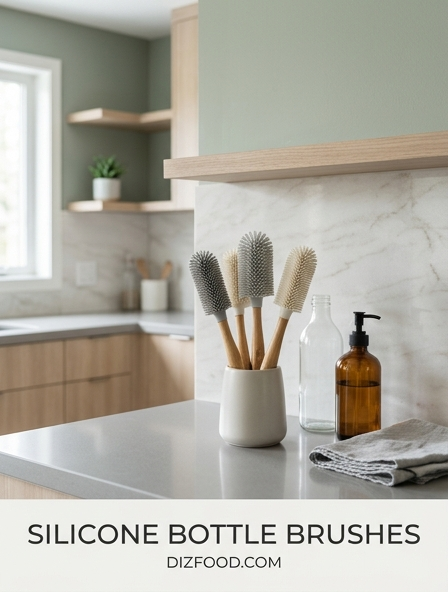
Non-Porous Materials Stop Bacteria Growth
The primary advantage of silicone bottle brushes lies in the fundamental molecular structure of the material itself. Unlike traditional cellulose sponges or nylon bristles, silicone is a non-porous material. This means it lacks the microscopic holes and crevices where food particles, fats, and moisture typically become trapped. In a standard kitchen sponge, these tiny pockets serve as a breeding ground for various pathogens, including E. coli and Salmonella. Because silicone does not absorb water, it effectively starves bacteria of the damp environment they require to thrive.
Furthermore, the smooth surface of silicone ensures that any debris gathered during the cleaning process is easily rinsed away under a stream of water. When you use a porous tool, you are often simply redistributing microscopic bio-films across your cookware. Transitioning to a silicone brush ensures that the tool itself remains as clean as the dishes it is meant to sanitize. This inorganic property makes it an essential component for any household that prioritizes laboratory-grade cleanliness in their daily culinary environment, providing a physical barrier against the invisible risks of cross-contamination.
Durability Over Traditional Sponge Brushes
In the high-use environment of a modern kitchen, the longevity of cleaning tools is a significant factor in both efficiency and cost-effectiveness. Traditional sponge-based brushes are prone to rapid degradation; the foam tears, the adhesive holding the head to the handle fails, and the material eventually loses its structural integrity. Silicone brushes, by contrast, are engineered for extreme durability. The flexible yet resilient bristles maintain their shape even after thousands of uses, resisting the common "flattening" effect that renders nylon brushes useless over time.
| Feature | Traditional Sponge | Silicone Brush |
|---|---|---|
| Average Lifespan | 2-4 Weeks | 6-12 Months |
| Structural Integrity | Tears easily | Highly tear-resistant |
| Bristle Shedding | High frequency | Zero shedding |
This physical robustness means that silicone tools do not need to be replaced nearly as often as their synthetic counterparts. They are resistant to the abrasive nature of scrubbing and do not become brittle when exposed to standard dish soaps or varying water temperatures. Investing in a single high-quality silicone brush can replace an entire dozen of disposable sponge heads, making it a superior choice for heavy-duty kitchen maintenance.
Gentle Non-Scratch Cleaning for Glassware
Glassware, particularly high-end crystal and delicate wine glasses, requires a cleaning touch that is firm enough to remove residue but soft enough to prevent micro-abrasions. Traditional plastic bristles can be surprisingly harsh, leaving behind tiny scratches that dull the clarity of the glass over time. Silicone is inherently soft and pliable, allowing the bristles to glide over surfaces without causing surface damage. This makes it the ideal material for cleaning everything from fragile champagne flutes to tempered glass blender jars.
The flexible nature of the silicone head allows it to contour to the unique shapes of various vessels. Whether it is the rounded bottom of a decanter or the sharp corners of a glass storage container, the brush applies even pressure without the risk of cracking or etching the material. For collectors of fine glassware, preserving the aesthetic transparency of the item is just as important as the cleaning itself. Silicone provides a protective cleaning experience, ensuring that your most expensive kitchen items remain in pristine, "like-new" condition for years, free from the cloudy appearance caused by repetitive scratching from inferior cleaning tools.
Heat Resistance and Sterilization Benefits
One of the most impressive technical specifications of food-grade silicone is its high thermal stability. Most silicone kitchen tools can withstand temperatures ranging from -40°F to over 450°F. This heat resistance is a game-changer for kitchen hygiene. While a standard plastic or sponge brush would melt or warp in boiling water, a silicone brush can be submerged in a pot of boiling water for deep sterilization. This process effectively kills 99.9% of any lingering germs that might have survived a standard rinse.
In addition to manual boiling, silicone brushes are almost universally dishwasher safe. They can be placed in the top or bottom rack and subjected to the high-heat drying cycles of modern dishwashers without any risk of chemical leaching or physical deformation. This ease of sterilization ensures that the brush is not just "clean" in the visual sense, but medically sanitized. For those who frequently handle raw proteins or brew their own kombucha and beer, the ability to thermally shock their cleaning tools provides an extra layer of safety and peace of mind that traditional materials simply cannot offer.
Quick-Drying Design Prevents Mold Accumulation
Moisture is the enemy of a hygienic kitchen. Traditional brushes with dense nylon bristles or sponge heads hold onto water for hours, creating a humid micro-climate that encourages the growth of mold and mildew. This often results in a "musty" smell emanating from the sink area. Silicone brushes solve this problem through their hydrophobic properties. Water does not soak into the bristles; instead, it beads up and rolls off almost immediately after use.
- Hydrophobic material sheds water instantly.
- Wide bristle spacing promotes rapid airflow.
- Dries up to 10 times faster than a standard sponge.
- Eliminates the "damp smell" associated with wet kitchen tools.
By drying so quickly, the silicone brush denies mold spores the window of opportunity they need to colonize the tool. This is particularly important for brushes that are stored in enclosed spaces or under-sink cabinets where airflow might be limited. The quick-drying nature ensures that the brush is dry and ready for its next use within minutes, maintaining a high level of sanitation without the need for constant monitoring or specialized drying racks.
BPA-Free Safety for Baby Bottles
When it comes to infant care, the safety of cleaning materials is paramount. Many plastic kitchen tools contain Bisphenol A (BPA) or phthalates, which can leach into items, especially when exposed to heat. High-quality silicone bottle brushes are naturally BPA-free, lead-free, and phthalate-free. This makes them the gold standard for cleaning baby bottles, sippy cups, and breast pump parts. Parents can rest assured that no harmful chemicals are being introduced to their child's feeding equipment during the scrubbing process.
Because the bristles do not scratch, they also prevent the creation of "micro-scratches" inside plastic baby bottles. These tiny scratches are dangerous because they can harbor milk proteins and bacteria even after washing. By using a gentle silicone brush, the interior surface of the bottle remains perfectly smooth, ensuring that sterilization liquids and soaps can reach every square millimeter effectively. Combining chemical safety with physical preservation, silicone brushes represent the most responsible choice for parents who want to minimize their infant's exposure to environmental toxins while maintaining a rigorous cleaning schedule.
Sustainable Choice for Low-Waste Kitchens
Environmental sustainability is becoming a core focus for modern households, and the kitchen is often the largest source of domestic waste. Traditional sponges and plastic brushes are frequently discarded, ending up in landfills where they take hundreds of years to decompose. Silicone, while not biodegradable, is a much more sustainable option due to its extreme longevity. A single silicone brush can last as long as twenty or thirty cheap plastic brushes, significantly reducing the volume of waste generated by a single household over the course of a year.
Furthermore, many silicone products are now recyclable through specialized facilities, and their durability means fewer resources are spent on manufacturing, packaging, and shipping replacement products. By choosing a tool that does not need to be replaced every month, consumers are participating in a "buy it once" philosophy that combats the "throwaway culture." This shift toward durable goods is a simple yet effective way to lower one's carbon footprint. In the long run, the environmental impact of a silicone brush is far lower than that of its disposable counterparts, aligning perfectly with a low-waste or zero-waste lifestyle.
Eliminating Odor Retention in Dishwashing Tools
One of the most unpleasant aspects of traditional kitchen cleaning tools is the "sour" smell they develop after just a few days of use. This odor is caused by the decomposition of trapped organic matter-fats, proteins, and sugars-within the fibers of the brush or sponge. Since silicone is non-absorbent and easy to rinse completely clean, it does not retain these food particles. Consequently, a silicone brush stays smelling fresh and neutral, even after months of heavy use cleaning greasy pans or pungent garlic presses.
The elimination of odor is more than just a sensory benefit; it is an indicator of cleanliness. An odorless brush means there is no decaying matter present on the tool. This is especially beneficial when cleaning water bottles or coffee thermoses, where you want to avoid transferring any "old food" smell to your fresh beverages. With silicone, you never have to worry about the "stink" that usually signals it is time to throw your cleaning supplies away. The tool remains as fresh as the day it was purchased, ensuring that your dishwashing routine is as pleasant as it is effective.
Ergonomic Reach for Deep Containers
Modern kitchenware often features deep, narrow designs that are notoriously difficult to clean. From tall hydro-flasks and sports bottles to narrow-neck carafes and vases, reaching the bottom corners can be a physical challenge. Silicone bottle brushes are specifically designed with these ergonomic hurdles in mind. Most feature long, reinforced handles and flexible heads that can be squeezed through narrow openings only to expand once inside the vessel, providing 360-degree cleaning coverage.
- Long handles reach the bottom of 32oz or 64oz growlers easily.
- Flexible heads pivot to scrub the "shoulder" of narrow-necked bottles.
- Non-slip grips provide better control when the brush is soapy and wet.
- Lightweight construction reduces wrist fatigue during long cleaning sessions.
This superior reach ensures that no "dead zones" are left at the bottom of your containers, preventing the buildup of sediment or mold in hard-to-reach areas. The ergonomic design translates to a more thorough clean with less physical effort, making it easier to maintain even the most awkwardly shaped kitchen items without needing a variety of different sized tools.
Maintaining Long-Term Kitchen Hygiene Standards
Achieving a high standard of kitchen hygiene is not about a single deep clean; it is about the consistency of the tools and methods used every day. Silicone bottle brushes act as a reliable foundation for these standards. By providing a tool that is resistant to bacteria, easy to sterilize, and built to last, you eliminate the weakest link in the cleaning chain. Traditional tools often become the very source of contamination they are meant to fight, but silicone remains a sterile agent throughout its entire lifecycle.
Integrating silicone tools into your kitchen workflow encourages better habits. When a tool is easy to clean and doesn't smell, you are more likely to use it frequently and maintain your cookware properly. This long-term approach to hygiene protects your family from foodborne illnesses and ensures that your kitchen remains a safe environment for food preparation. In the broader context of home health, the move to silicone is a small but powerful upgrade that yields significant dividends in cleanliness, safety, and overall kitchen management efficiency.


Comments