
If you find yourself hovering over the sink to scrub every plate before loading the dishwasher, you might be working harder than necessary. Settling the debate between manual pre-rinsing and enzyme-based cleaning comes down to science versus habit. While pre-rinsing is a common ritual, modern enzyme detergents are specifically designed to target and break down proteins and starches on contact. In fact, most high-end dishwashers perform better when there is slight residue for the enzymes to latch onto, ensuring a more thorough chemical reaction. By ditching the pre-rinse, you not only save significant amounts of water but also allow your appliance's sensors to accurately calibrate the cycle for a truly spotless, high-shine finish.
| Feature | Manual Pre-Rinsing | Enzyme-Based Cleaning |
|---|---|---|
| Action Mechanism | Mechanical removal via water pressure. | Biological breakdown of proteins/starches. |
| Water Usage | Wastes approx. 15-20 gallons per load. | Saves ~6,000 gallons of water annually. |
| Time Efficiency | Adds 10-15 mins of manual labor. | Load and go; enzymes work during cycle. |
| Sensor Accuracy | Can "trick" sensors into shorter cycles. | Allows turbidity sensors to detect soil accurately. |
| Cleaning Result | Risk of "etched" glass or cloudy film. | Superior shine; dissolves stuck-on organic matter. |
| Resource Cost | High utility bills (water and heating). | Lower utility costs; requires quality detergent. |
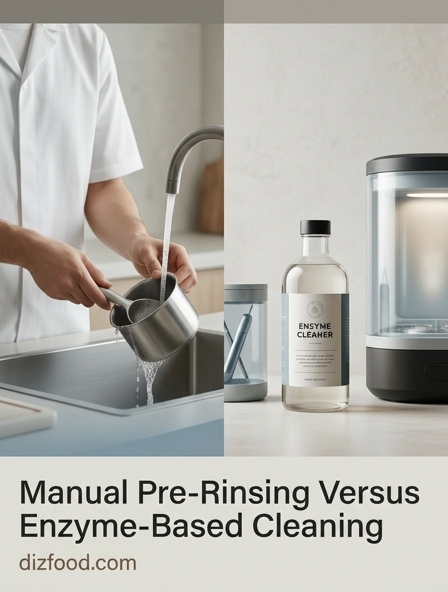
The Science of Enzymatic Breakdown vs Manual Scrubbing
The fundamental difference between enzymatic cleaning and manual scrubbing lies in the mechanism of soil detachment. In a commercial kitchen environment, organic matter such as proteins, fats, and starches create complex molecular bonds with stainless steel and polymer surfaces. Manual scrubbing relies on mechanical friction to physically break these bonds. While effective for bulk soil removal, mechanical action often fails to address microscopic residues trapped in the grain of the metal or within the porous structures of high-density polyethylene cutting boards.
Enzymatic cleaners utilize biological catalysts-primarily proteases, lipases, and amylases-to chemically digest organic soils. Proteases target protein-based stains like blood from meat or egg residues, breaking down long-chain proteins into water-soluble amino acids. Lipases specifically target triglycerides found in oils and fats, converting them into glycerol and fatty acids. This catalytic process occurs at a molecular level, allowing the cleaning solution to penetrate areas where bristles or scouring pads cannot reach. Unlike manual scrubbing, which requires consistent physical force, enzymes lower the activation energy required for hydrolysis, essentially "eating" the soil until it can be easily rinsed away without damaging the underlying substrate.
- Proteases: Effective against meat juices, dairy, and egg proteins.
- Lipases: Optimized for greases, oils, and butter fats.
- Amylases: Designed to break down complex carbohydrates and starches like pasta or potato residue.
- Cellulases: Useful for breaking down plant-based fibers and vegetable matter.
Efficiency Gains in Enzyme-Based Decontamination Protocols
Implementing enzyme-based protocols in a high-volume kitchen significantly streamlines the workflow by shifting the labor burden from active to passive tasks. In traditional manual pre-rinsing, staff must spend considerable time at the three-compartment sink, using high-pressure sprayers and manual labor to clear plates and cookware. This process is not only labor-intensive but also creates a bottleneck during peak service hours, leading to a backup of soiled wares and potential cross-contamination risks.
By adopting an enzymatic pre-soaking protocol, the "cleaning" begins the moment the item is submerged in a prepared solution. This allow-and-sit approach enables enzymes to work autonomously. While the proteins and fats are being digested, kitchen staff can focus on high-value tasks such as food preparation or plating. The efficiency gains are measurable; enzymatic solutions reduce the need for aggressive "re-washing" because the first pass through the dishwasher or sanitizer is more likely to be successful. Furthermore, because the soil is already softened or dissolved, the final rinse cycle requires less water and lower pressure, contributing to overall utility savings and faster turnover of essential kitchen equipment.
| Feature | Manual Scrubbing Protocol | Enzymatic Pre-Soak Protocol |
|---|---|---|
| Labor Intensity | High (Active) | Low (Passive) |
| Consistency | Variable (User Dependent) | Uniform (Chemical Action) |
| Turnover Speed | Slow (Bottle-necked) | Fast (Parallel Processing) |
| Water Usage | High (Constant Rinsing) | Moderate (Batch Soaking) |
Limitations of Manual Rinsing for Biofilm Removal
In the culinary industry, the most persistent threat to food safety is the formation of biofilms. Biofilms are complex colonies of microorganisms anchored to a surface and protected by an extracellular polymeric substance (EPS) matrix. Manual rinsing and standard detergent scrubbing are often insufficient for biofilm eradication because mechanical force typically only shears off the top layer of the colony, leaving the protective "root" structure intact. Once the mechanical pressure is removed, the surviving bacteria rapidly multiply and rebuild the protective shield, leading to recurring contamination issues in drains, ice machines, and soda dispensers.
Manual methods often lack the chemical specificity to penetrate the EPS matrix. Water alone, even at high pressure, tends to bounce off the hydrophobic layers of a mature biofilm. This is where manual rinsing fails as a decontamination strategy. Without a chemical agent designed to dissolve the structural sugars and proteins holding the biofilm together, the surface may appear visually clean while remaining biologically contaminated. This "illusion of cleanliness" is a primary driver of foodborne illness outbreaks in facilities that rely solely on vigorous rinsing without integrated enzymatic or chemical disruption of the microbial architecture.
How Enzyme Cleaners Protect Delicate Surgical Instrumentation
While the term "surgical instrumentation" typically refers to medical theaters, it applies equally to high-precision culinary tools such as damascus steel knives, mandoline blades, and delicate specialized pastry equipment. Manual scrubbing with abrasive pads-a common practice in many kitchens-can cause micro-scratches on these surfaces. These scratches not only dull the edge of fine cutlery but also create microscopic "harbors" where bacteria can hide, making future cleaning even more difficult. Over time, aggressive manual cleaning leads to the degradation of the tool's structural integrity and aesthetic finish.
Enzyme cleaners offer a non-abrasive alternative that preserves the longevity of expensive kitchen assets. Because the enzymes target specific organic molecules rather than using friction to remove soil, there is no risk of scratching or pitting the metal. This is particularly crucial for tools with moving parts or intricate hinges, such as heavy-duty meat grinders or pasta extruders, where manual scrubbing cannot reach internal mechanisms. By using a pH-neutral enzymatic soak, the kitchen can ensure that blood, fat, and protein residues are removed from the innermost crevices of the equipment without the corrosive effects of harsh alkaline chemicals or the physical damage associated with steel wool and scouring pads.
Reducing Occupational Exposure Through Enzymatic Pre-Soaking
The safety of kitchen staff is often compromised during the manual pre-rinsing phase. High-pressure hoses used to blast food residue off plates frequently create aerosols-fine mists of water laden with bacteria, grease, and cleaning chemicals. These aerosols can be inhaled by employees or settle on "clean" surfaces nearby, facilitating the spread of pathogens like Norovirus or Salmonella. Furthermore, the repetitive motion of vigorous scrubbing and the constant grip on high-pressure sprayers contribute to musculoskeletal disorders, such as carpal tunnel syndrome and chronic shoulder strain.
Enzymatic pre-soaking mitigates these risks by reducing the need for high-pressure intervention. When tools and plates are submerged in an enzymatic bath, the soil is contained within the liquid, preventing the formation of contaminated aerosols. The chemical action of the enzymes does the "heavy lifting," significantly reducing the physical exertion required from the dishwashing staff. This shift not only creates a more ergonomic workspace but also lowers the risk of slip-and-fall accidents, as less water is sprayed onto the floors during the pre-cleaning process. A cleaner, drier, and more automated decontamination area leads to higher employee retention and a lower rate of occupational injuries.
Comparing Soil Removal Efficacy of Water and Enzymes
Water is a universal solvent, but its efficacy in removing kitchen soils is limited by its surface tension and its inability to emulsify non-polar substances like animal fats. In a head-to-head comparison, plain water (even when heated) relies on the thermal energy to melt fats, which can often lead to "grease redeposition" where the fat simply moves from one part of the dish to another or coats the sink walls. Manual scrubbing helps, but it does not change the chemical nature of the soil, meaning the waste remains difficult to manage in the plumbing system.
Enzymatic solutions represent a massive leap in efficacy because they change the chemical identity of the soil. When an enzyme interacts with a protein stain, it breaks it down into smaller, more hydrophilic fragments that naturally prefer to stay in the water phase rather than re-attaching to the dish. This prevents redeposition and ensures a much higher rate of first-pass soil removal. In controlled tests, surfaces treated with enzymes show a significantly lower Relative Light Unit (RLU) count when tested with ATP bioluminescence swabs compared to surfaces that were only manually rinsed with water and detergent. The enzymes ensure that the surface is clean at a molecular level, not just a visual one.
- Contact: Enzymes find and bind to specific soil molecules.
- Reaction: The soil molecule is cleaved through hydrolysis.
- Release: The broken-down soil is suspended in the cleaning solution.
- Rinse: Minimal water is needed to flush away the pre-digested waste.
The Impact of Pre-Cleaning Methods on Sterilization Success
In a kitchen context, "sterilization" usually refers to the high-heat or chemical sanitization phase of the dishwashing cycle. However, the success of this final stage is entirely dependent on the quality of the pre-cleaning. If organic matter-such as a thin film of dried protein-remains on a plate, it acts as a thermal shield for any bacteria trapped underneath. High-temperature water in a commercial dishwasher may sanitize the surface of the protein film, but it will fail to reach the microorganisms protected beneath it. This is known as "soil-shielding."
Enzymatic pre-cleaning is the most reliable method to prevent soil-shielding. By ensuring that every trace of organic "bio-burden" is removed before the item enters the sanitizer, enzymes guarantee that the heat or sanitizing chemicals have direct contact with the surface of the equipment. This maximizes the lethality of the sanitization cycle. Facilities that rely on manual rinsing often see higher rates of failed health inspections because invisible biofilms and protein residues allow pathogens to survive the heat of the machine. Switching to an enzymatic protocol provides a margin of safety that manual scrubbing simply cannot match, ensuring that 99.999% of pathogens are eliminated during the final sanitizing rinse.
Time Management Benefits of Switching to Enzymatic Solutions
Time is the most expensive commodity in a professional kitchen. The transition from manual scrubbing to enzymatic solutions offers a significant return on investment through improved time management. In a traditional setup, the dish pit is often the "chokepoint" of the operation. When the dish-room falls behind, the entire kitchen slows down due to a lack of clean pans, hotel inserts, or service plates. Manual scrubbing is a linear process: one person can only scrub one item at a time.
Enzymatic solutions allow for parallel processing. A single employee can load dozens of soiled items into an enzymatic soak tank in minutes. While those items are being chemically cleaned by the enzymes, the employee can simultaneously unload the dishwasher, organize the storage area, or assist with basic prep work. This decoupling of labor from the cleaning action allows the kitchen to handle higher volumes of waste with fewer staff members. Additionally, because the enzymes prevent the "baking on" of proteins during the dishwashing cycle, the need for time-consuming secondary scrubbing is virtually eliminated, allowing for a faster flow of equipment back into the production line.
Economic Analysis of Manual Rinsing Versus Enzyme Concentrates
At first glance, manual rinsing appears more cost-effective because it avoids the purchase of specialized chemicals. However, a comprehensive economic analysis reveals that the hidden costs of manual cleaning far outweigh the price of enzyme concentrates. The primary costs in manual cleaning are labor, water usage, and heating energy. A high-pressure rinse nozzle can consume up to 1.6 gallons of water per minute. In a busy kitchen, this adds up to thousands of gallons of heated water per month, much of which is wasted as it splashes off the dishes.
Enzyme concentrates, while requiring an upfront investment, significantly reduce these operational costs. Because the enzymes work at lower temperatures and require only a static soak, the demand for hot water is drastically reduced. Furthermore, the reduction in labor hours-often the largest expense in any kitchen-provides a direct boost to the bottom line. There is also the factor of equipment longevity; by reducing the use of abrasive pads and harsh chemicals, the kitchen extends the life of its cookware and utensils, reducing capital expenditure over time. When factoring in the decreased risk of foodborne illness fines and the improved efficiency of the dishwasher, enzymatic solutions emerge as the more economical choice for modern food service operations.
Best Practices for Modern Medical Instrument Reprocessing
Applying the rigors of medical-grade instrument reprocessing to the kitchen involves adopting a "decontamination-first" mindset. The first best practice is the immediate application of cleaning agents. Soils should not be allowed to dry on kitchen equipment; if immediate washing isn't possible, items should be placed in a "holding" enzymatic soak to prevent the formation of stubborn pellicles. This is analogous to how surgical tools are treated immediately after a procedure to prevent the hardening of bio-burden.
Secondly, temperature control is vital. Most enzymes used in kitchen settings are optimized for lukewarm to warm water (between 100°F and 130°F). Using water that is too hot can denature the enzymes, rendering them useless, while water that is too cold slows the catalytic reaction. Finally, proper dilution of concentrates is essential for both efficacy and cost-control. Utilizing automated dispensing systems ensures that the correct "dosage" of enzymes is used for every batch, preventing waste and ensuring that the chemical concentration is sufficient to break down the specific soil load of that day's service. By treating every chef's knife and mixing bowl with the same systematic care used for medical instruments, a kitchen can achieve an elite standard of hygiene and operational excellence.


Comments