
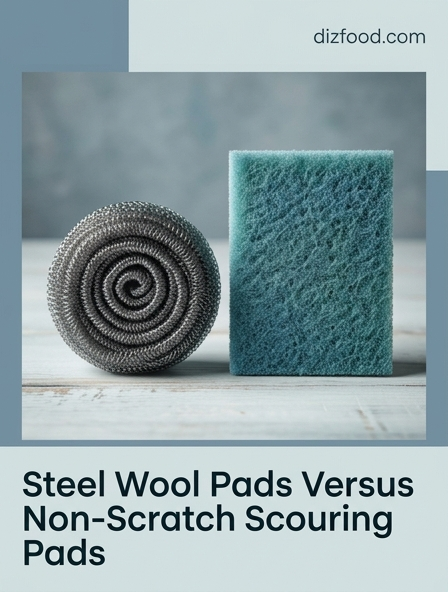
Deciding between steel wool and non-scratch scouring pads can make or break your kitchen cleanup routine, especially when preserving the finish of high-end cookware. While steel wool excels at stripping away carbonized food and stubborn rust from rugged surfaces like cast iron or uncoated stainless steel, its aggressive nature can be a death sentence for modern non-stick coatings. On the other hand, non-scratch pads provide a balanced approach, using soft synthetic fibers to agitate debris without leaving unsightly marks on porcelain, glass, or Teflon. Finding the "best" option depends entirely on your kitchen arsenal: lean on the raw power of steel for heavy restoration and heavy-duty metals, but reach for the non-scratch pad for your daily maintenance to keep your delicate pans looking brand new.
| Feature | Steel Wool Pads | Non-Scratch Scouring Pads |
|---|---|---|
| Material | Fine-grade carbon steel filaments | Synthetic nylon or polyester fibers |
| Best For | Cast iron, raw stainless, oven racks | Non-stick, ceramic, glass, enamel |
| Abrasiveness | Very High (Industrial strength) | Moderate to Low (Surface safe) |
| Scratch Risk | High; will strip coatings/soft metals | Negligible; designed for finish safety |
| Primary Use | Heavy burnt-on grease & rust removal | Daily dishwashing & light residue |
| Longevity | Short; prone to rusting after use | Longer; rinse-and-reuse synthetic |
Steel Wool vs Non-Scratch Pads Comparison
In the realm of kitchen maintenance, selecting the appropriate abrasive tool is the difference between a pristine finish and permanent damage. Steel wool pads and non-scratch scouring pads represent two distinct philosophies of cleaning. Steel wool consists of very fine, sharp-edged steel filaments bundled together. It acts as a series of tiny blades that shave off stubborn residues, making it the primary choice for industrial-strength grime. Conversely, non-scratch scouring pads are typically manufactured from synthetic fibers like polyester or nylon, often bonded with soft mineral abrasives that provide friction without the cutting action of metal.
| Feature | Steel Wool Pads | Non-Scratch Scouring Pads |
|---|---|---|
| Material | Low-carbon steel wire filaments | Synthetic polymer fibers (Nylon/Polyester) |
| Primary Action | Cutting and shearing debris | Friction and lifting particles |
| Rust Resistance | High susceptibility to oxidation | Inherently rust-proof |
| Common Use | Heavy carbon buildup and rust | Daily dishwashing and non-stick pans |
The choice between these two depends heavily on the surface hardness of the item being cleaned. Steel wool is incredibly effective at removing burnt-on food from unfinished metals but can easily cloud the surface of plastics or polished stone. Non-scratch pads are designed to be "surface-safe," meaning their hardness level is lower than that of most common kitchen finishes, allowing them to scrub away grease while leaving the underlying material intact. Understanding this fundamental physical difference ensures that your cleaning routine remains efficient without being destructive.
Abrasiveness Levels of Metal and Synthetic Scrubbers
Abrasiveness is measured by the tool's ability to wear away the surface of another material. For steel wool, this is categorized by a standardized grading system ranging from 0000 (super fine) to 3 (coarse). For synthetic scouring pads, abrasiveness is often indicated by color coding, which serves as a visual guide for the user to determine the potential for scratching. Using a high-abrasion tool on a low-tolerance surface can result in micro-scratches that trap bacteria and dull the visual appeal of the kitchenware.
- Steel Wool Grade 0000 (Super Fine): Used for polishing and cleaning delicate metalwork or glass without leaving visible marks.
- Steel Wool Grade 0 (Fine): Suitable for removing stubborn grease from pots and pans or cleaning tires.
- Steel Wool Grade 3 (Coarse): Reserved for heavy-duty paint removal, rust stripping, and extreme carbon buildup.
- White Synthetic Pads: The softest variant, containing no harsh abrasives, ideal for ceramic stovetops and delicate porcelain.
- Blue Synthetic Pads: Designed for "non-scratch" performance, safe for most non-stick coatings and plastic surfaces.
- Green Synthetic Pads: High-abrasion synthetic tools that can scratch soft metals and plastics but are excellent for heavy-duty scrubbing.
The mechanical interaction of these materials with kitchen surfaces is governed by the Mohs scale of mineral hardness. Steel wool is significantly harder than dried food proteins but also harder than many plastic resins. Synthetic pads, however, use softer polymers that yield when they encounter a harder surface, preventing the "digging" action that causes scratches. When transitioning between different tasks, such as moving from a cast iron skillet to a plastic storage container, the user must switch tools to match the appropriate abrasiveness level.
Best Household Surfaces for Steel Wool Cleaning
Steel wool is an indispensable tool for surfaces that can withstand aggressive mechanical friction. Its primary strength lies in its ability to conform to irregular shapes, such as the thin wires of an oven rack or the textured bottom of a heavy-duty stockpot. Because the metal filaments are sharp, they can slice through polymerized oils and carbonized food that synthetic pads would simply glide over. However, its use should be restricted to materials that are harder than the steel itself or where surface scratching is not an aesthetic concern.
- Oven Racks: The chrome-plated or stainless steel bars in ovens accumulate thick layers of baked-on grease that require the shearing power of steel wool.
- Pyrex and Glass Bakeware: Clear glass is surprisingly resilient to fine steel wool (Grade 0000 or 000), making it effective for removing "baked-in" brown stains that occur around the edges of casserole dishes.
- Unfinished Aluminum: For heavy-duty aluminum pots that are not anodized, steel wool can restore a bright finish by removing oxidation.
- Cast Iron: Steel wool is the gold standard for stripping rust off an old cast iron skillet before re-seasoning the metal.
- Copper Bottoms: When used with a polishing agent, fine steel wool can remove heat tint and oxidation from the undersides of high-end cookware.
When using steel wool on these surfaces, it is best to work in a circular motion or follow the "grain" of the metal if one is visible. It is also important to use a lubricant, such as soapy water, to help carry away the debris and reduce the heat generated by friction. While these surfaces are durable, always ensure they are thoroughly rinsed after cleaning to remove any tiny metal fragments that the steel wool might leave behind, as these can later rust and cause spotting.
Protecting Delicate Finishes with Non-Scratch Scouring Pads
Modern kitchens are filled with high-gloss finishes, acrylics, and specialized coatings that require a gentle touch. Non-scratch scouring pads are engineered to provide enough texture to dislodge dried food particles without compromising the integrity of the surface. These pads are usually made from non-woven synthetic fibers that have been "crimped" to create scrubbing edges. Because the fibers are flexible and soft, they deform upon contact with a hard surface rather than scratching into it, making them the safest choice for daily maintenance.
Surfaces that demand non-scratch pads include:
- Acrylic and Plastic: Mixing bowls and storage containers can become permanently cloudy if cleaned with metal scrubbers.
- Laminate Countertops: Modern laminates have a protective wear layer that, if scratched, can allow moisture to seep into the particleboard core.
- Ceramic Stovetops: The glass-ceramic surface of an induction or electric cooktop is highly susceptible to micro-scratches which dull the shine over time.
- Polished Stone: Marble and some granites are soft enough to be etched by the hard steel filaments in metal wool.
- Painted Surfaces: Kitchen cabinets or decorative hardware will quickly lose their finish if subjected to aggressive abrasives.
To maximize the effectiveness of a non-scratch pad, it is often helpful to allow the surface to soak in warm, soapy water for several minutes. This softens the debris, allowing the synthetic fibers to lift the grime away with minimal pressure. These pads are also less likely to harbor bacteria than natural sponges, provided they are rinsed and dried properly between uses. By prioritizing these softer tools for delicate finishes, homeowners can preserve the "new" look of their kitchen installations for many years.
Steel Wool for Heavy Duty Grime and Rust Removal
When a kitchen tool or surface has reached a state of extreme neglect, standard sponges and synthetic pads often fail. Steel wool excels in restorative cleaning, particularly when dealing with the chemical process of oxidation. Rust, which is iron oxide, forms a flaky, porous layer on the surface of iron and steel. The sharp edges of steel wool filaments can mechanically grind away this oxide layer, exposing the healthy metal underneath. This is a common requirement for vintage cookware or outdoor grilling equipment that has been exposed to the elements.
The effectiveness of steel wool in heavy-duty scenarios is enhanced by its density. Unlike synthetic pads, which are airy and porous, a compressed steel wool pad provides a solid surface area for applying significant downward force. This is essential for removing carbonized "char" from the bottom of pans or grill grates. In many cases, steel wool pads come pre-impregnated with specialized soaps that act as degreasers and lubricants, further aiding the breakdown of complex organic bonds in burnt-on food.
However, users must be aware of "flash rusting." Because steel wool is made of carbon steel, tiny fragments can break off during the scrubbing process. If these fragments are left on a surface-especially one made of a different metal-they will rust rapidly when exposed to moisture. This can create the illusion that the cleaned item is rusting when it is actually just the steel wool residue. Always perform a secondary wipe-down with a clean microfiber cloth to ensure all metallic dust has been removed from the work area.
Non-Scratch Pads for Non-Stick Cookware Safety
Non-stick cookware, primarily coated with polytetrafluoroethylene (PTFE) or ceramic-based layers, relies on a perfectly smooth surface to function. Once this surface is compromised by even microscopic scratches, its "release" properties diminish, and food begins to stick. More importantly, deep scratches in traditional non-stick coatings can lead to the peeling or flaking of the material, which is undesirable for food safety. Non-scratch pads are specifically designed to clean these surfaces without disrupting the polymer bond.
| Surface Type | Cleaning Goal | Recommended Tool |
|---|---|---|
| Teflon/PTFE | Remove fat/oil film | Blue Non-Scratch Pad |
| Ceramic Coating | Prevent protein buildup | Soft Sponge or Blue Pad |
| Hard-Anodized | Remove dried sauces | Non-Scratch Synthetic Pad |
| Silicone Bakeware | Remove sticky residue | Soft Mesh Scrubber |
The "non-scratch" designation is a promise that the abrasive particles embedded in the pad fibers are softer than the coatings used on pans. When cleaning these items, it is advisable to use the pad in conjunction with a degreasing dish soap to emulsify oils. Because the goal is to preserve the coating, one should avoid using excessive pressure. If food is stuck, a short soak is always preferable to increased scrubbing force. Using the correct synthetic pad ensures that the investment in high-quality non-stick cookware is protected, maintaining its performance for its intended lifespan.
Durability and Longevity of Steel Wool vs Scouring Pads
The lifespan of a cleaning tool is a significant factor in kitchen efficiency and waste management. Steel wool and synthetic scouring pads have very different degradation patterns. Steel wool is generally considered a short-term or even single-use tool in many kitchen contexts. Because it is made of fine iron filaments, it begins to oxidize the moment it becomes wet. A steel wool pad left in a damp sink will often turn into a rusted, brittle mass within 24 hours, making it unusable and potentially staining the sink surface itself.
In contrast, synthetic non-scratch pads are highly durable and can last for weeks or even months of daily use. They are made from plastics that do not react with water or most household chemicals. However, they do have their own failure points. Over time, the synthetic fibers can become "loaded" or clogged with grease and food particles, reducing their abrasive effectiveness. Additionally, the fibers may begin to fray or pull apart, a process known as "pilling," which signals that the pad should be replaced.
- Steel Wool Maintenance: To extend its life, squeeze out all water after use and store in a dry location, or place it in a small container of soapy water to exclude oxygen.
- Synthetic Pad Maintenance: Rinse thoroughly after each use and allow to air dry in a well-ventilated rack. They can often be sanitized in the top rack of a dishwasher.
- Replacement Indicators: Replace steel wool when it begins to crumble or rust. Replace synthetic pads when they become thin, excessively soft, or develop an odor.
While synthetic pads offer better longevity, steel wool provides a level of cleaning power that synthetic materials cannot match during their short lifespan. Therefore, many households maintain both: synthetic pads for high-frequency, low-impact cleaning, and steel wool for occasional, high-impact restorative tasks.
When to Avoid Steel Wool on Modern Kitchen Surfaces
The rise of modern aesthetics has introduced materials into the kitchen that are beautiful but highly sensitive to metal abrasives. Steel wool should be strictly avoided on any surface with a "directional finish" or a "brushed" appearance, such as stainless steel refrigerator doors, dishwashers, or microwaves. Although these appliances are made of steel, the filaments in a steel wool pad can cut across the factory-applied grain, creating permanent swirl marks that catch the light and ruin the uniform appearance of the metal.
Furthermore, steel wool should never be used on:
- Polished Chrome: The thin decorative plating on faucets can be stripped away, revealing the duller brass or plastic underneath.
- Mirror-Finished Stainless Steel: Fine steel wool will instantly cloud a mirror finish, turning it into a dull, scratched surface that is nearly impossible to buff back to its original state.
- Quartz and Solid Surface Counters: While durable against heat, these resin-based materials can be "scuffed" by metal wool, leaving a matte spot on an otherwise glossy counter.
- Gold or Silver Accents: Decorative trim on china or glassware is extremely soft and will be erased by even the finest steel wool.
An additional risk of using steel wool on modern surfaces is the potential for "galvanic corrosion" or simple rust transfer. If a fragment of carbon steel wool is embedded in a stainless steel sink, it can create a localized rust spot. This occurs because the fragment rusts and then attacks the protective chromium oxide layer of the stainless steel. For modern surfaces, microfiber cloths and liquid non-abrasive cleaners are the preferred choice, keeping the kitchen looking sleek and preventing the need for costly professional resurfacing.
The Best Scrubber for Cast Iron and Stainless Steel
Cast iron and stainless steel are the workhorses of the kitchen, but they require different scrubbing strategies depending on their condition. Stainless steel cookware is generally resilient and can handle either tool. For daily cleaning, a non-scratch pad is usually sufficient. However, for "fond" (browned food bits) that has become stuck to the bottom after searing meat, steel wool is the most efficient tool for restoring the pan to its original luster. Because stainless steel does not have a sensitive coating, the minor micro-scratches caused by steel wool are usually invisible and do not affect performance.
Cast iron care is more nuanced. For a well-seasoned pan, the goal is to clean it without stripping the layer of polymerized oil that provides the non-stick surface. In this case, a non-scratch pad or a specialized chainmail scrubber is preferred. However, if a cast iron pan has been neglected and developed a layer of orange rust, steel wool becomes the essential "rescue" tool. It is the only household abrasive aggressive enough to remove the rust and prepare the metal for a fresh coat of seasoning.
The general rule for these metals is:
- Stainless Steel: Use steel wool for burnt-on carbon; use non-scratch pads for light grease and daily maintenance.
- Seasoned Cast Iron: Stick to non-scratch pads or stiff brushes to preserve the seasoning.
- Rusted Cast Iron: Use coarse steel wool to strip back to bare metal.
By matching the tool to the specific state of the metal, you ensure that you are either maintaining the performance of the cookware or restoring it effectively without unnecessary effort or damage.
How to Choose Between Abrasive and Non-Abrasive Cleaning Tools
The decision-making process for choosing a cleaning tool should always begin with the "least aggressive" method. If a sponge or a soft cloth cannot remove a stain, you should progressively move toward more abrasive tools until the desired result is achieved. This conservative approach prevents accidental damage to expensive kitchen surfaces. A critical step in this process is the "inconspicuous area test," where you apply the scrubber to a small, hidden part of the item to check for scratching before proceeding to the main surface.
Consider the following factors when making your choice:
- Surface Hardness: Is the material metal, glass, plastic, or stone? Metals and glass usually tolerate higher abrasives, while plastics and stone require non-scratch tools.
- Type of Debris: Is it soft grease, sticky sugar, or hard carbon? Hard carbon often requires the cutting power of steel wool, whereas grease can be managed with a synthetic pad and soap.
- The Goal: Are you doing daily maintenance or a total restoration? Restoration usually calls for heavy-duty steel wool, while maintenance should favor non-scratch pads.
- Coating Presence: Does the item have a non-stick coating or a painted finish? If yes, strictly avoid steel wool.
Ultimately, a well-equipped kitchen should have a variety of scrubbers on hand. By understanding the physical properties of steel wool and synthetic pads, you can clean more effectively, save time, and ensure that your kitchen tools and surfaces last for their maximum intended lifespan. Maintaining this balance of power and protection is the hallmark of a knowledgeable home cook.

Comments