
Choosing between a microfiber drying mat and a plastic drain board can feel like a small decision that makes a big impact on your kitchen's daily workflow. While both tools aim to tackle post-wash puddles, they offer vastly different experiences in terms of absorbency, space-saving potential, and long-term hygiene. Microfiber mats are the modern, cushiony favorites that excel at soaking up excess moisture and tucking away into drawers, whereas traditional plastic drain boards provide a sturdy, angled surface that funnels water directly back into the sink. Understanding which one suits your countertop real estate and dishwashing habits is the secret to maintaining a clutter-free, efficient, and bone-dry kitchen environment.
| Feature | Microfiber Drying Mat | Plastic Drain Board |
|---|---|---|
| Water Management | Ultra-absorbent; holds 4x its weight in water. | Sloped design drains water directly into the sink. |
| Storage & Space | Highly flexible; folds easily for drawer storage. | Rigid and bulky; requires dedicated counter space. |
| Hygiene | Machine washable; needs frequent drying to avoid mold. | Easy to wipe down; can develop hard water stains. |
| Dish Protection | Soft cushioning protects delicate glass and china. | Hard surface; better for heavy pots and pans. |
| Airflow | Lower airflow to the underside of dishes. | Elevated ridges allow superior 360° air circulation. |
| Best For | Small apartments and occasional hand-washing. | High-volume kitchens and large families. |
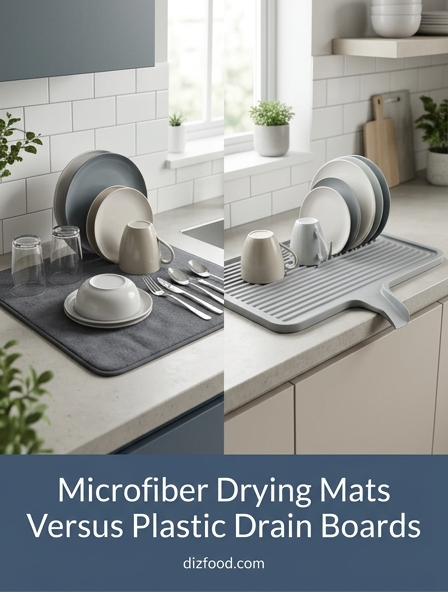
Microfiber Versus Plastic Drain Boards Comparison
In the modern kitchen, the choice between microfiber drying mats and plastic drain boards often dictates the efficiency and organization of the cleanup process. Microfiber mats represent a contemporary shift toward flexible, ultra-absorbent textiles designed to cushion delicate glassware while pulling moisture away from the surface. In contrast, plastic drain boards are a traditional staple, relying on rigid structures and gravity-fed slopes to manage excess water. Each solution serves the same fundamental purpose but operates on entirely different mechanical principles.
Microfiber options are favored for their low profile and ability to disappear when not in use. They are constructed from synthetic blends, usually polyester and polyamide, which create a massive surface area relative to their size. Plastic drain boards, typically made from high-density polyethylene or polypropylene, provide a stable, elevated platform that prevents dishes from sitting in stagnant water. Choosing between them requires an assessment of your typical dish load, the fragility of your cookware, and the permanent real estate you are willing to surrender on your countertop.
- Microfiber provides a soft landing for crystal and fine china.
- Plastic offers a firm foundation for heavy cast iron and large stockpots.
- Mats are silent during use, whereas plastic boards can be noisy when arranging cutlery.
- Drain boards often integrate with wire racks, while mats are usually standalone.
Maximum Absorbency vs Directed Drainage Systems
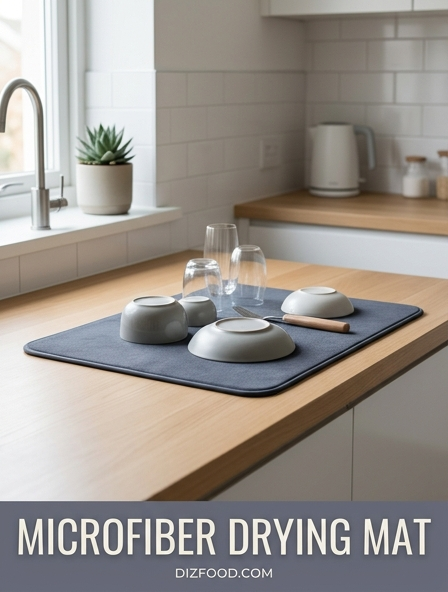
The core functional difference between these two accessories lies in how they handle liquid. Microfiber drying mats utilize capillary action to trap water within the fibers. This prevents puddling on the countertop by locking moisture into the fabric's core, where it eventually evaporates. High-quality mats can often hold up to four times their weight in water, making them remarkably effective for quick-dry scenarios involving smaller loads.
Plastic drain boards employ a directed drainage system. Rather than holding the water, they are engineered with a slight pitch or built-in channels that guide runoff directly into the kitchen sink. This design is superior for heavy-duty dishwashing sessions where the volume of water would quickly saturate a fabric mat. The effectiveness of a plastic board is entirely dependent on its angle and the "lip" design that overhangs the sink edge.
| Feature | Microfiber Mat | Plastic Drain Board |
|---|---|---|
| Water Management | Absorption/Internal Trapping | Gravity-Led Runoff |
| Saturation Point | Can become soaked | Unlimited (flows to sink) |
| Air Circulation | Low (under the dish) | High (ribbed elevation) |
| Surface Stability | High Friction/Non-slip | Moderate/Sloped |
Space Saving Benefits of Microfiber Drying Mats
For homeowners managing small kitchens or urban apartments, the footprint of kitchen accessories is a primary concern. Microfiber drying mats excel in this category because they are inherently collapsible. Unlike rigid plastic boards that require a dedicated cabinet slot or permanent counter space, a microfiber mat can be folded, rolled, or tucked into a shallow drawer the moment the dishes are put away. This "disappearing act" helps maintain a minimalist aesthetic and frees up workspace for food preparation.
The flexibility of the material also allows it to be used in awkward spaces where a rectangular plastic board might not fit. If you have a narrow strip of counter behind the sink or a corner blocked by a heavy appliance, a mat can be tucked or partially folded to accommodate the environment. Furthermore, because they are lightweight, they are the preferred choice for recreational vehicles, campers, and dorm rooms where every square inch of storage is calculated. The absence of a bulky lip or drainage spout means they can be stacked flat with linen towels, occupying virtually zero vertical space in a pantry or cupboard.
Durability and Longevity of Plastic Drain Boards
When considering a long-term investment for the kitchen, plastic drain boards often outperform fabric alternatives in terms of structural integrity. A well-manufactured plastic board is resistant to fraying, tearing, and thinning-issues that eventually plague microfiber after repeated wash cycles. The hard polymer surface is designed to withstand the sharp edges of knives and the heavy pressure of ceramic plates without losing its shape or functionality. Even after years of daily use, a plastic board will maintain its drainage angle and weight-bearing capacity.
However, durability is not just about physical strength; it is also about resistance to environmental degradation. Plastic boards are impervious to the "soggy" breakdown that can occur if a microfiber mat is left wet for too long. While fabric may eventually develop a permanent musty odor or lose its loft, plastic remains inert. The primary threat to a plastic board's longevity is cracking from extreme impact or warping if exposed to high-heat dishwashing cycles, but under normal conditions, a single board can last a decade or more, making it a highly cost-effective choice for busy households.
Hygiene and Mold Resistance Comparison
Hygiene is a critical factor in the humid environment of a kitchen sink. Microfiber mats, while treated with antimicrobial agents in some high-end versions, are essentially sponges. If they are not allowed to dry completely between uses, the moisture trapped within the dense weave can become a breeding ground for bacteria and mildew. Users must be diligent about hanging these mats to air dry or rotating them frequently to ensure they do not develop a biological film on the underside which touches the countertop.
Plastic drain boards offer a more hygienic profile for users who may be less fastidious about daily maintenance. The non-porous surface of the plastic does not allow water to penetrate the material itself. Because the water is directed away into the sink, the board stays relatively dry. Most plastic models are also designed with raised ridges that allow air to circulate underneath the dishes, preventing the "vacuum seal" effect that traps moisture inside cups and bowls. However, plastic is susceptible to hard water stains and calcium buildup, which can look unsightly and provide a textured surface where grime might eventually adhere if not wiped down regularly.
Cleaning and Maintenance Requirements for Each
Maintaining the cleanliness of your drying surface is essential for food safety. The cleaning protocols for microfiber and plastic are vastly different, though both are relatively straightforward. Microfiber mats are designed for machine maintenance. When the mat becomes soiled or begins to lose its absorbency due to dust and grease, it can be tossed into the laundry. However, it is vital to avoid fabric softeners, as these coat the fibers in a waxy layer that destroys the mat's ability to pull in water.
Plastic drain boards generally require manual intervention or the use of a dishwasher. Because they are bulky, they may not fit in all residential dishwashers, requiring a hand-scrub with warm soapy water and a sponge. To keep a plastic board looking new, users often need to address the underside, where soap scum and hard water deposits tend to collect. Below is a standard maintenance routine for both types:
- Microfiber: Machine wash cold, tumble dry low or air dry, avoid bleach.
- Plastic: Spray with a mild vinegar solution to remove mineral deposits, scrub grooves with a soft brush, and dry with a cloth to prevent spotting.
- Frequency: Mats should be washed weekly; boards should be wiped daily.
Countertop Protection and Heat Resistance Features
The relationship between a drying accessory and the countertop material is an often-overlooked consideration. Microfiber mats act as an insulating barrier. Their padded thickness protects delicate surfaces like marble, granite, or laminate from the scratches and dings associated with heavy cookware. Furthermore, many microfiber mats are heat-resistant to a certain degree, allowing them to pull double duty as a trivet for warm pans (though not straight from the oven), providing a protective layer that plastic simply cannot offer.
Plastic drain boards, conversely, are primarily designed for water management rather than surface protection. While they prevent water from reaching the counter, the hard plastic feet or the base of the board can sometimes slide, potentially scuffing softer countertop materials over time. Additionally, plastic is highly susceptible to heat damage. Placing a hot pot near or on a plastic drain board can result in melting, warping, or the release of unpleasant odors. For kitchens with expensive stone surfaces that are prone to thermal shock or scratching, the soft, cushioned nature of a microfiber mat provides a superior level of overall protection.
Kitchen Aesthetics and Style Variety
Aesthetics play a significant role in modern kitchen design, where the "clutter-free" look is highly desired. Microfiber mats come in an exhaustive array of colors, patterns, and textures. This variety allows homeowners to match their mat to their backsplash, cabinetry, or seasonal decor. From neutral greys and charcoals that blend into stone counters to vibrant floral prints that serve as a focal point, the mat is as much a design element as it is a tool.
Plastic drain boards are typically more utilitarian in appearance. They usually come in solid, neutral colors like white, black, or clear to minimize their visual impact. While some high-end designers have created sleek, metallic-look plastic or minimalist "architectural" boards, they generally lack the warmth and textile appeal of a fabric mat. For a kitchen that leans toward a cozy, traditional, or eclectic style, the fabric mat feels more integrated. For a professional, high-tech, or clinical kitchen aesthetic, the clean and sharp lines of a plastic drain board are often more appropriate. The choice frequently comes down to whether you want your drying area to be a hidden tool or a stylish accessory.
Environmental Impact of Drying Accessories
The ecological footprint of kitchen tools is an increasing concern for modern consumers. Microfiber is a synthetic product, often made from petroleum-based materials. During the wash cycle, microfiber mats can shed microplastics that eventually enter the water system. However, their ability to be reused hundreds of times before replacement offers a level of sustainability compared to disposable paper towels or low-quality alternatives. Many manufacturers are now moving toward using recycled plastics to create the polyester used in these mats.
Plastic drain boards are also petroleum products, but their environmental impact is characterized by their end-of-life disposal. While a plastic board might last ten years, it is often not recyclable through standard curbside programs once it cracks or warps. This leads to long-term landfill waste. However, because they do not require frequent machine washing and drying, they save on water and electricity over their lifespan. When evaluating the two, the consumer must weigh the energy used in laundering a mat against the carbon footprint of manufacturing and eventually disposing of a large plastic item.
Selecting the Best Dish Drying Solution for Your Home
Finalizing a choice between a microfiber mat and a plastic drain board depends on the specific workflow of your household. If you are a single professional or a couple living in a small space with a dishwasher, a microfiber mat is likely the superior choice. It handles the occasional hand-washed wine glass or chef's knife perfectly and can be tucked away to keep the kitchen looking pristine. It prioritizes flexibility and aesthetics over high-volume water management.
For large families, avid home cooks, or those without a dishwasher, the plastic drain board is the practical workhorse. The ability to handle a constant stream of wet dishes without becoming an oversaturated, heavy mess is a major advantage. It provides the necessary structure for drying large pots, pans, and plastic containers that require air circulation to dry effectively. To make the final decision, consider the following checklist:
- Does your kitchen have limited counter space? (Choose Microfiber)
- Do you frequently wash heavy cast iron or large stockpots? (Choose Plastic)
- Is your countertop made of a material sensitive to moisture or scratches? (Choose Microfiber)
- Do you prefer low-maintenance, "set it and forget it" cleaning? (Choose Plastic)
- Is kitchen color coordination important to your decor? (Choose Microfiber)

Comments