
Ever find yourself staring at your dishwasher's control panel wondering if the "Eco" button actually makes a difference or if it's just a marketing gimmick? While the standard cycle is your reliable go-to for blasting through stubborn, baked-on grease using high heat and rapid speed, switching to the eco-friendly mode is the ultimate long game for your utility bills and the planet. By extending the cycle duration to allow for longer soaking periods at lower temperatures, eco-mode significantly reduces energy consumption and water waste without sacrificing cleaning performance on standard daily loads. Choosing between them usually involves a trade-off between time and efficiency, but for your routine post-dinner cleanup, the eco-setting is almost always the smarter, more sustainable winner for your home.
| Feature | Standard Cycle | Eco-Friendly Mode |
|---|---|---|
| Cycle Duration | 90 - 120 Minutes | 180 - 240 Minutes |
| Energy Consumption | High (~1.2 - 1.5 kWh) | Low (~0.5 - 0.8 kWh) |
| Water Usage | 12 - 15 Liters | 8 - 10 Liters |
| Water Temperature | 60°C - 70°C (Hot) | 45°C - 50°C (Warm) |
| Cleaning Method | High heat and water pressure | Extended soaking and enzymes |
| Best Used For | Dried-on food & heavy grease | Daily dishes & light-medium soil |
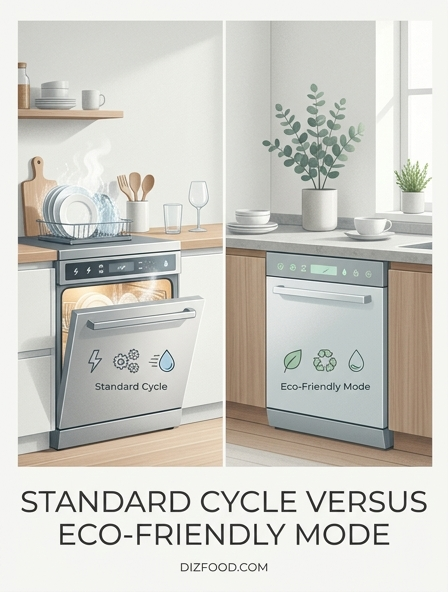
Standard Versus Eco Mode Efficiency Comparison
When evaluating modern kitchen appliances, the primary distinction between a standard cycle and an eco-friendly mode lies in the management of resources. A standard cycle is engineered for speed and convenience, utilizing high temperatures and significant mechanical force to strip away grease and grime in a condensed timeframe. In contrast, the eco-friendly mode is designed to minimize the environmental footprint by prioritizing energy conservation over speed. This shift in operational philosophy changes how the appliance interacts with water and electricity, often extending the duration of the cycle to compensate for the reduction in active heating.
Efficiency in a standard cycle is measured by the immediate cleanliness of the load, whereas efficiency in eco mode is measured by the output-to-resource ratio. While it may seem counterintuitive that a cycle lasting three hours is more "efficient" than one lasting ninety minutes, the secret lies in the electricity required to heat water. Heating water accounts for roughly 80% to 90% of a dishwasher's total energy consumption. By keeping temperatures lower and allowing the detergent more time to chemically break down food particles through prolonged soaking, the eco mode achieves comparable results using a fraction of the power required by its standard counterpart.
Furthermore, the mechanical action differs; standard cycles often use higher water pressure and faster pump speeds, which can be taxing on the motor. Eco modes typically employ more frequent but shorter bursts of water circulation, reducing the continuous load on internal components. Choosing between these modes requires a balance between the urgency of the task and the desire to reduce household resource consumption.
Impact of Water Temperature on Cleaning Results
Water temperature serves as a critical catalyst in the cleaning process, particularly in a kitchen environment where proteins and fats are the primary contaminants. Standard cycles usually operate at temperatures ranging from 60°C to 70°C (140°F to 158°F). These high temperatures are highly effective at melting animal fats and sanitizing surfaces, ensuring that bacteria like E. coli and Salmonella are neutralized. The thermal energy softens stubborn food residues, allowing the water pressure to easily dislodge them from plates and cutlery.
Eco-friendly modes typically operate at lower temperatures, often hovering between 35°C and 50°C. While this lower heat range is less aggressive toward grease, modern detergent formulations are specifically engineered to bridge this gap. Bio-detergents contain enzymes-proteases for proteins and amylases for starches-that perform optimally at these moderate temperatures. If the water is too hot, these sensitive enzymes can actually denature and lose their effectiveness. Therefore, an eco-mode wash is not necessarily less hygienic; it simply relies on biochemical reactions rather than brute thermal force.
However, there are limitations to low-temperature washing. For items heavily coated in solid fats, such as lard or butter, the lower temperature of an eco cycle may fail to fully emulsify the oils, potentially leaving a thin film on plastic containers. In such cases, the higher thermal energy of a standard cycle is superior for achieving a "squeaky clean" finish. Users must consider the nature of the soil on their dishes before selecting the temperature profile of the wash.
Energy Consumption and Utility Bill Savings
The financial implications of choosing the correct cycle are substantial when viewed over the lifespan of a kitchen appliance. The majority of the cost associated with running a dishwasher or a washing machine located in the kitchen is directly tied to the heating element. By opting for the eco-friendly setting, homeowners can significantly reduce their kilowatt-hour (kWh) usage per load. This reduction is not just a benefit for the environment; it manifests as a tangible decrease in monthly utility expenses.
Below is a general comparison of energy and water consumption for a typical modern dishwasher:
| Metric | Standard Cycle | Eco-Friendly Mode |
|---|---|---|
| Energy Used (kWh) | 1.2 - 1.5 kWh | 0.6 - 0.8 kWh |
| Water Used (Gallons) | 3.5 - 5.0 gal | 2.0 - 3.0 gal |
| Approx. Cost per Load | $0.25 - $0.40 | $0.12 - $0.20 |
Over the course of a year, running the eco mode for daily loads can save a household hundreds of dollars in energy costs. While the savings per individual wash might seem negligible, the cumulative effect is profound. Additionally, because eco modes put less strain on the heating element and the pump, they can contribute to a longer appliance lifespan, further increasing the return on investment by delaying expensive repairs or replacements. When electricity prices fluctuate or during peak demand hours, the lower wattage requirements of the eco mode also help in stabilizing the household's overall energy grid impact.
Understanding Cycle Duration and Time Tradeoffs
One of the most common complaints regarding eco-friendly modes is their seemingly excessive duration. It is not unusual for an eco cycle to take twice as long as a standard wash, often exceeding three or even four hours. This extension is a deliberate design choice known as the "Sinner's Circle" principle, which balances four factors: chemistry, mechanical action, temperature, and time. If you reduce the temperature to save energy, you must increase one of the other factors-usually time-to maintain the same level of cleanliness.
During a standard cycle, the machine heats the water quickly and sprays it with high intensity. This is effective but energy-intensive. In the eco mode, the machine allows the dishes to "soak" for longer periods. This prolonged contact time between the water-detergent solution and the food waste allows the surfactants to penetrate deeper into the debris without needing the water to be scalding hot. The time tradeoff is essentially trading electrical energy for "dwell time."
For many users, this requires a shift in kitchen management habits. While a standard cycle is perfect for a quick turnaround between lunch and dinner, the eco mode is best utilized overnight. By starting a three-hour eco wash before bed, the duration becomes irrelevant, and the dishes are clean and dry by morning. Understanding that the long duration is a sign of energy efficiency, rather than a mechanical flaw, helps users make more informed decisions about their daily schedules.
Standard Cycle Performance for Heavy Soil
Despite the benefits of eco modes, the standard cycle remains a vital tool for certain kitchen tasks. High-intensity cleaning is required when dealing with "heavy soil," which includes baked-on starches, caramelized sugars, and dried-on protein residues. These types of debris often form strong bonds with the surface of the dishware that a low-temperature soak simply cannot break efficiently. The standard cycle utilizes a combination of high heat and high-pressure water jets to physically blast these particles away.
The following items are typically better suited for a standard or intensive cycle rather than an eco mode:
- Lasagna pans with burnt-on cheese edges.
- Roasting tins with rendered meat fats.
- Pottery or stoneware used for slow-cooking stews.
- Cutlery used for egg-based dishes (which stick when dried).
- Mugs with deep tannins or tea stains.
When an eco mode is used on heavily soiled items, it may result in "re-deposition," where food particles are dislodged but not fully flushed away, leaving a grainy residue on otherwise clean dishes. To avoid the need for a second wash-which would negate any eco-mode savings-it is more efficient to use the standard cycle for these difficult loads. The standard cycle's ability to maintain a consistent high temperature throughout the wash and rinse phases ensures that fats remain in a liquid state until they are fully drained from the machine, preventing clogs and maintaining optimal hygiene.
Environmental Sustainability of Eco Friendly Modes
Sustainability in the kitchen is a multifaceted issue involving water conservation, carbon emissions, and chemical discharge. Eco-friendly modes are the primary technological response to the growing need for sustainable living. By reducing the electricity demand, these cycles directly lower the carbon footprint of the home, as much of the world's electricity is still generated from fossil fuels. Every kilowatt saved contributes to a reduction in greenhouse gas emissions associated with power generation.
Beyond energy, these modes are optimized for water conservation. Modern eco cycles use advanced sensors to detect the turbidity (cloudiness) of the water, allowing the machine to reuse water that is still relatively clean for the initial rinse phases. This reduces the total volume of fresh water drawn from the municipal supply and the volume of wastewater sent to treatment plants. In regions facing water scarcity, the cumulative water savings from eco-mode appliances are a critical component of local conservation efforts.
Furthermore, eco modes are gentler on the appliance's internal filtration system. Because the cycle uses less heat, there is less thermal expansion and contraction of the plastic and rubber seals within the machine. This prevents premature degradation and leaks, ensuring the appliance does not end up in a landfill earlier than necessary. By aligning household chores with ecological principles, consumers play a direct role in fostering a more circular economy and preserving natural resources for future generations.
Water Usage Differences Between Appliance Settings
Water is often perceived as an infinite resource in the kitchen, but the difference in consumption between appliance settings is stark. A standard cycle is designed to be "flush heavy," meaning it uses multiple changes of fresh water to ensure that no debris remains. While effective, this can result in the use of up to 5 gallons of water per load. Modern eco-friendly modes, however, are engineered to achieve the same results with as little as 2 to 3 gallons. They do this through sophisticated hydraulic systems that recirculate water more effectively.
In a standard cycle, the machine might fill and drain four or five times: a pre-wash, a main wash, and two or three rinses. The eco mode often combines these steps or uses a filtered recirculation method. The water used in the final rinse of an eco cycle is often stored or filtered and then used as the pre-wash for the next phase of the cycle. This "cascading" water usage ensures that every drop performs maximum work before being expelled into the drainage system.
It is important to note that using less water requires the user to be more diligent about scraping-but not pre-rinsing-dishes. Pre-rinsing dishes in the sink before putting them in the dishwasher can waste more water than the machine uses for the entire cycle. When the eco mode is used correctly without manual pre-rinsing, it represents the most water-efficient method of cleaning available in a modern home. The precision of the spray arms and the timing of the pulses are all calibrated to ensure that even a small volume of water provides complete coverage of the load.
Choosing the Right Cycle for Fabric Longevity
In many kitchens, especially in European-style layouts, the washing machine is integrated alongside kitchen appliances. When considering standard versus eco cycles for kitchen linens, tea towels, and aprons, the impact on fabric longevity is a major factor. Standard cycles, with their high-speed spins and high temperatures, can be abrasive. The heat can cause natural fibers like cotton and linen to shrink, while the aggressive mechanical action can break down the integrity of the weave over time, leading to fraying and thinning.
Eco-friendly modes are generally much gentler on textiles. Because they rely on longer soaking times and lower temperatures, they do not subject the fabrics to the same level of thermal stress. This is particularly beneficial for colored kitchen linens, as high heat is a primary cause of dye leaching and fading. Using an eco cycle helps maintain the vibrance of the fabric and keeps the fibers supple. Furthermore, the reduced spin speeds often associated with eco settings result in fewer wrinkles, making the items easier to iron or fold directly from the line.
However, for items like heavy-duty dishcloths that are used to wipe down raw meat surfaces, a standard high-heat cycle is still recommended for sanitization. The rule of thumb for kitchen fabrics is to use the eco mode for general use items to extend their life, but switch to a standard 60°C wash for items that require deep disinfection. Balancing the need for "clean" versus "sterile" allows for both fabric preservation and household safety.
The Science Behind Low Temperature Washing
The effectiveness of low-temperature washing in eco modes is rooted in advances in detergent chemistry and fluid dynamics. In the past, heat was necessary to activate the surfactants that pull oil away from surfaces. Modern "cool-water" detergents, however, utilize sophisticated molecular chains that are active at much lower kinetic energy levels. These surfactants have a hydrophobic tail that attaches to grease and a hydrophilic head that attaches to water, allowing the grease to be lifted and washed away even in lukewarm conditions.
Enzymatic action is the second pillar of this science. Enzymes are biological catalysts that speed up chemical reactions. In a kitchen setting, the protease enzymes specifically target the peptide bonds in protein stains, such as dried milk or egg. Because these enzymes are biological, they have an "optimal temperature window," usually between 30°C and 40°C. If the standard cycle exceeds this temperature too quickly, the enzymes are destroyed before they can finish their work. The eco mode's slow temperature climb provides the perfect environment for these enzymes to thrive and break down complex organic matter.
Additionally, the science of "suspension" is critical. In a long, low-temperature wash, the detergent must keep the dislodged dirt suspended in the water so it doesn't settle back onto the dishes. This is achieved through the use of polymers that coat the dirt particles and give them a negative charge, causing them to repel each other and the dishes. This complex chemistry allows the eco mode to produce a high level of cleanliness without the need for the aggressive boiling temperatures of the past.
Final Verdict on Standard Versus Eco Cycles
Choosing between a standard cycle and an eco-friendly mode is not a matter of which is "better," but rather which is most appropriate for the specific task at hand. Both settings serve distinct purposes within a high-functioning kitchen. The eco mode should be the default choice for 80% of household needs, particularly for daily loads that are not excessively soiled. It provides the best balance of cost savings, environmental protection, and gentle care for your kitchenware and appliances.
To maximize the efficiency of your kitchen appliances, consider the following decision checklist:
- Soil Level: Use Standard for baked-on grease; use Eco for light-to-moderate daily residue.
- Time Constraints: Use Standard when you need clean dishes within the hour; use Eco for overnight cleaning.
- Hygiene Requirements: Use Standard for sanitizing items after handling raw meat or during illness; use Eco for general cleanliness.
- Load Size: Use Eco for full loads to maximize water-to-item ratios; avoid running half-empty machines on Standard.
- Fabric Type: Use Eco for delicate linens and colored fabrics; use Standard for heavy-duty, white cotton towels.
Ultimately, the "standard" cycle is a legacy of an era when energy was cheap and detergents were less advanced. As technology continues to improve, the gap in cleaning performance between these two modes continues to shrink. By intelligently alternating between these settings, you can ensure a hygienic kitchen, lower utility bills, and a significantly reduced environmental impact, all while maintaining the quality of your dishes and linens for years to come.


Comments