
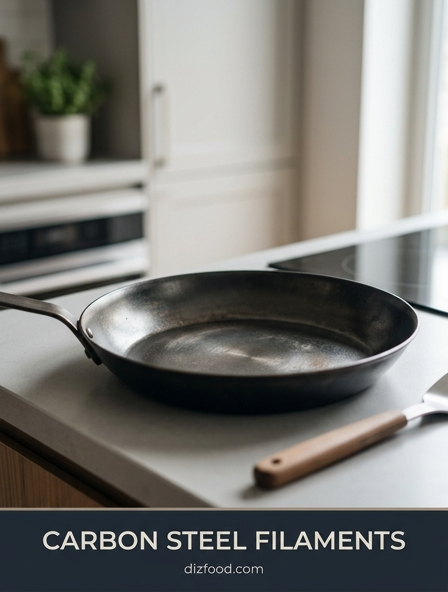
Unmatched Tensile Strength for Grime
In the demanding environment of a professional kitchen, the structural integrity of cleaning tools is paramount. Carbon steel filaments are engineered with exceptional tensile strength, allowing them to withstand significant manual pressure without snapping or permanently deforming. This high-tensile nature ensures that the individual wires maintain their upright orientation even when pushed against hardened, polymerized oils. Unlike synthetic nylon bristles that soften and flatten under stress, carbon steel remains rigid, acting as a series of micro-chisels that penetrate thick layers of accumulated grime.
The resilience of these filaments is particularly beneficial when addressing the following kitchen challenges:
- Removing stubborn mineral deposits from steam tables.
- Scrubbing the underside of heavy-duty stockpots.
- Dislodging solidified fats from deep-fryer heating elements.
- Cleaning the grooved surfaces of industrial panini presses.
Because the material resists stretching and fatigue, a single carbon steel brush can outperform several plastic counterparts. This mechanical advantage translates to less physical exertion for kitchen staff, as the filament's innate strength does the majority of the work during the scrubbing process.
Deep Carbonized Residue Removal
Carbonized food particles represent one of the most difficult cleaning hurdles in any culinary setting. When proteins and sugars are subjected to repeated high heat, they undergo a chemical transformation, bonding tightly to metal surfaces. Carbon steel filaments possess the specific hardness required to shear these bonds at a molecular level. The sharp, microscopic edges of each filament act as abrasive agents that can reach into the porous surfaces of stainless steel and iron to lift out buried carbon deposits.
- The user applies a back-and-forth motion with the carbon steel scrubber.
- Individual filaments penetrate the cracks in the carbonized crust.
- Mechanical friction generates localized heat, further loosening the residue.
- The debris is swept away, revealing the original substrate beneath.
This deep-cleaning capability is essential for maintaining the heat transfer efficiency of cookware. When carbon builds up, it creates an insulating layer that leads to uneven cooking and increased energy consumption. By utilizing high-carbon filaments, chefs can ensure their equipment performs at peak thermal capacity without the need for excessive chemical solvents.
Durability in Commercial Dishwashing
The environment within a commercial dish pit is characterized by constant moisture, fluctuating temperatures, and exposure to caustic chemicals. Carbon steel filaments designed for kitchen use are often treated with protective coatings to enhance their longevity in these conditions. This ensures that the tools do not succumb to rapid oxidation or corrosion when stored in damp areas. The robustness of carbon steel makes it a staple for back-of-house operations where equipment is subjected to hundreds of cleaning cycles per week.
| Attribute | Carbon Steel Performance |
|---|---|
| Chemical Resistance | High against degreasers and alkaline soaps. |
| Impact Strength | Resistant to damage from drops and heavy handling. |
| Elasticity | Returns to shape after heavy compression. |
| Service Life | 3-5 times longer than standard abrasive pads. |
The fiscal benefits of this durability are clear; reduced replacement frequency leads to lower overhead costs. Furthermore, the filaments do not shed microplastics into the wastewater stream, making them a more environmentally responsible choice for high-volume facilities.
Abrasive Efficiency of Steel Filaments
The efficiency of carbon steel filaments lies in their high Mohs hardness rating relative to common kitchen contaminants. While soft enough to be manipulated into various brush shapes, the steel is significantly harder than burnt starches, fats, and even some mineral scales. This hardness differential ensures that the filament wears down the target grime rather than the brush wearing down against the grime. The abrasive action is consistent throughout the life of the tool because the filaments maintain their sharp profile as they gradually wear.
- High friction coefficient for rapid material removal.
- Narrow filament diameter for accessing tight corners and welds.
- Optimal stiffness-to-weight ratio for ergonomic use.
- Resistace to clogging due to smooth surface finish.
In practice, this means that surface preparation and cleaning take a fraction of the time compared to using non-metallic scouring pads. For busy kitchens, time saved in the cleaning phase translates directly to faster turnover and improved labor efficiency. The abrasive nature of these filaments is finely tuned to provide maximum cleaning power with controlled surface impact.
Restoring Heavily Encrusted Cast Iron
Cast iron cookware is prized for its heat retention but can be difficult to restore once it has been neglected. When layers of old, rancid seasoning or rust have developed, carbon steel filaments are the preferred medium for restoration. They provide the necessary aggression to strip the iron back to its base metal without gouging the heavy material. This process is essential for creating a smooth foundation for a new, high-quality seasoning layer.
- Assess the depth of the rust or carbon buildup on the skillet.
- Use a dry carbon steel brush to knock away loose oxidation and flakes.
- Apply consistent pressure to scrub away the stubborn, blackened crust.
- Wipe away fine dust and inspect the gray iron surface.
- Repeat the process in the tight radius of the pan's sidewalls.
Unlike sandpaper, which can leave behind grit, or chemical strippers, which require extensive neutralizing, carbon steel filaments offer a mechanical solution that is clean and immediate. The result is a perfectly prepped surface ready for the polymerization of fresh oils, extending the life of heirloom cookware for decades.
Heat Resistance During Heavy Scouring
One of the most significant advantages of carbon steel filaments in the kitchen is their thermal stability. Professional grills, charbroilers, and ovens are often cleaned while still hot to prevent grease from solidifying. Synthetic bristles melt or warp at temperatures as low as 250°F, rendering them useless and potentially leaving plastic residue on food-contact surfaces. Carbon steel, however, maintains its structural integrity at temperatures exceeding 800°F.
- Enables "hot cleaning" to maximize kitchen uptime.
- Prevents filament melting and hazardous fumes.
- Maintains scrubbing power on active grill grates.
- Resists thermal shock during rapid cooling cycles.
This heat resistance allows for the immediate removal of drippings and charred remains between cooking shifts. By cleaning the equipment while the carbonized material is still thermally agitated, the bonds are easier to break. The use of carbon steel filaments ensures that the cleaning tool itself does not become a victim of the high-heat environment, providing a safe and reliable solution for line cooks.
High-Density Filaments for Restoration
The effectiveness of a cleaning tool is often determined by its filament density. High-density carbon steel brushes feature a greater number of contact points per square inch, which ensures a more uniform finish during restoration tasks. When stripping a surface, a low-density brush may leave "tracks" or uneven spots. In contrast, a high-density arrangement provides a continuous abrasive action that smoothes out imperfections as it cleans.
| Filament Density | Application Type | Cleaning Speed |
|---|---|---|
| Low (Standard) | General debris removal | Moderate |
| Medium | Standard cookware maintenance | High |
| High (Premium) | Professional restoration | Maximum |
This density is particularly important when dealing with textured surfaces, such as diamond-patterned grill grates or embossed metal platters. The sheer number of filaments ensures that every crevice is reached simultaneously. This prevents the need for multiple passes over the same area, reducing the risk of over-scrubbing one spot while missing another. High-density filaments represent the pinnacle of mechanical cleaning precision.
Breaking Down Industrial Grease
Industrial grease in a kitchen is a complex mixture of lipids, proteins, and airborne particulates that forms a viscous, sticky layer on ventilation hoods and backsplashes. Carbon steel filaments are uniquely suited to breaking down this film because they don't just slide over the grease; they cut through it. The rigidity of the steel allows the filaments to shear the grease layer into smaller, manageable fragments that can then be emulsified by detergents.
- Aggressive mechanical action on horizontal and vertical surfaces.
- Ability to "bite" into slippery, oil-slicked metal.
- Resistance to the "gumming up" effect seen in soft sponges.
- Effective removal of grease-trap buildup and floor drains.
When grease is allowed to accumulate, it becomes a significant fire hazard. Carbon steel filaments provide a rapid means of removing these combustible layers from exhaust systems and cooking ranges. Their ability to work in tandem with heavy-duty degreasers makes them an essential component of a kitchen's fire safety and sanitation protocol.
Longevity in High-Volume Environments
In high-volume catering or institutional kitchens, tools are used almost continuously. The longevity of carbon steel filaments in these environments is a key driver for their adoption. While other materials fray, split, or lose their abrasive coating, carbon steel is a solid-state abrasive. The filament itself is the working medium, meaning its effectiveness only ends when the filament is physically worn down to the base.
- Initial deployment in a high-volume dish pit or cleaning station.
- Sustained performance through thousands of heavy-duty cycles.
- Resistance to the "bloom" effect where bristles splay outward.
- Consistent result delivery from the first use to the last.
The economic value is realized through reduced downtime. Workers do not need to stop their tasks to find replacement tools frequently. Additionally, the predictable wear pattern of carbon steel allows managers to schedule replacements accurately, ensuring that cleaning standards never dip due to worn-out equipment. It is the gold standard for endurance in the culinary industry.
Precision Surface Stripping Power
Precision stripping is required when a specific layer-such as rust or a damaged coating-must be removed without compromising the thickness of the base metal. Carbon steel filaments offer a level of control that power tools or harsh chemicals cannot match. By adjusting the hand pressure and the angle of the filaments, a technician can delicately remove light oxidation from a stainless steel prep table or aggressively strip a charred rotisserie spit.
- Controlled removal of paint or labels from storage bins.
- Cleaning delicate weld joints on kitchen equipment.
- Smoothing out burrs or rough edges on metal shelving.
- Removing localized rust spots before they spread.
This precision is vital for maintaining the aesthetic and hygienic standards of an open-concept kitchen. Appearance matters as much as cleanliness, and carbon steel filaments allow for the maintenance of a polished, professional look across all metal surfaces. They bridge the gap between heavy demolition-style cleaning and fine-detail finishing, making them incredibly versatile tools for any culinary professional.




Comments