
Ever wonder why your glasses still come out cloudy despite using high-quality detergent? The secret to a streak-free shine lies in the battle between Steam Drying and Heated Air Drying, two distinct technologies that handle moisture in very different ways. While traditional heated air relies on a high-temperature internal coil to "bake" dishes dry, modern steam technology gently releases hot vapor to lift away stubborn residues and prevent water droplets from mineralizing on your surfaces. Choosing the right method isn't just about convenience; it's about protecting your delicate plastics from warping while ensuring that your fine crystal remains crystal clear. By understanding how these cycles manage evaporation and condensation, you can finally eliminate the need for hand-drying and achieve that elusive, professional-grade sparkle every time you unload the rack.
| Feature | Steam Drying Technology | Heated Air Drying |
|---|---|---|
| Mechanism | High-temp vapor lifts residues and condensation. | Calrod heating element bakes moisture away. |
| Spotting Risk | Minimal; prevents mineral deposits. | Higher; prone to "water spots" from evaporation. |
| Energy Usage | Low; leverages residual heat and vapor. | High; requires constant electrical coil heat. |
| Plastic Safety | Safe; gentle temperature distribution. | Risk of warping/melting on bottom racks. |
| Cycle Time | Slightly longer for vapor penetration. | Faster due to intense, direct heat. |
| Sanitization | Superior bacterial reduction via steam. | Standard; relies on final rinse temperature. |
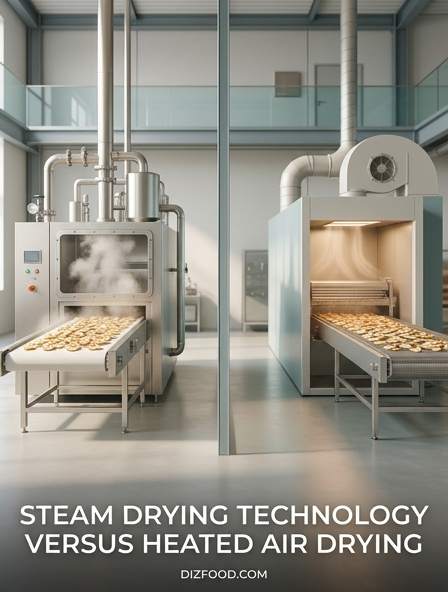
Understanding Steam Versus Heated Air Drying
In the realm of modern kitchen technology and food processing, the debate between steam drying and heated air drying centers on how thermal energy is transferred to a product. Heated air drying, the traditional method, utilizes convection to move dry, hot air over food surfaces, carrying away evaporated moisture. This process relies heavily on the humidity gradient between the product and the surrounding air. While effective for simple applications, it often leads to uneven results because the outer layer dries significantly faster than the core, a phenomenon known as case hardening.
In contrast, steam drying-specifically Superheated Steam Drying (SSD)-replaces air with steam that has been heated beyond its boiling point. In this environment, the steam acts as both the heat transfer medium and the moisture carrier. Because there is no air present, the moisture within the food is forced out and converted into steam itself. This creates a fundamentally different thermodynamic interaction where the boiling point of the water inside the food becomes the primary factor for evaporation. Understanding these differences requires looking at three key factors:
- Heat Transfer Medium: Air uses gas-phase convection, while steam uses high-enthalpy vapor.
- Oxygen Presence: Heated air systems are oxygen-rich, whereas steam systems are oxygen-free.
- Evaporation Rate: Steam drying typically occurs at higher intensities due to superior thermal conductivity.
While air drying remains the standard for home dehydrators and conventional ovens, industrial kitchen settings increasingly favor steam for its precision and speed. The shift toward steam represents a move away from simple evaporation toward a more controlled phase-change process.
Thermal Efficiency and Energy Consumption Comparison
Evaluating the efficiency of drying technologies requires an analysis of how much energy is required to remove a specific mass of water. Heated air drying is notoriously inefficient because a significant portion of the energy is lost through the exhaust air, which carries away both moisture and sensible heat. Improving efficiency in air systems usually requires complex heat exchangers to recapture energy from the humid exhaust, which often leads to diminishing returns.
Superheated steam drying offers a distinct advantage in thermal efficiency because the medium is already a vapor. In a closed-loop steam system, the latent heat of the evaporated moisture can be recovered and reused within the process. When moisture is removed from the food, it becomes part of the steam medium, allowing for a self-sustaining cycle where excess steam can be compressed or used for secondary heating tasks. The following table highlights the general energy dynamics:
| Metric | Heated Air Drying | Superheated Steam |
|---|---|---|
| Heat Transfer Coefficient | Low to Moderate | Very High |
| Energy Recovery Potential | 20% - 30% | Up to 80% |
| Latent Heat Utilization | Generally Lost | Fully Recyclable |
| Startup Energy Need | Lower | Higher |
While steam systems require a higher initial energy input to generate the vapor state, the operational cost over long durations is significantly lower. For high-volume kitchen operations, the ability to recycle latent heat makes steam the superior choice for sustainability and energy cost management.
Mechanism of Moisture Removal in Steam Systems
The mechanism of moisture removal in a superheated steam environment is driven by the temperature difference between the steam and the saturation temperature of the water in the product. Unlike air drying, which relies on a concentration gradient of water vapor, steam drying is a heat-transfer-limited process. When the food is introduced to the superheated steam, the surface moisture quickly reaches the boiling point and evaporates. The process follows a specific sequence of physical changes:
- Initial Heating: The steam condenses slightly on the cold food surface, transferring a massive amount of latent heat instantly.
- Constant Rate Period: As the surface temperature stabilizes at the boiling point, water evaporates rapidly and the condensed moisture re-evaporates.
- Internal Diffusion: Moisture from the center of the food migrates to the surface as steam, driven by internal pressure rather than just capillary action.
- Falling Rate Period: As the product reaches the desired dryness, the rate slows, but the lack of air prevents the formation of a dry "crust" that would otherwise trap moisture.
Because there is no air, there is no boundary layer resistance caused by non-condensable gases. This allows the steam to penetrate the porous structure of food items more effectively. This mechanism ensures that the interior of the product is dried as thoroughly as the exterior, reducing the risk of internal spoilage and ensuring a more consistent texture throughout the batch.
Product Quality and Nutrient Retention Benefits
Quality retention is perhaps the most visible advantage of steam drying over traditional heated air. When food is exposed to hot air for extended periods, it undergoes several detrimental changes, including vitamin degradation and the loss of volatile aromatic compounds. Heated air often results in a shrunken, toughened texture because the rapid removal of surface water causes the cellular structure to collapse before the interior is dry.
Steam drying preserves the physical structure of food items through a process called "puffing." Because the moisture inside the food is converted to steam, it creates a slight internal pressure that maintains the volume of the product, resulting in a more porous and crisp texture. This is particularly beneficial for dried vegetables, snacks, and herbs. Key quality benefits include:
- Vibrant Color: The absence of oxygen prevents enzymatic browning and the degradation of chlorophyll and carotenoids.
- Vitamin Preservation: Water-soluble vitamins like Vitamin C are better preserved because the drying time is shorter and oxygen is excluded.
- Flavor Density: Volatile oils are often "locked" within the structure rather than being stripped away by the continuous flow of dry air.
- Rehydration Capacity: The porous structure created by steam allows for much faster rehydration when the food is eventually prepared.
In high-end culinary applications, these benefits mean that ingredients retain their "fresh" profile even after being preserved. This makes steam drying the preferred choice for producing premium ingredients where aesthetic and nutritional integrity are paramount.
Reducing Oxidation Risks with Superheated Steam
Oxidation is the primary enemy of food shelf-life and flavor. In conventional air drying, the constant supply of oxygen-rich hot air facilitates the oxidation of lipids and pigments. This often leads to rancidity in fat-heavy foods like nuts or meats and causes the "fading" of bright colors in fruits and vegetables. By its very nature, a superheated steam environment is an anaerobic one; the steam displaces all air within the drying chamber.
In this oxygen-free atmosphere, the chemical reactions that typically lead to spoilage are inhibited. For example, sensitive fats do not break down into peroxides, which means that the "off-flavors" associated with old dried goods are virtually eliminated. Furthermore, the exclusion of oxygen prevents the oxidation of phenolic compounds, which are essential for both health benefits and flavor profiles. Because the drying happens in a medium of pure water vapor, the food is essentially shielded during the most vulnerable stage of its processing. This allows for the drying of delicate items-such as fish or citrus peels-that would otherwise turn bitter or brown in a standard oven. The result is a cleaner-tasting product that remains shelf-stable for longer periods without the need for chemical antioxidants or preservatives.
Industrial Throughput and Processing Speed Differences
From an operational standpoint, speed is the most critical metric for industrial kitchens and food processors. Steam drying systems generally outperform heated air systems in terms of throughput due to the superior heat transfer properties of vapor. Water vapor has a much higher heat capacity than air, meaning it can carry and deliver more energy to the food product per unit of volume. This results in significantly shorter drying cycles.
In a commercial setting, reducing the drying time from six hours to two hours effectively triples the capacity of the facility without increasing the physical footprint of the equipment. While air drying relies on a slow diffusion process, steam drying utilizes the pressure of internal vapor to accelerate moisture exit. The comparison in processing speed is often stark:
| Product Type | Air Drying Time (Hours) | Steam Drying Time (Hours) |
|---|---|---|
| Sliced Root Vegetables | 4.0 - 6.0 | 1.0 - 1.5 |
| Granular Proteins | 2.0 - 3.0 | 0.5 - 0.8 |
| Leafy Herbs | 1.5 - 2.5 | 0.3 - 0.5 |
| Fruit Leathers | 8.0 - 12.0 | 2.0 - 3.5 |
This increased speed does not just improve volume; it also reduces the time the product spends at elevated temperatures, further protecting it from thermal damage. For businesses looking to scale production, the throughput advantages of steam often justify the higher initial investment in specialized steam-handling hardware.
Environmental Impact and Carbon Footprint Analysis
The environmental profile of kitchen drying technologies is becoming an essential consideration for modern food brands. Heated air drying systems contribute to a larger carbon footprint primarily because they are energy-intensive and difficult to insulate. A vast amount of heated air is simply vented into the atmosphere, wasting the fuel or electricity used to heat it. Additionally, if the drying involves odorous compounds, air systems require secondary scrubbers or thermal oxidizers to treat the exhaust, adding another layer of energy consumption.
Steam drying systems are inherently more "green" because they operate in a closed or semi-closed loop. The primary waste product is not hot air, but excess water vapor. This vapor can be condensed to recover pure water and heat. Some advanced industrial systems use the excess steam to drive other kitchen processes, such as blanching or sanitation. The environmental benefits include:
- Reduced Energy Waste: High thermal efficiency leads to lower kilowatt-hour consumption per ton of product.
- Emissions Control: Volatile organic compounds (VOCs) are trapped in the condensate rather than being released into the air.
- Water Recovery: In water-scarce regions, the ability to collect and reuse the moisture pulled from the food is a significant ecological advantage.
By minimizing heat loss and maximizing energy recovery, steam technology aligns with global initiatives to reduce the carbon intensity of food manufacturing. For companies aiming for "Net Zero" certifications, transitioning away from open-air drying is a logical step.
Operational Cost Breakdown for Drying Technologies
When choosing between these two technologies, a thorough cost analysis must account for both Capital Expenditure (CAPEX) and Operational Expenditure (OPEX). Heated air systems generally have a lower CAPEX. They are simpler to design, use less expensive materials, and do not require pressure-rated vessels or complex steam management valves. For a small startup kitchen, the lower entry price of an air dehydrator or convection oven is often the deciding factor.
However, the OPEX of steam drying is significantly lower in high-volume applications. The energy savings alone can often offset the higher equipment cost within the first two to three years of operation. The cost breakdown typically follows this pattern:
- Energy Costs: Steam drying is 30-50% cheaper per unit of water removed due to latent heat recovery.
- Maintenance: Air systems require frequent filter changes and duct cleaning. Steam systems require boiler maintenance and seal inspections.
- Labor: Shorter drying cycles in steam systems mean fewer man-hours required for loading and monitoring.
- Product Yield: Steam drying often results in higher yields because there is less product loss through "scorching" or uneven drying.
While the "sticker price" of steam equipment is higher, the total cost of ownership (TCO) favors steam for any facility processing more than a few hundred kilograms of product daily. The long-term savings in utilities and the increased value of the higher-quality output provide a robust return on investment.
Safety Advantages of Oxygen Free Drying Environments
Safety is a critical, yet often overlooked, factor in the comparison between drying methods. Many food products, particularly those with high sugar or starch content, produce fine dust particles during the drying process. In a traditional heated air dryer, these dust particles are suspended in an oxygen-rich, high-temperature environment. This creates a significant risk of dust explosions or flash fires, necessitating expensive spark detection and suppression systems.
Superheated steam drying inherently mitigates these risks. Since the drying chamber is filled with water vapor and contains no oxygen, combustion is physically impossible. Even if a spark were to occur or the temperature were to spike, there is no oxidizer present to support a flame. This "inert" atmosphere allows for the safe drying of materials that would be considered hazardous in an air-based system. Furthermore, the absence of air prevents the oxidation of organic vapors that could otherwise become flammable. For industrial kitchens located in integrated facilities, the safety profile of steam drying can lead to lower insurance premiums and fewer regulatory hurdles regarding fire safety and explosion venting. This makes steam the preferred choice for drying volatile or powdery ingredients where safety cannot be compromised.
Choosing the Right Drying Method for Your Application
Selecting the appropriate technology depends on a balance of product requirements, budget, and scale. While steam drying offers superior speed, quality, and efficiency, it is not always the necessary choice for every kitchen application. A small-scale bakery or a boutique jerky maker may find that the simplicity and low cost of heated air drying perfectly suit their needs, especially if the product is not sensitive to oxidation.
To make the right choice, consider the following decision matrix:
- Sensitivity of the Product: If you are drying high-value, nutrient-dense, or color-sensitive items like berries or herbs, steam is superior.
- Production Volume: For continuous, high-throughput industrial lines, the energy efficiency of steam is essential for profitability.
- Safety Constraints: If the product creates flammable dust, steam provides an inherently safe, oxygen-free environment.
- Resource Availability: Steam systems require a reliable water source and more complex infrastructure. If these are unavailable, air drying is the practical fallback.
- Budgetary Horizon: Choose air for low upfront costs; choose steam for the lowest long-term operational cost and highest ROI.
Ultimately, the transition toward steam drying in the professional kitchen reflects a broader trend toward precision engineering in food preparation. As energy costs rise and consumer demand for "clean label," nutrient-rich dried foods grows, superheated steam is likely to become the new benchmark for excellence in drying technology.




Comments